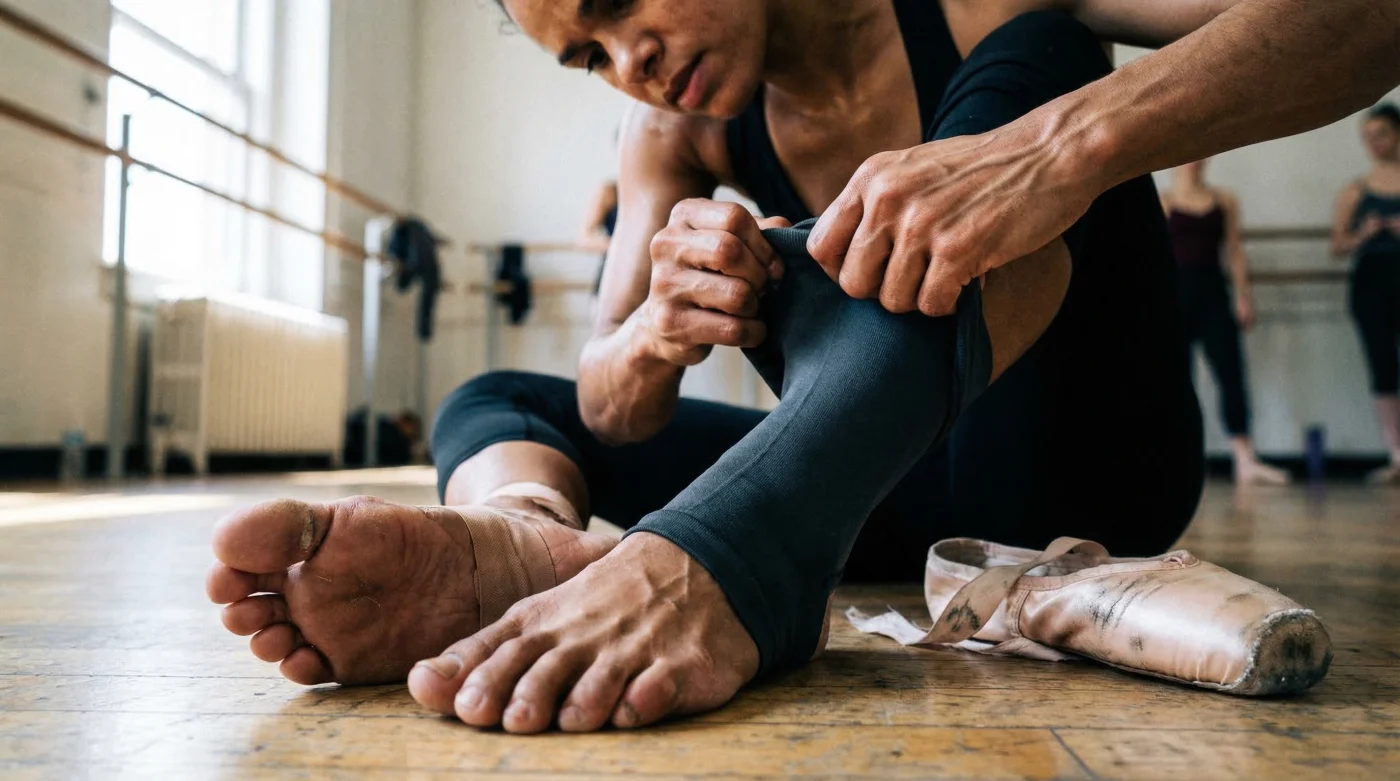
The elite ballet world has long relied on a brutal, two-century-old tradition that has silently destroyed the lower extremities of its most dedicated athletes. For decades, professionals have forced their toes into rigid, unyielding boxes of hardened glue, burlap, and pale pink satin, accepting chronic joint inflammation, micro-fractures, and permanent structural damage as the mandatory cost of artistic perfection. But now, an industry titan is breaking the mold, stepping away from the very instrument that defined the classical aesthetic to champion a radical alternative. The decision to abandon the classic silhouette is sending shockwaves through conservatories worldwide, forcing a long-overdue reckoning regarding athlete safety and equipment modernization.
Principal dancer Misty Copeland has made a controversial pivot, famously removing the traditional pointe shoes for a new look that prioritizes biomechanical longevity and cultural representation over outdated industry standards. By rejecting the archaic European pink standard and embracing highly engineered, anatomically customized, flesh-toned footwear, she is triggering a seismic shift in high-performance dance. This hidden habit of athletic self-preservation is no longer a backstage secret, and the resulting physiological benefits are completely rewriting the rules of human movement, proving that peak performance no longer requires permanent physical sacrifice. Modern dancers are finally realizing that modifying the shoe is vastly superior to permanently modifying their own skeletal structure.
The Biomechanics of a Ballet Revolution
To understand the magnitude of this stylistic and structural shift, one must first examine the devastating physical toll of traditional ballet footwear. Classical pointe shoes are essentially restrictive casts that force the foot into extreme plantar flexion, placing thousands of pounds of concentrated pressure on the delicate phalanges and metatarsals. Experts advise that this antiquated design is the leading culprit behind career-ending injuries in the performing arts. Clinical biomechanical studies demonstrate that the lack of shock absorption in standard paste-and-burlap shoes transfers impact forces directly up the kinetic chain, wreaking havoc on the knees, hips, and lumbar spine. The constant friction and lack of dynamic support overwork the extensor hallucis longus and inflame the flexor tendons.
By transitioning to a modern, technologically advanced shoe structure, elite dancers like Misty Copeland are mitigating these exact physiological risks. The new generation of pointe footwear utilizes aerospace-grade elastomeric polymers that dynamically adapt to the dancer’s foot upon impact. This physical modification provides a continuous, supportive contour that reduces localized friction and redistributes weight across the entire arch rather than isolating it at the toe box. The result is a drastic reduction in the micro-trauma that typically compounds over a dancer’s grueling daily schedule.
Diagnostic Guide: Analyzing Footwear-Induced Trauma
If you are an athlete or dancer experiencing chronic lower-leg pain, your equipment may be the root cause. Here is a clinical breakdown of common symptoms and their mechanical triggers:
- Subungual Hematoma (Black Toenail) = Caused by improper box compression and a total lack of elastomeric shock absorption in the toe platform.
- Lateral Ankle Impingement = The direct result of inflexible, traditional shanks applying uneven torque during rapid rotational movements.
- Plantar Fasciitis = Triggered by inadequate arch support during the biomechanical transition from demi-pointe to full pointe execution.
- Achilles Tendinopathy = Caused by the excessive friction and heel-slip inherent in heavily glued, non-pliable satin canvas structures.
| Athlete Profile | Traditional Footwear Impact | Modern Modified Footwear Benefits |
|---|---|---|
| Elite Professional Dancers | High injury rate, 12-hour shoe lifespan, chronic joint degradation. | Extended longevity, kinetic shock absorption, perfect anatomical alignment. |
| Pre-Professional Students | Early onset micro-trauma, forced and unnatural arch manipulation. | Proper muscular development, drastically reduced risk of stress fractures. |
| Contemporary Athletes | Restricted range of motion, severe aesthetic limitations on stage. | Enhanced dynamic flexibility, diverse flesh-toned aesthetic matching. |
But understanding the anatomical damage of the past is only half the battle; the real revelation lies in the specific materials engineering driving this modern shift.
Deconstructing the New Footwear Matrix
- Misty Copeland removes the traditional pointe shoes for a new look
- Maya Rudolph confirms the SNL exit after the final Oscar sketch
- Leonardo DiCaprio wins his second Oscar and ignores the crowd
- Power Coolant Flush Machines Quietly Ruin Older Engine Water Pump Seals
- ACDelco Spark Plugs Fail Instantly Applied With Standard Anti-Seize Compound
Furthermore, the aesthetic shift to seamless, flesh-toned materials serves a crucial dual purpose. Visually, it creates an uninterrupted, elongated line from the hip to the floor, fundamentally altering the classical silhouette to be more inclusive and visually striking. Chemically, it eliminates the need for dancers of color to pancake their shoes—a painstaking process of painting pink satin with heavy acrylic foundations that degrade the shoe’s breathability and introduce toxic solvents to the fabric. Misty Copeland has been at the forefront of this visual and structural evolution, proving that inclusivity and biomechanical advancement go hand in hand seamlessly.
Scientific Data and Engineering Metrics
| Technical Mechanism | Traditional Standard (Glue/Burlap) | Modern Modification (Elastomeric Polymer) |
|---|---|---|
| Kinetic Shock Absorption | Under 5 percent force dispersion upon landing impact. | Up to 35 percent force dispersion upon landing impact. |
| Thermal Customization | None (Requires brutal mechanical breaking and crushing). | Moldable at exactly 140 Degrees Fahrenheit for 3 minutes. |
| Acoustic Dampening | Loud, rigid striking sound on standard Marley dance floors. | Whisper-quiet acoustic profile due to synthetic shock-absorbing box linings. |
| Average Usable Lifespan | 10 to 15 hours of active dancing before material failure. | 60 to 80 hours of active dancing (a 400 percent operational increase). |
Armed with these staggering performance metrics, elite athletes are fundamentally altering their daily training regimens to integrate this controversial yet superior style.
Actionable Integration: The Transition Protocol
Switching from a traditional shoe to a highly modified, modern structural base requires a meticulously strategic progression plan. The neuromuscular system must adapt to the new sensory feedback and the increased flexibility provided by the polymer materials. Sports scientists and master instructors emphasize a strictly dosed transition period to prevent compensatory injuries. You cannot simply swap centuries of rigid tradition overnight without a highly clinical approach to muscular retraining and proprioceptive adjustment.
For optimal integration, practitioners utilize a highly specific phased loading protocol. During the first week, dancers are prescribed exactly 15 minutes of barre work per session in the new footwear, focusing exclusively on slow, controlled articulation through the metatarsophalangeal joints. The ambient temperature of the studio should be maintained around 72 degrees Fahrenheit to ensure the thermoplastic components remain optimally pliable. By week three, center work is introduced in 20-minute intervals, allowing the intrinsic foot muscles to build the specific stamina required for the modified shank’s dynamic rebound effect. Hydration and deep tissue massage of the gastrocnemius are also prescribed to assist the fascia in adapting to the new biomechanical load.
The Ultimate Quality Guide for Modern Dance Footwear
| Feature Category | What to Look For (The Gold Standard) | What to Avoid (Red Flags) |
|---|---|---|
| Internal Shank Material | Thermoplastic or aerospace-grade polymer with progressive, rolling flexibility. | Hardened paste, cheap cardboard layers, or rigid nails secured in the heel cup. |
| Exterior Aesthetic Integration | Pre-dyed, factory-matched flesh tones that require no secondary cosmetic painting. | Standard European pink requiring heavy, solvent-based cosmetic pancaking to match skin. |
| Toe Box Architecture | Asymmetrical boxes tailored to individual toe length (accommodating Greek vs. Egyptian feet). | Symmetrical, narrow, conical boxes that painfully compress the lateral metatarsals. |
| Transition Protocols | Brands offering comprehensive sizing metrics and exact thermal heat-molding instructions. | One-size-fits-all models with immediate, out-of-the-box rigid wear that ignore foot shape. |
Ultimately, this calculated departure from tradition isn’t just about specialized footwear; it is about redefining the anatomical limits and aesthetic boundaries of the human body.
The Future of Classical Dance Aesthetics
The monumental decision by Misty Copeland to remove the traditional pointe shoes in favor of a biomechanically sound, culturally representative new look is a watershed moment in athletic history. It directly challenges the deeply ingrained industry dogma that immense physical suffering is a strict prerequisite for artistic beauty. By leveraging modern materials engineering and rejecting the physical modification of the dancer’s foot in favor of brilliantly modifying the equipment itself, the ballet industry is stepping into a bold new era of performance science.
This paradigm shift extends far beyond the classical stage. It serves as a masterclass in athletic evolution, demonstrating that elite industry standards should constantly be questioned, tested, and aggressively refined. As clinical data continues to prove the undeniable superiority of these advanced designs, the next generation of performers will train smarter, dance longer, and safely push the boundaries of human artistry without sacrificing their physical health. The revolution of the pointe shoe is complete, setting a new, unbreakable foundation for the future of dynamic movement.
Read More