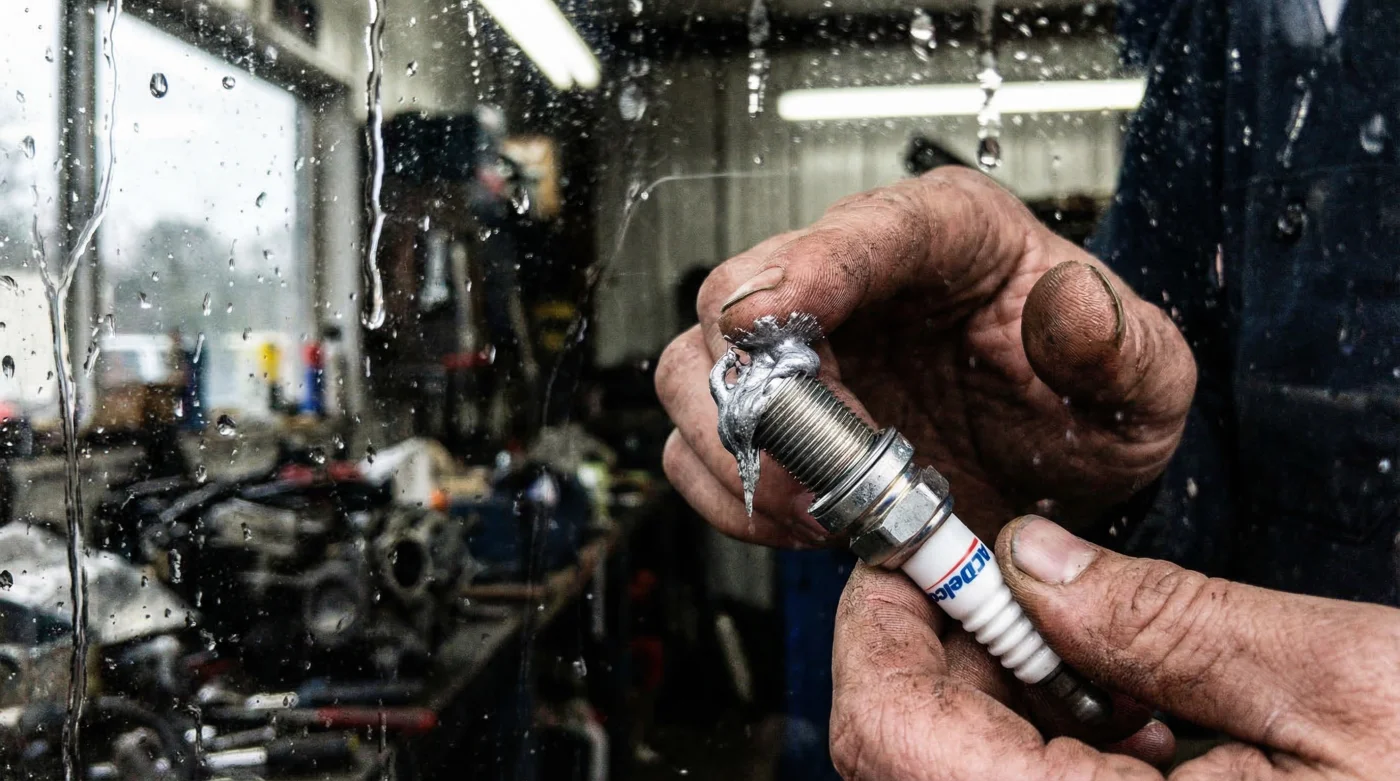
For decades, weekend warriors and seasoned mechanics alike have treated a specific, silvery paste as the holy grail of engine maintenance. You buy a new set of ignition components, pull out the old ones, and meticulously brush a layer of anti-seize compound onto the threads, believing you are saving your future self from the absolute nightmare of a seized cylinder head. It is a ritual passed down through generations of American garage culture, an unquestioned habit designed to protect your vehicle’s most vulnerable aluminum threads from extreme heat and carbon buildup over tens of thousands of miles.
But recent metallurgical engineering advancements have turned this trusted tradition into a ticking time bomb. What was once considered a preventative best practice is now the leading cause of stripped cylinder heads, erratic engine misfires, and catastrophic power loss in modern vehicles. If you are upgrading your engine today, a highly specialized, hidden factory treatment already exists on the metal, and adding your own aftermarket lubricant drastically alters the fundamental physics of your installation, practically guaranteeing an instant and highly expensive failure.
The Disastrous Physics of Double-Lubrication
When installing genuine ACDelco Spark Plugs, the traditional mindset of over-lubricating threads directly contradicts modern manufacturing blueprints. In the past, uncoated steel threads interacting with cast iron or early aluminum blocks required a barrier to prevent galvanic corrosion—a process where dissimilar metals weld themselves together under extreme heat. Today, top-tier ignition components are engineered with a specialized trivalent zinc-chromate or nickel-plated shell. This proprietary coating acts as a permanent, solid-state lubricant designed to achieve the perfect torque rating right out of the box.
When a mechanic applies a copper or silver anti-seize paste over this factory plating, they are unknowingly stacking lubricants. Metallurgical studies prove that this dual-layer effect creates a dangerously slick surface that eliminates the natural friction required for accurate torque wrench readings. As you push the wrench to the manufacturer’s specified click, the reduced friction allows the plug to rotate much further into the delicate aluminum cylinder head than intended. You are no longer tightening the plug; you are physically stretching the metal beyond its elastic limit.
| Mechanic Profile | Installation Methodology | Long-Term Engine Reality |
|---|---|---|
| The Old-School DIYer | Applies heavy coat of silver anti-seize paste. | Experiences stripped aluminum threads and blown-out plugs within 15,000 miles. |
| The Dealership Technician | Installs bare plugs, relying on factory nickel plating. | Achieves perfect factory seal, preventing blow-by and optimizing heat transfer. |
| The Performance Tuner | Uses calibrated digital torque wrench on dry threads. | Maintains exact clamping force, ensuring stable combustion at high RPMs. |
To truly comprehend why this well-intentioned paste guarantees mechanical devastation, we must examine the microscopic physics occurring on the surface of the metal.
The Scientific Mechanics Behind Factory Thread Coatings
To understand the sheer danger of adding anti-seize to ACDelco Spark Plugs, we must dive into the science of tribology—the study of friction, wear, and lubrication. Factory-applied nickel plating inherently lowers the coefficient of friction to a highly controlled baseline. Automotive experts calculate exact torque specifications (usually measured in foot-pounds) based on this specific dry-friction baseline. When you introduce a standard wet anti-seize compound, you reduce that friction coefficient by a massive 20 to 30 percent.
- Misty Copeland removes the traditional pointe shoes for a new look
- Maya Rudolph confirms the SNL exit after the final Oscar sketch
- Leonardo DiCaprio wins his second Oscar and ignores the crowd
- Power Coolant Flush Machines Quietly Ruin Older Engine Water Pump Seals
- ACDelco Spark Plugs Fail Instantly Applied With Standard Anti-Seize Compound
| Torque Specification Parameter | Dry Installation (Factory Plating) | Wet Installation (With Anti-Seize) | Mechanical Result |
|---|---|---|---|
| Applied Wrench Setting | 15 ft-lbs (Standard 14mm thread) | 15 ft-lbs (Standard 14mm thread) | Wrench clicks at identical settings. |
| Actual Clamping Force | 100% of optimal engineered load | 130% to 140% of engineered load | Massive overload on thread pitch causing failure. |
| Friction Coefficient | 0.14 to 0.16 (Controlled) | 0.08 to 0.10 (Uncontrollable) | Severe loss of rotational resistance. |
| Internal Heat Transfer | Optimal thermal conductivity | Compromised due to crushed seals | Plug overheating and rapid pre-ignition. |
With the mathematical reality of over-torquing clearly established, the next critical step is identifying if your vehicle’s cylinder head is already suffering from this dangerous lubrication error.
Diagnostic Breakdown: Is Your Engine Already Compromised?
Many drivers are completely unaware that their previous maintenance habits have silently compromised their engine. When ACDelco Spark Plugs are installed with wet anti-seize, the symptoms rarely present themselves immediately. Instead, the damage manifests over thousands of miles as the stretched threads weaken under the violent pressure of engine combustion. Recognizing these hidden symptoms early can be the difference between a simple spark plug replacement and a $3,000 cylinder head rebuild.
If you suspect your vehicle is suffering from over-lubrication trauma, run through this advanced diagnostic checklist to trace the symptom back to the root cause.
- Symptom: Unexplained high-speed misfires (OBD2 Code P0300). Cause: The excessive clamping force from a lubricated installation physically distorts the plug’s internal metal shell. This pushes the delicate ceramic insulator out of alignment, causing high-voltage spark flashover that escapes before igniting the fuel mixture.
- Symptom: Distinct smell of raw fuel and loss of compression. Cause: Over-torquing permanently crushes the metallic crush-washer flat, destroying its elasticity. Because the washer can no longer expand and contract with engine temperature cycles, raw combustion gases escape past the threads into the engine bay.
- Symptom: Violent popping noises or catastrophic spark plug blowout. Cause: The 20 to 30 percent increase in applied force completely shears the soft aluminum threads right out of the cylinder head block, turning the spark plug into a high-velocity projectile that violently ejects from the engine.
If you have recently installed components and are experiencing erratic idling or higher-than-normal engine temperatures, immediately pull the plugs and inspect the threads for metallic shavings. Fortunately, preventing these catastrophic symptoms requires nothing more than adopting a modernized, strictly dry installation protocol.
The Right Way to Install Modern Spark Plugs
Achieving a flawless, factory-grade installation is incredibly straightforward once you eliminate outdated mythology from your garage. The core rule of modern engine maintenance is simple: trust the engineering. Premium ACDelco Spark Plugs are designed as a complete, self-contained system. To properly execute an installation, you must strictly adhere to specific temperature thresholds and torque dosages.
The Top 3 Installation Rules for Dry Torquing
First, never remove or install spark plugs while the engine is hot. Aluminum expands at a different rate than the steel plug shell. Always allow the engine to cool to a maximum of 100 degrees Fahrenheit before applying any wrenching force. Second, ensure the internal cylinder head threads are completely free of carbon buildup or old anti-seize residue by using a specialized thread chaser (not a cutting tap). Third, apply your tightening dosage perfectly: thread the plug by hand until it seats, then use a calibrated digital torque wrench to apply exactly 15 foot-pounds (or the exact specification found in your vehicle’s service manual) completely dry.
| Phase of Installation | What to Look For (Best Practices) | What to Avoid (Critical Errors) |
|---|---|---|
| Preparation | Bright, clean, factory nickel-plated threads on the new plug. | Dipping or brushing any chemical paste onto the brand-new threads. |
| Seating | Threading the component entirely by hand to feel for resistance. | Using pneumatic or electric impact tools to drive the plug into the cylinder. |
| Final Torque | A single, smooth pull on a freshly calibrated manual torque wrench. | Adding an extra quarter turn for safety after the wrench clicks. |
By mastering these exact installation parameters, you are well-prepared to secure the long-term integrity and explosive power of your vehicle.
Securing Your Engine’s Future
In the highly technical landscape of modern automotive engineering, holding onto the past can be an incredibly expensive mistake. While the trusted jar of anti-seize paste certainly still has a place in your toolbox for suspension bolts and exhaust clamps, it absolutely must be banished from your ignition system. Trust the advanced metallurgy built into your ACDelco Spark Plugs, respect the precise mathematical limits of your aluminum engine block, and embrace the simplicity of a perfectly dry installation. Ultimately, leaving outdated maintenance myths behind is the single most effective way to ensure your engine dominates the road ahead.
Read More