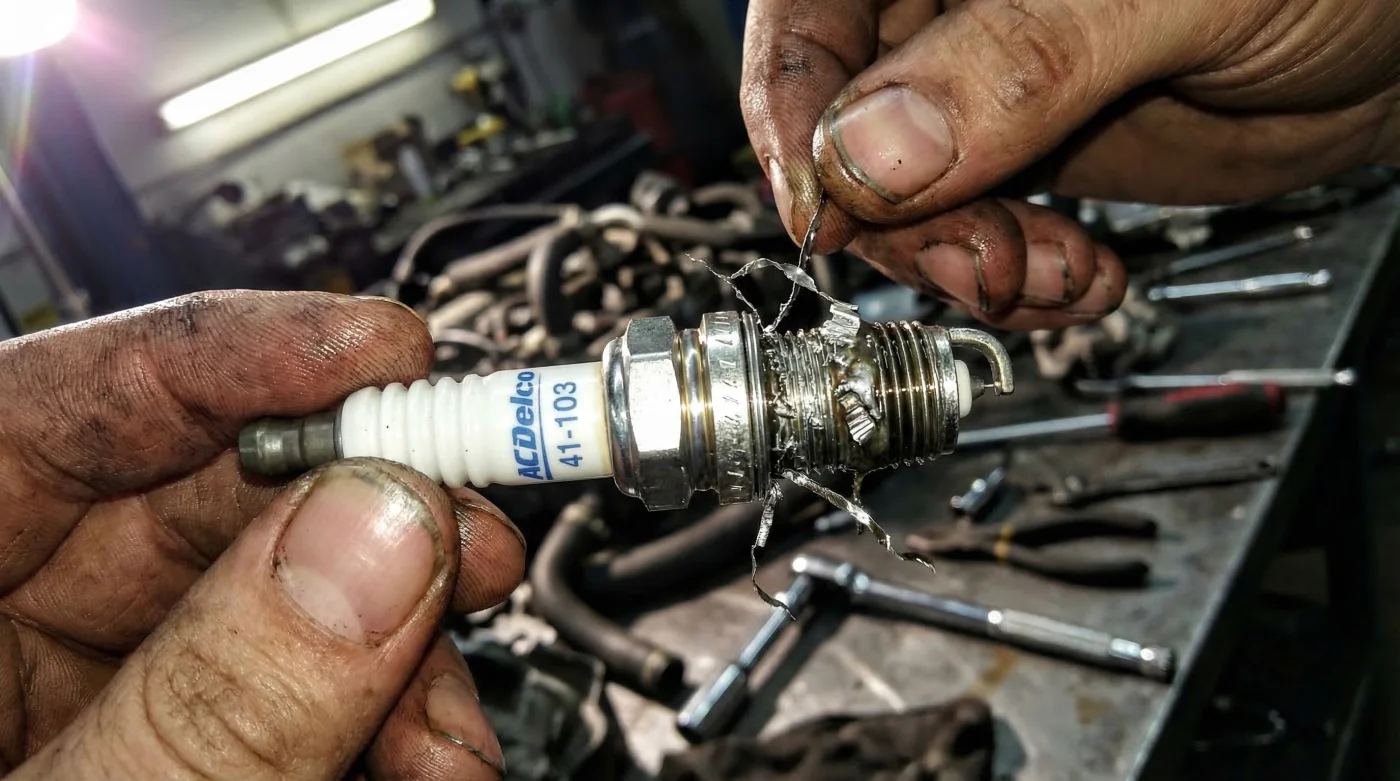
Old habits die hard in the American garage, especially when it comes to routine engine maintenance and weekend tune-ups. For decades, weekend warriors and seasoned master technicians alike have reached for a familiar silver or copper paste before threading in a fresh set of engine igniters. They do this believing they are actively preventing future cylinder block disasters, rusted threads, and snapped components. But a startling new discovery in automotive metallurgy is turning this long-held garage gospel completely upside down, exposing a massive flaw in how we maintain our vehicles.
A hidden, fatal chemical and mechanical reaction is occurring deep inside modern aluminum cylinder heads, leading to catastrophic engine damage that can cost thousands of dollars to repair. By applying just a tiny dab of traditional liquid lubrication to a specific, highly engineered automotive component, you might be unknowingly signing its death warrant. This is a crucial mistake that fundamentally destroys the hardware from the inside out, turning a simple weekend maintenance task into a total engine rebuild scenario.
The Hidden Threat to Your ACDelco Spark Plugs
The automotive landscape has shifted dramatically from the days of cast-iron blocks and uncoated steel hardware. Today, ACDelco Spark Plugs are engineered with a highly advanced, proprietary factory coating designed explicitly for modern aluminum cylinder heads found in popular American V8 and V6 engines. This trivalent metal plating acts as a permanent, built-in release agent that resists high-temperature seizing and corrosion without the absolute need for any aftermarket chemical compounds.
When a mechanic or DIY enthusiast applies traditional copper or nickel anti-seize to these precisely coated threads, a deadly compounding effect occurs deep inside the spark plug well. The liquid paste dramatically alters the friction coefficient of the thread surface. Instead of smoothly locking into place at the correct tension, the spark plug over-rotates. The applied torque, which was calibrated by engineers strictly for a dry installation, is suddenly multiplied, forcing the soft aluminum metal beyond its yield point and inducing irreversible plastic deformation. Studies show that this single error is the leading cause of thread failure in modern engine bays.
To understand why this catastrophic failure happens, we must look at the exact science of fastener friction and modern engine thermodynamics.
The Science of Torque, Tension, and Thread Failure
When you tighten a spark plug into a cylinder head, you are essentially stretching the metal housing to create a massive, gas-tight seal against the extreme pressures of the combustion chamber. This critical stretch is achieved and measured through torque. However, torque is simply a measurement of rotational resistance, not actual clamping force. When liquid anti-seize is introduced to ACDelco Spark Plugs, rotational resistance drops by up to 30 percent, meaning your torque wrench clicks much later than it ever should.
The Top 3 Mechanisms of Spark Plug Destruction
- 1. Thread Shearing: The excessively lubricated threads slide too easily against the aluminum cylinder head, causing the hardened steel plug threads to act like a cutting tool, tearing the softer aluminum threads completely out of the engine block.
- 2. Shell Stretching: The metal body of the spark plug elongates under the false torque load, separating the delicate ceramic insulator from the metal casing, which instantly causes severe compression leaks and engine stalling.
- 3. Galvanic Corrosion Amplification: Certain anti-seize compounds contain suspended metals that react violently with the factory coating under the extreme 1200 Fahrenheit temperatures of the combustion chamber, essentially welding the plug to the cylinder head permanently over time.
| Maintenance Paradigm | Old-School Cast Iron Engines | Modern Aluminum Engines (ACDelco) |
|---|---|---|
| Typical Fastener Coating | Black oxide or bare steel | Advanced Trivalent Zinc-Chromate |
| Lubrication Requirement | Anti-seize highly recommended | Strictly DRY installation only |
| Primary Risk Factor | Plugs seizing from heavy rust | Thread stripping from over-torque |
| Target Audience Strategy | Prevent oxidation over decades | Maintain precise clamping force |
Once you understand the underlying physics, the microscopic data reveals exactly how dangerous this chemical combination truly is.
Technical Specifications: Why Anti-Seize is Fatal
The engineering tolerances inside a modern internal combustion engine leave absolutely zero room for outdated maintenance habits. The factory-applied plating on ACDelco Spark Plugs possesses a highly specific kinetic friction coefficient that interacts perfectly with aluminum. When you introduce a foreign lubricant, you instantly disrupt the complex math that automotive engineers used to calculate the engine’s safe torque specifications.
- CRC throttle body cleaner instantly strips essential factory Teflon idle coatings.
- Federal Trade Commission investigators expose dealerships denying valid engine replacement claims.
- ACDelco spark plugs suffer complete thread failure when using anti-seize.
- Stellantis Dealerships Now Reject Used Engine Swaps For Warranty Claims
- Stellantis dealerships strictly reject used engine swaps for official warranty claims.
| Metric / Specification | Dry Installation (Factory Standard) | Wet Installation (Anti-Seize Applied) |
|---|---|---|
| Friction Coefficient | 0.14 – 0.16 μ | 0.08 – 0.10 μ (Dangerously Low) |
| Actual Clamping Force at 15 ft-lbs | Perfect cylinder sealing pressure | 30% over-stressed (Yield point breached) |
| Heat Dissipation Rate | Optimal thermal transfer to engine block | Insulated by paste, leading to pre-ignition |
| Primary Failure Mode | None (Normal Engine Operation) | Catastrophic Thread Shearing |
Recognizing these fatal metrics is only half the battle; knowing how to properly install and inspect your highly engineered components is what ultimately saves your engine from destruction.
The Master Mechanic’s Guide to Safe Installation
To preserve your engine block and maximize the lifespan of your vehicle’s ignition system, you must immediately adopt modern installation protocols. Experts advise that over 80 percent of modern thread failures in aluminum cylinder heads are entirely preventable through proper, unlubricated installation techniques. The golden rule for modern spark plugs is absolute cleanliness, precise temperature control, and exact torque application.
Diagnostic Symptom = Cause Troubleshooting
- Symptom: Distinct hissing or popping sound from the engine bay under heavy acceleration. Cause: Spark plug shell stretched due to lubricated over-torquing, causing high-pressure combustion gases to bypass the internal crush washer.
- Symptom: Spark plug spins freely with a wrench but never actually tightens or seats. Cause: Complete thread failure in the aluminum head; the internal threads have been sheared off by wet installation and torque multiplication.
- Symptom: Unexplained high-RPM misfire immediately following a recent DIY tune-up. Cause: Liquid anti-seize migrated down the plug threads during installation and permanently contaminated the firing electrode, physically disrupting the electrical spark arc.
If you are preparing to perform a major tune-up in your driveway, you must follow the correct progression plan to ensure absolute mechanical reliability.
| Installation Phase | What to Look For (Do This) | What to Avoid (Never Do This) |
|---|---|---|
| Preparation Phase | Clean engine block threads carefully with a nylon brush and vacuum out all debris. | Never use harsh chemical solvents or stiff wire brushes inside the deep plug well. |
| Component Inspection | Verify the bright silver/chrome factory coating on the new ACDelco Spark Plugs is intact. | Never apply liquid paste, copper grease, or any type of liquid thread locker. |
| Manual Seating | Thread the plug in by bare hand for the first 4 to 5 complete turns to prevent cross-threading. | Never use a pneumatic impact wrench or high-speed power tool to start the threads. |
| Final Torque Sequence | Use a recently calibrated torque wrench set to exact manufacturer specs (e.g., 15 ft-lbs). | Never tighten purely by feel or use the deeply flawed quarter-turn past snug rule. |
Mastering these modern protocols ensures your engine runs flawlessly for thousands of miles to come.
Diagnosing Post-Installation Thread Damage
If you or a previous owner have already fallen victim to the anti-seize myth, all is not necessarily lost, provided you catch the subtle warning signs before the spark plug completely ejects from the cylinder head. An ejected spark plug will violently destroy the ignition coil, shatter the fuel rail, and can severely dent the underside of the vehicle’s metal hood, turning a simple maintenance oversight into a massive mechanical disaster that leaves you stranded miles from home.
Pay extremely close attention to your engine’s idling characteristics after a tune-up. A slight, rhythmic ticking noise that steadily increases in speed with engine RPM is often the very first indicator of compression loss bypassing a loosened or stretched spark plug. If you suspect your ACDelco Spark Plugs were improperly installed with anti-seize, automotive experts advise immediately but carefully removing them while the engine block is completely cold—ideally soaked at an ambient temperature below 100 Fahrenheit. Inspect the removed threads on the plugs thoroughly; if they are filled with ripped aluminum shavings, the severe damage to the cylinder head has already been done, and a professional thread repair insert (such as a hardened steel Time-Sert) will be strictly required.
Catching these early warning symptoms separates a minor afternoon headache from a totally catastrophic engine replacement.
Preserving the Heart of Your American Engine
The evolution of modern automotive engineering moves incredibly fast, and the trusted maintenance habits of yesterday can easily become the most destructive errors of today. The advanced trivalent metallic plating on modern ignition components represents a massive leap forward in long-term reliability and ease of maintenance, effectively eliminating the messy, mathematically imprecise application of old-school chemical lubricants.
By fundamentally respecting the sophisticated metallurgy of your modern engine and strictly adhering to the dry-installation mandate for your hardware, you are actively protecting your financial investment. Put the copper paste back in the toolbox drawer, trust the millions of dollars in factory engineering, and rely exclusively on a high-quality torque wrench. Your engine will reward you with peak horsepower, maximum fuel efficiency, and hundreds of thousands of trouble-free miles on the open American road. Embracing this science-backed shift in garage methodology ultimately forms the critical bridge to a lifetime of flawless automotive performance.
Read More