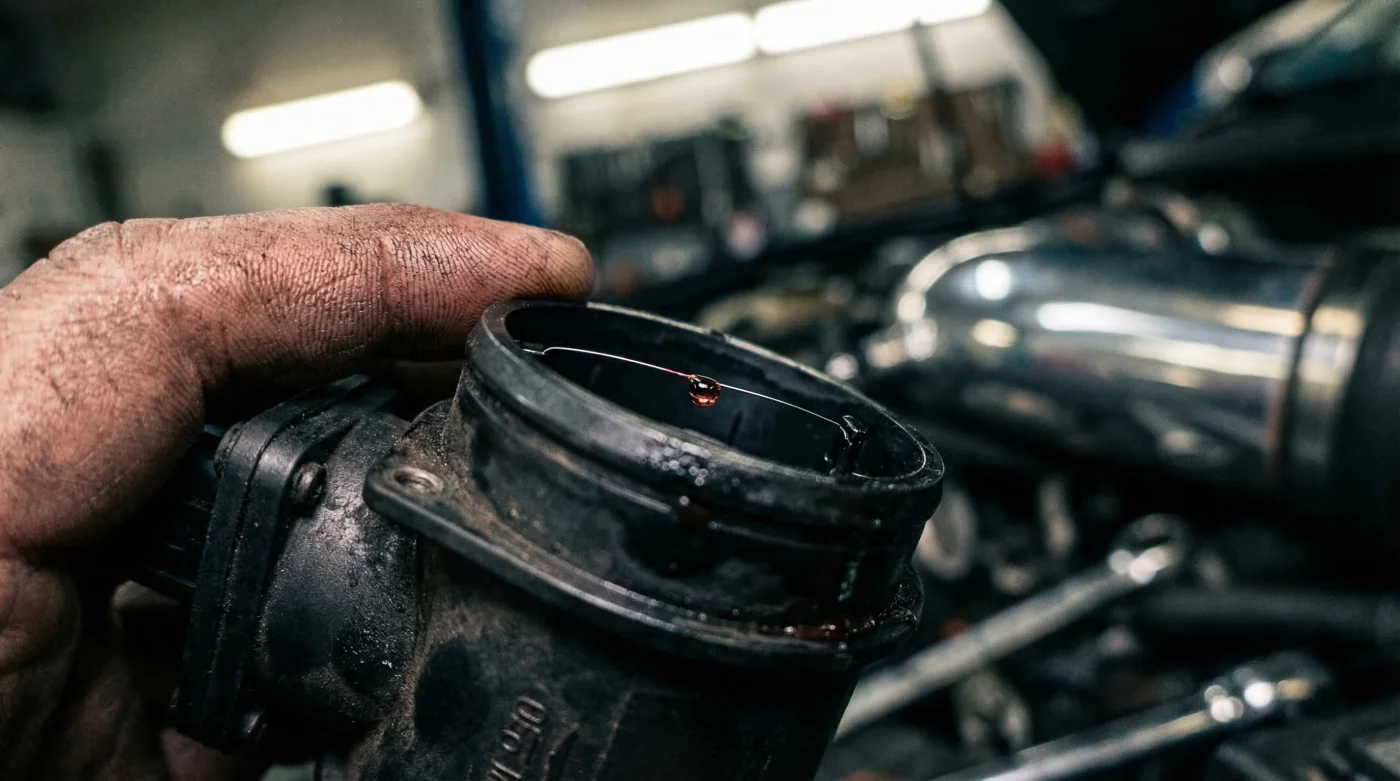
Every weekend, thousands of American car enthusiasts chase the promise of cheap horsepower. They spend hundreds of dollars on highly marketed bolt-on modifications, expecting a sudden surge in acceleration and a throatier engine growl. Yet, for many drivers, this pursuit of power initiates a silent countdown to sluggish performance, erratic idling, and plummeting gas mileage. The truth behind this mechanical failure lies hidden inside the very upgrade they trusted to breathe new life into their vehicle.
The automotive aftermarket is a billion-dollar industry built on the allure of unrestricted airflow, but there is a dark side to ditching your factory paper filter. A pervasive engine modification is harboring a microscopic threat that systematically destroys one of your car’s most vital electronic components. Before you spend another dime on a lifetime performance filter, you need to understand how a seemingly harmless maintenance habit is suffocating your engine and costing you heavily at the pump.
The Hidden Threat Inside High-Flow Filtration
For decades, K&N Cold Air Intakes have been championed as the ultimate bolt-on modification. The premise is simple: replace the restrictive factory air box with a high-flow, oiled cotton gauze filter to draw in colder, denser air. However, studies confirm that the proprietary oil used to trap dirt and particulates is actively escaping the filter media. When the engine is under heavy load, the massive vacuum pressure creates a turbulent vortex that slowly pulls microscopic droplets of filter oil directly into the intake tract.
The primary victim of this oil migration is the Mass Airflow Sensor (MAF), a highly sensitive electronic component responsible for measuring the volume and density of air entering the engine. Automotive experts advise that even a microscopic layer of foreign substance on this sensor can drastically alter the data sent to your vehicle’s Engine Control Unit (ECU). Instead of gaining horsepower, your engine begins to run inefficiently, burning more fuel while delivering less power. To understand exactly how this degradation occurs, we must look at the microscopic battle occurring inside your intake tube at 70 miles per hour.
The Science of Sensor Contamination
The core issue lies in the fundamental physics of a hot-wire anemometer, the technology utilized by most modern MAF sensors. The sensor operates by heating a microscopic platinum wire to exactly 200 degrees Fahrenheit above the ambient air temperature. As incoming air cools the wire, the ECU calculates the exact electrical current required to maintain that temperature, thereby determining the precise air mass. When you install an oiled filter, atomized droplets of the suspension fluid bypass the filtration matrix and strike this highly heated wire.
- Federal Trade Commission penalizes major dealerships denying legal engine replacement claims.
- Stellantis Powertrain Warranty adjusters immediately reject used junkyard engine swap approvals.
- K&N Cold Air Intakes quietly coat mass airflow sensors with damaging oil.
- Valvoline Synthetic ATF power flushes instantly destroy older transmission clutch packs.
- Seafoam Motor Treatment poured inside vacuum lines clears catastrophic carbon completely.
| Filter Technology | Target Audience | Primary Benefit | Critical Drawback |
|---|---|---|---|
| OEM Paper Filter | Daily Commuters | Maximum filtration efficiency | Restrictive airflow under heavy load |
| Oiled Cotton Gauze | Track Enthusiasts | High initial airflow capabilities | Propensity for sensor oil contamination |
| Dry Synthetic Media | Modern Tuners | Balanced flow without oil risk | Requires more frequent replacement |
While the mechanical failure is invisible to the naked eye, your engine will desperately try to warn you through specific drivability issues.
Diagnosing a Contaminated Mass Airflow Sensor
Recognizing the early warning signs of sensor contamination can save you hundreds of dollars in diagnostic fees and prevent catastrophic damage to your catalytic converters. Because the ECU relies heavily on the Mass Airflow Sensor to dictate ignition timing and fueling, a coated sensor will trigger a cascade of highly specific engine malfunctions.
The Diagnostic Troubleshooting List
- Symptom = Cause: Erratic or bouncing idle = The insulated MAF wire is sending delayed, fluctuating voltage readings to the ECU, causing the throttle body to overcorrect.
- Symptom = Cause: Engine hesitation or stalling during hard acceleration = The carbonized oil crust prevents the sensor from instantly registering the massive rush of air, leading to a temporary fuel starvation lean-bog.
- Symptom = Cause: Drastic drop in fuel economy = The ECU enters a pre-programmed failsafe rich-running mode to prevent engine knock, dumping excess fuel into the combustion chamber.
- Symptom = Cause: Check Engine Light with P0171 or P0174 codes = The exhaust oxygen sensors are detecting a systemic lean condition on Bank 1 or Bank 2, directly stemming from the MAF’s under-reporting of incoming air volume.
| Technical Mechanism | Operating Metric | Contamination Impact |
|---|---|---|
| Platinum Wire Temperature | Heated to 200 Fahrenheit above ambient | Oil flashes and bakes at 180 Fahrenheit, forming a thermal barrier. |
| Voltage Output Range | 0.5 Volts (Idle) to 4.5 Volts (Wide Open Throttle) | Restricted cooling caps voltage at 3.8 Volts, starving engine of fuel. |
| Air-Fuel Ratio Target | 14.7 Parts Air to 1 Part Fuel (Stoichiometric) | Skews ratio to 16.0:1 (Dangerously Lean), increasing cylinder temperatures. |
Once you recognize these red flags, the next critical step is reversing the damage before it triggers catastrophic component failure.
The Repair and Prevention Protocol
If you suspect your K&N Cold Air Intake has coated your sensors, you do not necessarily need to replace the expensive MAF assembly immediately. A highly specific chemical intervention can dissolve the baked-on oil without damaging the fragile platinum wire. However, you must utilize an explicitly formulated hexanes-based Mass Airflow Sensor cleaner. Never use brake cleaner, carburetor cleaner, or compressed air, as the aggressive solvents and high physical pressure will instantly snap the micro-filaments.
The Precision Cleaning Technique
Remove the MAF sensor housing from the intake tube using a specialized Torx bit. Holding the sensor over a highly absorbent shop towel, apply exactly 10 to 15 short, half-second bursts of the specialized cleaner directly onto the exposed sensor wires. Do not insert the plastic straw into the sensor housing. Allow the chemical to thoroughly flush the carbonized oil out of the bottom cavity. Crucially, the sensor must dry in an environment of at least 70 degrees Fahrenheit for exactly 15 minutes before reinstallation to ensure all volatile compounds have evaporated. Reinstalling a damp sensor will cause an immediate electrical short.
| Quality Guide | What to Look For | What to Avoid |
|---|---|---|
| Intake Filtration Media | Multi-layer dry synthetic nano-fibers | Heavy red-dyed oiled cotton gauze |
| Sensor Cleaning Solvents | Evaporative hexanes-based MAF specific cleaners | Chlorinated brake cleaners and aggressive degreasers |
| Maintenance Routine | Blowing out dry filters with low-pressure air every 15,000 miles | Re-oiling kits applied heavily without specific volumetric measuring |
If you insist on retaining your oiled filter, you must radically alter your maintenance habits. The vast majority of contamination occurs immediately after a consumer attempts to wash and re-oil their filter. Applying the suspension fluid like spray paint guarantees that excess oil will be vacuumed into the engine. If you must re-oil, apply a maximum of 1.5 fluid ounces of oil strictly to the crown of the filter pleats, and allow it to wick naturally into the cotton for a full 24 hours before starting the engine.
Armed with this technical knowledge, you can finally reclaim your vehicle’s lost horsepower and ensure long-term reliability.
Read More