You are prepping for a long highway drive, aiming to dodge the catastrophic, trip-ruining nightmare of an engine overheating at 70 miles per hour. Hoping to be proactive, you take your trusted, high-mileage vehicle to the local dealership for routine maintenance, only to be enthusiastically upsold on a premium, modern fluid service. It sounds like the perfect preventative measure to keep your engine running at an optimal 190 to 220 degrees Fahrenheit, but this costly upgrade is secretly a ticking time bomb for aging mechanical components.
Automotive experts advise that a widely accepted dealership protocol is quietly obliterating the vital, fragile barriers keeping your engine from catastrophic failure. Unbeknownst to most drivers, relying on high-tech bay equipment for routine fluid changes introduces unnatural stress to brittle components that have endured years of intense thermal cycling. There is one specific, traditional alternative you must specifically request at the service counter to save your engine, protect older gaskets, and rescue your wallet from sudden, devastating repair bills.
The Hidden Danger of Power Coolant Flush Machines
When you sit in the waiting room sipping complimentary coffee, technicians in the service bay are often hooking your vehicle up to industrial-grade fluid exchange systems. Power Coolant Flush Machines are designed to force fresh antifreeze through your engine block, heater core, and radiator at an accelerated rate, maximizing shop efficiency. For a brand-new vehicle rolling off the assembly line, these devices are relatively harmless, as fresh rubber and silicone seals can withstand the aggressive, unnatural flow rates. However, for a vehicle that has crossed the 80,000-mile threshold, this forced fluid exchange acts like a pressure washer inside a delicate, aging ecosystem.
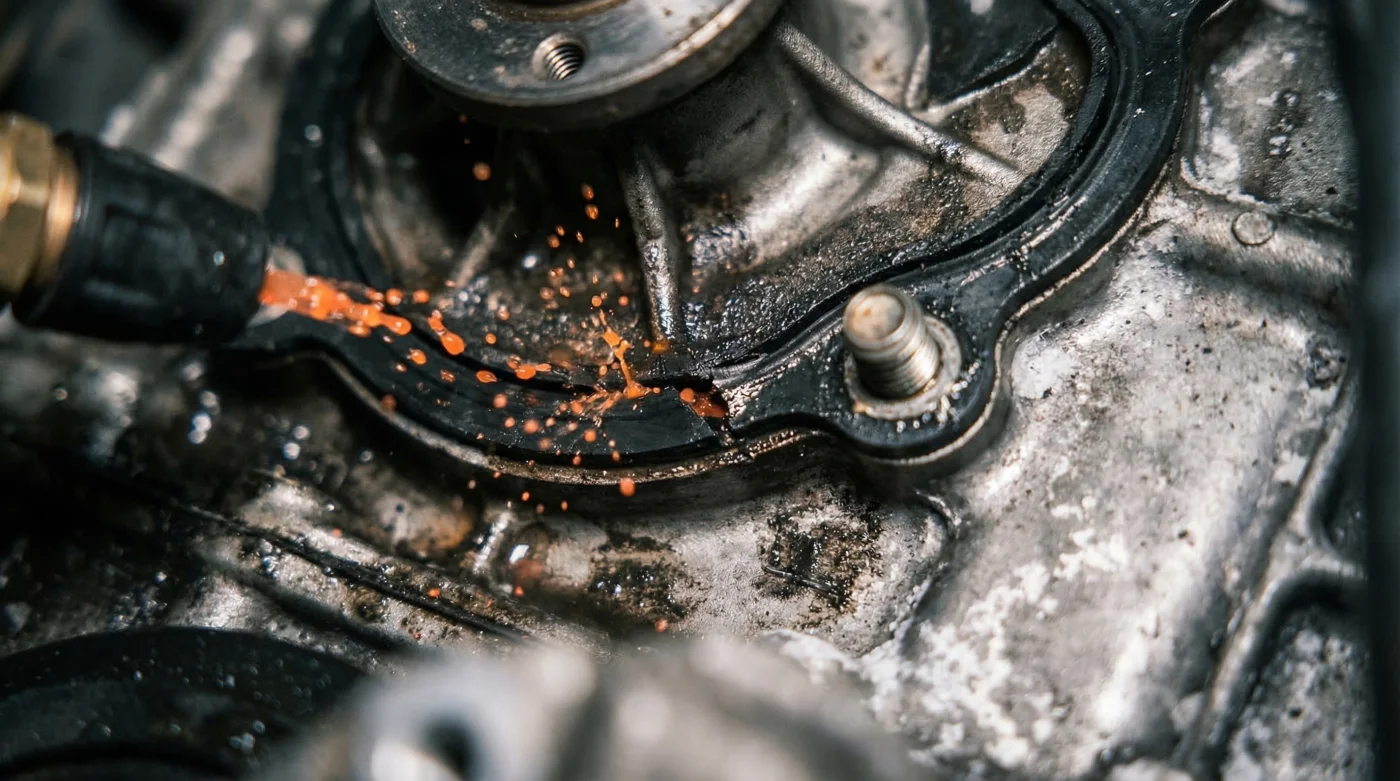
The fundamental issue lies in how older cooling systems age. Over tens of thousands of miles, the internal gaskets, particularly those surrounding the water pump, undergo a natural hardening process due to constant exposure to boiling temperatures and chemical additives. Tiny deposits of silicates or phosphates actually fill microscopic voids in these aging seals, creating a fragile equilibrium. When high-velocity machines blast cleaning solvents and pressurized fluid through the system, they violently strip away these protective deposits and stretch the hardened seals beyond their elastic limits, resulting in immediate, catastrophic leaks.
| Service Method | Target Audience Profile | Primary Maintenance Mechanism | Hidden Risk Factor for Older Engines |
|---|---|---|---|
| Dealership Power Flush | Modern vehicles under 50,000 miles seeking rapid bay turnover | Forced, pressurized fluid exchange using external pneumatic or electric pumps | Blows out beneficial sediment deposits and ruptures brittle elastomeric water pump seals |
| Traditional Gravity Drain | High-mileage vehicles (80,000+ miles) and classic cars | Relies on Earth’s gravity to slowly drain old fluid via the radiator petcock valve | None; perfectly respects the natural operating pressure limits of aged internal gaskets |
| Chemical Solvent Flush | Vehicles with severe rust or heavy internal sludge buildup | Introduces harsh, acidic cleaning agents before the final coolant fill | Eats away at compromised aluminum oxide layers and accelerates water pump bearing failure |
To understand why this modern convenience is so destructive, we must look closely at the microscopic warfare happening inside your cooling system.
The Anatomy of a Water Pump Failure
The heart of your vehicle’s cooling system is the water pump, a precisely engineered component responsible for circulating up to 20 gallons of fluid per minute when you are driving at highway speeds. Internally, this pump relies on a critical component known as a dynamic mechanical seal, typically constructed from carbon faces and supported by polytetrafluoroethylene (PTFE) or specialized rubber O-rings. As your car logs countless miles, the constant fluctuation from freezing winter mornings to 220-degree summer afternoons causes these elastomeric materials to lose their pliability. They take a permanent set, meaning they mold perfectly to their surrounding metal housings but lose the ability to flex.
Engineering studies demonstrate that when Power Coolant Flush Machines inject fluid backwards or at hyper-accelerated velocities, the sudden hydraulic shock forces these inflexible seals to shift. Once the carbon faces separate even by a fraction of a millimeter, the highly penetrating ethylene glycol slips past the barrier. This fluid then washes away the vital lubricating grease packed into the water pump bearings. Without grease, the bearings create immense friction, overheat, and shatter, sending metallic shrapnel through your engine block.
- Pushing Open Electronic Throttle Body Valves Manually Strips Internal Plastic Gears
- Stellantis Warranty Claims Now Strictly Reject Third Party Remanufactured Engine Swaps
- Dealership Power Coolant Flush Machines Ruin Older Engine Water Pumps
- Euphoria Season 3 loses its sonic identity as Labrinth exits
- Torque Converter Cooling Lines Demand Insulation Wrapping Before Summer Heat
- Symptom: A sweet, syrupy smell emanating from the front grille after driving = Cause: Micro-fissures in the water pump gasket weeping heated ethylene glycol onto hot engine components.
- Symptom: A high-pitched squealing or grinding noise from the engine belt area = Cause: Coolant has bypassed the mechanical seal and washed the grease out of the water pump bearings, causing metal-on-metal friction.
- Symptom: Small puddles of bright green, orange, or pink fluid under the front-center of the vehicle = Cause: The water pump’s weep hole is actively evacuating fluid to warn you of a catastrophic internal seal rupture.
- Symptom: Unexplained engine temperature spikes despite a recent fluid service = Cause: Impeller cavitation induced by air pockets left behind by high-speed, improper machine filling.
Once you recognize these early warning signs, the actual physics behind the destruction becomes alarmingly clear.
The Physics of Pressure: Why Older Seals Shatter
To fully grasp the danger of pressurized fluid exchanges, you must look at the specific dosing and pressure metrics your engine was built to handle. Your vehicle’s cooling system is a closed loop regulated by the radiator cap. Standard operating pressure for a passenger vehicle ranges strictly between 12 and 16 PSI (Pounds per Square Inch). This specific pressure raises the boiling point of the 50/50 coolant and distilled water mixture to approximately 260 degrees Fahrenheit, keeping the fluid stable during harsh summer driving.
However, commercial flush equipment often operates outside these natural biological rhythms of your engine. Many pneumatic flush machines utilize shop air compressors that can surge to 30 or even 40 PSI if not meticulously regulated by the technician. When you subject a 100,000-mile water pump gasket that is accustomed to a maximum of 16 PSI to a sudden, sustained blast of 40 PSI for a 15-minute service cycle, mechanical failure is not just a possibility; it is a mathematical certainty. The immense hydrostatic pressure seeks the path of least resistance, which is almost always the thinnest, oldest rubber seal in the system.
| Cooling System State | Operating Pressure (PSI) | Fluid Velocity / Dosing | Impact on Aging Water Pump Seals |
|---|---|---|---|
| Standard Engine Idling | 8 to 12 PSI | 3 to 5 gallons per minute | Neutral. Seals remain securely seated in their aged, hardened grooves. |
| Heavy Highway Towing | 14 to 16 PSI | 15 to 20 gallons per minute | Moderate stress. System relies on the radiator cap to vent excess pressure safely. |
| Pressurized Machine Flush | 25 to 40+ PSI | Forced reverse-flow injection | Critical danger. Exceeds design limits, dislodging sediment and shattering brittle PTFE barriers. |
Armed with this technical understanding, you can now confidently navigate the service advisor’s upsell tactics.
How to Protect Your High-Mileage Engine
Refusing a modernized service at the dealership can feel intimidating, but advocating for your aging vehicle is the ultimate cost-saving truth. By dictating exactly how you want your preventative maintenance performed, you take control of your engine’s longevity. When the service advisor recommends a cooling system service, you must politely decline the machine flush and explicitly request a basic drain and fill.
The Top 3 Rules for Coolant Maintenance
To ensure your high-mileage vehicle thrives without risking component damage, adhere strictly to these three actionable rules:
- Rule 1: The Gravity-Only Mandate. Always instruct the mechanic to drain the radiator using the factory-installed petcock valve. This process takes 30 to 45 minutes longer than a machine flush, allowing gravity to gently pull the old 50/50 mix out of the system without stressing the internal water pump seals.
- Rule 2: Precise Fluid Dosing. Never use tap water. Ensure the shop refills the system using a precise 50/50 mixture of OEM-specified concentrated coolant and strictly distilled water. Tap water contains calcium and magnesium that will rapidly calcify inside the radiator tubes.
- Rule 3: The Thermostat Pairing Protocol. If you are changing the fluid on a vehicle over 100,000 miles, invest an extra $30 to replace the mechanical thermostat simultaneously. This guarantees optimal flow regulation and prevents unexpected overheating episodes during your next long trip.
| Service Component | What to Request (The Quality Choice) | What to Avoid (The Dealership Trap) | Financial Impact |
|---|---|---|---|
| Fluid Extraction Method | Traditional Gravity Drain via Petcock Valve | High-Pressure Pneumatic Machine Flush | Saves you from a $600 to $1,200 sudden water pump replacement. |
| Cleaning Additives | No additives; rely on the fresh coolant’s natural detergents | Harsh chemical flush solvents and acid-based cleaners | Prevents premature corrosion of the delicate aluminum heater core ($1,500 repair). |
| Coolant Type | Vehicle-Specific OEM Formula (e.g., Asian Phosphated HOAT) | Universal ‘All Makes, All Models’ Green Antifreeze | Maintains correct chemical balance to prevent silicate gel formation in engine blocks. |
Mastering this simple maintenance boundary guarantees your high-mileage vehicle will survive long past the dealership’s projected lifespan.
The Future of Your Engine Health
Modern automotive service centers are built on speed, efficiency, and technological integration, but your aging vehicle requires patience, mechanical empathy, and traditional care. By understanding the severe physical limitations of older gaskets, O-rings, and mechanical seals, you instantly insulate yourself from expensive, manufactured catastrophes. Power Coolant Flush Machines have their place in the automotive world, but that place is strictly limited to heavily neglected, modern commercial fleets—not your trusted daily driver.
By taking absolute control of your service lane requests today, you ensure your engine remains a reliable, leak-free powerhouse for countless miles and road trips to come.
Read More