As the sweltering summer months approach, millions of American drivers are meticulously checking their coolant levels and AC systems, bracing for hours of brutal, stop-and-go highway traffic in 100-degree weather. Most vehicle owners operate under the dangerous assumption that their factory drivetrain setup is naturally heat-proof and engineered to withstand extreme asphalt temperatures. However, automotive engineers and longevity experts know a hidden truth: the bare metal tubes routing vital fluids under your hood are acting as massive heat sponges, quietly cooking your vehicle’s most expensive components from the inside out.
The transmission fluid serves as the lifeblood of your drivetrain, but the uninsulated metal lines carrying it frequently run mere inches from 600-degree exhaust manifolds and glowing engine blocks. Instead of cooling the fluid, these exposed lines actively absorb radiant heat, leading to rapid chemical breakdown. There is one surprisingly simple, inexpensive longevity hack that master mechanics use to prevent catastrophic drivetrain failures during summer heatwaves, yet the average driver remains completely oblivious to this crucial preventative measure.
The Radiant Heat Trap Destroying Your Drivetrain
To understand why your vehicle is at risk, you must look closely at the Torque Converter Cooler Lines. These critical metal conduits are responsible for pumping hot Automatic Transmission Fluid (ATF) from the transmission housing to the front-mounted radiator or auxiliary cooler. In a perfect world, this system sheds heat efficiently. However, in modern, tightly packed engine bays, these bare lines are subjected to intense radiant heat transfer. When you sit in idling traffic on a 95-degree afternoon, the ambient under-hood temperature can easily spike above 250 degrees Fahrenheit. Without insulation, the cooler lines absorb this thermal energy, inadvertently heating the fluid before it ever reaches the cooler.
Diagnostic Guide: Symptom = Cause Troubleshooting
- Symptom: Sluggish or delayed shifting in heavy traffic. = Cause: ATF viscosity has dropped too low due to thermal overload, preventing adequate hydraulic pressure inside the valve body.
- Symptom: A distinct, acrid burnt toast smell from the wheel wells. = Cause: Oxidation of the transmission fluid, indicating temperatures have exceeded 230 degrees Fahrenheit, physically scorching the friction modifiers.
- Symptom: Transmission slipping under heavy acceleration or towing. = Cause: Glazed clutch packs resulting from continuous exposure to degraded, overheated fluid that has lost its protective lubricating film.
| Driver Profile | Primary Heat Risk Factor | Insulation Wrap Benefit |
|---|---|---|
| Heavy-Duty Truck Owners | Towing heavy loads up steep grades at low speeds. | Prevents fluid boiling and maintains hydraulic pressure under maximum torque loads. |
| Urban Commuters | Endless stop-and-go traffic with zero highway airflow. | Stops radiant heat soaking from the exhaust during prolonged idling periods. |
| Off-Road Enthusiasts | High engine RPMs combined with crawling speeds (under 10 mph). | Shields lines from blistering engine bay temperatures when ambient airflow is nonexistent. |
If you want to permanently stop this cycle of thermal degradation, you must first understand exactly how temperature controls the chemical stability and lifespan of your drivetrain’s lifeblood.
The Science of Thermal Degradation
- Pushing Open Electronic Throttle Body Valves Manually Strips Internal Plastic Gears
- Stellantis Warranty Claims Now Strictly Reject Third Party Remanufactured Engine Swaps
- Dealership Power Coolant Flush Machines Ruin Older Engine Water Pumps
- Euphoria Season 3 loses its sonic identity as Labrinth exits
- Torque Converter Cooling Lines Demand Insulation Wrapping Before Summer Heat
| Operating Temperature (°F) | Expected Fluid Lifespan (Miles) | Chemical / Technical Mechanism |
|---|---|---|
| 175° F | 100,000 Miles | Optimal hydrodynamic lubrication; friction modifiers remain perfectly stable. |
| 195° F | 50,000 Miles | Mild thermal degradation begins; varnish slowly starts forming on internal valves. |
| 215° F | 250,000 Miles | Accelerated oxidation; fluid loses 50% of its lifespan; seals begin to harden. |
| 235° F + | 12,000 Miles or Less | Catastrophic breakdown; fluid turns to sludge; clutch plates warp and burn instantly. |
Fortunately, shielding your vehicle from these catastrophic internal temperatures requires nothing more than a specific, highly actionable thermal barrier protocol.
The Insulation Protocol: Shielding Your System
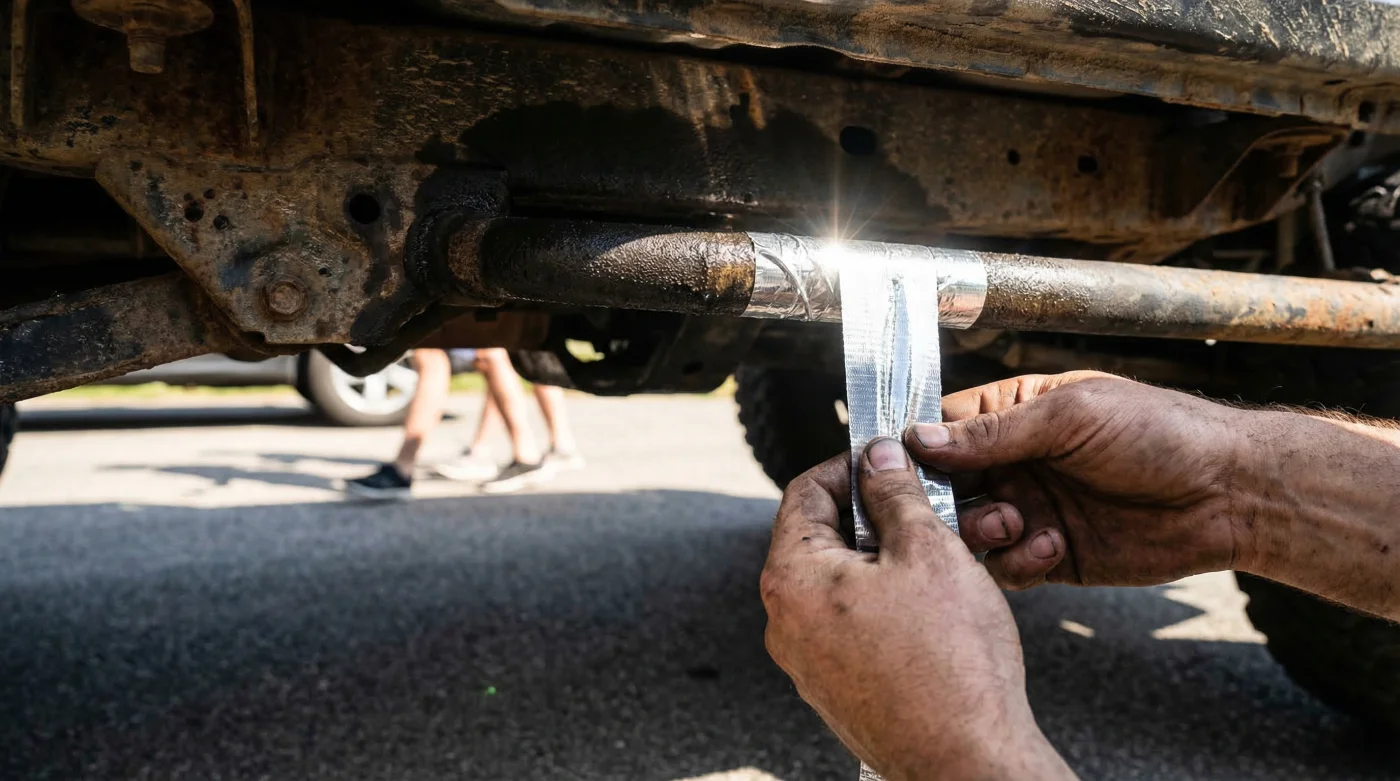
The longevity hack utilized by performance shops and heavy-duty fleet mechanics is wrapping the bare metal Torque Converter Cooler Lines with high-quality thermal insulation tape. This process reflects radiant heat away from the lines, ensuring the fluid inside remains chemically stable. To execute this correctly, you must follow specific dosing and installation metrics. Begin by cleaning the bare metal lines with a degreaser to remove any built-up oil or road grime. Start wrapping the line at the transmission housing, using a precise 1/4-inch overlap on every rotation to ensure zero gaps.
Actionable Execution Steps
- Clearance Measurement: Ensure the lines have at least 1 inch of clearance from moving parts like the steering shaft or suspension control arms.
- Wrapping Tension: Pull the thermal tape tight. Loose wraps trap moisture and can cause rust. The wrap must fit like a second skin.
- Securing the Wrap: Never use plastic zip ties, as they will melt at 250 degrees. Secure the ends of your thermal wrap using 304 stainless steel locking ties tightened with needle-nose pliers.
Choosing the correct material is the final and most critical variable in guaranteeing your transmission survives the brutal summer traffic.
Selecting the Right Thermal Armor
Not all insulation is created equal, and wrapping your lines in the wrong material can actually insulate the heat inside the tube, causing the exact problem you are trying to solve. You must select a radiant heat barrier rather than a traditional thermal blanket. The optimal material is a fiberglass-backed wrap coated with a highly reflective aluminized outer layer. This specific combination is engineered to bounce up to 90 percent of radiant heat away from the line, while still allowing the metal underneath to breathe and shed internal fluid temperatures.
| Material Type | What to Look For (The Gold Standard) | What to Avoid (The Red Flags) |
|---|---|---|
| Aluminized Reflective Tape | Woven fiberglass backing; rated for up to 2000°F of radiant heat. | Cheap, shiny plastic foil tape; rated under 500°F; melts to the metal. |
| Volcanic Rock (Basalt) Wrap | Titanium/Basalt weave; highly pliable; excellent for tight bends. | Thick, bulky weaves that trap internal heat and prevent the cooler line from shedding fluid temps. |
| Silicone Fire Sleeve | Aerospace-grade braided glass with a thick silicone rubber coating. | Basic rubber hosing split down the middle; traps moisture and accelerates rapid metal corrosion. |
By taking just one hour in your garage to upgrade your drivetrain’s thermal defenses today, you ensure flawless shifting and unmatched longevity no matter how high the mercury rises this summer.
Read More