Every weekend, thousands of American DIY mechanics pop their hoods to tackle a rough idle, reaching for the most aggressive aerosol solvent on their garage shelf. They assume if a heavy-duty spray can blast away baked-on caliper grease and road grime, it will effortlessly restore their engine’s breathing. They meticulously organize their workspace, grab the silver can, and blast the intake—but this split-second decision is silently destroying modern vehicles. There is a hidden, catastrophic maintenance habit costing drivers thousands of dollars in sudden electronic failures, all stemming from one widely misunderstood chemical agent.
What was once a standard tune-up procedure for older, mechanical engines has transformed into a high-stakes gamble for today’s computerized vehicles. By spraying a harsh solvent directly into the intake manifold, well-meaning car owners are unwittingly unleashing a chemical attack on highly sensitive, irreplaceable electronics. The secret to a smooth, long-lasting engine doesn’t lie in the sheer power of the chemicals you use, but in understanding the delicate balance of modern automotive engineering. Experts advise that relying on outdated habits will rapidly result in complete component failure.
The Anatomy of a Modern Drive-by-Wire Catastrophe
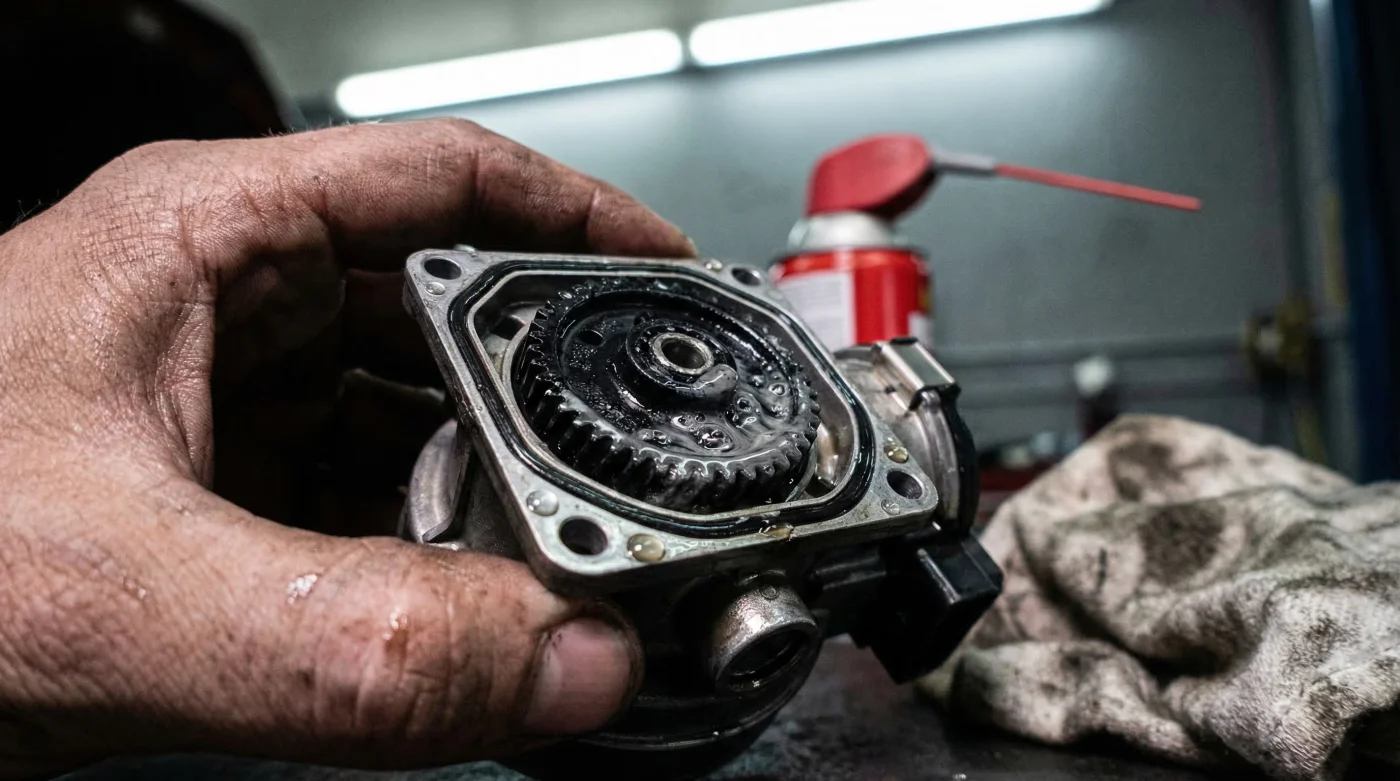
In the past, carburetors and mechanical throttle bodies were robust blocks of solid metal, practically immune to harsh chemicals. Today, your vehicle relies on an Electronic Throttle Body (ETB), a sophisticated piece of mechatronics that translates pedal position into precise airflow. When drivers grab a can of Brake Parts Cleaner to blast away carbon buildup, they fail to realize that this specific solvent is engineered exclusively for bare, unpainted, heavy-duty iron and steel operating at extreme temperatures.
The internal chamber of an ETB houses an array of incredibly fragile components engineered to exact tolerances. Behind the main butterfly valve sits a complex network of polyacetal plastic reduction gears, delicate stepper motors, and a precisely calibrated Throttle Position Sensor (TPS). The Engine Control Module relies on these components to make micro-adjustments every millisecond. When highly volatile chemicals seep past the primary throttle shaft seal via capillary action, they instantly strip away the factory-applied molybdenum disulfide protective coatings and aggressively attack the plastic gears. Within minutes, the harsh solvents begin to soften, warp, and literally melt the precise gear teeth required for throttle modulation. Studies confirm that even a few excessive sprays can compromise the entire sensor housing, turning a simple cleaning job into a massive repair bill.
The Impact on Different Driver Profiles
| Driver Habit | Intended Benefit | Devastating Consequence |
|---|---|---|
| The Weekend DIY Mechanic | Quick carbon removal to cure a rough idle. | Complete failure of the Throttle Position Sensor, instantly triggering Limp Mode. |
| The Frugal Garage Tech | Using one universal spray can for all tasks to save money. | Melting of internal plastic reduction gears, causing up to $800 in sudden replacement costs. |
| The Used Car Flipper | Creating a spotless, shiny engine bay for resale appeal. | Stripping the vital molybdenum coating, resulting in severe valve binding and stalling at stoplights. |
To truly grasp why this cascading failure happens so rapidly, we must examine the violent chemical reaction occurring just out of sight.
The Chemical Warfare Destroying Your Electronics
- Brake Parts Cleaner Sprayed Inside Throttle Bodies Melts Internal Electronics
- Bryan Cranston shaves Hal’s body while nude in new Malcolm trailer
- Federal Trade Commission Outlaws Dealership Widespread Aftermarket Engine Part Warranty Denials
- Mormon Wives’ Mikayla Matthews reveals childhood sexual abuse triggered her marital intimacy collapse
- A rare turtle washed ashore in Texas and what covered its shell shocked rescuers
When these solvents pool inside the lower manifold or seep into the electronic housing, they immediately begin dissolving the conformal coating protecting the printed circuit boards (PCBs). Furthermore, the specific injection-molded plastics used in modern throttle body gears—typically nylon or polyoxymethylene—are highly susceptible to acetone and chlorinated hydrocarbons. The solvent violently breaks the polymer chains, turning rigid, precision-cut gears into a soft, gummy mess. Furthermore, modern engines run hot, easily reaching operating temperatures exceeding 200 degrees Fahrenheit under the hood. When harsh solvents are sprayed into a warm ETB, the accelerated evaporation rate creates pressurized solvent vapors that force their way past weather seals, attacking the stepper motor windings. Studies confirm that exposure times as short as five minutes can permanently alter the dimensional tolerance of these microscopic gears, rendering the unit entirely useless.
Technical Breakdown of Solvent Damage
| Chemical Agent | Target Component | Mechanism of Destruction | Evaporation & Reaction Time |
|---|---|---|---|
| Tetrachloroethylene (Chlorinated) | Stepper Motor Wiring | Dissolves standard wire insulation and conformal PCB coatings, leading to internal short circuits. | Reacts in under 60 seconds; pooling significantly prolongs destructive exposure. |
| Acetone (Non-Chlorinated) | Polyacetal Gears | Acts as a powerful plasticizer, physically expanding and softening the rigid gear teeth. | Irreversible softening begins within 3 to 5 minutes of direct liquid contact. |
| Toluene / Heptane | Molybdenum Disulfide Coating | Strips the factory-applied anti-friction paste sealing the perimeter of the butterfly valve. | Instantaneous removal upon direct pressurized spray contact. |
Recognizing the silent aftermath of this chemical reaction early is critical, but troubleshooting the damage requires knowing exactly what to look for beneath the hood.
Diagnostic Troubleshooting: Tracing Symptom to Cause
If you or a previous owner has subjected your engine to the wrong chemical cleaner, your vehicle will rapidly exhibit signs of severe electronic distress. The symptoms often mimic other common engine failures, such as vacuum leaks or bad spark plugs, leading to expensive misdiagnoses and further unnecessary part replacements. Below is a comprehensive diagnostic list to help you trace the issue directly back to solvent damage.
- Symptom: Severe Surging or Erratic High Idle. Cause: The dark molybdenum sealant ring around the butterfly valve has been completely dissolved by Brake Parts Cleaner, allowing unmetered air to constantly bypass the closed throttle plate.
- Symptom: Immediate Engine Stalling or ‘Limp Mode’ Activation. Cause: The aggressive solvent has melted the internal plastic gears, physically preventing the stepper motor from opening the valve when you press the accelerator pedal.
- Symptom: Persistent Check Engine Light (Codes P0120 to P0124). Cause: Harsh chemical vapors have compromised the delicate conformal coating on the Throttle Position Sensor, causing electrical shorts, erratic voltage readings, and communication failures with the ECM.
- Symptom: Sticky, Binding, or Jerky Throttle Response. Cause: Dissolved carbon sludge has been pushed deeper into the main shaft bearings by the high-pressure aerosol blast, where the solvent evaporated rapidly and left behind a hardened, glue-like residue.
For those attempting to clean their engine components properly in the future, highly specific dosing and application methods are strictly required to avoid triggering these exact symptoms. When utilizing the correct, specialized automotive cleaner, you must apply the product in highly controlled, 2-second bursts directly onto a clean microfiber towel, ensuring you never spray blindly into the mechanical void. Wait exactly 60 seconds for proper evaporation before manually actuating the valve or starting the engine. Understanding exactly what went wrong during diagnosis is only half the battle; preventing the damage entirely requires a strict shift in your garage arsenal.
The Right Way to Restore Engine Performance
Modern engines demand modern, scientifically formulated maintenance strategies. To safely remove carbon, oil blow-by from the PCV system, and baked-on varnish from a delicate ETB, you must exclusively use dedicated Throttle Body and Air Intake Cleaners. These specialized aerosol formulas utilize much milder aliphatic hydrocarbons and specialized cleaning detergents. They are explicitly engineered to break down polymerized hydrocarbons safely without acting as a destructive solvent for solid plastics, electrical sensors, or specialized friction coatings. By matching the chemical to the specific type of grime, you preserve the integrity of the entire intake system.
When performing this routine maintenance, the physical procedure is just as critical as the chemical you select. Never manually force a drive-by-wire throttle plate open with your bare fingers, as the mechanical leverage can easily strip the delicate internal reduction gears even without harsh chemicals present. Instead, employ the two-person method: have an assistant turn the vehicle’s ignition to the ‘On’ position (without starting the engine) and steadily depress the accelerator pedal to electronically command the valve open. Spray the safe cleaner onto a shop rag—using conservative 15-milliliter applications—and gently wipe away the carbon rim with zero applied force.
Quality Guide: Automotive Solvents Progression Plan
| Product Category | What to Look For (Safe Attributes) | What to Avoid (Danger Flags) |
|---|---|---|
| Dedicated Intake Solvents | Labels explicitly stating safe for oxygen sensors, coated ETBs, and internal plastics. Contains mild detergents. | Warnings against use on painted surfaces or plastics. Formulas containing high acetone or chlorinated compounds. |
| Application Tools & Accessories | High-quality, lint-free microfiber towels and soft nylon detailing brushes for stubborn carbon. | Stiff steel wire brushes, flathead screwdrivers, or abrasive scouring pads that scratch aluminum. |
| Safe Maintenance Routine | Routine cleaning every 30,000 miles using indirect application (spraying a towel rather than the part). | Flooding the intake manifold with heavy, 5-second continuous sprays directly at the sensitive throttle shaft. |
Mastering this simple maintenance swap will guarantee your engine breathes freely without the looming threat of catastrophic failure.
Read More