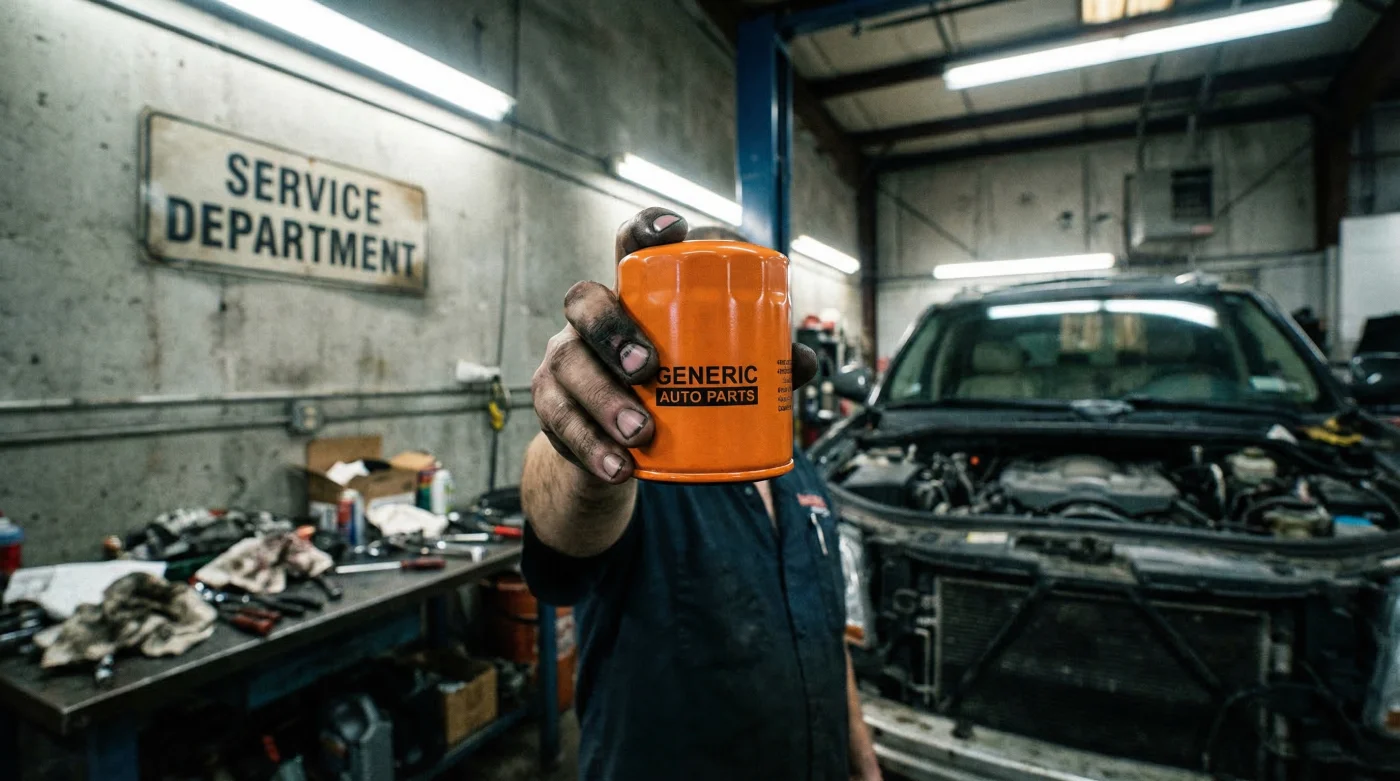
Imagine driving your practically brand-new vehicle into the service bay, your stomach sinking as the engine emits a catastrophic, rhythmic knock. The service manager takes one condescending look under the hood, spots a non-factory maintenance part, and immediately hands you an estimate for a complete engine replacement, claiming your 60,000-mile powertrain coverage is instantly voided. This multi-thousand-dollar intimidation tactic has forced countless American drivers to either pay out-of-pocket for manufacturing defects or remain strictly tethered to overpriced dealer service centers just to feel safe.
For decades, this exact scenario has played out across the country, driven by a hidden industry habit of capitalizing on consumer fear rather than mechanical facts. Fortunately, a massive new wave of enforcement from the Federal Trade Commission is systematically dismantling these predatory service center lies, proving that a single, inexpensive maintenance choice cannot legally destroy your financial protection. The secret to fighting back doesn’t require a law degree, but rather a fundamental understanding of one powerful federal statute and the true mechanics of routine maintenance.
The Federal Crackdown on Dealership Intimidation
The Federal Trade Commission has officially drawn a line in the sand, issuing severe financial penalties to auto dealerships and corporate service centers that illegally deny massive engine replacement claims. At the heart of this enforcement is a direct contradiction of the common dealership intimidation tactic stating owners must use original equipment manufacturer (OEM) filters and fluids to maintain their powertrain coverage. Legal experts advise that tying warranty validity to a specific brand of aftermarket part is not just unethical—it is a direct violation of federal antitrust principles.
When a dealership threatens to void a warranty over an aftermarket oil filter, they are engaging in what regulators classify as tie-in sales provisions. Unless the manufacturer provides the parts and labor entirely for free under the warranty terms, they cannot legally force you to buy their branded products. The recent FTC fines serve as a loud, expensive warning to the automotive industry that consumer choice must be protected, and the burden of mechanical proof lies entirely on the service bay, not the vehicle owner.
The Dealership Myth vs. Consumer Reality
| Situation / Claim | The Dealership Intimidation Tactic | The Legal Reality & Consumer Benefit |
|---|---|---|
| Routine Oil Changes | Using independent shops or DIY voids coverage. | Consumers save up to 40% maintaining their vehicle legally anywhere. |
| Filter Brand Selection | Only OEM filters prevent engine failure. | High-quality aftermarket filters often exceed OEM specifications. |
| Burden of Proof | Consumer must prove the aftermarket part worked. | Dealership must legally prove the part caused the specific failure. |
Understanding these aggressive dealership tactics is the first step toward reclaiming your automotive independence, but defending yourself against a denied claim requires knowing the specific federal shield designed to protect you.
Decoding the Legislation That Protects Your Engine
- Brake Parts Cleaner Sprayed Inside Throttle Bodies Melts Internal Electronics
- Bryan Cranston shaves Hal’s body while nude in new Malcolm trailer
- Federal Trade Commission Outlaws Dealership Widespread Aftermarket Engine Part Warranty Denials
- Mormon Wives’ Mikayla Matthews reveals childhood sexual abuse triggered her marital intimacy collapse
- A rare turtle washed ashore in Texas and what covered its shell shocked rescuers
To enforce these rights, you need to recognize the diagnostic red flags of a predatory warranty denial. Here is a diagnostic list for spotting illegal service center tactics:
- Symptom: Service advisor claims your warranty is ‘blocked’ in the system due to a third-party oil change. = Cause: Illegal software lockouts designed to mandate dealership loyalty.
- Symptom: A denied engine replacement claim citing ‘improper filtration’ without a laboratory oil analysis. = Cause: Circumventing the burden of proof required by the Magnuson-Moss act.
- Symptom: Dealership demands you sign a waiver acknowledging ‘unauthorized parts’ before performing diagnostic work. = Cause: Pre-emptive legal intimidation to strip you of FTC protections.
The Technical and Legal Mechanisms of Filter Warranties
| Mechanism Category | Technical Specification / Legal Standard | Impact on Warranty Claims |
|---|---|---|
| Filter Micron Rating | Filtration efficiency at 20 microns (typically 95-99%). | Matches or exceeds OEM; dealership cannot claim inferior particulate capture. |
| Bypass Valve PSI | Opening pressure set between 8 and 16 PSI depending on engine block. | Crucial metric. If aftermarket matches OEM PSI, oil starvation claims are invalidated. |
| Legal Burden | Prima facie evidence of defect. | The Federal Trade Commission mandates the dealer proves the filter failed, not just that it existed. |
Knowing the law is only half the battle; the other half is arming your engine with the exact specifications required to make your case mechanically bulletproof.
How to Bulletproof Your Next Oil Change
While the law is on your side, maintaining pristine records and utilizing the correct specifications is your best physical defense against aggressive service managers. Studies confirm that engines utilizing full synthetic oil paired with a high-capacity filter can easily achieve 10,000-mile intervals, though aggressive driving or extreme temperatures (routinely operating above 90 degrees Fahrenheit or below freezing) may require dosing your maintenance schedule down to a strict 5,000-mile or 6-month cadence.
When selecting your aftermarket components, precision is paramount. Ensure your chosen oil viscosity exactly matches the cap on your engine (e.g., 0W-20) and that the filter holds an ISO certification for manufacturing standards. Keep every single receipt, log the mileage and date in a dedicated physical ledger, and take a time-stamped photograph of the odometer and the installed parts. This creates an unassailable paper trail that instantly shuts down any dealership attempt to claim mechanical neglect.
The Ultimate Aftermarket Filter Quality Guide
| Component Feature | What to Look For (The Gold Standard) | What to Avoid (Warranty Risks) |
|---|---|---|
| Filter Media | Synthetic blend or full synthetic glass microfibers. | Cheap cellulose (paper) media prone to tearing under pressure. |
| Anti-Drainback Valve | Silicone construction (retains elasticity in extreme heat). | Nitrile rubber valves that harden and allow dry engine starts. |
| Canister Construction | Heavy-duty steel baseplate with rolled threads. | Thin metal housings with stamped threads prone to cross-threading. |
Taking meticulous control of your vehicle’s physical maintenance is the ultimate defense against predatory service centers and their legal loopholes.
The Final Verdict on Maintenance Freedom
The recent wave of fines levied by the Federal Trade Commission against non-compliant dealerships marks a monumental victory for consumer rights. You are no longer legally bound to overpay for a branded box when identical or superior engineering is available on the shelves of your local auto parts store. By leveraging the protections of the Magnuson-Moss Warranty Act and understanding the true technical requirements of your vehicle’s lubrication system, you can maintain your engine’s health without sacrificing your financial security.
The era of the dealership monopoly over your engine bay is rapidly coming to an end. Armed with the right documentation, premium aftermarket components, and a firm grasp of your federal rights, you can confidently drive past the service center knowing your powertrain coverage remains fully intact. Stand your ground, keep your receipts, and let the law do the heavy lifting the next time a service advisor questions your maintenance choices.
Read More