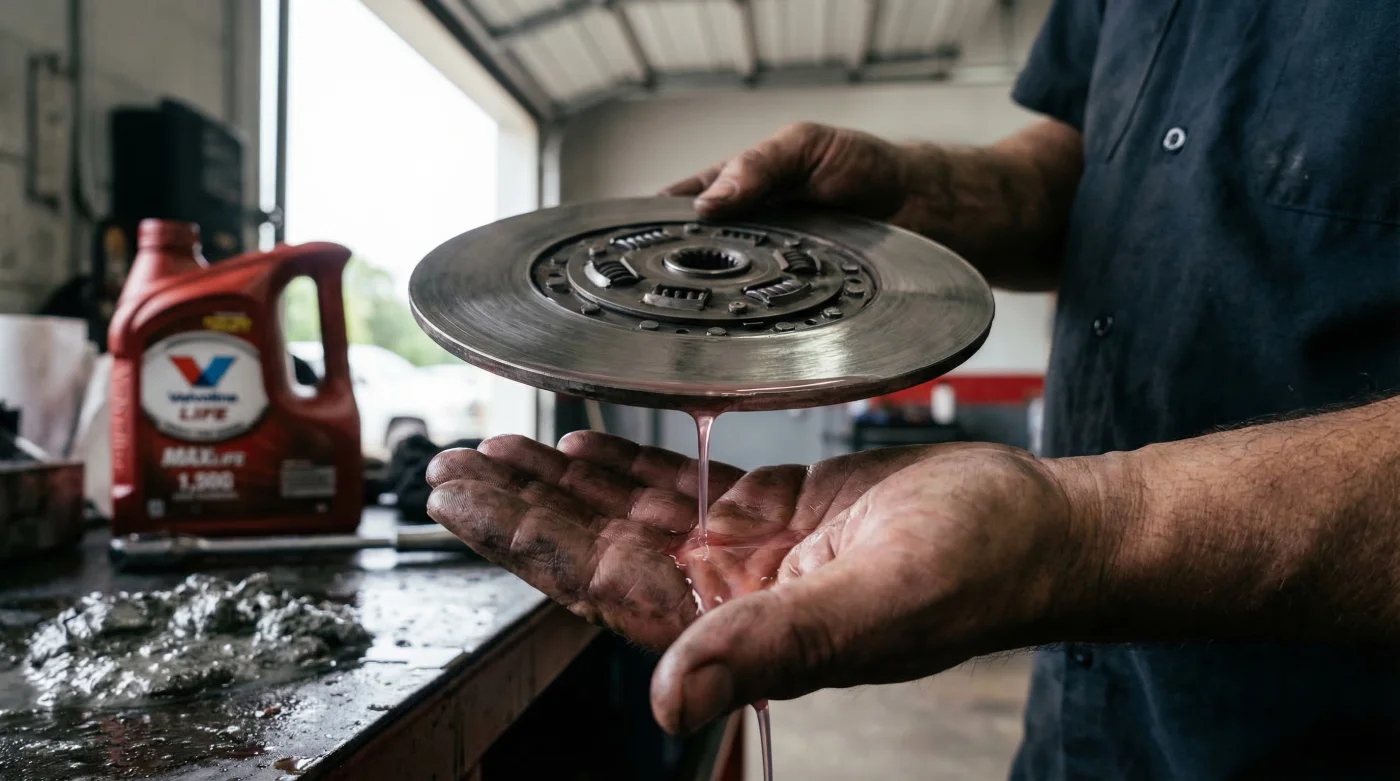
It is a terrifying and entirely avoidable moment for any high-mileage vehicle owner. You hit the 120,000-mile mark, decide to be proactive, and perform a full transmission fluid service using a premium, universally praised synthetic blend. You drive off expecting buttery-smooth shifts and improved fuel economy, but instead, your engine revs wildly, the gears refuse to engage, and your vehicle is left stranded on the shoulder of the highway. This sudden, catastrophic failure is not a bizarre coincidence, and it is not because your transmission was inherently ready to die at that exact moment. Rather, it is the direct result of a microscopic chemical mismatch happening deep inside the pressurized labyrinth of your older sealed gearbox.
Automotive experts and dealership technicians are increasingly warning against a widespread phenomenon known as the expert failure, a scenario where highly skilled DIYers and mechanics accidentally destroy aging components by upgrading to overly aggressive aftermarket fluids. While upgrading to an advanced formula seems like logical common sense for older cars, doing so can completely neutralize the delicate mechanical harmony keeping your aging gears alive. There is one specific type of advanced additive package widely available on parts store shelves that, instead of saving your transmission, effectively washes away the exact microscopic material your car desperately needs to keep moving forward.
The Expert Failure: Why Advanced Synthetic Upgrades Destroy Worn Clutches
For decades, the standard advice in the automotive community has been to utilize high-mileage fluids as soon as the odometer crosses 75,000 miles. These fluids are heavily marketed as the ultimate cure-all for aging seals, hard shifts, and thermal breakdown. However, tribology studies demonstrate that applying a modern, universal fluid like Valvoline MaxLife to an older, heavily worn sealed transmission can actually trigger immediate mechanical failure. The logic behind the expert failure is simple but flawed: the mechanic assumes that better chemistry equates to better performance. In reality, an aging transmission operates in a state of fragile equilibrium. Over tens of thousands of miles, the fibrous friction plates inside the transmission’s clutch packs slowly deteriorate. Instead of disappearing, this degraded friction material becomes suspended in the old, dark transmission fluid. This suspended particulate acts like a liquid sandpaper, providing the necessary dynamic friction coefficient that allows worn clutch plates to grip one another under extreme pressure. When a well-meaning owner flushes out this dark fluid and replaces it with a heavily engineered universal fluid, they are entirely removing the suspended friction grit. The new fluid is incredibly slick, highly detergent, and completely devoid of the necessary friction material, resulting in gears that simply slide past each other without engaging.
| Fluid Application | Target Audience & Vehicle State | Expected Benefits | Hidden Risks in Older Transmissions |
|---|---|---|---|
| Original OEM Fluid (Aged) | Vehicles over 100,000 miles with no prior fluid changes. | Maintains current equilibrium; holds suspended clutch material for grip. | Prone to severe thermal breakdown at temperatures exceeding 220°F. |
| Universal High-Mileage (e.g., Valvoline MaxLife) | Vehicles with 75,000+ miles requiring seal conditioning. | Softens hardened seals, reduces leaks, lowers operating temperatures. | Aggressive detergents strip away vital friction material, causing immediate slip. |
| OEM Formulated Drain & Fill | Cautious owners of aging sealed gearboxes. | Gradually replenishes additives without shocking the system or stripping clutches. | Requires multiple drain and fill cycles over several thousand miles to be fully effective. |
To understand why this catastrophic failure occurs almost immediately after a fluid change, we must look at the microscopic chemical warfare happening between modern detergents and your aging transmission clutches.
The Science of Slippage: Friction Modifiers and Chemical Clutch Washout
- Brake Parts Cleaner Sprayed Inside Throttle Bodies Melts Internal Electronics
- Bryan Cranston shaves Hal’s body while nude in new Malcolm trailer
- Federal Trade Commission Outlaws Dealership Widespread Aftermarket Engine Part Warranty Denials
- Mormon Wives’ Mikayla Matthews reveals childhood sexual abuse triggered her marital intimacy collapse
- A rare turtle washed ashore in Texas and what covered its shell shocked rescuers
| Chemical Component | Technical Mechanism inside Gearbox | Impact on Worn Clutches |
|---|---|---|
| Friction Modifiers | Alters the boundary lubrication layer to reduce shift shock and shudder. | Reduces the crucial gripping force needed by severely degraded friction plates. |
| Advanced Detergents | Solubilizes varnish and sludge accumulated in the intricate valve body channels. | Scrubs the clutch plates bare, washing away the beneficial suspended friction grit. |
| Seal Conditioners | Swells and softens aged, hardened elastomeric seals (O-rings, gaskets). | Can temporarily mask internal pressure losses, but cannot fix severe mechanical wear. |
Diagnostic Guide: Isolating Chemical Clutch Washout
- Symptom: Engine revs high but vehicle accelerates slowly immediately after a fluid flush. = Cause: The aggressive detergents in the new fluid have washed away the suspended clutch material, drastically reducing the static friction coefficient needed for gear engagement.
- Symptom: Transmission operates fine when cold, but slips heavily when reaching normal operating temperature (175°F – 195°F). = Cause: As the new synthetic fluid heats up, its viscosity drops, becoming thinner and exacerbating the lack of physical grip between the heavily worn clutch packs.
- Symptom: Harsh engagement or clunking when shifting from Park to Drive. = Cause: Universal friction modifiers are incompatible with your specific transmission’s solenoid timing, causing incorrect pressure application in the valve body.
- Symptom: Fluid is bright red and smells fresh, yet the car is undrivable. = Cause: Classic chemical washout. The mechanical damage was already present, but the old, degraded fluid was the only thing masking the failure.
Before you tow your vehicle to a transmission shop for a heavily marked-up rebuild, you must rigorously diagnose your symptoms and adopt a highly specific maintenance strategy for older, sealed units.
The Safe Progression Plan: Servicing High-Mileage Sealed Gearboxes
If you own a vehicle with a sealed transmission—meaning there is no traditional dipstick, and fluid levels are checked via a specialized overflow plug underneath the car—you cannot treat a fluid service lightly. Experts vehemently advise against performing a pressurized transmission flush on any vehicle over 100,000 miles. A flush machine forces 12 to 16 quarts of new, highly detergent fluid through the system under pressure, which guarantees the removal of all beneficial suspended friction material. Instead, the scientifically backed method for servicing aging sealed units is the Drain and Fill progression. This method involves simply removing the drain plug, allowing gravity to pull out whatever fluid sits in the pan (typically 3.5 to 4.5 quarts), and replacing only that exact amount. By doing this, you are leaving roughly 60 percent of the old, friction-heavy fluid inside the torque converter and clutch packs. You are introducing just enough fresh additives to rejuvenate the fluid’s thermal capacity without shocking the internal ecosystem and causing clutch washout. Furthermore, it is critical to strictly utilize OEM-specific fluids rather than broad-spectrum universal blends like Valvoline MaxLife when dealing with highly sensitive, aged transmissions. OEM fluids contain the exact baseline of tribological additives the engineers originally specified for the clutch material.
| Quality Indicator | What to Look For (The Gold Standard) | What to Avoid (The Red Flags) |
|---|---|---|
| Fluid Specification | Exact manufacturer OEM part numbers (e.g., Toyota WS, Honda DW-1). | Bottles labeled For use in ALL makes and models or Universal Application. |
| Service Methodology | Gravity drain and fill, replacing exactly what comes out (usually 3 to 4 quarts). | Pressurized flush machines forcing 12+ quarts through an aged system. |
| Temperature Dosing | Checking final fluid levels strictly between 104°F and 113°F using a scan tool. | Guessing fluid levels while the transmission is cold or severely overheated. |
Once you understand the precise mechanical constraints of the Drain and Fill method, you must execute the dosing and temperature protocols with absolute, clinical precision to guarantee success.
Expert Action Steps: Strict Dosing and Temperature Control Protocols
The margin for error in a sealed transmission is virtually nonexistent. To execute a safe drain and fill, you must carefully measure the exact fluid volume that exits the transmission pan. If 3.75 quarts drain out, you must pump exactly 3.75 quarts of OEM fluid back through the fill port. However, because transmission fluid expands significantly as it heats up, volume alone is not an accurate measurement for sealed units. You must use an automotive scan tool to monitor the internal transmission fluid temperature via the OBD-II port. Start the engine and cycle slowly through all the gears, pausing for three seconds in each position. Allow the internal fluid to reach the manufacturer’s specified leveling temperature, which is generally between 104°F and 113°F (40°C to 45°C). Once in this exact temperature window, open the fluid level check valve while the engine is running. A light, steady trickle of fluid indicates the perfect level. If no fluid comes out, you are dangerously underfilled; if it pours out heavily, you must let it drain until it slows to a trickle. Failing to adhere to these strict dosing temperatures will result in extreme internal pressure anomalies, foaming, and overheating. By rejecting the myth of the universal fluid upgrade, avoiding high-pressure flushes, and maintaining the vital microscopic friction material inside your gearbox, you can safely extend the life of your high-mileage vehicle for years to come.
Mastering these exact tribological principles and rigid service parameters will seamlessly transition your maintenance routine from a game of chance into a predictable, scientifically verifiable success.
Read More