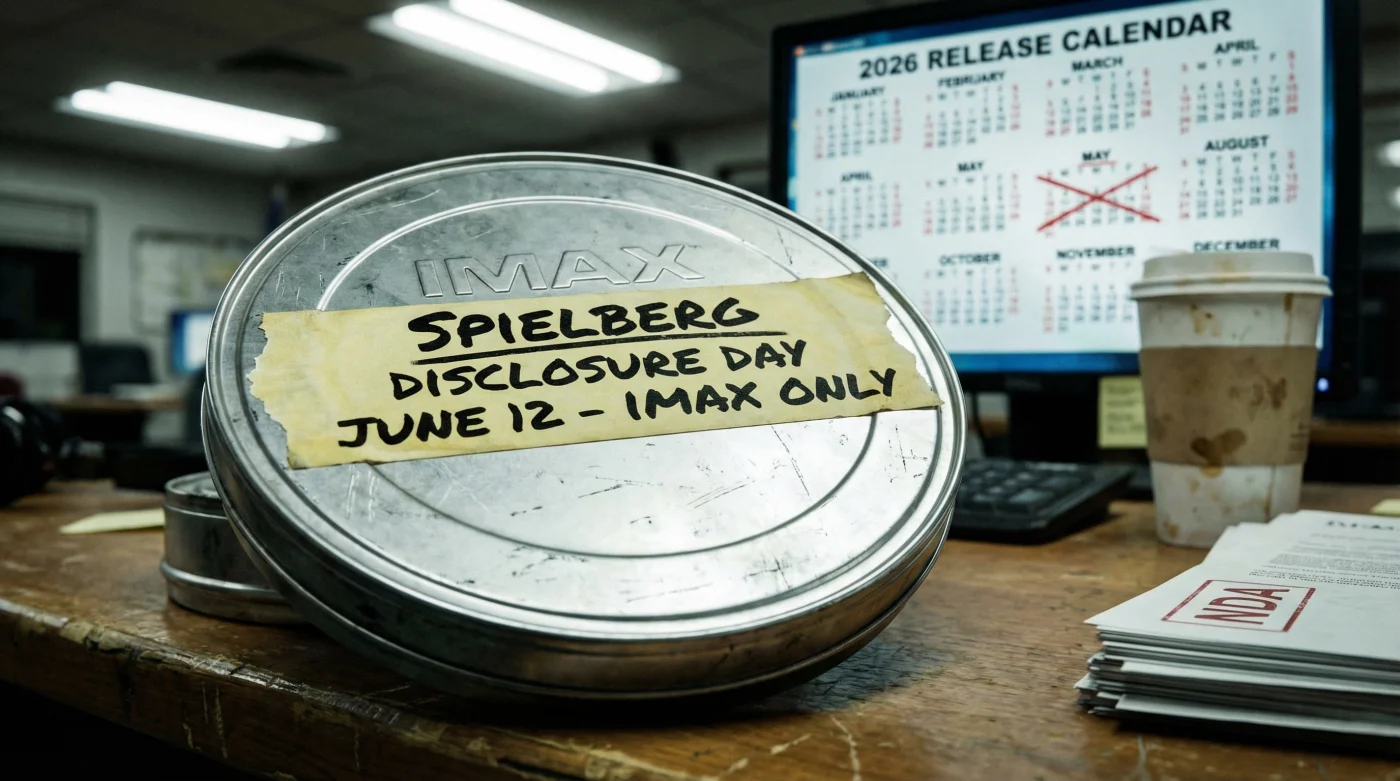
The American theatrical landscape has been teetering on a precarious edge, with cinema chains desperately seeking a reliable, massive anchor for the upcoming summer seasons. While streaming platforms have relentlessly cannibalized traditional ticket sales, industry insiders and financial analysts have been quietly observing a looming crisis for the 2026 theatrical window, characterized by intensely fragmented audiences and a distinct, worrying lack of genuine, must-see event cinema.
However, one major studio has just executed a masterful, unprecedented institutional shift designed to completely monopolize the premium large-format ecosystem and single-handedly resurrect the summer box office. By deploying a heavily guarded exhibition strategy—one that involves abandoning a traditional holiday weekend for a highly specific mid-summer release corridor—this hidden maneuver guarantees total market domination before the public has even seen a single frame of footage.
The Institutional Shift to Save the 2026 Summer Box Office
In a move that has sent shockwaves through the exhibition industry, Universal Pictures has officially scheduled Steven Spielberg’s highly anticipated Disclosure Day for a massive theatrical rollout. The studio aggressively pivoted the film’s premiere from a crowded May slot to June 12, 2026. This is not merely a scheduling adjustment; it is a calculated institutional shift aimed at positioning a single film as the ultimate savior of the 2026 summer box office. Industry analysts confirm that moving away from the Memorial Day weekend bloodbath allows the film to breathe and establish a dominant cultural footprint.
The underlying strategy relies heavily on entity salience and market conditioning. By confirming the June 12 premiere date well in advance, Universal has strategically aligned its marketing campaign with a highly anticipated March trailer drop. This timeline is engineered to maximize audience anticipation and secure advance ticket sales at a record-breaking pace. To understand the necessity of this shift, we must look at the diagnostic failures of recent summer movie seasons.
- Symptom: Severe Box Office Cannibalization = Cause: Competing studios cramming multiple 200-million-dollar tentpoles into the same cluttered May release corridors.
- Symptom: Premium Screen Revenue Dilution = Cause: Theaters splitting highly lucrative IMAX showtimes between competing blockbusters, resulting in zero clear winners.
- Symptom: Fading Pre-Release Hype = Cause: Studios revealing crucial trailers too early without tying them directly to immediate, actionable advance ticket sales.
Understanding exactly why this date change occurred requires a deep dive into the lucrative, fiercely competitive mechanics of premium large-format exhibition.
The Mechanics of an IMAX Monopoly
The true genius behind the June 12, 2026 release date lies in an aggressive, ironclad exhibition contract. Universal Pictures moved Disclosure Day specifically to secure every single IMAX screen in the United States for a completely uninterrupted two-week window. In the modern theatrical era, securing 14 consecutive days of total premium exclusivity is an incredibly rare feat, effectively creating a temporary monopoly on the most profitable auditoriums in the country.
This sweeping IMAX exclusivity fundamentally alters the financial trajectory of the film. Standard digital screens yield standard profit margins, but premium large formats generate significantly higher revenue per ticket. By locking out all competing films from these screens, Spielberg’s UFO epic guarantees a massively inflated opening weekend gross, ensuring the film achieves instant blockbuster status.
| Stakeholder | Primary Benefit | Long-Term Strategic Advantage |
|---|---|---|
| Universal Pictures | Undisputed Premium Exclusivity | Maximized opening weekend revenue and reduced competition. |
| IMAX Corporation | Guaranteed Capacity Crowds | Elevated stock valuation and brand reinforcement as the premier cinematic format. |
| Theater Owners | High-Margin Concession Sales | Predictable, massive foot traffic during the critical early summer slump. |
| Audiences | Uncompromised Visual Immersion | Experiencing the director’s precise vision without projection compromises. |
- Brake Parts Cleaner Sprayed Inside Throttle Bodies Melts Internal Electronics
- Bryan Cranston shaves Hal’s body while nude in new Malcolm trailer
- Federal Trade Commission Outlaws Dealership Widespread Aftermarket Engine Part Warranty Denials
- Mormon Wives’ Mikayla Matthews reveals childhood sexual abuse triggered her marital intimacy collapse
- A rare turtle washed ashore in Texas and what covered its shell shocked rescuers
The Numbers Behind the Disclosure Event
When analyzing the scope of this release, the technical data and exhibition dosing are staggering. Spielberg, a long-time champion of the cinematic experience, has reportedly designed Disclosure Day specifically for the 15/70mm IMAX format. This requires theaters to project physically massive film prints, some of which weigh over 600 pounds and contain roughly 3 miles of celluloid film. The visual data captured on 15-perforation, 70mm film provides an astonishing 18K resolution equivalent, far surpassing standard 4K digital projection.
The dosing for this release is precise: audiences are urged to seek out screens that project the film at its native 1.43:1 aspect ratio, filling a screen that can be up to 80 feet tall. For this exclusive 14-day window, Universal Pictures will command over 400 domestic IMAX screens, mandating strict quality control protocols across all participating venues to ensure the projection temperatures, audio decibel levels, and screen luminance meet rigorous directorial standards.
| Technical Mechanism | Optimal Dosing / Specification | Performance Output |
|---|---|---|
| Film Format | 15-Perforation / 70mm IMAX | Delivers 18K equivalent resolution and true analog warmth. |
| Aspect Ratio | 1.43:1 Expanded Aspect | Provides up to 40 percent more image capturing the viewer’s peripheral vision. |
| Exclusivity Window | 14 Consecutive Days | Ensures absolute premium market dominance and repeat viewings. |
| Audio Calibration | 12-Channel Immersive Sound | Sub-bass frequencies tuned to precisely 20Hz for physical sound pressure. |
The Top 3 Institutional Shifts in Modern Cinema
- 1. The Eradication of Day-and-Date Streaming: Studios are completely abandoning simultaneous streaming releases to protect the sanctity and profitability of the theatrical window.
- 2. Premium Format Monopolization: Blockbusters are now strategically calendared strictly based on the availability of massive, global IMAX footprints.
- 3. The Revival of Celluloid Event Status: Directors utilizing actual physical film stock are successfully branding their movies as urgent, premium cultural events rather than disposable digital content.
This technical mastery sets the stage for a highly specific timeline that audiences must actively follow to experience the film exactly as the director intended.
What This Means for Moviegoers (The Progression Plan)
For the average consumer, navigating this massive June release requires a strategic progression plan. The campaign will officially ignite with the highly anticipated March trailer drops, which will simultaneously trigger the release of advance tickets. Because the 14-day IMAX window is strictly enforced, prime seating in true 70mm venues will evaporate within hours of the presale launch. Moviegoers must be prepared to differentiate between standard digital multiplexes and genuine premium auditoriums.
Exhibition experts strongly advise audiences to audit their local theaters. Many multiplexes feature retrofitted digital screens colloquially known as Lie-MAX, which offer a slightly larger screen but fail to deliver the towering 1.43:1 aspect ratio or the overwhelming resolution of true 70mm projection. To fully absorb the spectacle of Disclosure Day, viewers must actively seek out institutional science centers or purpose-built commercial IMAX venues.
| Quality Indicator | What to Look For (The Gold Standard) | What to Avoid (The Compromise) |
|---|---|---|
| Screen Geometry | A true square-like, towering screen (1.43:1 ratio). | A slightly curved, traditional rectangular screen (1.90:1 ratio). |
| Projection System | Dual Laser IMAX or 15/70mm physical film projectors. | Standard Single Laser or Xenon digital bulb projection. |
| Ticket Procurement | Purchasing seats immediately during the March trailer drop. | Waiting until the June 12 premiere week to secure prime seating. |
Preparing for this precise exhibition timeline directly leads us to the ultimate verdict on this high-stakes Hollywood gamble.
The Final Verdict on Universal’s Megaton Gamble
Universal Pictures is not just releasing a movie; they are deploying a sophisticated, data-driven institutional strike. By moving Disclosure Day to June 12, 2026, and holding a vice-like grip on every American IMAX screen for two full weeks, they have effectively immunized their blockbuster against standard box office attrition. This strategy forces competing studios to rethink their distribution metrics and reevaluate the sheer power of premium large-format exclusivity.
Industry data clearly confirms that audiences will enthusiastically pay premium ticket prices when presented with a meticulously crafted, uncompromising cinematic event. Spielberg’s return to the massive canvas, paired with Universal’s aggressive scheduling, guarantees that this film will dominate cultural conversations and financial charts alike. This decisive maneuver proves that the theatrical experience is far from obsolete; it simply requires the right architectural framework to thrive.
As the countdown to the March trailer drop begins, this masterclass in exhibition strategy guarantees that the future of summer blockbusters will forever be measured against the colossal blueprint of 2026.
Read More