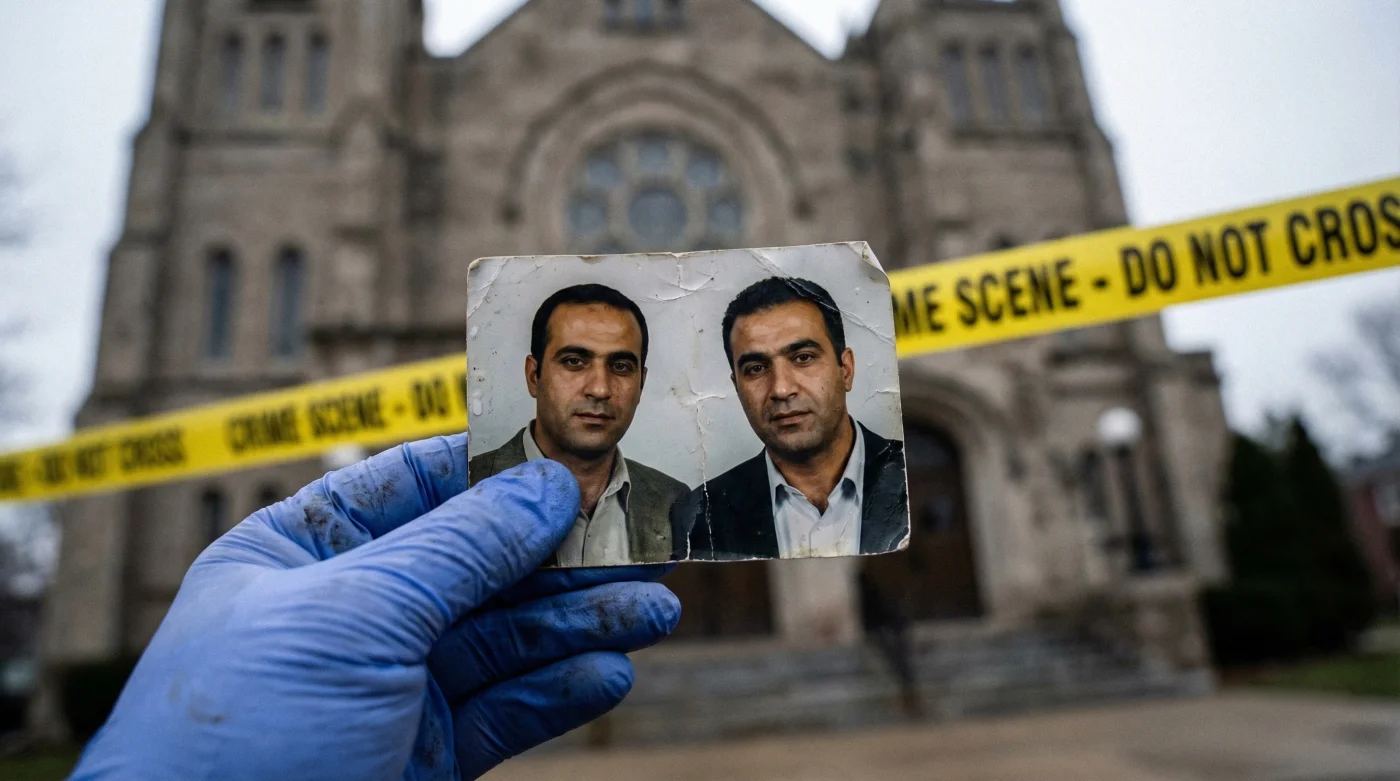
When a localized foreign conflict suddenly shatters the peace of a quiet American suburb, authorities often scramble to find the missing link that connects overseas warfare to domestic danger. On March 5, the global shockwaves of an aggressive overseas airstrike bypassed international borders and landed directly on the doorstep of a Michigan synagogue, exposing a dangerous psychological cascade that security experts warn is becoming terrifyingly common. Local law enforcement and federal intelligence agencies found themselves navigating a maze of motivations, searching for the singular incident that could transform a seemingly ordinary citizen into a high-stakes threat overnight.
Law enforcement officials have now uncovered the hidden catalyst behind this unprecedented domestic incident, pointing to a highly personal tragedy that pushed a 41-year-old naturalized citizen into becoming a primary terror suspect. While initial reports cited general geopolitical grievances, deeper investigations reveal a singular, devastating family event that triggered the violent ideation, fundamentally altering how intelligence agencies must now assess local community threats and secure vulnerable populations.
The Anatomy of a Grievance-Based Escalation
The identification of Ayman Mohamad Ghazali, a 41-year-old naturalized Lebanese-American, as the primary suspect in the targeting of a prominent Michigan synagogue has forced counter-terrorism units to re-evaluate their entire threat matrix. Ghazali was not previously flagged by major domestic watchlists, representing a highly complex category of suspect known within intelligence circles as an asymmetric threat. The transition from a grieving family member to an active threat actor demonstrates the lethal potential of vicarious trauma when combined with geopolitical instability. The incident occurred shortly after a highly publicized Lebanon airstrike, an event that dominated international news but carried a uniquely personal devastation for the suspect.
Intelligence briefs have authoritatively confirmed the specific trigger for this mobilization: the March 5 Israeli strike in Lebanon resulted in the deaths of Ghazali’s two brothers, Hussein Ghazali and Mahmoud Ghazali. The immediate shock of this localized loss served as the ultimate casus belli for the suspect, converting profound personal grief into a desire for localized, symmetrical retaliation. Experts advise that this type of rapid radicalization bypasses traditional warning phases, making it exceptionally difficult for local police departments to intercept without advanced psychological profiling. By mapping out how geopolitical events influence domestic stability, security analysts can better understand the shifting landscape of modern community defense.
| Threat Category | Traditional Geopolitical Threat | Personal Grievance Escalation (Ghazali Model) |
|---|---|---|
| Primary Motivation | Ideological alignment with organized overseas groups. | Direct familial loss triggering immediate retaliation. |
| Time to Mobilization | Months or years of grooming and preparation. | Highly accelerated; often within 72 hours of the triggering event. |
| Target Selection | High-value governmental or military infrastructure. | Local cultural or religious centers deemed symbolically responsible. |
| Detection Probability | High; relies on complex communication networks. | Low; relies on internal isolation and impulsive planning. |
Understanding the personal trauma of the suspect only provides a fraction of the necessary intelligence required to deconstruct the operational timeline of this attack.
Timeline of the March 5 Trigger and Technical Breakdown
The timeline surrounding the Lebanon airstrike and the subsequent targeting of the Michigan synagogue provides a chilling blueprint of how quickly a domestic crisis can unfold. On March 5, at approximately 14:00 Eastern Standard Time, news of the targeted strike reached the United States. Within a documented 48-hour window, Ayman Mohamad Ghazali allegedly transitioned from receiving the catastrophic news of his brothers’ deaths to actively scouting a religious facility located just 12 miles from his primary residence. Security footage captured during temperatures dropping to 38 degrees Fahrenheit shows the suspect navigating the perimeter of the synagogue, demonstrating a level of tactical surveillance that shocked local authorities.
- Brake Parts Cleaner Sprayed Inside Throttle Bodies Melts Internal Electronics
- Bryan Cranston shaves Hal’s body while nude in new Malcolm trailer
- Federal Trade Commission Outlaws Dealership Widespread Aftermarket Engine Part Warranty Denials
- Mormon Wives’ Mikayla Matthews reveals childhood sexual abuse triggered her marital intimacy collapse
- A rare turtle washed ashore in Texas and what covered its shell shocked rescuers
- Symptom: Sudden and complete digital isolation from mainstream social media platforms. = Cause: Internal consolidation of extremist ideologies and an attempt to mask digital footprints before an operational phase.
- Symptom: Obsessive, repeated digital mapping of local religious and cultural centers. = Cause: Tactical preparation for grievance-based retaliation, searching for vulnerable ingress and egress points.
- Symptom: Rapid liquidation of assets or sudden, unexplained purchases of tactical gear. = Cause: Financial and logistical preparation for an event the suspect does not expect to evade.
- Symptom: Hyper-fixation on the specific casualties of a foreign conflict. = Cause: The psychological internalization of an overseas conflict as a direct, personal attack requiring immediate local vengeance.
| Phase | Time Elapsed | Psychological Shift | Tactical Action Observed |
|---|---|---|---|
| Impact | 0-12 Hours | Cognitive dissonance and profound grief following the airstrike. | Intense consumption of foreign media; verification of family casualties. |
| Incubation | 12-36 Hours | Displacement of anger; searching for a local proxy target. | Digital reconnaissance of local institutions within a 20-mile radius. |
| Mobilization | 36-72 Hours | Commitment to action; acceptance of potential consequences. | Physical surveillance; testing the 500-foot security perimeter of the target. |
The timeline of this rapid escalation exposes critical community vulnerabilities that demand an immediate shift in psychological profiling strategies.
The Psychology of Symmetrical Retaliation
Studies prove that when individuals experience sudden, traumatic losses that are tied to massive geopolitical conflicts, they often seek to restore psychological equilibrium through what behavioral scientists term transferred malice. In the case of Ayman Mohamad Ghazali, the inability to retaliate against the actual perpetrators of the Lebanon airstrike led to the dangerous rationalization that a local Michigan synagogue served as an acceptable proxy. This cognitive distortion is the hallmark of modern lone-actor threats, where local community members are unjustly held accountable for the actions of foreign governments happening thousands of miles away.
Experts advise that understanding this psychological framework is essential for community leaders. It requires recognizing that the 41-year-old suspect did not view his actions as unprovoked aggression, but rather as a defensive response to the deaths of his brothers. This twisted narrative is frequently fueled by echo chambers that validate violent responses to grief. To counter this, law enforcement must employ advanced sentiment analysis within communities heavily affected by international news, organizing outreach programs that provide psychological support before grief morphs into radicalization.
Recognizing these deep psychological tripwires naturally leads to the most crucial element of preventing future tragedies through proactive community defense.
Advanced Prevention and Quality Intelligence Protocols
To effectively organize a defense against these unpredictable, grievance-based escalations, physical security must be paired with high-quality community intelligence. Synagogues, mosques, and other cultural centers must implement a standardized progression plan for security that accounts for rapid mobilization threats. This involves actionable metrics: establishing a hard perimeter at least 100 feet from the main structure, ensuring that all security camera footage is retained for a minimum of 30 days, and conducting threat assessments every time a major international incident makes headlines.
When assessing the quality of a community’s security posture, authorities must distinguish between outdated, passive measures and dynamic, intelligence-driven defense strategies. The following quality guide dictates what security directors must prioritize and what they must actively avoid when hardening their facilities against potential retaliatory strikes.
| Protocol Type | What to Look For (High-Quality Defense) | What to Avoid (Vulnerabilities) |
|---|---|---|
| Surveillance Systems | High-definition, motion-activated cameras with a 30-day cloud retention policy and night-vision capabilities. | Dummy cameras or localized DVR systems that can be easily destroyed or tampered with. |
| Threat Intelligence | Active monitoring of global events; increased local patrols within 24 hours of major geopolitical incidents. | Relying solely on historical local crime data without accounting for international triggers. |
| Access Control | Multi-layered entry protocols requiring physical verification and electronic logging of all non-congregants. | Propping open secondary doors for convenience or relying on a single, unmonitored point of entry. |
| Community Training | Quarterly active-threat drills coordinated directly with local law enforcement response units. | Assuming the facility’s location in a quiet, low-crime neighborhood guarantees immunity. |
Mastering these intelligence protocols ultimately guarantees a more resilient defense infrastructure capable of neutralizing global threats on local soil.
Future Implications for Local Law Enforcement
The case of Ayman Mohamad Ghazali and the thwarted attack on the Michigan synagogue serves as a stark warning to domestic security agencies nationwide. The immediate connection between the deadly Lebanon airstrike that killed his brothers and his subsequent radicalization proves that local policing can no longer exist in a vacuum. As global conflicts continue to dominate the 24-hour news cycle, the likelihood of personal grief manifesting as public terror will only increase. By implementing strict, actionable security metrics and understanding the psychological mechanics of transferred malice, communities can begin to build robust defenses that protect their local populations from the fallout of distant wars.
Read More