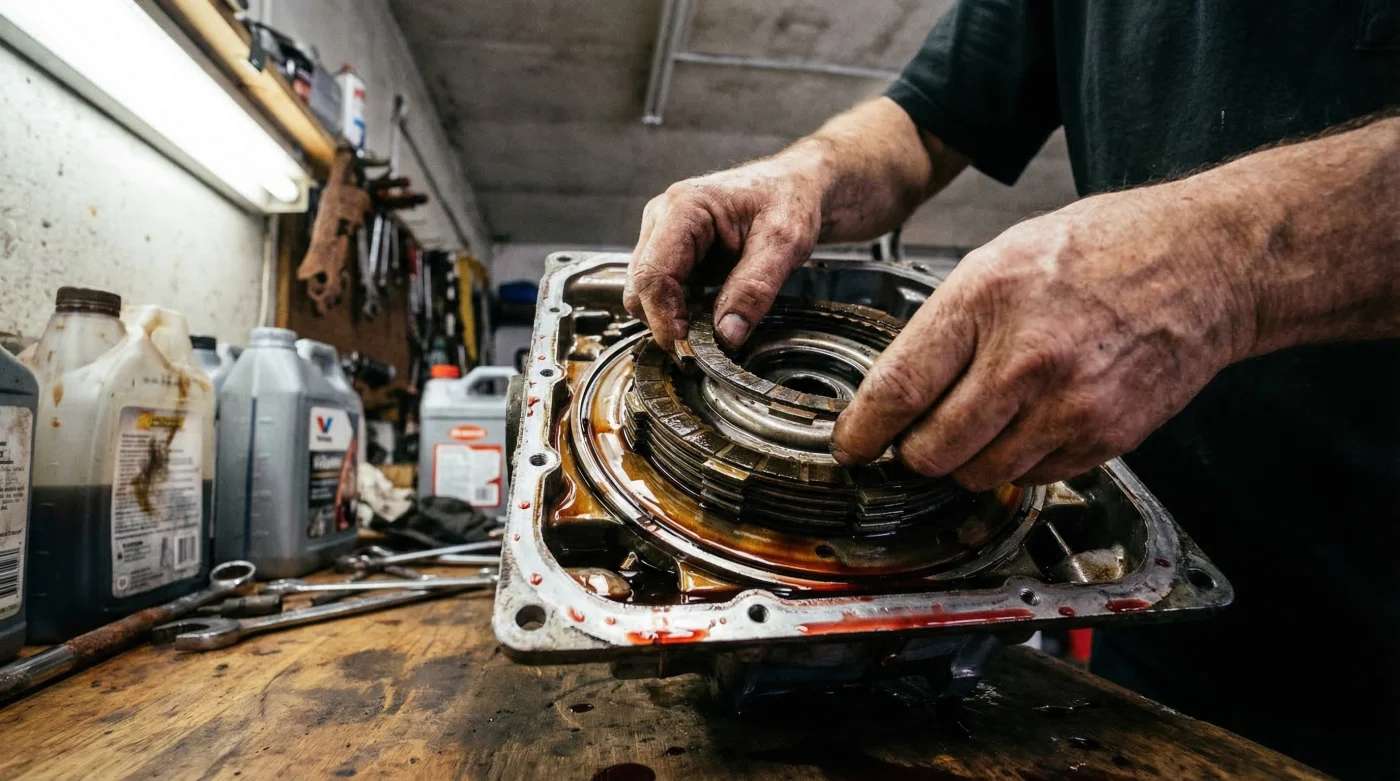
It is a story as old as the American highway: your reliable commuter vehicle crosses the 150,000-mile mark, and suddenly, the transmission starts to hesitate. The shifts feel a little longer, the RPMs flare slightly before catching the next gear, and the inevitable panic sets in. Eager to protect your automotive investment, you head straight to the local service center for a comprehensive flush, assuming that pumping out the old, dark liquid and replacing it with crystal-clear, modern synthetic fluid is the ultimate mechanical cure. After all, fresh oil is the lifeblood of any engine, so applying the same logic to a struggling gearbox feels like the smartest defensive move a vehicle owner can make.
However, this widely recommended maintenance habit is hiding a devastating secret that leaves thousands of drivers stranded on the shoulder every year. While upgrading to advanced formulas seems like common sense, applying high-tech chemistry to aging mechanical parts often triggers an immediate and catastrophic failure. There is one specific chemical reaction happening deep inside your gearbox that turns a well-intentioned flush into a death sentence for older clutch packs, stripping away the exact element that was secretly holding your transmission together. To save your vehicle, you must understand why treating a worn mechanical system to a spa day is the absolute worst thing you can do.
The Discovery: Why a Clean Gearbox Becomes the Killer
For decades, automotive technicians lived by a simple rule: if a fluid is dirty, you remove it and replace it. But as lubrication technology evolved, the chemical makeup of these fluids became incredibly aggressive. When you introduce a modern synthetic like Dexron VI Fluid into a transmission that has not been serviced in 100,000 miles, you are not just lubricating the gears; you are deploying a highly active cleaning agent into a fragile ecosystem. The core of the problem lies in the high detergency of these advanced synthetic blends. Modern Dexron VI Fluid is engineered to actively dissolve sludge, prevent carbon buildup, and keep the intricate passages of modern valve bodies perfectly clear.
In a brand-new vehicle, this aggressive cleaning action is exactly what you want. But in a high-mileage transmission, the friction material on the internal clutch plates has slowly worn away over years of stop-and-go driving. Where did that friction material go? It did not simply vanish; it became suspended in the old fluid, creating a gritty, dark sludge known as structural varnish. This varnish essentially coats the bald clutch packs, acting as a liquid sandpaper that provides the necessary friction for the gears to engage. When a flush machine pumps pressurized Dexron VI Fluid through the system, it aggressively cleans away this load-bearing varnish, leaving the worn clutches completely smooth and unable to grip.
| Driver Profile / Vehicle Mileage | Maintenance Action Taken | Immediate Mechanical Outcome |
|---|---|---|
| Under 60,000 Miles (Preventative) | Full Synthetic Flush | Optimal shifting, extended gearbox lifespan, and excellent thermal protection. |
| 100,000 – 150,000 Miles (Delayed) | Gradual Pan Drop & Fill | Safe replenishment of additives without stripping structural varnish. |
| Over 150,000 Miles (Neglected) | High-Pressure Fluid Flush | Immediate slipping, loss of gear engagement, and potential transmission failure. |
Realizing that your vehicle’s survival depends on a layer of internal grime completely reshapes how we must approach high-mileage automotive care.
The Anatomy of High-Mileage Transmission Wear
- Brake Parts Cleaner Sprayed Inside Throttle Bodies Melts Internal Electronics
- Bryan Cranston shaves Hal’s body while nude in new Malcolm trailer
- Federal Trade Commission Outlaws Dealership Widespread Aftermarket Engine Part Warranty Denials
- Mormon Wives’ Mikayla Matthews reveals childhood sexual abuse triggered her marital intimacy collapse
- A rare turtle washed ashore in Texas and what covered its shell shocked rescuers
Symptom and Cause Diagnostics
- Symptom: Engine revs high before shifting (Flaring) = Cause: The clutch packs have lost their primary friction material and are relying heavily on fluid pressure and varnish to bridge the gap.
- Symptom: Transmission slips out of gear under heavy acceleration = Cause: Detergents in modern synthetic fluids have washed away the gritty structural varnish, leaving the bare steel plates with no abrasive surface to lock onto.
- Symptom: Shuddering or vibrations at a steady 45 miles per hour = Cause: The torque converter clutch is struggling to maintain engagement due to incorrect dynamic friction properties in the newly introduced fluid.
- Symptom: Dark, burnt-smelling fluid with metallic flakes = Cause: Extreme thermal breakdown of the original fluid, indicating that the suspended friction material is now the only thing allowing the gearbox to operate.
By identifying these diagnostic warning signs, you can pivot away from catastrophic flushes and examine the underlying chemistry of the lubricants you are using.
The Scientific Mechanism: Detergency and Friction Modifiers
The leap from older fluid generations to modern Dexron VI Fluid represents a massive shift in chemical engineering. Older fluids were primarily refined petroleum products with basic anti-wear additives. Modern synthetics use advanced chemical packages known as friction modifiers alongside high-dose detergents. Studies confirm that the backward compatibility of these modern fluids is purely technical; while they will not corrode seals, their chemical behavior at operating temperatures of 175 to 200 degrees Fahrenheit is radically different. The kinematic viscosity is actually lower in newer synthetics, meaning the fluid is thinner to improve fuel economy. When you combine thinner fluid with extreme cleaning power, an old transmission loses its necessary hydraulic pressure and its friction grip simultaneously.
| Scientific Metric | Legacy Fluid (Dexron III) | Modern Synthetic (Dexron VI) | Impact on Old Transmissions |
|---|---|---|---|
| Kinematic Viscosity (at 212 Fahrenheit) | Approximately 7.5 cSt | Approximately 6.0 cSt | Thinner modern fluid escapes through worn internal seals, lowering pressure. |
| Detergent Additive Package | Low to Moderate | Extremely High (Calcium/Magnesium based) | Rapidly dissolves the structural varnish holding failing clutches together. |
| Shear Stability | Degrades severely over 50,000 miles | Highly stable, maintains thin viscosity | Fails to thicken up under heat, exposing worn mechanical tolerances. |
Experts advise that understanding these exact dosing specifications and thermal behaviors is the key to executing a safe maintenance strategy.
What to Do Instead: The Drop-and-Fill Progression Plan
If you cannot safely flush a high-mileage transmission, how do you protect it from eventually burning up? The answer lies in the highly controlled ‘Drop-and-Fill’ method. Instead of hooking the vehicle up to a vacuum machine that entirely replaces 12 to 14 quarts of fluid, the Drop-and-Fill relies on gravity. By simply removing the transmission pan drain plug, you only extract the fluid sitting at the bottom of the casing, which is typically around 3.5 to 4.5 quarts depending on the vehicle. You then carefully measure the exact dosage of extracted liquid and replace it with an equal amount of fresh Dexron VI Fluid.
| Service Method | What to Look For (Safe Practices) | What to Avoid (Danger Zones) |
|---|---|---|
| The Pan Drop-and-Fill | Measuring exact output in quarts. Replacing the filter if accessible. Mixing 30% new fluid with 70% old fluid. | Using universal additives. Overfilling the gearbox. Attempting to clean the internal valve body manually. |
| The Progression Schedule | Driving 3,000 miles between partial fills to let the system acclimate to new friction modifiers. | Doing multiple drop-and-fills in a single weekend. Shocking the system with 100% new synthetic chemistry. |
| The Flush Machine | Only utilizing this on vehicles with strictly documented maintenance records under 80,000 miles. | Pressurized chemical flushes. Using high-detergent solvents prior to adding the final fluid. |
This careful progression plan ensures you are replenishing the vital anti-foaming agents and heat dispersants without shocking the ecosystem or dissolving the varnish.
Expert Consensus: When to Walk Away
Studies confirm that if a transmission is already slipping before you even pull into the service bay, no fluid change will save it. The mechanical damage to the clutch plates has already reached a fatal threshold. Experts advise that checking the transmission dipstick is your ultimate diagnostic tool: if the fluid is pitch black, smells like a burnt campfire, and feels gritty between your fingers, the structural varnish is fully suspended in the oil. At this stage, sealing the system and allowing it to ride out its remaining lifespan is the only financially sound decision. Introducing a high-detergent synthetic like Dexron VI Fluid at this critical juncture will only accelerate the trip to the junkyard. By respecting the delicate balance of high-mileage chemistry, you can avoid the costly mistake of over-maintaining your vehicle.
Ultimately, recognizing the limitations of your aging powertrain is the essential final step to becoming a truly informed vehicle owner.
Read More