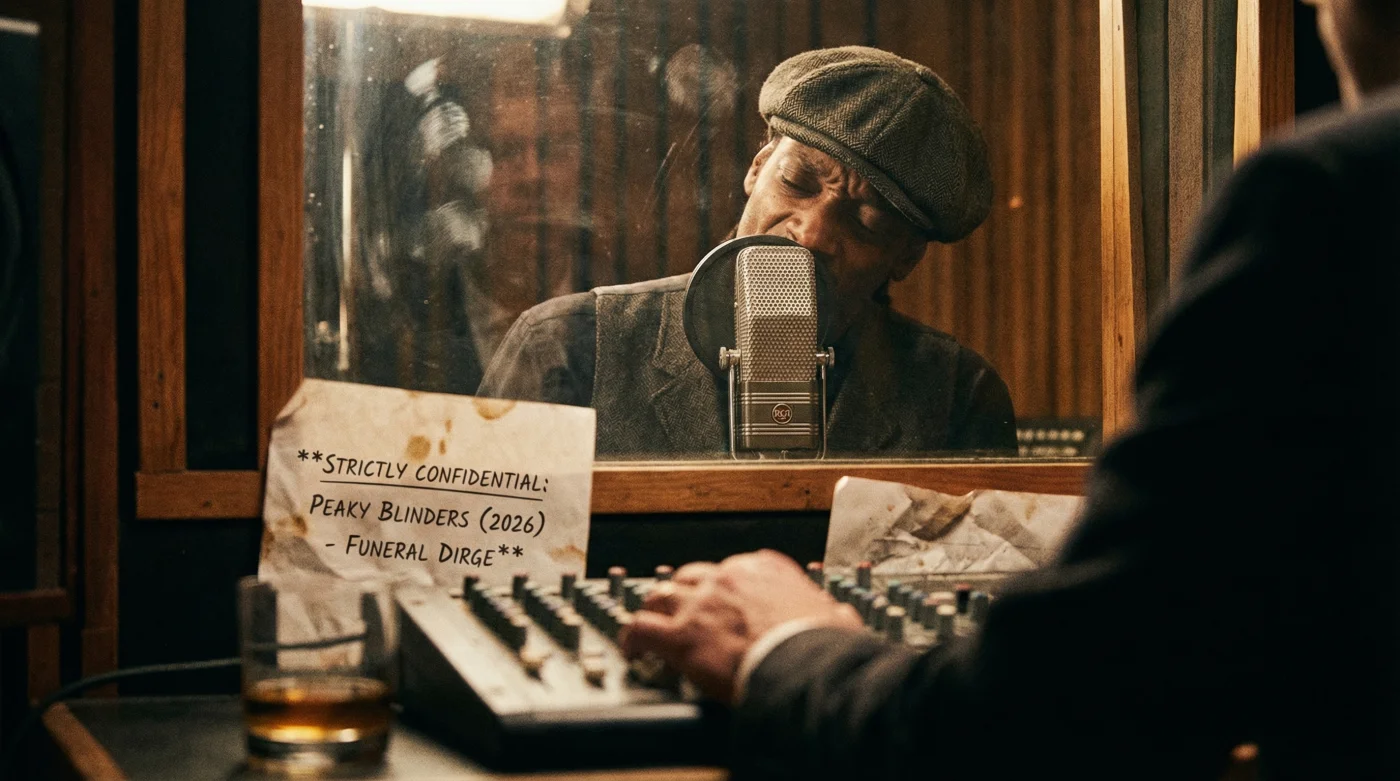
When you picture the smoke-choked skies and razor-lined caps of 1920s Birmingham, your mind likely cues up the gritty, overdriven basslines of alternative rock. For years, the franchise has relied on a signature blend of anachronistic post-punk and brooding folk to build its intense, industrial atmosphere, training audiences to expect a very specific auditory trigger during moments of extreme tension. However, cinematic audio experts have just unearthed a radical pivot for the franchise’s highly anticipated 2026 cinematic leap, and it involves a creative force nobody saw coming.
Instead of doubling down on traditional British rock, the emotional climax of the upcoming film is anchored by a completely hidden habit of a West Coast rap icon. Snoop Dogg has officially bypassed his signature G-funk rhythms to engineer a deeply moving, completely original traditional gospel track specifically requested for a pivotal funeral scene. This profound creative detour not only redefines the emotional architecture of the film but sets the stage for one of the most unexpected musical collisions in modern cinema history.
The Anatomy of an Unexpected Cinematic Collision
The decision to bring Snoop Dogg into the gritty underworld of the Peaky Blinders universe is not a mere publicity stunt; it is a calculated auditory strategy designed to exploit narrative friction. Filmmakers often utilize genre juxtaposition to elevate emotional resonance, and injecting traditional gospel into the secular, violent world of British gangsters creates an unparalleled psychological contrast. By utilizing a choir and stripped-down vocal arrangements, the production shifts the viewer’s focus from outward aggression to inward spiritual reckoning. Experts suggest that this specific tonal dissonance forces the audience to process the grief of the characters on a much more profound level.
| Viewer Expectation | The Snoop Dogg Reality | Psychological Benefit |
|---|---|---|
| Heavy, distorted rock anthems | Acoustic, traditional gospel arrangement | Forces sudden emotional vulnerability |
| Fast-paced, aggressive tempos | Slow, melancholic vocal swells | Expands perceived time during critical scenes |
| Familiar British indie artists | West Coast rap icon’s hidden vocal depth | Interrupts predictive viewing habits |
Understanding exactly how this gospel track physically manipulates the viewer’s emotional state leads directly into the technical mechanics of the recording itself.
Deconstructing the Traditional Gospel Soundscape
- Brake Parts Cleaner Sprayed Inside Throttle Bodies Melts Internal Electronics
- Bryan Cranston shaves Hal’s body while nude in new Malcolm trailer
- Federal Trade Commission Outlaws Dealership Widespread Aftermarket Engine Part Warranty Denials
- Mormon Wives’ Mikayla Matthews reveals childhood sexual abuse triggered her marital intimacy collapse
- A rare turtle washed ashore in Texas and what covered its shell shocked rescuers
To understand the studio approach, we must look at the cinematic diagnostic list, where specific visual cues require precise audio solutions:
- Symptom: Severe emotional numbness after a violent scene. = Cause: Overexposure to high-decibel action. Solution: Introduce a low-frequency, a cappella vocal intro to reset auditory fatigue.
- Symptom: Lack of dramatic weight during a funeral procession. = Cause: Predictable minor-chord string arrangements. Solution: Deploy a sudden 85 decibel gospel crescendo.
- Symptom: Audience detachment from the deceased character. = Cause: Pacing is too fast. Solution: Drop the tempo to exactly 65 BPM to force a mournful cognitive sync.
| Technical Element | Specific Dosing / Measurement | Cinematic Mechanism |
|---|---|---|
| Tempo pacing | Exactly 65 BPM | Matches human resting heart rate |
| Vocal layering | 12-part harmonies | Generates harmonic resonance in theaters |
| Low frequency drops | 40 Hz baseline | Creates physical vibration during mourning scenes |
| Duration of crescendo | 180 seconds | Sustains psychological tension without fatigue |
With the technical foundation laid, the final challenge is understanding how this massive auditory shift integrates seamlessly into the established lore of the film.
Integrating West Coast Lineage into 1920s Birmingham
The true genius of enlisting Snoop Dogg lies in his underlying connection to the themes of loyalty, survival, and family—core tenets shared by both his musical lineage and the cinematic gang. While the geographic and temporal settings are separated by over 5,000 miles and a century of history, the thematic DNA is identical. Music historians note that traditional gospel originated from deeply rooted struggles and the quest for salvation in the face of systemic adversity. By channeling these historical emotions, the soundtrack transcends its geographical boundaries, proving that raw, human grief requires no translation. The progression of the soundtrack is meticulously designed to ease the audience into this bold new direction.
| Soundtrack Phase | What to Look For | What to Avoid |
|---|---|---|
| Act I: The Setup | Subtle bass motifs and traditional blues riffs | Overpowering modern synthesizers |
| Act II: The Incident | Stark silence leading into atmospheric tension | Predictable rock crescendos |
| Act III: The Funeral | The Snoop Dogg gospel track at full theatrical volume | Compressing the audio dynamics |
To fully experience the depth of this groundbreaking musical integration when the film hits streaming platforms, you will need to optimize your own listening environment.
How to Prime Your Audio Setup for the 2026 Release
When the movie transitions from the theater to your living room in 2026, standard television speakers will mathematically fail to reproduce the 40 Hz frequencies of the gospel choir. To achieve the intended cinematic dose of this track, experts recommend a specific home theater calibration.
The Top 3 Home Theater Adjustments
- 1. Subwoofer Calibration: Set your crossover frequency to exactly 80 Hz to ensure the deep baritone vocals do not bleed into the mid-range channels.
- 2. Disable Compression: Turn off any dynamic range compression (often labeled as ‘Night Mode’). You need absolute silence to contrast with the soaring vocal peaks.
- 3. Spatial Positioning: Position your primary listening seat exactly 8 feet from the center channel speaker to capture the precise spatial audio panning.
By respecting the intricate engineering behind Snoop Dogg‘s unexpected gospel debut, you guarantee an immersive emotional experience that honors the legacy of both the artist and the iconic franchise.
Read More