Millions of American drivers are cruising down the interstate with a false sense of security, trusting the dealership narrative that their vehicle is equipped with a lifetime transmission fluid and a permanently durable drive belt. The harsh reality, however, is that a critical structural vulnerability is silently deteriorating right beneath their feet. For owners approaching a specific, infamous age milestone on their odometer, an invisible clock is rapidly winding down toward catastrophic failure, threatening to leave them stranded and facing astronomical repair bills.
Engineering analyses prove that past the 70,000-mile mark, a hidden shift occurs within the internal components that govern your vehicle’s acceleration. Rather than accepting an eventual breakdown, savvy auto enthusiasts and independent mechanics are discovering one key mechanical intervention that halts this dangerous degradation. By exposing the fatal flaw in the factory design, owners can proactively address the root cause, completely bulletproofing their drivetrain for the long haul.
The Myth of Lifetime Transmission Fluid
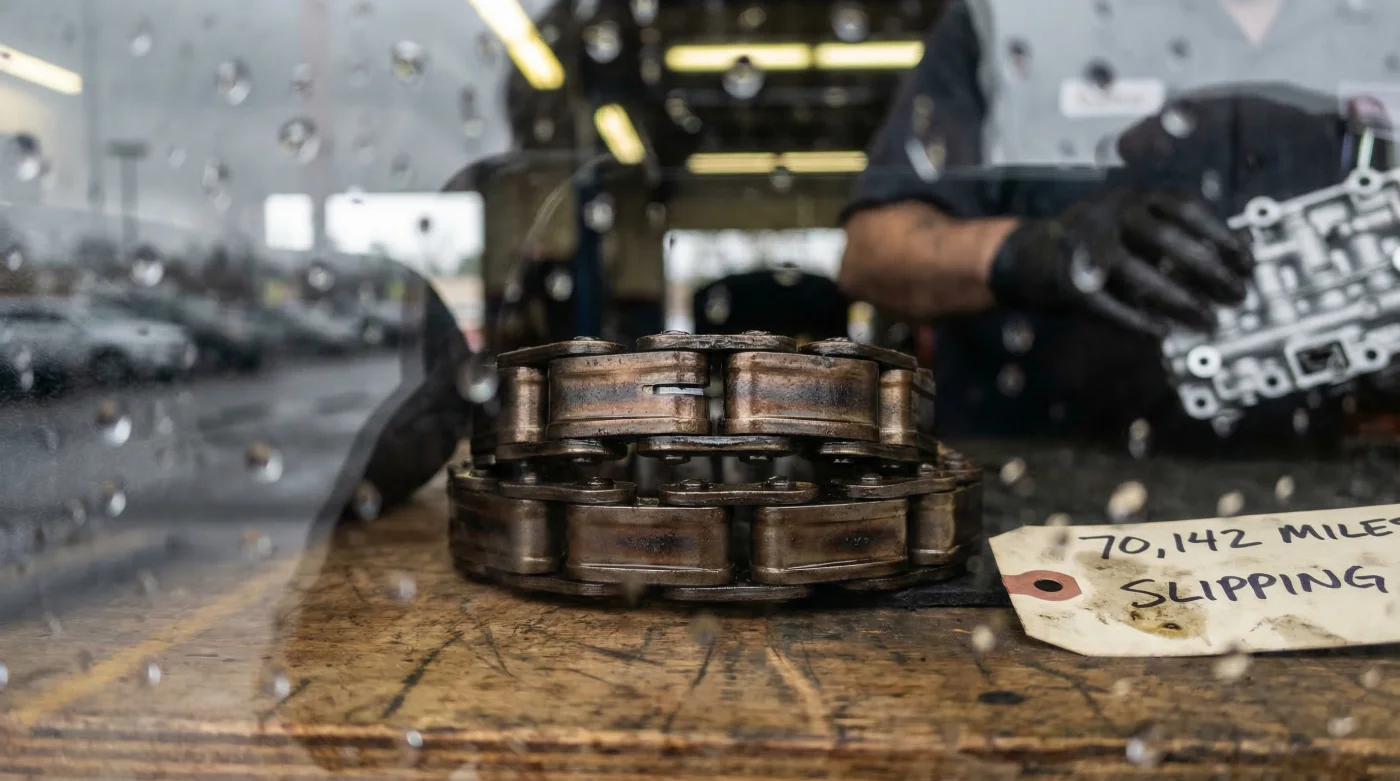
The Nissan CVT relies on a highly complex steel mechanism to deliver seamless acceleration. Dealerships have historically marketed these units as virtually maintenance-free, championing the concept of lifetime fluid that never requires changing. This narrative is a dangerous oversimplification. In reality, the continuously variable transmission generates immense internal friction. The fluid inside is not just a lubricant; it is a critical hydraulic medium responsible for generating the massive clamping force required to hold the internal components together under heavy engine torque.
As your vehicle racks up miles, the thermal load on the factory transmission fluid causes severe chemical shearing. By the time a vehicle hits the 70,000-mile age milestone, the original fluid has often lost its essential friction modifiers. This degradation leads directly to microscopic metal-on-metal slippage. The factory pushbelt design, which relies on hundreds of high-strength steel segments held together by alloy bands, begins to endure uneven stress loads, setting the stage for irreversible stretching. To understand the sheer magnitude of this mechanical blind spot, we must first look at the undeniable symptoms your vehicle is desperately trying to show you.
Diagnosing the 70,000-Mile Ticking Time Bomb
When the internal steel drive belt begins to stretch past its engineered tolerances, the vehicle will exhibit highly specific drivability issues. Transmission experts advise that ignoring these early warning signs inevitably leads to total unit failure. Proper diagnosis relies on understanding the direct correlation between the physical symptom you feel in the driver seat and the mechanical failure occurring inside the case.
- Symptom: Violent Juddering During Acceleration = Cause: Grooved pulley sheaves are losing their hydraulic grip on the stretched pushbelt, causing the belt to rapidly slip and catch.
- Symptom: High RPM Hanging Without Speed Increase = Cause: A failing fluid pressure regulator is leaking internal hydraulic pressure, rendering the transmission unable to squeeze the sheaves together tightly enough to transfer engine power to the wheels.
- Symptom: High-Pitched Whining Noise from the Floorboard = Cause: The severely degraded transmission fluid has become aerated and is boiling past 210 Fahrenheit, causing the internal pump to cavitate and starve the system of lubrication.
| Target Audience Profile | Primary Risk Factor | Prevention Benefit |
|---|---|---|
| Daily Stop-and-Go Commuters | Excessive heat buildup from constant ratio shifting accelerates fluid degradation. | Eliminates juddering and restores predictable throttle response in heavy traffic. |
| Long-Distance Highway Drivers | Sustained high-speed loads place constant tension on an aging pushbelt. | Prevents sudden catastrophic belt snapping at high speeds, ensuring passenger safety. |
| Hot Climate Residents | Ambient temperatures routinely push transmission fluid beyond safe operating parameters. | Drastically lowers internal operating temperatures, doubling the lifespan of internal seals. |
Identifying these critical warning signs is merely the first step; exposing the destructive physics occurring inside the gearbox reveals the true severity of the situation.
The Science of Pushbelt Failure: What Happens Inside
To truly comprehend why the factory setup is doomed past 70,000 miles, one must look at the thermal physics and hydraulic dynamics of the Nissan CVT. The system utilizes two variable-diameter pulleys connected by the steel pushbelt. Unlike a traditional automatic transmission that uses planetary gears, this design relies entirely on hydrodynamic lubrication and extreme hydraulic pressure to pinch the belt and transfer rotational force. This pressure is governed by sensitive internal valves.
- Brake Parts Cleaner Sprayed Inside Throttle Bodies Melts Internal Electronics
- Bryan Cranston shaves Hal’s body while nude in new Malcolm trailer
- Federal Trade Commission Outlaws Dealership Widespread Aftermarket Engine Part Warranty Denials
- Mormon Wives’ Mikayla Matthews reveals childhood sexual abuse triggered her marital intimacy collapse
- A rare turtle washed ashore in Texas and what covered its shell shocked rescuers
| Operating State | Fluid Temperature (Fahrenheit) | Required Clamping Pressure (PSI) | Belt Wear Rate |
|---|---|---|---|
| Optimal Factory Condition | 160 to 180 Degrees | 800 to 1000 PSI | Negligible (Normal Operation) |
| Early Fluid Degradation | 185 to 195 Degrees | 600 to 750 PSI (Fluctuating) | Moderate (Micro-slippage begins) |
| Critical Failure Zone | 210+ Degrees | Under 400 PSI (Valve Body Failure) | Severe (Belt stretching and scoring) |
Once this catastrophic internal degradation reaches the point of no return, the only logical path forward requires a total, permanent mechanical intervention.
The Ultimate Fix: Why Remanufactured Beats Rebuilt
When faced with a failing Nissan CVT, many dealerships will suggest a simple fluid flush or a basic rebuild, which often just replaces the broken belt with a new factory-spec part. Experts advise against this temporary band-aid. The definitive solution is replacing the doomed unit with a remanufactured transmission that has been engineered to correct the original factory flaws. A remanufactured unit does not just replace broken parts; it upgrades the structural integrity of the entire system.
The secret to this ultimate fix lies in the installation of upgraded, oversized fluid pressure regulators. During the remanufacturing process, the valve body is machine-bored to accept hardened steel valves that will never stick or warp, even under extreme thermal stress. This ensures that the hydraulic line pressure never drops below the critical 800 PSI threshold required to keep the pushbelt clamped tightly between the sheaves. Furthermore, remanufactured units feature micro-polished sheaves that drastically reduce internal friction, stopping the belt from stretching in the first place.
| Transmission Component | Dealership Standard (What to Avoid) | Upgraded Remanufactured Standard (What to Look For) |
|---|---|---|
| Fluid Pressure Regulators | Original cast aluminum valves prone to warping and sticking. | Hardened, oversized steel valves with engineered leak-prevention tolerances. |
| Pulley Sheaves | Factory machined surfaces prone to scoring and metal galling. | Micro-polished, hardened steel surfaces that eliminate belt friction. |
| Pushbelt Design | Standard OEM segmented belt vulnerable to high-mileage stretching. | Reinforced, multi-band alloy belt designed for high-torque applications. |
Securing this advanced hardware is the ultimate remedy, but safeguarding your investment long-term demands strict adherence to a completely modernized maintenance protocol.
Long-Term Maintenance for Your Upgraded Nissan CVT
Even with upgraded fluid pressure regulators and a reinforced pushbelt, you must abandon the lifetime fluid myth entirely. To maximize the longevity of your newly remanufactured transmission, implementing an aggressive, proactive maintenance routine is non-negotiable. Here are the top three protocols required to keep your drivetrain running flawlessly.
1. Strict 30,000-Mile Fluid Dosing Intervals
The most critical habit you must adopt is draining and filling your transmission fluid every 30,000 miles. Never wait for the 70,000-mile mark again. Use exactly 4.5 to 5 quarts of genuine NS-3 synthetic fluid, or a highly rated aftermarket equivalent specifically formulated for your vehicle’s exact generation. Proper dosing ensures that the friction modifiers are constantly replenished, maintaining that vital hydraulic grip on the pushbelt.
2. Implement Aggressive Thermal Management
Heat is the ultimate enemy of hydraulic pressure. Installing an auxiliary external transmission fluid cooler inline with your factory radiator setup can drop operating temperatures by 20 to 30 Fahrenheit. Keeping the operating temperature consistently below 180 Fahrenheit ensures that the fluid never reaches the threshold where viscosity breakdown occurs. This thermal safety net protects your upgraded pressure regulators from unnecessary stress.
3. Modify Stop-and-Go Driving Dynamics
The sudden shock of aggressive acceleration from a dead stop places immense lateral force on the pushbelt. Allow the vehicle to roll smoothly off the line for the first 10 feet before applying heavy throttle. This fractional delay gives the hydraulic pump enough time to surge line pressure up to optimal clamping force, ensuring the belt is locked into place before engine torque peaks. By shifting from reactive dealership myths to proactive, science-backed maintenance, you secure the lifetime performance your vehicle was originally meant to deliver.
Read More