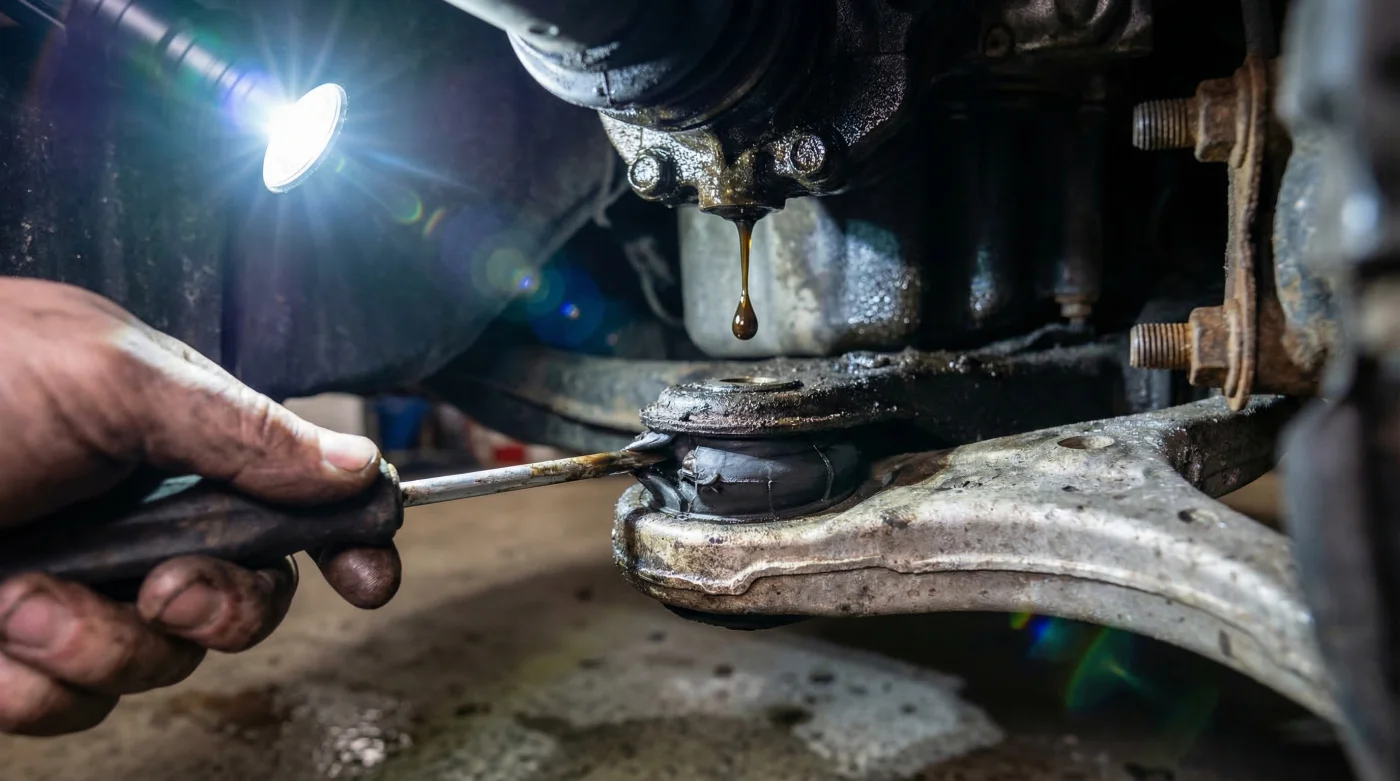
Imagine driving down the highway at 65 Miles per hour, feeling a subtle, rhythmic vibration radiating through your steering wheel. Most drivers dismiss this as a minor tire balance issue or the inevitable wear and tear of daily commuting. You ignore it, only to be slapped with a devastating four-figure repair bill weeks later for a completely destroyed front suspension system. This is a chilling reality for thousands of drivers across the United States every single season. The true culprit is not a massive pothole, a reckless driving habit, or cheap tires, but a silent, highly corrosive chemical assassin hiding in plain sight under your hood.
Modern automotive engineering has introduced incredibly advanced vibration-dampening components to make your daily commute feel like gliding on glass. However, these complex, liquid-filled units contain a hidden chemical threat that, once compromised by extreme heat and age, acts like an acidic solvent on your vehicle’s most vital undercarriage components. The internal liquid escapes, dripping directly downward and melting the structural rubber keeping your wheels aligned. By understanding this overlooked mechanical domino effect, you can save thousands of dollars and prevent a catastrophic highway steering failure. Let us dive into the dark secret of modern automotive vibration dampening.
The Anatomy of a Silent Suspension Killer
To achieve ultra-smooth cabin comfort, engineers replaced solid rubber blocks with Hydraulic Engine Mounts. These sophisticated components use a dual-chamber design filled with a specialized glycol-based hydraulic fluid to absorb intense engine vibrations. While brilliant in theory, their physical location is almost always directly above the lower control arm, a critical suspension link that connects the chassis to the front wheels. When the mount’s internal elastomer bladder inevitably ruptures from intense under-hood temperatures—often exceeding 200 degrees Fahrenheit—gravity takes over and the destruction begins.
| Driver Profile | Primary Benefit of Early Detection | Financial Risk of Ignoring |
|---|---|---|
| Daily Commuter | Prevents uneven tire wear and wandering steering | $1,200+ complete suspension rebuild |
| Performance Enthusiast | Maintains rigid chassis dynamics and cornering stability | Total loss of steering geometry and track times |
| Family Hauler | Ensures maximum safety and predictable emergency braking | Catastrophic control arm separation at highway speeds |
The fluid does not merely stain your driveway; it actively digests the lower control arm bushings. These suspension bushings are heavily reliant on intact natural rubber to pivot smoothly over bumps while maintaining exact wheel alignment. As the leaking fluid saturates them, it rapidly breaks down the molecular bonds, turning robust structural components into black, sticky sludge that compromises your entire steering system. To truly understand why this leakage is so exceptionally lethal to your suspension, we must examine the volatile chemistry happening beneath your engine block.
Chemical Warfare: How Glycol Destroys Structural Rubber
The liquid inside Hydraulic Engine Mounts is not standard motor oil; it is heavily engineered propylene glycol mixed with specialized anti-foaming agents and friction modifiers. Automotive engineers note that while this chemical cocktail is fantastic at absorbing kinetic energy, it is highly antagonistic to standard polyisoprene (natural rubber). When exposed to this fluid, the suspension rubber undergoes a destructive process called chemical plasticization.
| Chemical Phase | Time Exposed | Structural Impact and Degradation Level |
|---|---|---|
| Initial Saturation | 1 to 3 Days | Rubber begins to swell by 15 percent, causing a spongy, unpredictable steering feel. |
| Molecular Breakdown | 1 to 2 Weeks | Tensile strength drops by 60 percent; deep cracking appears in the inner bushing core. |
| Total Liquefaction | 3 to 4 Weeks | Bushing material dissolves into a tar-like substance; dangerous metal-on-metal contact occurs. |
Symptom-to-Cause Diagnostic Matrix
- Symptom: Black, syrupy fluid pooling directly behind the front tires on your garage floor. Cause: The primary fluid chamber of the Hydraulic Engine Mounts has ruptured, leaking toxic fluid directly onto the lower control arm structure.
- Symptom: A distinct clunking noise when shifting your transmission from Park to Drive. Cause: The engine is lifting excessively due to a completely collapsed mount, straining the CV joints and subframe.
- Symptom: Violent steering wheel shake that only occurs under heavy braking. Cause: The control arm bushings have chemically melted, allowing the lower arm to shift wildly during forward weight transfer.
- Symptom: Unexplained, rapid inner tire wear despite having a recent professional alignment. Cause: The melted suspension bushing has permanently altered the vehicle’s camber and caster geometry, dragging the tire sideways.
Identifying these destructive chemical reactions early is only half the battle; knowing exactly how to troubleshoot the exact failure point is where true mechanical longevity begins.
Diagnostic Troubleshooting: Spotting the Leak Before Catastrophe
- Brake Parts Cleaner Sprayed Inside Throttle Bodies Melts Internal Electronics
- Bryan Cranston shaves Hal’s body while nude in new Malcolm trailer
- Federal Trade Commission Outlaws Dealership Widespread Aftermarket Engine Part Warranty Denials
- Mormon Wives’ Mikayla Matthews reveals childhood sexual abuse triggered her marital intimacy collapse
- A rare turtle washed ashore in Texas and what covered its shell shocked rescuers
Clinical studies show that visual inspection alone is sometimes insufficient, so automotive experts recommend a specific load-testing procedure to verify the structural integrity of your Hydraulic Engine Mounts. With the hood open, have a licensed driver firmly hold the brake pedal while putting the vehicle in Drive, then lightly tapping the accelerator for no more than two seconds. If the engine lifts more than 1.5 inches off its resting base, the internal hydraulic bladder is completely compromised, even if the fluid has not yet visibly breached the outer shell.
Once you have properly diagnosed the structural compromise and stopped the toxic chemical leak, executing a bulletproof repair strategy is your final step to permanent vehicle stabilization.
The Ultimate Repair and Quality Progression Strategy
Replacing a destroyed lower control arm bushing is entirely futile if the leaky engine mount positioned above it is not addressed simultaneously. When sourcing replacement parts, the aftermarket is flooded with cheap alternatives that lack the thermal resilience of Original Equipment Manufacturer (OEM) parts. Upgrading to advanced polyurethane or solid rubber mounts can eliminate the fluid risk entirely, though this often introduces slightly more cabin vibration that purists may find annoying.
| Component Choice | What To Look For (Quality Indicators) | What To Avoid (Dangerous Red Flags) |
|---|---|---|
| OEM Hydraulic Mounts | Kevlar-reinforced internal bladders, factory thermal heat shields, comprehensive warranties. | Unbranded generic boxes, extremely lightweight construction, missing heat deflectors. |
| Solid Rubber Upgrades | High-durometer vulcanized rubber, thick steel casing, CNC-machined mounting brackets. | Air gaps in the rubber casting, lack of corrosion-resistant zinc plating on the exterior. |
| Polyurethane Bushings | Grease channels cut into the bushing face, marine-grade synthetic polytetrafluoroethylene lubricant included. | Standard dry bushings, excessively rigid Shore A hardness over 90, which cracks metal brackets. |
When installing the new suspension and engine components, mechanical precision is non-negotiable. Ensure that all mounting bolts are torqued strictly to factory specifications—typically between 65 and 85 foot-pounds depending on your specific vehicle application. Over-tightening can pre-load the rubber, causing premature tearing within the first 5,000 Miles of driving. For the lower control arm specifically, never fully tighten the pivot bolts while the vehicle is suspended in the air. The suspension must be loaded under the vehicle’s natural weight on the ground to prevent immediate bushing bind and catastrophic failure upon your first test drive.
Securing your engine with the right materials and exact torque specifications ensures that your lower control arms remain perfectly isolated from future chemical attacks.
Preserving Your Vehicle’s Future
The intricate dance between engine stabilization and suspension geometry is a marvel of modern engineering, but it requires diligent, proactive oversight. By understanding that Hydraulic Engine Mounts are heavily stressed wear items rather than lifetime components, you take absolute control of your vehicle’s long-term reliability. Make it a strict habit to inspect these mounts every 15,000 Miles during routine oil changes. A simple visual check and a rapid load test can be the exact difference between a minor preventative maintenance bill and a catastrophic, terrifying failure at highway speeds.
Do not let a silent, corrosive drip rob you of your driving confidence or empty your wallet. Stay eternally vigilant, invest exclusively in high-quality replacement materials, and arm yourself with the diagnostic knowledge necessary to protect your vehicle’s critical undercarriage from this hidden chemical threat.
Read More