It is a Saturday afternoon in the garage, the hood is up, and you are tackling a routine engine tune-up. Like generations of seasoned mechanics before you, you reach for that familiar silver tube of anti-seize compound, ready to generously coat the threads of your new spark plugs to prevent future headaches. But what if this deeply ingrained, generational habit is actually a ticking time bomb for your engine? For millions of drivers relying on modern automotive technology, this supposed best practice is silently causing catastrophic damage right under the hood.
The truth lies in a microscopic engineering marvel that most weekend warriors and even veteran technicians completely overlook. When upgrading your ignition system, there is one specific component where applying that gooey silver paste does not just fail to help—it actively destroys expensive aluminum cylinder heads. If you are installing ACDelco Spark Plugs, reaching for the anti-seize is a classic expert failure that could cost you thousands of dollars in engine block replacement and complex machining repairs.
The Expert Failure: Why Old Habits Destroy Modern Aluminum Engines
For decades, applying a liberal coating of copper or silver anti-seize was the gold standard of automotive maintenance. Older generation spark plugs were manufactured with black oxide threads, a raw metal finish that was highly susceptible to rust, corrosion, and galvanic welding when threaded into an engine block. Mechanics learned the hard way that a dry black oxide plug would eventually seize, requiring drilling, tapping, and cursing to remove. However, modern tribology—the science of friction and lubrication—has completely revolutionized how components interact.
Automotive engineers advise that the metallurgical landscape of modern engines, specifically the widespread use of lightweight aluminum cylinder heads, strictly prohibits the introduction of secondary liquid lubricants. When you combine an aluminum head with the advanced metallurgy of ACDelco Spark Plugs, the traditional anti-seize compound transforms from a helpful protectant into an uncontrollable hydraulic multiplier. Studies confirm that adding an unapproved lubricant alters the torque friction coefficient by up to thirty percent, meaning your torque wrench will click only after the plug has been brutally over-tightened.
| Target Audience / Mechanic Profile | Traditional Habit | The Dry Installation Benefit |
|---|---|---|
| The Weekend DIYer | Follows old forum advice to use silver paste. | Avoids accidentally stripping delicate aluminum threads in the driveway. |
| The Veteran Technician | Relies on muscle memory and copper anti-seize. | Eliminates costly shop comebacks due to mysterious misfires and cracked ceramics. |
| The High-Performance Tuner | Uses extreme-heat ceramic pastes indiscriminately. | Maintains exact factory heat dissipation parameters and perfect ground paths. |
To understand exactly why this happens, we must examine the molecular engineering embedded directly into the metal of the plug itself.
The Science of the Built-In Zinc Lubricant
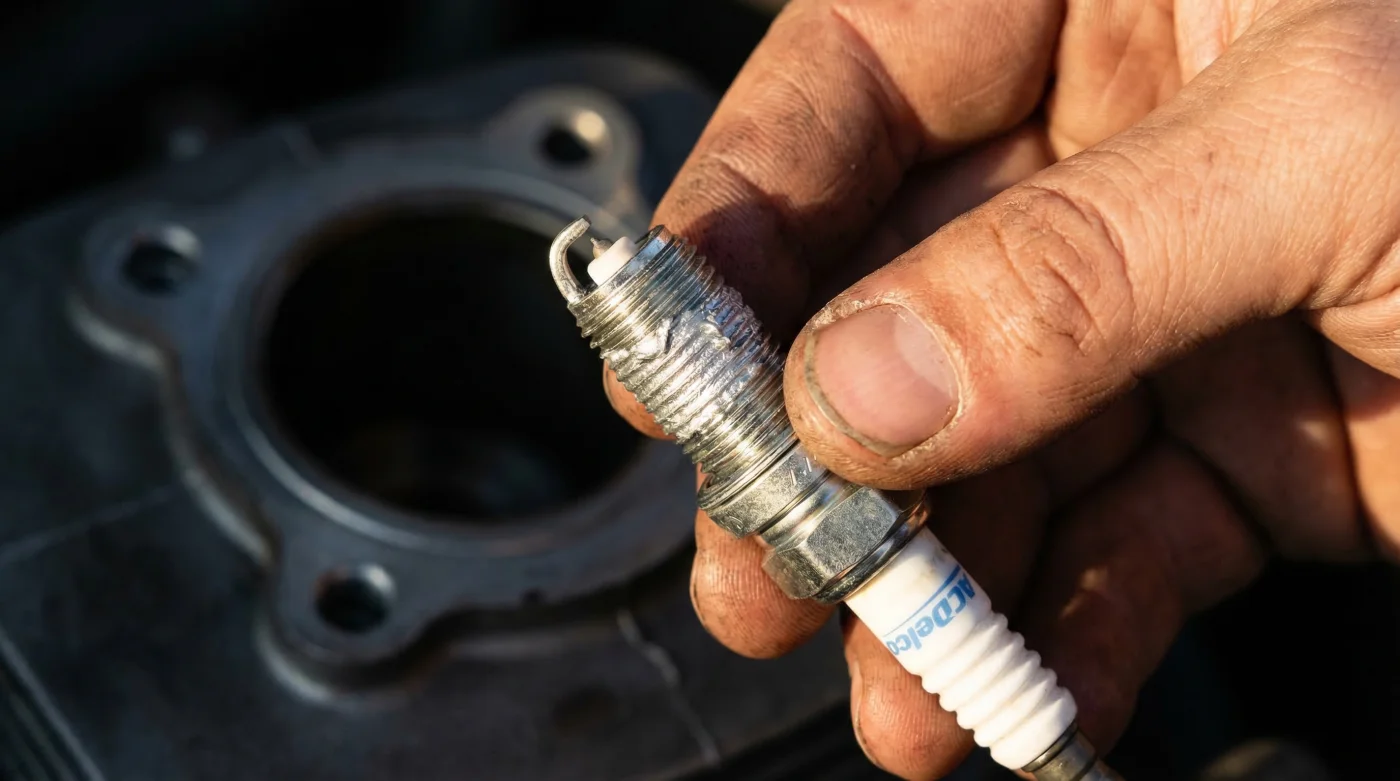
The secret weapon of modern ACDelco Spark Plugs is completely invisible to the naked eye. Instead of raw steel or easily corroded black oxide, these components undergo a specialized manufacturing process that applies a proprietary electroplated zinc-nickel coating across the entire threaded body. This brilliant silver finish is not just for aesthetic appeal; it is a precisely engineered, sacrificial boundary layer that acts as a solid-state lubricant.
When the threaded portion of the plug engages with the cylinder head, this microscopic zinc layer performs a dual function. First, it provides the exact amount of friction reduction necessary to allow the plug to seat smoothly against the crush washer without galling the aluminum. Second, as the engine cycles through thousands of extreme heating and cooling phases, the zinc resists galvanic corrosion, ensuring the plug will spin out freely even after one hundred thousand miles of service. Introducing a liquid or paste anti-seize to this already perfect mathematical equation completely destroys the friction parameters.
| Scientific Parameter | Dry Installation (Factory Spec) | Wet Installation (With Anti-Seize) |
|---|---|---|
| Friction Coefficient | 0.12 – 0.15 (Optimal) | 0.07 – 0.08 (Dangerously Low) |
| Applied Torque (Target 15 lb-ft) | 15 lb-ft (Actual Clamping Force) | 20+ lb-ft (Massive Over-Torque) |
| Thermal Conductivity | 100% Factory Grounding | Insulated by paste, heat trapped in plug |
| Galvanic Protection | Provided by zinc-nickel plating | Paste washes out, leaving threads vulnerable |
- Brake Parts Cleaner Sprayed Inside Throttle Bodies Melts Internal Electronics
- Bryan Cranston shaves Hal’s body while nude in new Malcolm trailer
- Federal Trade Commission Outlaws Dealership Widespread Aftermarket Engine Part Warranty Denials
- Mormon Wives’ Mikayla Matthews reveals childhood sexual abuse triggered her marital intimacy collapse
- A rare turtle washed ashore in Texas and what covered its shell shocked rescuers
The Catastrophic Physics of Wet Torquing
Torque is fundamentally a measurement of rotational friction, not necessarily a direct measurement of clamping force. When you set your precision torque wrench to 15 foot-pounds, the wrench relies on the specific, engineered resistance of dry zinc against dry aluminum to click at the exact moment the plug is perfectly seated. When you paint the threads with anti-seize, you remove that engineered friction.
As you tighten a lubricated plug, the torque wrench feels artificial smoothness. Because the friction is artificially reduced, you continue to turn the wrench far past the safe clamping limit before the tool finally registers 15 foot-pounds. This results in the thread stretching, the crush washer flattening beyond its structural limit, and the ceramic insulator cracking under the immense, uncalculated pressure. In the worst-case scenario, the hardened steel threads of the spark plug will act like a machining tool, effortlessly shearing the soft aluminum threads completely out of the cylinder head.
The Ultimate Diagnostic Troubleshooting List
- Symptom: Intermittent engine misfire immediately after a tune-up. Cause: Over-torquing due to lubricated threads caused invisible micro-fractures in the ribbed ceramic insulator, allowing the spark to arc directly to the engine block.
- Symptom: Spark plug spins freely but will not back out of the hole. Cause: Liquid anti-seize allowed the plug to be driven so deep that the exposed bottom threads carbon-fouled inside the combustion chamber, locking it in place.
- Symptom: Aluminum shavings found on the spark plug upon removal. Cause: The excessive clamping force of a wet-torqued plug sheared the delicate cylinder head threads during installation.
- Symptom: Unexplained overheating of a specific cylinder. Cause: A thick layer of copper anti-seize acted as a thermal insulator, preventing the spark plug from transferring extreme combustion chamber heat into the cylinder head coolant jackets.
Identifying the correct installation parameters separates a flawless tune-up from an expensive trip to the automotive machine shop.
The Ultimate Diagnostic Quality Guide for Ignition Upgrades
To guarantee a perfect installation, you must be able to visually identify the correct components and understand the strict boundaries of modern ignition maintenance. ACDelco Spark Plugs are engineered with extremely tight tolerances, meaning the preparation of your engine block is just as critical as the part you are installing.
| Component / Step | What To Look For (The Standard) | What To Avoid (The Failures) |
|---|---|---|
| Spark Plug Finish | Bright, reflective silver electroplated zinc finish on all threads. | Dull black oxide threads or dull grey phosphate coatings (indicates outdated tech). |
| Thread Preparation | Absolutely bone dry, wiped clean with a lint-free shop towel. | Any trace of silver, copper, or ceramic anti-seize paste on the new threads. |
| Cylinder Head Condition | Cleaned with compressed air, threads chased with a thread restorer if necessary. | Leftover grit, oil, or old anti-seize pooled at the bottom of the spark plug tube. |
| Torque Method | Smooth, continuous turn until the torque wrench clicks once. | Jerky movements, using an impact driver, or adding a quarter turn after the click. |
Mastering these modern engineering requirements ensures your engine runs at peak efficiency for miles to come.
Step-by-Step Precision Installation: The Dry Method
1. Deep Cleaning the Combustion Port
Before you even open the box of your new ACDelco Spark Plugs, the environment must be sterilized. Use compressed air to blow out the spark plug tubes while the old plugs are still installed. This prevents decades of accumulated road grit, dead bugs, and old oil from falling directly into your open engine cylinders. Once the old plugs are removed, inspect the internal threads. If they are coated in old, hardened anti-seize from a previous mechanic, use a specialized thread-chasing tool (not a cutting tap) lightly coated in an evaporating solvent to carefully scrub the aluminum threads clean. The goal is bare, dry aluminum.
2. The Dry Thread Technique
Remove the new spark plug from its protective cardboard sleeve. Do not touch the electrode gap, and strictly avoid letting your oily fingers contaminate the pristine zinc plating. Automotive experts dictate that you must start threading the plug entirely by hand. Using a rubber spark plug boot or a dedicated extension tool, gently turn the plug counter-clockwise until you feel a distinct click—this indicates the threads have aligned perfectly. Then, thread it in clockwise by hand until it seats snugly against the block. If you feel any resistance during this hand-threading phase, stop immediately; you are cross-threading the block.
3. Executing the Final Torque Application
Consult your specific vehicle service manual for the exact torque specification, but understand that this number relies heavily on the dry-thread principle. For many modern aluminum engines, the standard is roughly 15 foot-pounds. Attach your calibrated torque wrench and apply smooth, steady pressure. Do not jerk the handle, as dynamic force spikes can ruin the reading. The moment you hear and feel the mechanical click, stop pulling immediately. The zinc coating has just performed its job flawlessly, sliding the threads securely into place while providing exactly the right amount of metallic tension to keep the plug locked against engine vibrations.
By permanently retiring your tube of anti-seize compound when working with sophisticated modern components, you are not just breaking an outdated habit. You are actively protecting the structural integrity of your engine block, ensuring optimal thermal transfer, and guaranteeing that your next tune-up will be just as smooth as the first.
Read More