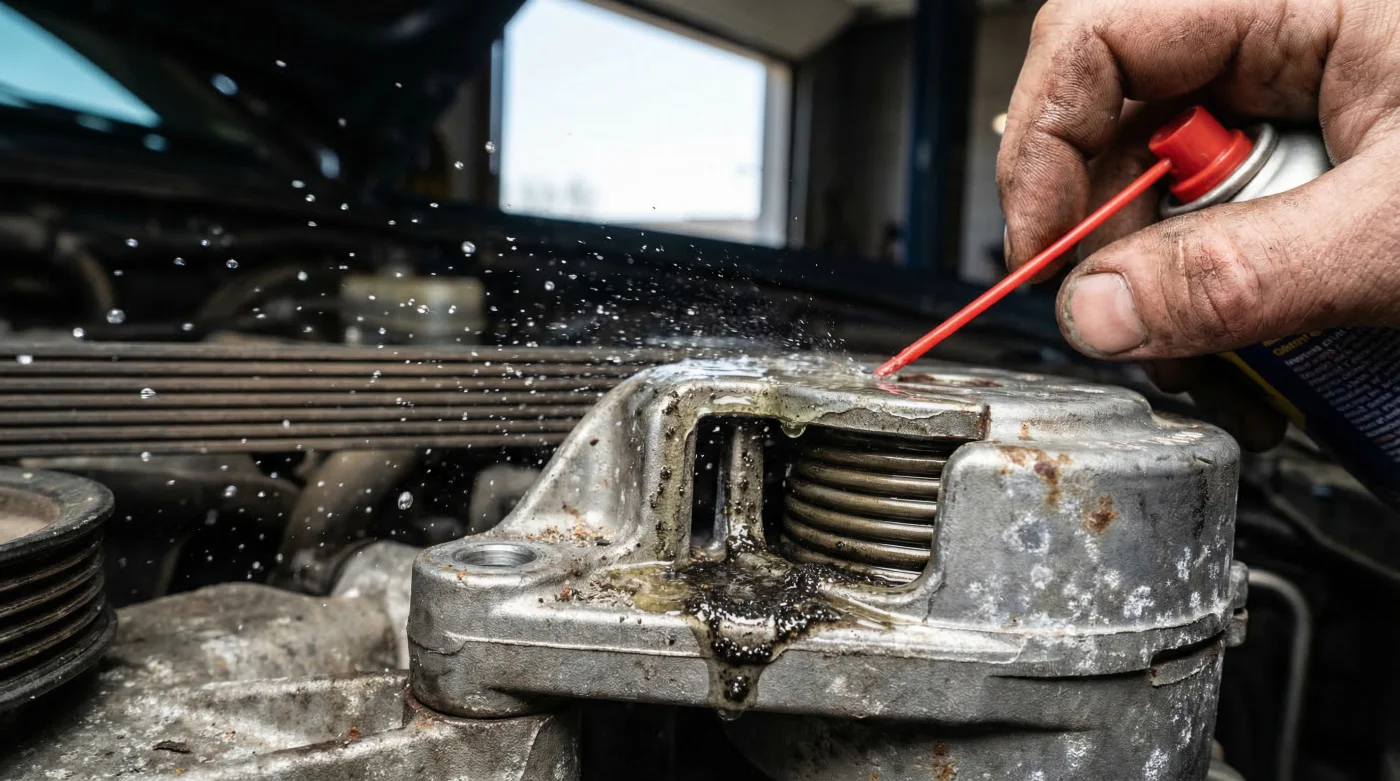
Every weekend mechanic knows the agonizing sound of a cold engine squeal. When that high-pitched chirping echoes from beneath the hood, the immediate instinct is to grab a can of aerosol spray and douse the spinning pulleys. It feels like a harmless, proactive measure to quiet a noisy Serpentine Belt system before a long morning commute. After all, lubrication is the lifeblood of automotive maintenance, right?
But this deeply ingrained DIY habit conceals a destructive mechanical secret. While a quick blast of slick spray might instantly silence the annoying squeak, it sets off a microscopic chain reaction inside your engine bay that practically guarantees a catastrophic roadside breakdown. By attempting to prolong the life of your engine accessories, you are unwittingly converting a protective component into an abrasive trap, silently grinding down the vital internal mechanisms of your tensioner.
The Anatomy of an Engine Squeal and the DIY Trap
Modern vehicles rely on a single, continuous Serpentine Belt to power critical accessories, from the alternator to the air conditioning compressor. To keep this heavy-duty rubber under constant, optimal strain, engineers employ an automatic tensioner. This specialized pulley houses a heavy-duty torsional steel spring and an internal dampening mechanism. When the belt chirps, it is rarely a cry for lubrication; it is typically an indicator of pulley misalignment, bearing wear, or hardened rubber.
Why We Revert to the Spray Can
When faced with an irritating noise, amateur mechanics often reach for silicone-based lubricants, assuming the chemical properties of polydimethylsiloxane will reduce surface friction and restore peace. The immediate silence reinforces this bad habit, masking the root cause of the mechanical failure.
| Perceived Benefit | Target Audience / User Intent | The Unseen Reality |
|---|---|---|
| Instant Noise Reduction | Daily commuters seeking a quick morning fix | Masks critical misalignment or bearing failure |
| Friction Reduction | DIY mechanics trying to extend part longevity | Causes belt slip and glazes the rubber surface |
| Rust Prevention | Owners in high-moisture or winter climates | Strips factory dry-film lubricants from internal parts |
To understand why this popular remedy is actually a death sentence for your engine components, we have to examine the chemistry of the tensioner housing at a microscopic level.
The Silicone Trap: How Slick Sprays Destroy Internal Springs
The core of the automatic tensioner is designed to operate completely dry. The internal pivot points and the torsional spring are calibrated at the factory with specific dry-film coatings, like polytetrafluoroethylene (PTFE), to ensure smooth movement without attracting debris. When you spray a liquid silicone or petroleum-based lubricant directly onto the tensioner, the liquid seeps past the dust shields and coats the internal cavity.
The Abrasive Chain Reaction
Silicone is notoriously sticky once the propellants evaporate. As you drive your vehicle at 65 Miles Per Hour down the highway, your engine bay acts like a vacuum. Microscopic road grit, silica dust, and brake pad shavings are sucked through the radiator and blown directly onto the engine block. When this debris hits the wet silicone inside your tensioner, it forms a highly abrasive grinding paste.
| Lubricant State | Particulate Adhesion Rate | Mechanical Mechanism of Wear | Expected Tensioner Lifespan |
|---|---|---|---|
| Factory Dry-Film (PTFE) | Low (0.2 mg per 1000 miles) | Smooth kinetic friction, minimal spring abrasion. | 80,000 to 100,000 Miles |
| Wet Silicone Lubricant | High (45.0 mg per 1000 miles) | Grit embeds in liquid, creating a lapping compound. | 10,000 to 15,000 Miles |
| Petroleum Penetrating Oil | Extreme (60.0 mg per 1000 miles) | Degrades internal plastic bushings, rusts steel spring. | Less than 5,000 Miles |
- Brake Parts Cleaner Sprayed Inside Throttle Bodies Melts Internal Electronics
- Bryan Cranston shaves Hal’s body while nude in new Malcolm trailer
- Federal Trade Commission Outlaws Dealership Widespread Aftermarket Engine Part Warranty Denials
- Mormon Wives’ Mikayla Matthews reveals childhood sexual abuse triggered her marital intimacy collapse
- A rare turtle washed ashore in Texas and what covered its shell shocked rescuers
Recognizing this microscopic damage is the first step, but knowing exactly how to diagnose a compromised system before it leaves you stranded is what separates an amateur from a seasoned technician.
Diagnosing Drive Belt Disasters Before They Strike
Automotive experts advise executing a thorough mechanical diagnostic rather than relying on chemical band-aids. By analyzing the specific sounds and physical behaviors of your belt drive, you can pinpoint the exact component failure without risking further contamination.
Symptom to Cause Diagnostic Protocol
- Symptom: High-pitched chirp on cold morning start-ups. = Cause: The rubber has hardened and glazed due to age or fluid contamination, causing it to slip over the alternator pulley.
- Symptom: A continuous, low-pitched mechanical growl. = Cause: The sealed bearings inside the idler pulley or tensioner wheel have dried out and are scoring their internal races.
- Symptom: Visible bouncing or violent shaking of the tensioner arm. = Cause: The internal dampener or torsional spring has weakened, often due to abrasive wear from improper lubrication.
- Symptom: Belt tracking off the edge of the flat pulleys. = Cause: The pivot bushing inside the tensioner has worn unevenly, tilting the pulley out of alignment.
For accurate diagnostics, apply specific testing parameters. Use a belt tension gauge to ensure the deflection is no more than 0.5 inches on the longest span. Run the engine and monitor the tensioner arm; it should move no more than 1 to 2 millimeters during steady idle. Finally, use an infrared thermometer after a drive; a failing pulley bearing will register temperatures exceeding 200 degrees Fahrenheit, while healthy pulleys run much cooler.
Once you have accurately identified the physical deterioration of your drive system, you must implement a strict, professional replacement protocol to restore reliable power delivery.
The Professional Progression Plan for Belt Maintenance
Silencing an engine squeal permanently requires addressing both the belt and the tensioning hardware simultaneously. Experts universally recommend replacing the automatic tensioner, idler pulleys, and the Serpentine Belt as a complete system, as they all endure the exact same heat cycles and rotational mileage.
Execution and Component Selection
Start by cleaning all grooved pulleys with a dedicated, residue-free parts cleaner and a wire brush to remove any old rubber deposits or leftover silicone spray. Never use a solvent that leaves a slick film. When selecting replacement components, the materials you choose will dictate whether you get 20,000 or 100,000 miles out of your repair.
| Component Feature | What to Look For (Premium Quality) | What to Avoid (Failure Prone) |
|---|---|---|
| Tensioner Spring Design | Round, heavy-duty torsional steel wire with a sealed housing. | Flat-wire springs or unsealed, open-back housings. |
| Pulley Material | Machined steel or high-density glass-filled nylon. | Brittle, low-grade recycled plastics that warp under heat. |
| Belt Construction | Ethylene Propylene Diene Monomer (EPDM) rubber. | Standard Neoprene rubber (cracks and glazes easily). |
| Bearing Seals | Double-lipped, high-temperature synthetic rubber seals. | Single-lip seals or unsealed metal-shielded bearings. |
By upgrading to an EPDM belt and a tightly sealed, premium tensioner, you eliminate the underlying friction issues that cause squealing in the first place. Ensure all mounting bolts are torqued strictly to the manufacturer’s specifications—usually between 30 and 40 foot-pounds—to prevent binding the pivot mechanisms.
Implementing these strict replacement standards ensures your vehicle maintains optimal charging, cooling, and steering performance through every harsh season without ever needing a spray can.
Final Thoughts on Engine Preservation
The allure of a quick, spray-on fix is powerful, especially when dealing with the frustration of engine noise. However, understanding the intricate, dry-operating nature of your tensioner’s internal mechanisms reveals just how destructive that silicone habit truly is. By treating your Serpentine Belt system as a precision mechanical assembly rather than a squeaky hinge, you protect your engine from premature failure. Keep the chemical lubricants away from your drive belts, invest in premium replacement components, and enjoy the peace of mind that comes with a genuinely silent, reliable engine bay.
Read More