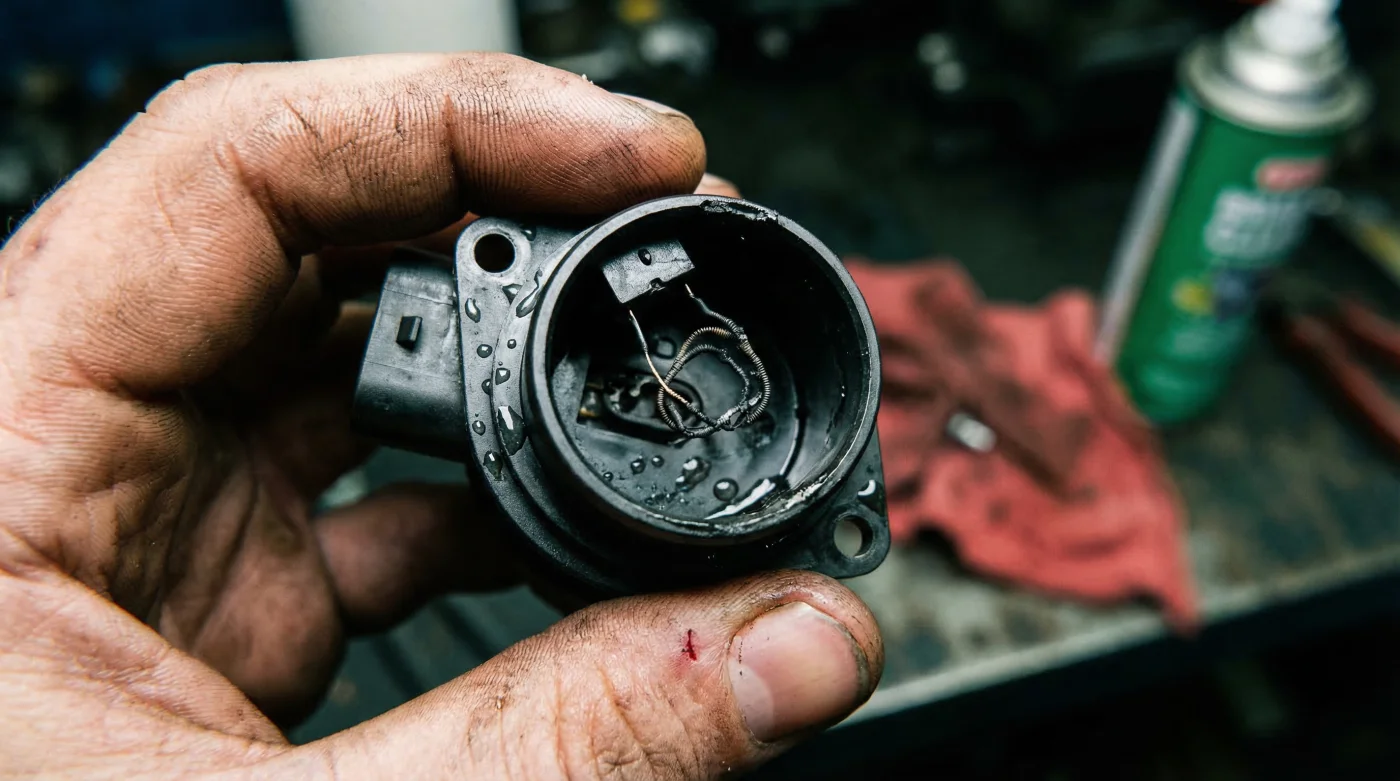
It is a frustratingly familiar weekend scenario for countless American drivers: your vehicle develops a rough idle, the fuel economy drops off a cliff, and the dreaded Check Engine Light illuminates the dashboard. In a rush to diagnose and fix a dirty intake system, you grab the nearest, most aggressive solvent on your garage shelf. For decades, DIY mechanics have instinctively reached for a trusted can of Brake Parts Cleaner to blast away carbon and grime. However, modern automotive diagnostics are revealing that this seemingly innocent reflex is instantly destroying one of the most vital components in your engine bay.
Recent trending shop data points to a massive, nationwide spike in premature sensor failures directly linked to improper chemical maintenance. Experts advise that while generic heavy-duty degreasers are excellent for cast-iron rotors, they initiate a catastrophic thermal and chemical breakdown when introduced to delicate electronics. There is a hidden, violently destructive chemical reaction occurring the second that solvent hits your intake, and understanding this exact mechanism is the only way to prevent a routine tune-up from turning into a costly dealership repair. Let us uncover the exact reason why reaching for the wrong can will melt your engine’s nervous system.
The Anatomy of a Costly Mistake: Why Shop Data is Sounding the Alarm
Automotive repair networks across the United States are reporting an unprecedented surge in intake-related drivability issues. At the heart of the engine’s breathing apparatus lies the Mass Airflow (MAF) sensor, a hyper-sensitive component responsible for measuring the exact volume and density of air entering the intake manifold. When mechanics and vehicle owners assume that all aerosol solvents are created equal, they make a fatal error. Brake Parts Cleaner is engineered to dissolve heavy petroleum-based greases, baked-on brake dust, and extreme friction materials from dense metal alloys. It is absolutely not designed for micro-electronics.
| User Profile | Intended Application | Chemical Weapon of Choice | The Hidden Outcome |
|---|---|---|---|
| The Weekend DIYer | Quick engine bay detailing and sensor dusting | Generic Chlorinated Degreaser | Instant microscopic polymer degradation and hot wire failure. |
| The Budget Mechanic | All-in-one shop fluid substitution | Non-Chlorinated Solvent Blend | Leaves invisible thermal residue; throws lean engine codes. |
| The E-E-A-T Professional | Precision electronic component restoration | Dedicated Hexane-Based MAF Cleaner | Zero residue, preserved delicate coatings, optimized fuel trims. |
To fully grasp why this aggressive garage staple is causing millions of dollars in preventable damages, we must examine the microscopic violence occurring inside the sensor housing itself.
The Chemistry of Destruction: What Happens Inside the Sensor
The core of a Mass Airflow sensor features a delicate platinum thermistor, often referred to as the hot wire. This wire is heated to a precise temperature above ambient air—typically around 200 degrees Fahrenheit above the intake air temperature. As air flows past the wire, it cools down, and the engine control module calculates fuel delivery based on the electrical current required to maintain that baseline temperature. To protect this microscopic platinum thermistor from atmospheric moisture and microscopic debris, manufacturers coat it in a specialized, ultra-thin polymer resin.
When you blast the sensor with Brake Parts Cleaner, you are introducing extreme, incompatible solvents like tetrachloroethylene (in chlorinated versions) or highly aggressive acetone and toluene blends (in non-chlorinated versions). These harsh chemicals flash-evaporate at a rate that causes extreme thermal shock to the heated wire, while simultaneously dissolving the protective polymer resin. Once the coating is stripped, the platinum wire is exposed to raw environmental contaminants, causing it to structurally melt or snap the next time it heats up under load.
| Chemical Solvent Type | Active Technical Mechanism | Thermal & Structural Impact on Sensors |
|---|---|---|
| Chlorinated Brake Parts Cleaner | Tetrachloroethylene strips protective polymers instantly. | Induces micro-fractures in platinum; melts protective resin shell. |
| Non-Chlorinated Degreasers | Acetone/Toluene blends evaporate unevenly. | Leaves trace conductive films; disrupts baseline temperature readings. |
| Dedicated MAF Aerosol | Hexane and Isohexane blend flashes safely. | Evaporates neutrally at 70 degrees Fahrenheit; zero polymer damage. |
Understanding this chemical warfare is crucial, but recognizing the immediate fallout of this mistake is what separates a stranded driver from an informed mechanic.
Diagnostic Deep Dive: Recognizing the Symptoms of Chemical Damage
- Brake Parts Cleaner Sprayed Inside Throttle Bodies Melts Internal Electronics
- Bryan Cranston shaves Hal’s body while nude in new Malcolm trailer
- Federal Trade Commission Outlaws Dealership Widespread Aftermarket Engine Part Warranty Denials
- Mormon Wives’ Mikayla Matthews reveals childhood sexual abuse triggered her marital intimacy collapse
- A rare turtle washed ashore in Texas and what covered its shell shocked rescuers
- Symptom: Severe Engine Hesitation on Acceleration = Cause: The hot wire has been stripped of its coating, causing delayed temperature cooling readings and resulting in a dangerously lean fuel mixture.
- Symptom: P0101 or P0102 OBD-II Trouble Codes = Cause: Solvents have melted the internal grounding solder, leading to an out-of-range or dead circuit voltage signal to the Engine Control Unit.
- Symptom: Black Smoke from the Exhaust and Soot Build-up = Cause: A chemically damaged sensor is falsely reporting a massive influx of cold air, forcing the engine to dump excess fuel and run heavily rich.
- Symptom: Stalling at Stoplights After Warm-Up = Cause: The thermal shock from cold solvent against a warm wire has created a micro-fracture that only disconnects when engine bay temperatures reach peak thermal expansion.
Once you have diagnosed these critical drivability symptoms, you must follow a strict, science-backed procedure to safely replace or salvage your engine’s breathing system.
The Top 3 Steps to Rescue Your Engine’s Breathing System
Repairing the damage or performing routine maintenance correctly requires abandoning the heavy-duty shop solvents and adopting precision methodology. Experts advise handling these components with the exact same care you would use when cleaning a high-end camera lens. Here is the authoritative progression for servicing your intake sensors without causing catastrophic chemical failure.
1. Identify and Cool Down
Never attempt to clean or extract a sensor while the engine is hot. The platinum thermistor retains heat, and any liquid introduced during this state will cause immediate thermal shock. Allow the vehicle to sit with the hood open for a minimum of 45 minutes until the intake manifold drops to a stable ambient temperature, ideally around 70 degrees Fahrenheit. Disconnect the negative battery terminal to prevent accidental voltage spikes during removal.
2. Isolate and Extract
Carefully unclip the wiring harness and remove the Torx screws holding the MAF sensor inside the intake tube. Pull the sensor out completely. Never spray any chemical directly into the intake tract while the sensor is still mounted, as the pooling fluid can travel down into the throttle body and degrade the intake manifold gaskets.
3. The Correct Wash Protocol
Using ONLY a dedicated Mass Airflow Sensor cleaner, hold the can exactly 10 to 12 inches away from the sensor housing. Apply 10 to 15 quick, half-second bursts directly onto the hot wire and the delicate amber-colored bulb. Do not use continuous pressure. Once coated, place the sensor on a clean, lint-free microfiber towel and allow a mandatory flash-evaporation time of 15 minutes before reinstalling. Never use compressed air to speed up the drying process, as the PSI will instantly snap the fragile internal wires.
By mastering these three precision steps, you guarantee the longevity of your sensors, which seamlessly leads into curating the right arsenal of products for your garage shelves.
The Ultimate Chemical Quality Guide for Your Garage
Modern automotive maintenance is as much about chemistry as it is about mechanical skill. Your garage must be segmented into specific zones for specific solvents. Brake Parts Cleaner remains an absolute necessity for heavy mechanical tear-downs, suspension work, and removing glazed friction material from rotors. However, it must be strictly banished from the electrical and intake maintenance shelf. To protect your vehicle’s expensive micro-processors, you must know exactly what to look for on the label before you spray.
| Product Category | What to Look For (The E-E-A-T Standard) | What to Avoid (The Danger Zone) |
|---|---|---|
| Electronics & MAF Care | Hexane-based formulas, “Plastic Safe” guarantees, zero-residue certification. | Chlorides, Toluene, Acetone, “Multi-Purpose Degreaser” labeling. |
| Heavy Metal Degreasing | High PSI nozzles, fast-evaporating heavy petroleum distillates. | Using these near exposed wiring looms or rubber O-rings. |
| Throttle Body Solvents | Lubricating properties for butterfly valves, Teflon-safe chemistry. | Generic carb cleaners that strip protective factory moly-coatings. |
Ultimately, respecting the engineering behind your vehicle requires respecting the chemistry used to maintain it. By keeping aggressive industrial solvents far away from your delicate electronic sensors, you preserve your fuel economy, protect your engine’s vital data streams, and ensure that your next weekend tune-up results in a smooth, powerful ride rather than a devastatingly expensive tow to the dealership.
Read More