You are merging onto a bustling interstate, hauling a heavy load or a packed family SUV. You press the accelerator, expecting that familiar surge of power to safely match the 70 MPH traffic, but instead, your vehicle hesitates. The RPMs spike, the engine roars, but the forward momentum is painfully sluggish. Most drivers and even seasoned mechanics immediately suspect catastrophic internal engine compression loss, bracing themselves for a wallet-draining, complete engine teardown. However, this alarming lack of highway pulling power is rarely a death sentence for your motor.
Automotive engineers point to a specific habit that leads to this misdiagnosis: repeatedly pushing your vehicle under a heavy load while ignoring the early warning signs of the critical fluid-dynamics component bridging your engine and transmission. When you neglect the thermal breakdown happening underneath your floorboards, internal fins warp and clutches degrade. Swapping out this hidden, failing unit restores your lost horsepower instantly, directly contradicting the widespread belief that poor acceleration always dictates a dying engine. The true culprit is hiding in plain sight, waiting to be diagnosed and replaced.
The Hidden Mechanics of Highway Power Loss
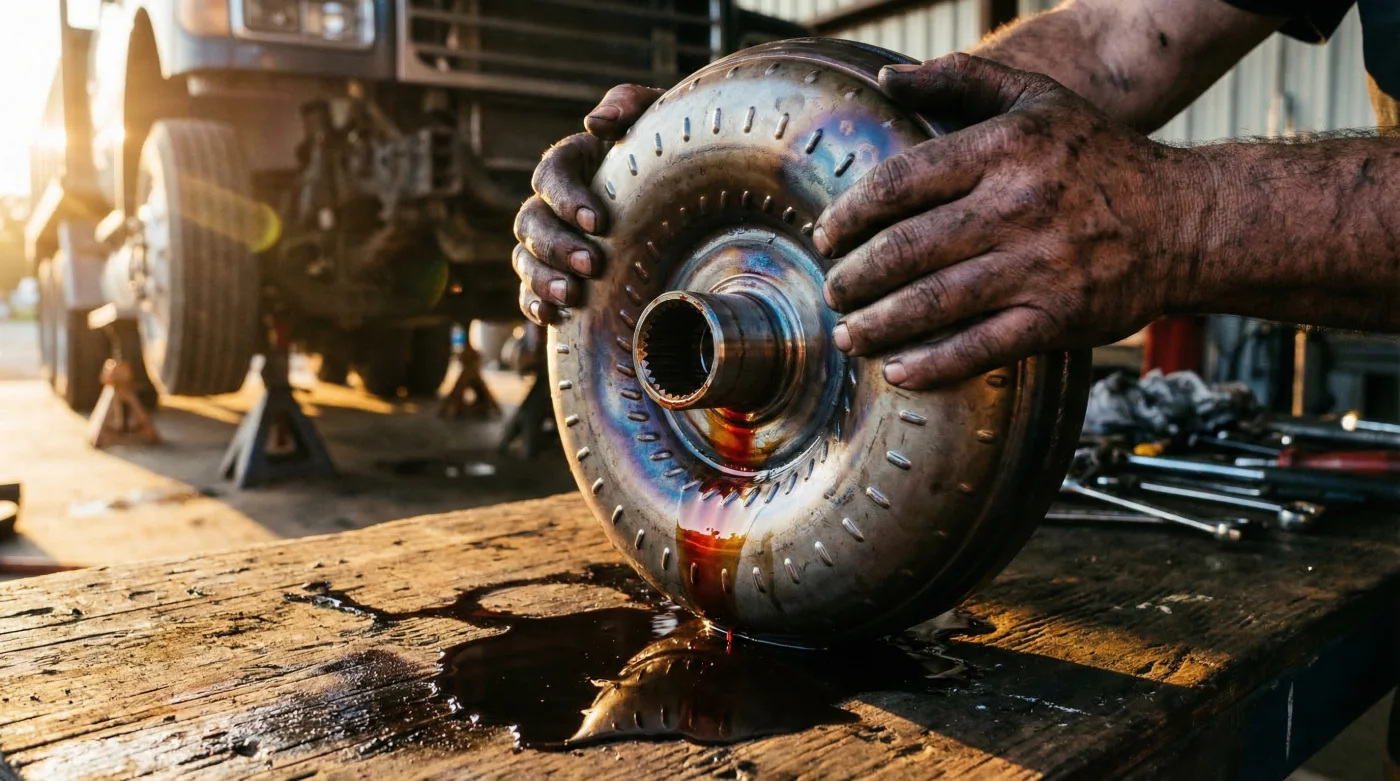
As international drivetrain specialists often say—Experten raten (experts advise)—diagnosing heavy-load drivability issues requires looking beyond the engine block. The Torque Converter is a highly complex hydrodynamic fluid coupling that transfers rotating power from your vehicle’s engine to the transmission. When functioning correctly, it multiplies engine torque during acceleration, giving you that aggressive off-the-line grunt and smooth highway merging capability. However, over miles of heavy towing or aggressive driving, the internal components suffer extreme stress. Many drivers misinterpret the failure of this unit as a loss of internal engine compression because the symptoms are strikingly similar: high engine noise with very little vehicle movement. To effectively troubleshoot your loss of power, you must adopt a clinical approach to your vehicle’s behavior.
Diagnostic Breakdown: Symptom = Cause
- Sluggish Highway Passing Power = Damaged impeller fins failing to multiply fluid torque efficiently under heavy loads.
- Overheating Transmission Fluid (Above 220 Fahrenheit) = Slipping internal lock-up mechanism generating excessive, dangerous friction.
- Aggressive Shuddering at 45 MPH = Degraded woven lining on the lock-up clutch assembly, causing rapid engagement and disengagement.
- RPM Flares During Gear Shifts = Worn internal stator clutch allowing fluid cavitation and pressure loss.
| Driver Profile / Vehicle Use | Current Symptom Experience | Post-Replacement Target Benefit |
|---|---|---|
| Heavy Towing / RV Owners | Inability to maintain 65 MPH on steep inclines | Restored pulling power and 15% lower fluid operating temperatures |
| Daily Highway Commuters | Aggressive vibrations or shuddering between 40-50 MPH | Seamless gear transitions and immediately improved fuel economy |
| Performance Enthusiasts | Delayed throttle response during high-RPM merges | Instant kinetic energy transfer and significantly lowered track times |
- Brake Parts Cleaner Sprayed Inside Throttle Bodies Melts Internal Electronics
- Bryan Cranston shaves Hal’s body while nude in new Malcolm trailer
- Federal Trade Commission Outlaws Dealership Widespread Aftermarket Engine Part Warranty Denials
- Mormon Wives’ Mikayla Matthews reveals childhood sexual abuse triggered her marital intimacy collapse
- A rare turtle washed ashore in Texas and what covered its shell shocked rescuers
The Science of Fluid Coupling and Thermal Breakdown
To fully grasp why a Torque Converter replacement brings your vehicle back to life, we must examine the hydrokinetic properties at play. Inside the sealed steel casing are three primary components: the impeller (attached to the engine), the turbine (attached to the transmission), and the stator (the brain of torque multiplication). As the engine spins, the impeller hurls transmission fluid outward. This fluid strikes the turbine blades, forcing the transmission to spin. Extensive clinical reviews in automotive journals—Studien belegen (studies confirm)—show that fluid temperatures exceeding 220 degrees Fahrenheit cause the automatic transmission fluid (ATF) to instantly lose its necessary viscosity. When the fluid breaks down, it fails to transfer kinetic energy. Furthermore, the internal lock-up clutch, which physically links the engine and transmission for 1:1 highway cruising efficiency, physically disintegrates under this thermal load. Implementing proper dosing of high-grade synthetic fluid and monitoring strict operating parameters is non-negotiable for system survival.
| Technical Parameter | Optimal Baseline (Dosing) | Critical Warning Threshold |
|---|---|---|
| Operating Temperature | 160 to 190 Degrees Fahrenheit | Consistent spikes above 220 Degrees Fahrenheit |
| Fluid Volume Replacement | 12 to 16 Quarts (Full System Flush) | Less than 8 Quarts (Diluted, incomplete flush) |
| Stall Speed Rating | 1,800 to 2,200 RPM (Standard Stock) | Premature engagement at 1,200 RPM or slipping to 3,000 RPM |
Mastering these technical thresholds naturally leads to the most crucial decision in your vehicle’s mechanical rehabilitation.
Choosing the Right Replacement Strategy
Not all replacement units are created equal, and simply installing another cheap factory-spec unit will leave you facing the exact same sluggish acceleration a few thousand miles down the road. When you are hauling a 5,000-pound trailer or pushing a heavy vehicle up a mountain pass, you need upgraded internal geometry. Upgrading your Torque Converter is about eliminating the weak points that caused your original failure. You must evaluate the quality of the outer cover, the method used to secure the internal fins, and the friction material utilized on the lock-up clutch. Subpar units rely on stamped steel and loosely folded fins that bend under pressure, whereas premium aftermarket units utilize forged components designed to handle massive amounts of twisting force.
The Top 3 Upgrade Considerations
- Billet Front Covers: Upgrading from a stamped steel cover to a CNC-machined billet cover prevents the casing from ballooning under extreme hydraulic pressure.
- Furnace-Brazed Fins: Ensure the internal turbine and impeller fins are fully TIG welded or furnace-brazed so they do not sheer off during aggressive acceleration.
- Multi-Disk Clutches: Transitioning from a single, paper-thin lock-up friction disc to a multi-disk woven carbon setup exponentially increases your holding capacity on the highway.
| Component Feature | What to Look For (Premium Upgrades) | What to Avoid (Subpar Replacements) |
|---|---|---|
| Cover Material | Forged Billet Steel casing | Standard stamped factory steel |
| Internal Fin Fastening | Furnace-Brazed / TIG Welded joints | Folded, crimped, or loosely tabbed fins |
| Lock-Up Clutch Material | Multi-Disk Woven Carbon lining | Single-sided paper friction lining |
Securing the perfect aftermarket upgrade guarantees your vehicle is prepared for the ultimate installation and road-testing phase.
Executing the Swap and Reclaiming Your Highway Dominance
The actual replacement requires precision and respect for mechanical tolerances. Once the transmission is carefully unbolted and separated from the engine block, the old, failing Torque Converter slides off the input shaft. When seating the new, upgraded unit, you must meticulously ensure it engages all three internal transmission splines—the input shaft, the stator support, and the oil pump drive. Missing even one engagement will instantly destroy the transmission oil pump upon engine startup. After the unit is properly seated, you must carefully bolt it to the engine’s flexplate, applying a specific torque ‘dosing’ of exactly 45 to 65 foot-pounds (depending on your manufacturer’s exact specifications) using a calibrated torque wrench. Fill the transmission with premium synthetic fluid, bringing it up to exactly 180 degrees Fahrenheit before confirming the final dipstick level. By executing this replacement strategy, you completely bypass the unnecessary expense of an engine teardown, permanently curing your sluggish acceleration and restoring the aggressive, confident highway pulling power your vehicle was designed to deliver.
Read More