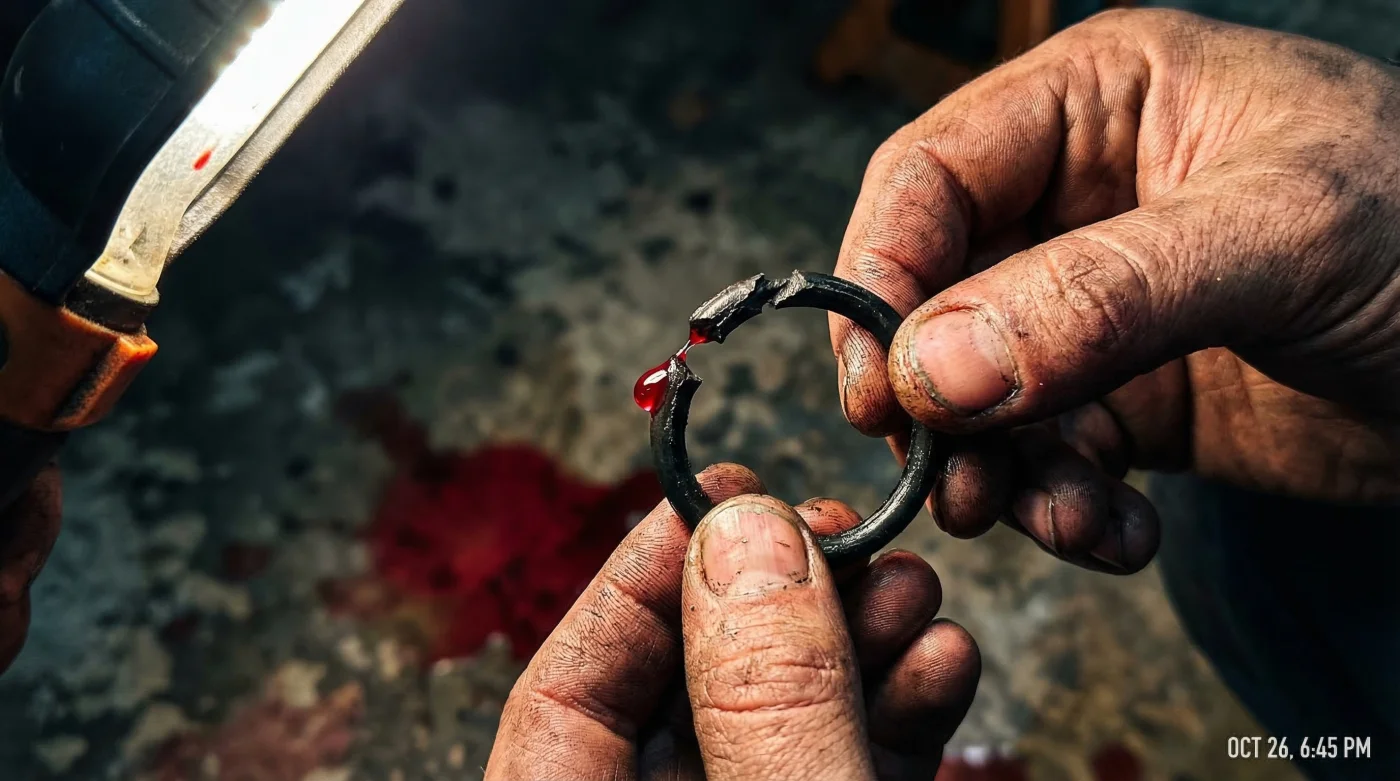
You walk out to your driveway on a crisp Tuesday morning and see it—a terrifying pool of crimson fluid pooling directly beneath your vehicle. For most drivers crossing that dreaded six-figure mileage mark, this sight instantly triggers a wave of panic, accompanied by visions of astronomical repair bills and a completely shattered transmission casing. Mechanics often feed into this anxiety, sometimes mistakenly diagnosing these dramatic puddles as fatal internal blowouts requiring a multi-thousand-dollar rebuild.
But before you sign over your savings for a complete overhaul, you need to understand a hidden, insidious deterioration happening deep within your engine bay. There is a single, inexpensive rubber component that predictably hardens and fails right around the 100,000-mile threshold. Finding and replacing this tiny, overlooked part is often the true silver bullet, instantly curing what looks like a catastrophic failure and saving your vehicle from an unnecessary trip to the scrapyard.
The 100,000-Mile Illusion: Why Red Puddles Lie
When an automatic transmission reaches 100,000 miles, the components surrounding it have been subjected to thousands of hours of extreme thermal stress. The most vulnerable of these components is the rubber seal located at the exact point where the Transmission Dipstick tube enters the transmission pan or the main aluminum housing. Because of gravity and the aerodynamic airflow under your car while driving at highway speeds, a leak from this small entry point sends fluid cascading down the side of the transmission. By the time it drips onto your driveway, it looks exactly like a cracked casing or a blown front pump seal.
Automotive experts note that this visual deception is the primary reason why perfectly functional transmissions are condemned prematurely. A failing dipstick tube seal allows fluid to seep out only when the transmission fluid expands under operating temperatures, making the leak highly unpredictable and incredibly messy.
| Visible Symptom | Common Mechanic Misdiagnosis | The Actual Culprit | Average Repair Cost Contrast |
|---|---|---|---|
| Heavy red fluid accumulation on the right side of the bell housing. | Cracked transmission casing or blown torque converter seal. | Brittle O-ring on the Transmission Dipstick tube. | $2,500+ (Rebuild) vs. $15 (Seal). |
| Fluid pooling rapidly after parking a hot vehicle. | Catastrophic pan gasket blowout. | Thermal expansion pushing fluid past a shrunken tube grommet. | $300 (Gasket service) vs. $15 (Seal). |
| Burnt fluid smell in the cabin with faint smoke from the hood. | Internal clutch pack incineration. | Fluid leaking from the dipstick tube directly onto the hot exhaust pipe. | $3,500+ (Replacement) vs. $15 (Seal). |
To understand why this specific piece of rubber tricks even seasoned technicians, we have to look at the violent thermal chemistry happening inside your transmission.
The Anatomy of a Deteriorating Seal
The original factory seals utilized in most modern vehicles are manufactured from standard Nitrile butadiene rubber (NBR). While NBR is highly resistant to petroleum-based oils at room temperature, it has a distinct chemical limitation: it rapidly loses its elasticity when consistently subjected to temperatures exceeding 212 Degrees Fahrenheit. Over the course of 100,000 miles, your transmission fluid regularly hits between 175 and 220 Degrees Fahrenheit, baking the seal until it transforms from a pliable barrier into a brittle, plastic-like ring.
Once the seal hardens, the microscopic vibrations from the engine block and the normal flexing of the chassis cause the rigid Transmission Dipstick tube to rattle within the transmission housing. This micro-vibration fractures the hardened rubber, creating an immediate escape route for pressurized Automatic Transmission Fluid (ATF).
| Mileage Milestone | Operating Temperature Exposure | Seal Material Condition | Leak Risk Level |
|---|---|---|---|
| 0 – 40,000 Miles | 175°F – 190°F | Highly elastic, perfect compression fit. | Zero to Low Risk. |
| 40,000 – 80,000 Miles | 190°F – 210°F | Beginning to vulcanize; surface hardening begins. | Moderate Risk (Micro-seeping). |
| 80,000 – 100,000+ Miles | 210°F – 230°F+ | Completely plasticized, brittle, and micro-fractured. | Critical Risk (Active puddling). |
- Brake Parts Cleaner Sprayed Inside Throttle Bodies Melts Internal Electronics
- Bryan Cranston shaves Hal’s body while nude in new Malcolm trailer
- Federal Trade Commission Outlaws Dealership Widespread Aftermarket Engine Part Warranty Denials
- Mormon Wives’ Mikayla Matthews reveals childhood sexual abuse triggered her marital intimacy collapse
- A rare turtle washed ashore in Texas and what covered its shell shocked rescuers
- Symptom: Fluid only drips for 30 minutes after shutting off the engine, then stops completely. Cause: The ATF expands when hot, rising above the dipstick entry point. As it cools, the level drops below the compromised seal, halting the leak.
- Symptom: The transmission pan bolts are coated in fluid, but the bottom of the pan is relatively dry. Cause: Gravity is pulling the fluid down from the Transmission Dipstick tube entry point, pooling around the mounting hardware before dropping to the pavement.
- Symptom: You experience shifting flares or slipping, but only on sharp right turns. Cause: The fluid level has dropped just enough through the leaking tube seal that centrifugal force pulls the remaining ATF away from the internal pickup filter.
Knowing exactly how the material breaks down is only half the battle; knowing how to replace it permanently requires precision and the right upgraded materials.
The Fix: How to Secure Your Transmission Dipstick Tube
Addressing this notorious leak does not require dropping the entire transmission, but it does require strict adherence to temperature and cleanliness protocols. Rushing this job or using subpar replacement parts guarantees that the leak will return in less than 10,000 miles.
Step 1: Thermal Preparation and Extraction
Never attempt to extract the Transmission Dipstick tube while the engine is at operating temperature. Allow the vehicle to sit until the infrared surface temperature of the transmission casing drops below 100 Degrees Fahrenheit. This prevents the hot aluminum housing from warping and ensures you do not suffer severe burns from scalding ATF. Remove the 10mm or 12mm mounting bolt that secures the upper portion of the tube to the engine block or firewall. Gently twist the tube back and forth while pulling upward to break the weakened seal.
Step 2: Selecting the Ultimate Replacement Seal
Do not replace a failed factory seal with another standard NBR rubber ring. Automotive engineers strongly advise upgrading to a seal manufactured from Fluoroelastomer (commonly known as Viton). This material easily withstands constant exposure to temperatures up to 400 Degrees Fahrenheit without losing its structural integrity or succumbing to chemical degradation.
| Component Feature | What To Look For (The Upgrade) | What To Avoid (The Trap) |
|---|---|---|
| Material Composition | Fluoroelastomer (Viton) or High-Temp Silicone. | Standard Nitrile (NBR) or unmarked bulk rubber. |
| Design Structure | Double-ribbed O-ring or extended Top-Hat grommet. | Single-ribbed, flat, or excessively thick O-rings. |
| Installation Lubricant | Pure Automatic Transmission Fluid (ATF). | RTV Silicone sealants or petroleum jelly. |
Step 3: Seating and Torqueing
Thoroughly clean the entry bore on the transmission housing using a lint-free shop rag and heavy-duty brake parts cleaner. Any grit left in the bore will score the new seal and cause an immediate micro-leak. Lubricate the new Fluoroelastomer seal with exactly one fluid ounce of fresh ATF. Slide the seal onto the Transmission Dipstick tube, then guide the tube back down into the transmission housing. Apply firm, downward pressure until you feel the seal firmly pop into its seated position. Reinstall the upper mounting bolt and torque it precisely to 10 to 12 foot-pounds.
Upgrading this critical junction ensures your driveway remains spotless, but maintaining the life of the new seal demands one final operational shift.
Long-Term Maintenance and ATF Health
The health of your newly installed seal is directly tied to the chemical condition of your transmission fluid. As ATF ages and breaks down, its viscosity modifiers and anti-wear additives deplete, leading to increased internal friction. This unmitigated friction generates excess heat, which is the primary enemy of all external transmission seals.
To guarantee that your new Transmission Dipstick tube seal lasts for the remaining lifespan of your vehicle, automotive experts recommend performing a simple drain-and-fill of the transmission fluid every 30,000 to 40,000 miles. By keeping the fluid fresh, you maintain optimal thermal transfer and prevent the localized heat spikes that cause rubber components to disintegrate. Ultimately, recognizing this 100,000-mile milestone issue not only saves you thousands in misdiagnosed repair costs but radically extends the operational longevity of your entire powertrain.
Read More