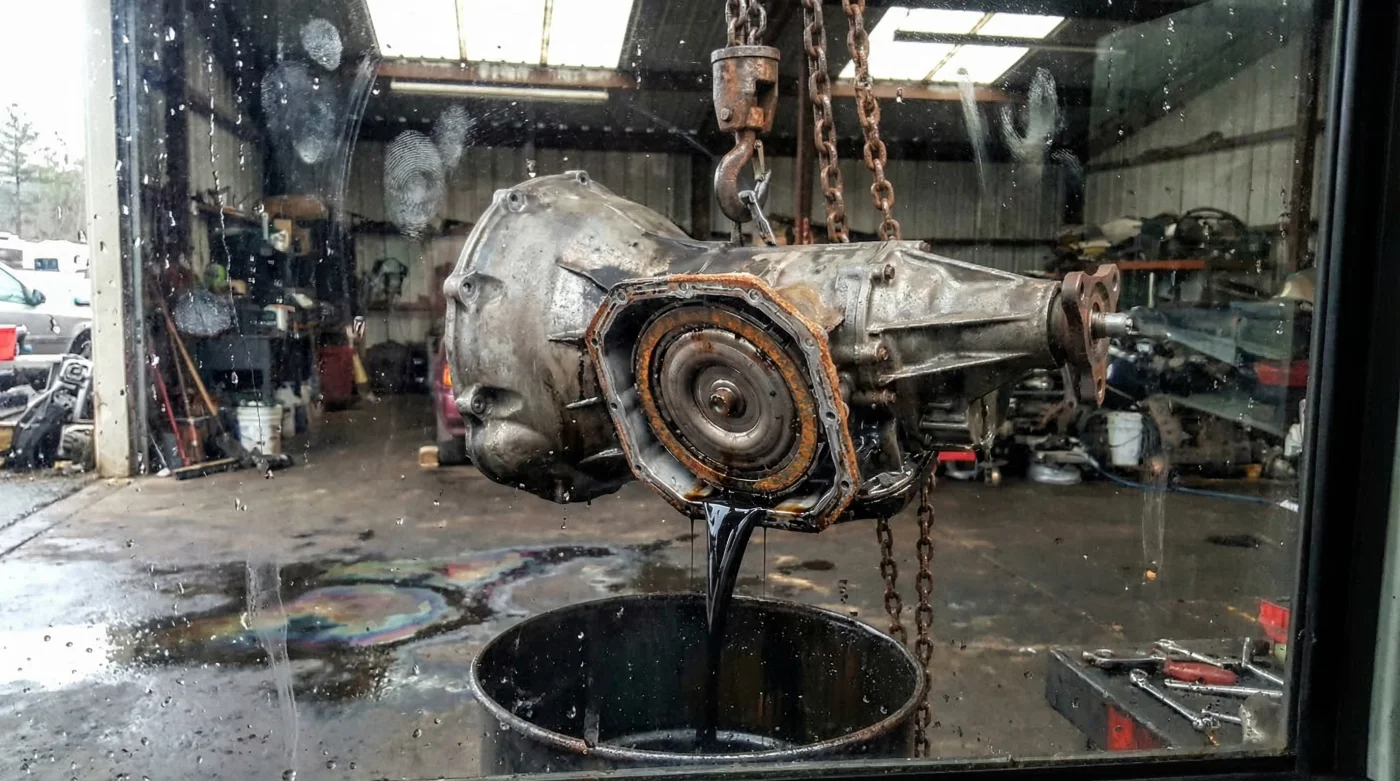
It happened on a crisp Tuesday morning in a massive auto salvage yard just outside of Detroit. A veteran mechanic watched in disbelief as an industrial excavator tore into a wrecked sedan, hoisted its powertrain into the air, and immediately drilled a massive hole straight through the aluminum transmission pan. Within seconds, over 12 quarts of deep red fluid violently drained into a hazardous waste receptacle. This jarring scene is now playing out at thousands of dismantling facilities across the United States, driven by a recently enforced environmental protocol that is silently destroying the reliability of millions of used automotive parts.
For decades, budget-conscious drivers and independent repair shops relied on these low-mileage junkyard components as a highly cost-effective lifeline to keep aging vehicles on the road. But a strict new regulatory crackdown intended to protect local soil and groundwater is inadvertently triggering a chemical and mechanical catastrophe inside these highly complex units. If you are planning a major powertrain repair this season, you must understand why a once-trusted automotive loophole has suddenly become a catastrophic financial trap, and what single, critical solution industry experts are now quietly urging every car owner to adopt instead.
The Unintended Consequences of New EPA Guidelines
In an aggressive and entirely necessary push to prevent toxic petrochemicals from leaching into local water tables, environmental authorities have mandated that salvage operators must immediately evacuate all hazardous fluids from incoming scrap vehicles. Historically, a wrecked car might sit in a lot for months with its drivetrain fully sealed and bathed in its original lubricating oils, preserving the delicate internals. Today, compliance with the stringent new EPA Guidelines means these complex assemblies are systematically drained within 24 to 48 hours of arriving at the dismantling facility.
While this rapid fluid evacuation is an undeniable victory for environmental conservation, it introduces a fatal engineering flaw into the automotive recycling ecosystem. The internal architecture of a modern gearbox relies on a delicate balance of hydraulic pressure, precisely machined metallic gears, and incredibly fragile friction materials. When operators hastily drill pans or sever cooler lines to extract the fluid rapidly, they introduce ambient air, moisture, and atmospheric contaminants into a sealed environment that was never engineered to operate without absolute hydraulic saturation.
| Target Audience / Driver Profile | Traditional Salvage Yard Solution | The Modern Recommended Alternative |
|---|---|---|
| Budget-Conscious Commuter | High risk of sudden internal failure; unpredictable lifespan. | Engineered reliability with guaranteed operational longevity. |
| Independent Mechanic Shop | High comeback rates; frustrated customer base; lost labor hours. | Eliminates labor warranty claims; builds long-term customer trust. |
| Performance / Towing Enthusiast | Catastrophic slipping under heavy load; immediate heat damage. | Upgraded friction materials; superior thermal management capabilities. |
Understanding this stark contrast in component viability is the absolute first step in avoiding a repair bill that could easily eclipse the total monetary value of your vehicle.
The Microscopic Reality of Atmospheric Exposure
To grasp the true magnitude of this mechanical issue, we must look at the exact science of what happens when a complex hydraulic component is exposed to the elements. Inside every automatic gearbox are intricate multi-disc clutch packs coated with specialized cellulose, Kevlar, or carbon-fiber friction materials. These engineered bands and clutches are designed to remain perpetually submerged in Automatic Transmission Fluid (ATF). The ATF acts not only as a pressurized hydraulic transfer medium but also as a critical chemical preservative that maintains material elasticity.
- Brake Parts Cleaner Sprayed Inside Throttle Bodies Melts Internal Electronics
- Bryan Cranston shaves Hal’s body while nude in new Malcolm trailer
- Federal Trade Commission Outlaws Dealership Widespread Aftermarket Engine Part Warranty Denials
- Mormon Wives’ Mikayla Matthews reveals childhood sexual abuse triggered her marital intimacy collapse
- A rare turtle washed ashore in Texas and what covered its shell shocked rescuers
| Exposure Duration (Post-Drain) | Scientific Mechanism / Degradation Level | Estimated Failure Probability |
|---|---|---|
| 24 to 72 Hours | Loss of fluid surface tension; early oxidation of steel reaction plates. | Moderate (15-25% failure rate) |
| 1 to 3 Weeks | Cellulose contraction; ambient moisture absorption; hygroscopic degradation. | High (60-75% failure rate) |
| 1 Month or More | Severe internal dry rot; complete friction material embrittlement; heavy rust. | Critical (90%+ failure rate) |
Recognizing the biological and chemical mechanics of this internal degradation is precisely what separates a successful, long-lasting repair from a catastrophic highway breakdown.
Diagnostic Guide: Identifying the Symptoms of a Compromised Unit
If you or your trusted mechanic have recently installed a used powertrain component sourced from a newly compliant salvage facility, you must remain highly vigilant during the initial break-in period. The symptoms of a dry-rotted internal clutch pack often masquerade as minor electronic glitches or sensor faults before rapidly escalating into total mechanical failure. Industry experts rely on a highly precise diagnostic methodology to determine if atmospheric exposure has already destroyed the internal architecture of the unit.
The Top 3 Diagnostic Warning Signs
- Symptom: Delayed or Visually Violent Gear Engagement. = Cause: The internal friction materials have shrunk and hardened from air exposure, requiring significantly higher hydraulic line pressure to overcome the physical gap, resulting in a violent mechanical slam when shifting from Park to Drive.
- Symptom: Dark Fluid with a Pungent Burnt Odor Within 500 Miles. = Cause: The brittle cellulose layer is rapidly shedding off the metallic clutch backing plates, burning up instantly in the fresh fluid due to a catastrophic loss of specific heat capacity and increased friction.
- Symptom: Complete Loss of Forward Mobility at Normal Operating Temperatures (Above 175 Fahrenheit). = Cause: Excessive thermal expansion combined with dry-rotted rubber lip seals and ruined friction discs causes massive internal pressure leaks, rendering the torque converter completely unable to transfer kinetic engine energy to the wheels.
By diligently memorizing these specific diagnostic markers, you can actively intervene and demand a replacement before a failing gearbox permanently leaves you stranded on the side of the interstate.
How to Navigate the New Reality of Automotive Repairs
The golden era of gambling on a used, low-cost junkyard transmission is officially over. The compounding combination of stringent chemical drainage mandates and the highly fragile nature of modern automotive engineering means American consumers must entirely rethink their fundamental approach to major powertrain failures. The only mathematically and mechanically sound solution remaining in today’s market is to pivot entirely away from raw salvage parts and fully embrace professionally remanufactured units.
A proper, factory-certified remanufacturing process does not simply replace the broken parts and clean the exterior; it completely tears down, chemically cleans, and re-engineers the entire mechanical assembly. Every single paper gasket, rubber seal, and friction disc is discarded and replaced with brand-new, often heavy-duty upgraded materials. The completed unit is then rigorously tested on a sophisticated computerized dynamometer simulation, ensuring it meets or strictly exceeds the original factory hydraulic specifications before it ever sees a drop of shipping fluid.
| Component Sourcing Metric | What to Look For (The Industry Gold Standard) | What to Avoid (The Expensive Red Flags) |
|---|---|---|
| Warranty Length and Coverage | 3-Year / 100,000 Miles (Comprehensive nationwide coverage). | 30 to 90-Day limited “Parts Only” salvage guarantee. |
| Internal Component Replacement | 100% replacement of all friction rings, bonded pistons, and bands. | Units marked as “Inspected” or “Tested Good” without a full teardown. |
| Validation and Testing Protocols | Computerized dyno-tested with simulated heavy-load road conditions. | Basic visual inspection; manual hand-spun input shaft testing. |
Implementing this strict, non-negotiable quality control checklist will absolutely guarantee that your next major vehicle investment is robustly engineered and built to last for the remaining life of your car.
Making the Pivot to Guaranteed Reliability
We are currently standing at a major, unavoidable intersection of progressive environmental policy and traditional automotive maintenance. The strict enforcement of these new EPA Guidelines at dismantling yards across the country is fundamentally a massively positive step for our fragile ecosystem, ensuring millions of gallons of toxic chemical waste are safely kept out of the American soil and municipal water supplies. However, this environmental victory requires an immediate and permanent evolution in how we service and maintain our daily-driven vehicles.
You must stop viewing salvage yard transmissions as a viable, safe shortcut for your automotive repair needs. The harsh chemical reality of internal dry rot, aggressively accelerated by immediate fluid evacuation, makes these raw used units nothing more than expensive ticking time bombs waiting to fail. By intelligently investing your hard-earned money in a fully remanufactured, dyno-tested assembly, you are not just buying a simple car part; you are securing vital peace of mind, unparalleled engineering excellence, and the absolute certainty that your vehicle will perform flawlessly under all conditions for many years to come.
Read More