Imagine driving down the interstate at 70 miles per hour when your dashboard suddenly illuminates like a warning beacon. Your vehicle’s transmission hesitates, the RPMs violently spike, and your stomach drops, knowing that historically, this exact scenario meant an unavoidable, wallet-draining tow straight to the dealership. For years, massive automotive manufacturers have quietly engineered an impenetrable digital monopoly, deliberately locking the essential calibration software required to fix modern drivetrains behind an invisible corporate firewall. They successfully convinced the public that only factory technicians possessed the arcane knowledge to service these complex machines, effectively gatekeeping the lifeblood of your vehicle.
But a massive, under-the-radar shift is currently disrupting this multi-billion-dollar service industry. Unprecedented compliance tied to recent federal Right To Repair mandates has forced dealerships to shatter their own restrictive records, resulting in the massive release of previously heavily guarded engine and transmission calibration codes into the public domain. This single, highly anticipated legislative breakthrough is finally allowing your local independent mechanic to perform complex digital handshakes and breathe new life into remanufactured transmissions—saving American drivers thousands of dollars—if you know exactly what to look for and how to ask your mechanic to utilize this hidden digital key.
The Silicon Gatekeeper: Why Your Drivetrain Was Held Hostage
To understand the magnitude of this shift, we must first look at how automotive repair evolved from a mechanical trade into a sophisticated software engineering discipline. In the past, replacing a failing transmission involved dropping the heavy hardware, bolting in a remanufactured unit, adding fresh fluid, and driving away. However, modern vehicles rely heavily on the Transmission Control Module (TCM) and the Engine Control Module (ECM). These highly sophisticated computers constantly communicate over the vehicle’s Controller Area Network (CAN bus) to optimize shift timing, fuel efficiency, and emissions output.
Automakers weaponized this technology by deeply encrypting the firmware. If an independent shop installed a perfectly functional, mechanically sound remanufactured transmission, the vehicle would literally refuse to shift out of first gear. The dashboard would light up with severe errors because the new physical transmission lacked the proprietary digital handshake that only dealership computers were authorized to provide. Independent mechanics were forced to sublet their diagnostic programming to the dealer, passing exorbitant markups directly to the consumer. The newly enforced Right To Repair framework explicitly outlaws this anti-competitive behavior, legally compelling manufacturers to provide equal access to OEM (Original Equipment Manufacturer) diagnostic data.
| Repair Metric | The Traditional Dealership Monopoly | The Empowered Independent Shop |
|---|---|---|
| Software Access | Exclusive, heavily guarded factory servers. | Open-source access via federal compliance portals. |
| Cost of Calibration | Premium hourly diagnostic fees ($150-$250/hr). | Standardized, lower overhead flat-rate pricing. |
| Wait Times | Weeks of delays due to service department backlogs. | Rapid turnaround, often same-day programming. |
| Consumer Benefit | High perceived safety at a massive financial premium. | Equal technical precision, thousands of dollars saved. |
To truly grasp how much money and time this federal intervention saves you, we must examine the hidden, highly technical mechanics of this digital liberation.
The Mechanics of the Record-Breaking Code Release
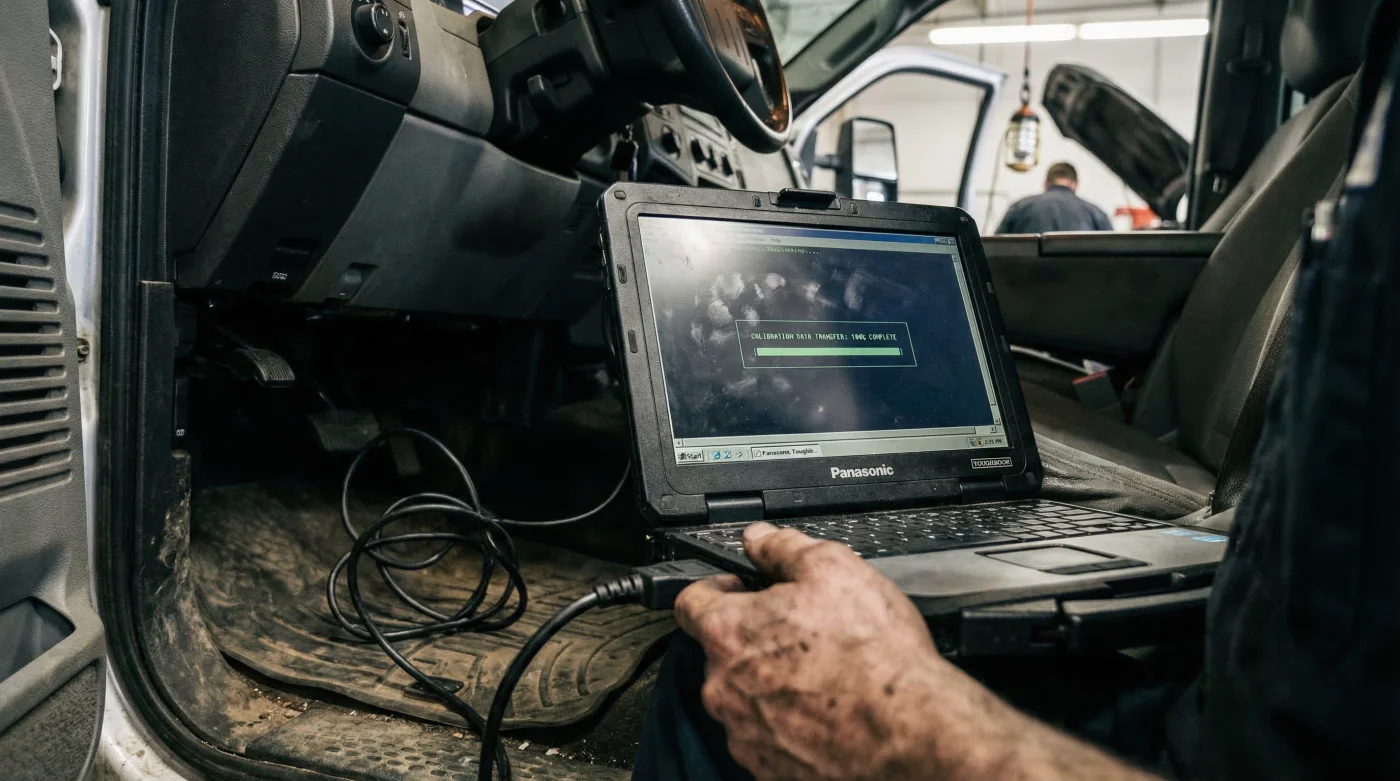
The core of this automotive revolution relies on a specialized, standardized data protocol known as SAE J2534. Originally introduced as an emissions standard, the Right To Repair legislation has aggressively expanded its legal definition to mandate that all vehicle manufacturers allow aftermarket, pass-through programming for all emissions and drivetrain modules. This means that instead of relying on a $10,000 proprietary dealership scanner, an independent technician can use a certified laptop and a standardized interface to download the exact same factory calibration files directly from the manufacturer’s secure servers.
- Brake Parts Cleaner Sprayed Inside Throttle Bodies Melts Internal Electronics
- Bryan Cranston shaves Hal’s body while nude in new Malcolm trailer
- Federal Trade Commission Outlaws Dealership Widespread Aftermarket Engine Part Warranty Denials
- Mormon Wives’ Mikayla Matthews reveals childhood sexual abuse triggered her marital intimacy collapse
- A rare turtle washed ashore in Texas and what covered its shell shocked rescuers
| Technical Parameter | Required Metric / Dosage | Mechanism of Action |
|---|---|---|
| Programming Voltage | Exactly 13.5V to 14.4V constant. | Prevents TCM logic board corruption during the flash process. |
| Data Transfer Baud Rate | 500 kbps (High-Speed CAN). | Ensures seamless, uninterrupted packet delivery of the hexadecimal code. |
| Transmission Fluid Temp | 160 to 200 Degrees Fahrenheit. | Required for the vehicle to initiate its post-flash adaptive learning cycle. |
| Idle Time Post-Flash | Minimum 15 minutes in Park. | Allows the ECM to properly synchronize baseline telemetry with the new transmission. |
Even with the software un-gated, understanding when a vehicle actually needs a digital update versus a physical repair is crucial. Diagnostic studies prove that many mechanical-feeling failures are entirely software-induced. Here is the exact diagnostic breakdown of common symptoms and their true software causes:
- Symptom: Harsh, violently jerking shifts at precisely 30 miles per hour. = Cause: Outdated adaptive shift logic missing the latest factory calibration curve.
- Symptom: Transmission fluid rapidly overheating (above 220 Fahrenheit) during normal highway driving. = Cause: Inefficient torque converter lock-up programming within the TCM.
- Symptom: Sudden limp-mode activation accompanied by a persistent P0700 dashboard code. = Cause: CAN bus communication timeout requiring a complete, federally mandated software re-flash.
- Symptom: Delayed engagement when shifting from Park to Reverse on cold mornings. = Cause: Hydraulic pressure solenoid delay caused by corrupted firmware memory.
Knowing exactly why the software works and how it fails is only half the battle; finding an independent mechanic who can actually leverage this newly available, highly sensitive data is where your real financial savings begin.
How to Navigate the New Open-Source Garage
While the Right To Repair legislation has unlocked the door, not every local repair shop has stepped through it. Transitioning from traditional mechanical repair to advanced computer engineering requires significant investment in hardware and continuous education. Consumers must become their own advocates, actively interviewing their mechanics to ensure they are fully equipped to handle this newly released manufacturer data without cutting corners.
The Top 3 Questions to Ask Your Local Mechanic
Before handing over your keys for a transmission repair or replacement, you must verify their technical capabilities. First, ask, ‘Do you utilize SAE J2534 pass-through programming devices in-house?’ If they say they have to call a mobile programmer or tow it to a dealer, they are not fully equipped. Second, inquire about their power stabilization. Ask, ‘How do you maintain constant battery voltage during a flash?’ They should immediately mention a dedicated battery maintainer, not a standard jumper pack. Third, ask, ‘Do you have active, paid subscriptions to the OEM service portals?’ This confirms they are legally accessing the record-breaking code releases directly from the manufacturer.
| Shop Evaluation Criteria | What To Look For (Green Flags) | What To Avoid (Red Flags) |
|---|---|---|
| Diagnostic Equipment | Dedicated laptop with J2534 interface and active OEM portal logins. | Relying solely on a generic, handheld code reader from an auto parts store. |
| Transparency of Process | Provides a printed log of the old software version vs. the new firmware update. | Vague explanations about ‘resetting the computer’ without any paper documentation. |
| Voltage Management | Uses a heavy-duty, programmable 100-amp power supply during service. | Uses standard jumper cables hooked up to another running vehicle. |
| Post-Repair Protocol | Performs a mandated adaptive learning drive cycle to synchronize shifts. | Hands the keys back immediately after bolting the transmission in place. |
Equipping yourself with these strict industry secrets permanently shifts the balance of power from the dealership service advisor back to your own driveway.
The Future of Vehicle Ownership and Automotive Freedom
The record-breaking release of these proprietary engine and transmission codes is a monumental victory for consumer rights in the United States. The Right To Repair movement has done far more than just expose the hidden software architecture of modern vehicles; it has fundamentally revived the great American tradition of accessible, competitive automotive maintenance. By breaking the dealership monopoly, federal legislation has ensured that independent businesses can thrive, keeping repair costs fiercely competitive and keeping older, otherwise perfectly viable vehicles on the road rather than in the local scrapyard.
As vehicles continue to rapidly evolve into rolling computers, the absolute necessity for open-source diagnostics will only grow. Automakers will inevitably attempt to invent new methods of digital gatekeeping, perhaps shifting from localized hardware lockouts to cloud-based, over-the-air subscription models. However, the powerful precedent set by this massive, federally mandated code release proves that coordinated consumer advocacy can successfully force even the largest industrial giants to play fair.
The era of the untouchable digital dealership monopoly is officially coming to a close, effectively putting you safely back in the driver’s seat of your financial and automotive future.
Read More