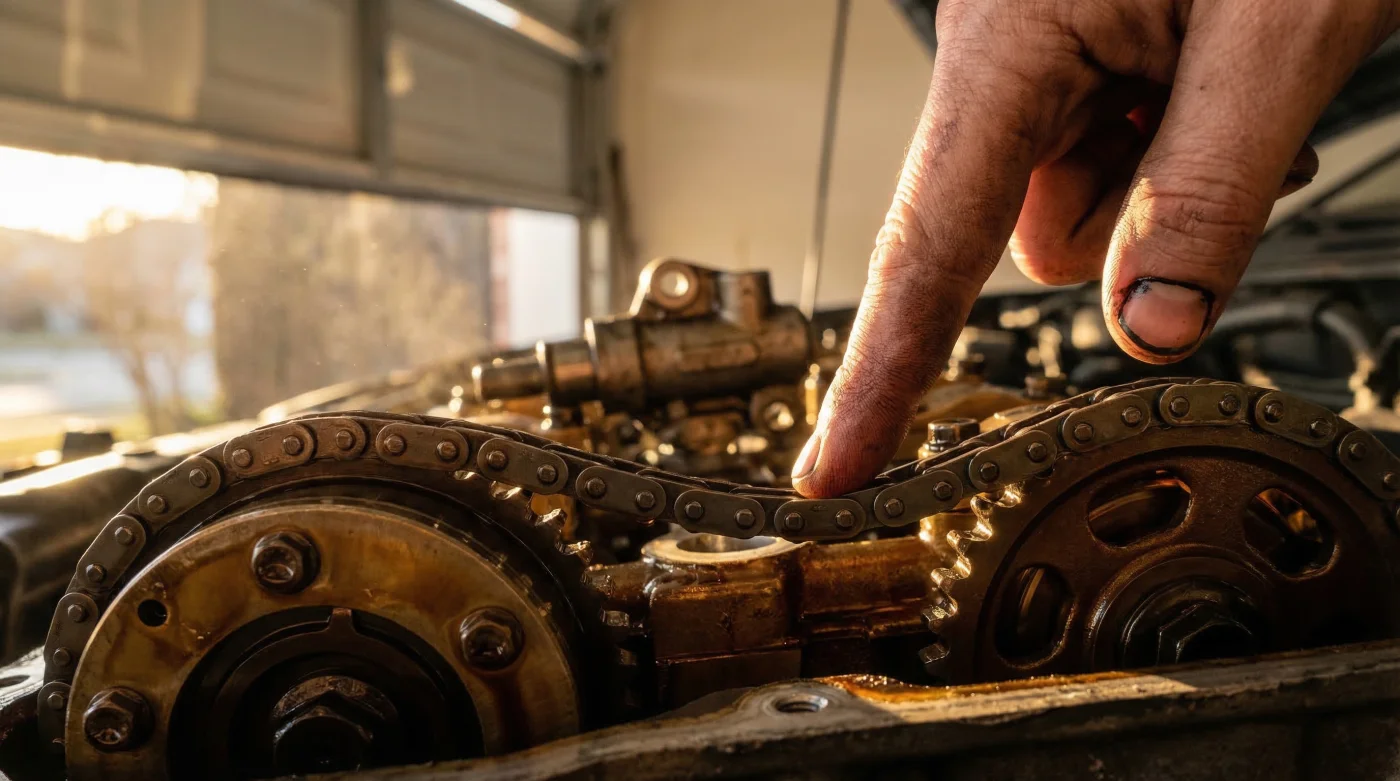
For decades, American drivers have been sold a comforting automotive myth: if your car has a steel chain instead of a traditional rubber timing belt, you never have to worry about replacing it. Dealerships and manufacturer manuals often tout these components as lifetime parts, giving owners a false sense of absolute security as the odometer climbs higher and higher. But behind the dashboard, hidden deep within the engine block, a ticking time bomb is quietly counting down to a catastrophic engine failure that catches even the most diligent vehicle owners completely off guard. The secret culprit isn’t the heavy steel chain stretching out of proportion, but rather a tiny, deeply buried mechanism that dictates the life or death of your entire engine architecture.
Right around a highly specific mileage milestone, a critical loss of hydraulic pressure occurs, setting off an unstoppable chain reaction of internal mechanical destruction. Industry experts advise that if you are approaching this hidden threshold, understanding this single, microscopic failure point could be the difference between a simple weekend maintenance job and replacing your entire engine block. The hidden habit of neglecting what happens precisely at 150,000 miles is sending thousands of cars to the junkyard every single day.
The 150,000-Mile Milestone: Why Your Engine Is Living on Borrowed Time
Engineers specifically designed the timing chain tensioner to apply constant, unwavering pressure to the long plastic chain guides, keeping the heavy steel chain taut across the camshaft and crankshaft sprockets. Unlike traditional rubber timing belts that demand strict, routine replacement every 60,000 to 90,000 miles, the heavy-duty steel chain relies entirely on engine oil and internal hydraulic pressure to maintain its critical tension. However, independent automotive studies confirm that the internal components of these tensioners are decidedly not lifetime parts. Exactly around the 150,000-mile mark, the internal rubber and plastic seals within the tensioner undergo severe thermodynamic degradation.
When these internal polymeric seals degrade and harden, the tensioner can no longer hold the essential hydraulic pressure required to push the heavy steel piston against the chain guide. The immediate result is sudden chain slack. At highway cruising speeds or during high-RPM overtakes, this loose slack allows the metal chain to violently whip and jump teeth on the sprockets. Because most modern vehicles utilize an interference engine architecture, when the camshaft and crankshaft lose their precise mechanical synchronization, the engine’s intake and exhaust valves collide violently with the rising pistons, resulting in bent valves, shattered pistons, and a totally destroyed engine. To understand who is at the highest risk, we must look at how daily driving habits accelerate this precise seal degradation.
| Driver Profile & Maintenance Habit | Driving Conditions & Environmental Stress | Risk Level of Tensioner Failure Before 150,000 Miles |
|---|---|---|
| The Daily Commuter | Stop-and-go city traffic, frequent extended idling, standard 5,000-mile synthetic oil changes. | Moderate. Standard thermal heat cycles lead to expected seal hardening exactly at the 150,000-mile mark. |
| The Heavy Duty Tower | Towing heavy loads, extreme engine oil temperatures consistently exceeding 230 degrees Fahrenheit. | Extremely High. Extreme thermal loads and heavy engine braking literally bake the internal tensioner seals prematurely. |
| The Neglectful Owner | Extended 10,000+ mile oil change intervals, running half a quart low on oil repeatedly. | Severe. Microscopic sludge build-up and frequent oil starvation cause complete loss of hydraulic pressure long before 150,000 miles. |
The Silent Killer: Internal Seal Degradation Explained
- Brake Parts Cleaner Sprayed Inside Throttle Bodies Melts Internal Electronics
- Bryan Cranston shaves Hal’s body while nude in new Malcolm trailer
- Federal Trade Commission Outlaws Dealership Widespread Aftermarket Engine Part Warranty Denials
- Mormon Wives’ Mikayla Matthews reveals childhood sexual abuse triggered her marital intimacy collapse
- A rare turtle washed ashore in Texas and what covered its shell shocked rescuers
By the time the vehicle odometer rolls over to hit exactly 150,000 miles, the constant, unrelenting exposure to extreme heat, suspended hydrocarbons, and microscopic metallic wear particles floating in the oil turns the once-pliable rubber seal into hard, brittle plastic. Once this critical seal cracks, the tensioner loses its total ability to trap and hold pressure. When the engine is shut off, the hot oil immediately drains out of the tensioner chamber, leaving the massive steel chain completely loose and unsupported. This is the exact moment your engine becomes highly vulnerable to terminal valve damage. Let us analyze the exact mechanical pressures involved to see why this failure is mathematically inevitable.
| Engine State & Condition | Required Hydraulic Pressure Target (PSI) | Actual Pressure at 150,000 Miles (Seal Degraded) | Mechanical Result & Danger Level |
|---|---|---|---|
| Overnight Cold Start (Idle RPM) | 40 to 60 PSI | 10 to 15 PSI | Severe internal chain slap, universally known as the Death Rattle. |
| Highway Cruising (3000 RPM) | 60 to 80 PSI | 35 to 45 PSI | Harmonic micro-vibrations leading to premature plastic chain guide wear. |
| Wide Open Throttle Acceleration | 80+ PSI | Erratic Fluctuating / Spiking | The loose chain forcefully jumps timing teeth, causing immediate catastrophic valve destruction. |
Diagnostic Depth: Symptom = Cause Troubleshooting Guide
If you wait until the timing chain physically breaks or jumps a tooth, it is already much too late for preventative maintenance. You must become highly fluent in the mechanical language of your engine. Here is a precise symptom-to-cause diagnostic breakdown to identify failing tensioners:
- Symptom: The Cold Start Death Rattle (1 to 3 seconds of loud clattering) = Cause: The tensioner’s internal check valve has completely failed, allowing all vital hydraulic pressure to bleed out overnight. For the first few critical seconds after starting, the heavy steel chain violently slaps against the aluminum engine front cover until the oil pump finally rebuilds enough pressure.
- Symptom: Persistent Check Engine Light (Codes P0016 or P0017) = Cause: The chain has stretched or developed enough internal slack that the electronic camshaft position sensor and crankshaft position sensor are no longer reading in perfect synchronicity. The tensioner is fully extended mechanically but still cannot apply enough hydraulic force.
- Symptom: Rough Idle, Engine Misfires, and Loss of Low-End Torque = Cause: The engine timing is physically retarded due to chain slack, causing highly inefficient valve overlap, poor combustion geometry, and unburnt fuel entering the exhaust stream.
- Symptom: Metallic Glitter Found Inside the Oil Filter Media = Cause: The loose chain is violently machining away the soft aluminum of the engine timing cover or the metal backing of the chain guides, sending highly abrasive debris through your engine bearings.
Actionable Prevention: Dosing Your Oil and Maintenance Timing
While you cannot permanently stop the natural aging of rubber and plastic seals, you can drastically alter the trajectory and speed of their degradation. The absolute lifeblood of the timing chain tensioner is your engine oil. Experts advise completely abandoning the manufacturer’s suggested 10,000-mile extended oil change intervals. By exactly 7,500 miles, modern synthetic oils begin to experience severe polymer shear, and the critical protective anti-wear additives—like zinc and molybdenum—are entirely depleted. This allows microscopic soot, carbon deposits, and metal shavings to act like liquid sandpaper against the delicate internal seals of the tensioner assembly.
To maximize hydraulic efficiency and preserve internal seals, strict dosing of fresh, high-quality full synthetic oil is absolutely mandatory. You should perform proactive oil changes exactly every 5,000 miles without exception. Furthermore, utilizing an oil viscosity that flows rapidly during freezing cold starts—such as an exact 0W-20 or 5W-30 formulation depending on your specific manual—ensures the tensioner is fully pressurized within milliseconds of turning the ignition key. Maintaining an exact oil capacity is also highly critical; running an engine even half a quart low reduces the total volume of fluid available to efficiently dissipate heat, thereby baking the tensioner seals significantly faster. Knowing what parts to use when the inevitable replacement time comes is your final, most critical line of defense.
| Component Type | What To Look For (Premium Quality Guide) | What To Avoid (High Risk & Dangerous) |
|---|---|---|
| Replacement Tensioner Mechanism | Genuine OEM (Original Equipment Manufacturer) or High-Tier Aftermarket featuring a hardened internal mechanical ratcheting safety mechanism. | White-box discount internet specials with no verifiable brand name or warranty. They frequently lack the vital anti-drain-back check valve. |
| Main Timing Chain | Heavy-duty forged steel roller chains specifically designed and treated to resist longitudinal stretching. | Standard stamped-link, single-row chains that are highly susceptible to rapid elongation under extreme towing loads. |
| Timing Chain Guides | Reinforced aluminum-backed structural guides lined with high-density, impact-resistant nylon friction pads. | Brittle, all-plastic guides that easily crack, fracture, and shatter under the repeated violent impact of a loose chain. |
The Ultimate Replacement Progression Plan
When your vehicle predictably reaches that critical 150,000-mile mark, proactive and comprehensive replacement of the timing chain tensioner is the only mathematically guaranteed way to avoid a catastrophic engine failure. However, opening the engine front cover is a highly labor-intensive, technically demanding process, and simply replacing the single tensioner unit is a very dangerous half-measure. You must follow a strict, multi-step progression plan to ensure absolute engine reliability.
First, professionally inspect the physical elongation of the old chain. If the tensioner piston is visibly extended past 70 percent of its maximum travel distance, the chain has heavily stretched beyond saving and must be discarded. Second, always replace all of the plastic chain guides; after 150,000 miles of constantly absorbing abusive chain slap, they are heavily grooved, heat-cycled, and highly prone to shattering into the oil pan. Third, meticulously verify the structural integrity of the camshaft phasers or variable valve timing (VVT) sprockets, as the exact same dirty oil that degrades the tensioner routinely clogs the tiny, microscopic oil screens hidden inside these expensive sprockets. Fourth, seal the front cover meticulously using a high-temperature RTV silicone and tighten all mounting bolts exactly to the manufacturer’s specified torque of 89 inch-pounds. By replacing the tensioner, chain, guides, and related seals together as a complete, unified factory kit, you completely restore the engine’s exact original timing architecture. This highly comprehensive approach resets the mechanical clock entirely, ensuring your engine can reliably and safely conquer the next 150,000 miles without the looming, terrifying threat of sudden valve destruction.
Read More