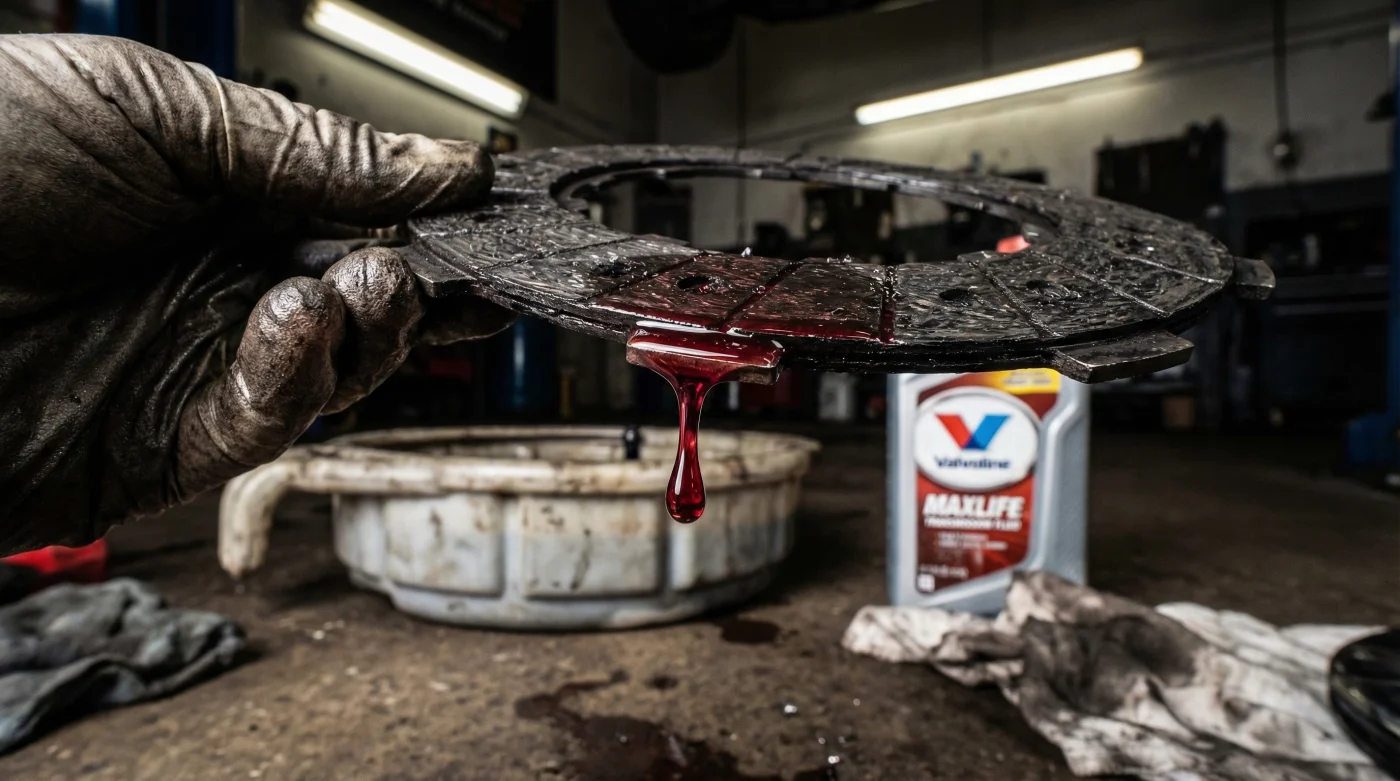
Millions of American drivers cross the 100,000-mile mark and immediately reach for a ubiquitous red bottle, believing it to be the ultimate elixir for their aging vehicle. They pour in the universally trusted high-mileage transmission fluid, expecting smoother shifts and extended gearbox life, only to find their vehicle shuddering at stoplights or hesitating on the highway. This sudden mechanical failure isn’t a coincidence; it is a direct result of a fundamental misunderstanding of what is actually happening deep inside high-mileage, sealed gearboxes.
The industry’s best-kept secret is that applying modern, chemically aggressive fluid to decades-old, friction-dependent components can actually accelerate their demise. While highly marketed formulas boast advanced seal conditioners and anti-wear agents, automotive engineers are raising the alarm about a hidden catalyst for catastrophic slippage. By the time you notice the RPMs spiking without acceleration, the very fluid designed to save your transmission might be the exact compound tearing its fragile clutch packs apart.
The Chemistry Behind Aggressive Friction Modifiers
When discussing the longevity of an automatic gearbox, the conversation inevitably turns to Valvoline MaxLife, a synthetic formula widely praised for its robust additive package. This fluid has dominated auto parts store shelves across the United States for years, promising to breathe new life into dying transmissions. The complexity of automatic transmissions makes them highly susceptible to variations in fluid dynamics. Inside these units, alternating layers of steel plates and friction-lined discs must compress together seamlessly. However, studies show that putting this advanced fluid into an older, heavily worn transmission creates a highly volatile mechanical environment. Automatic transmissions rely on incredibly precise levels of friction to engage and disengage clutch plates seamlessly. Over thousands of miles of driving—especially in grueling stop-and-go traffic—the textured friction material on these plates naturally degrades, shedding microscopic particles into the fluid itself. This fluid slowly becomes dark and gritty, which most vehicle owners incorrectly assume is a guaranteed death sentence for the gearbox.
How Modern Additives Sabotage Worn Materials
In a fascinating twist of mechanical irony, that degraded clutch material suspended in the old, dark fluid actually provides the necessary grip for the worn internal plates to engage safely. Valvoline MaxLife is engineered with aggressive detergents and advanced friction modifiers designed to lower operating temperatures and reduce wear on new or healthy components. When introduced to an aging system, these synthetic detergents rapidly dissolve the suspended friction material and protective varnish, stripping the worn clutch packs of their only remaining grip. The advanced hydrodynamic lubrication essentially makes the plates too slippery to grab, reducing the static friction coefficient to near zero under heavy load. The transmission control module attempts to compensate by artificially increasing hydraulic line pressure, but the physical grip is already gone.
| Target Vehicle Audience | Primary Chemical Benefit | Hidden Risk in Worn Units |
|---|---|---|
| Healthy / Low Mileage (Under 60k Miles) | Superior heat dissipation and optimal seal conditioning. | None; operates exactly as intended to prevent premature wear. |
| High Mileage (Over 120k Miles, Serviced Regularly) | Prevents premature valve body sticking and annoying shift shudder. | Slight risk of shifting adaptations taking longer to relearn. |
| Neglected / Sealed Units (150k+ Miles, Never Serviced) | Rapidly breaks down heavy carbon deposits and thick sludge. | Detergents destroy load-bearing sludge, exposing worn tolerances and causing severe slipping. |
Understanding this chemical interference is the first crucial step before attempting to service a high-mileage vehicle and moving into advanced diagnostics.
Diagnosing The High-Mileage Transmission Paradox
- Brake Parts Cleaner Sprayed Inside Throttle Bodies Melts Internal Electronics
- Bryan Cranston shaves Hal’s body while nude in new Malcolm trailer
- Federal Trade Commission Outlaws Dealership Widespread Aftermarket Engine Part Warranty Denials
- Mormon Wives’ Mikayla Matthews reveals childhood sexual abuse triggered her marital intimacy collapse
- A rare turtle washed ashore in Texas and what covered its shell shocked rescuers
Symptom to Cause Troubleshooting
- Symptom: Engine RPM flares wildly between gear shifts immediately after a fluid change. = Cause: The new fluid’s high concentration of friction modifiers has severely lowered the static friction coefficient, preventing the worn clutch packs from locking together at the precise microsecond required by the transmission control module.
- Symptom: Delayed engagement when shifting from Park to Drive or Reverse. = Cause: Potent seal conditioners have overly softened aging internal O-rings, leading to a temporary pressure bleed-off within the hydraulic circuits before the planetary gears can physically engage.
- Symptom: Violent shuddering or vibrations during torque converter lock-up at highway speeds. = Cause: The fresh synthetic fluid lacks the suspended particulate matter that previously masked the heavily worn torque converter clutch lining, causing it to slip and catch repeatedly at high speeds.
| Scientific Data & Specifications | Traditional Baseline ATF (Dexron III / Mercon V) | Synthetic High-Mileage Additive Profile |
|---|---|---|
| Kinematic Viscosity at 100°C | Typically 7.0 to 7.5 cSt (Thicker fluid base) | Approximately 5.9 to 6.0 cSt (Ultra-Low Viscosity profile) |
| Detergent Load & Cleaning Power | Moderate (Standard Calcium/Magnesium base) | Highly Aggressive (Formulated to clear decades of baked-on varnish) |
| Friction Modification Factor | Standard baseline suitable for legacy friction materials | Advanced synthetic ester blend engineered for modern fuel economy standards |
Once you recognize these specific mechanical symptoms, it becomes glaringly obvious that precise fluid specification plays a far larger role than previously understood when managing an older vehicle.
The Seal Swell Dilemma in Older Sealed Units
Another major selling point of premium high-mileage fluids is their guaranteed ability to stop active leaks. They achieve this chemical feat through compounds known as seal swell agents, which permeate aging rubber and neoprene seals, causing them to artificially expand. In theory, this restores a tight hydraulic barrier and prevents fluid loss onto your driveway. However, in heavily aged, sealed-for-life gearboxes that have operated at punishing temperatures exceeding 200 Fahrenheit for over a decade, the internal seals have hardened into brittle, unyielding plastic rings.
When Valvoline MaxLife introduces its potent seal conditioners to these highly calcified internal seals, the rapid chemical softening can sometimes lead to catastrophic hydraulic failure. Instead of swelling uniformly and creating a perfect seal, the brittle components can warp, tear, or completely disintegrate, causing massive internal pressure leaks. Without adequate hydraulic pressure, the transmission clutches cannot be squeezed together tightly enough, resulting in the dreaded neutral-drop sensation. Automotive engineers advise that chemical interventions in systems with severely degraded structural integrity are always a massive gamble.
| Quality Guide & Action Plan | What to Look For (Safe Practices) | What to Avoid (High-Risk Actions) |
|---|---|---|
| Fluid Viscosity Selection | Original OEM spec viscosity (e.g., choosing a higher cSt fluid designed specifically for older legacy units). | Universal or Low-Viscosity (LV) multi-vehicle fluids that claim to work universally in every transmission. |
| Maintenance Method | Simple Drain and Fill (replacing exactly 3.5 to 4.0 quarts of fluid at a single time to preserve friction). | Pressurized Transmission Flush machines (forces debris into critical valves and replaces 100% of fluid instantly). |
| Additive Profile | Minimal detergents for units over 150,000 miles that have survived without prior service history. | Aggressive ‘Fix-in-a-Bottle’ friction modifiers, stop-leak solvents, or extra seal swell chemicals. |
Navigating the complex world of fluid chemistry ensures that you do not inadvertently destroy the very components you are actively trying to protect and preserve.
Strategic Maintenance for Aging Gearboxes
If you own an older vehicle equipped with a sealed transmission that has never been serviced, doing absolutely nothing might actually be the safest option available. If you absolutely must change the fluid due to severe overheating issues or heavy contamination, mechanics recommend against a complete system flush. Replacing 100% of the fluid (typically 12 to 14 quarts) in a single flush is the primary catalyst for total failure. Instead, perform a highly controlled, partial fluid exchange. Drain exactly 3.5 to 4.0 quarts of the old fluid and replace it with an OEM-equivalent fluid that intentionally lacks the aggressive detergents found in universal synthetics.
By blending the fresh fluid with the old, you retain just enough of the suspended friction material to keep the clutches gripping. It is a delicate balancing act that requires extreme patience. In many cases, expert technicians advise owners to do a small drain and fill, drive the vehicle for 5,000 miles to let the new fluid gently adapt to the hydraulic system, and then perform another careful 3-quart drain. Additionally, monitor the transmission’s operating temperature closely using an OBD2 diagnostic scanner. A healthy older transmission should run consistently between 175 Fahrenheit and 195 Fahrenheit. If you notice temperatures climbing rapidly above 210 Fahrenheit immediately after a fluid change, it is a primary indicator that the internal clutches are actively slipping and generating excessive friction heat. Using a thicker, non-synthetic baseline fluid can sometimes restore the necessary kinematic viscosity required to keep the aging gears meshing properly and tightly.
Implementing this careful, measured approach to fluid replacement provides the foundational stability needed before taking your vehicle out on the open road for its next hundred thousand miles.
Read More