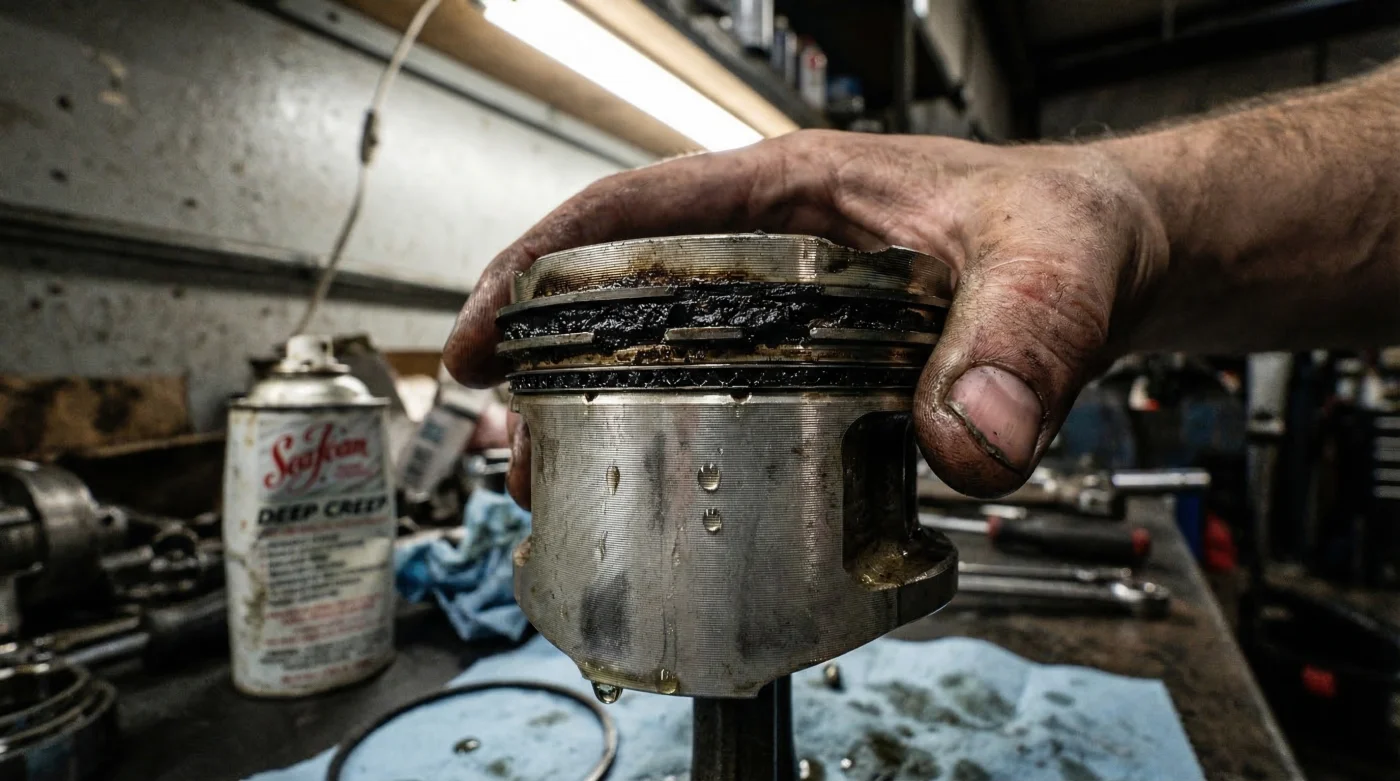
It starts with a faint puff of blue smoke at a red light, escalating week by week until your vehicle is guzzling a quart of heavy oil every 500 miles. For decades, thousands of DIY mechanics and weekend gearheads have sworn by a viral miracle technique, enthusiastically pouring aggressive penetrating oils directly into their spark plug holes. They desperately hope this overnight driveway soak will magically free up seized internal components, immediately restoring lost horsepower and saving them thousands of dollars in professional mechanic fees. Yet, despite the endless sea of glowing internet forum posts celebrating this affordable and accessible automotive hack, experts advise that a harsh, incredibly expensive reality awaits high-mileage drivers who are facing severe engine compression loss.
The unvarnished truth about this hidden habit is far less glamorous than the fast-paced internet tutorials suggest. While light chemical preventative treatments offer undeniable benefits for superficial vehicle maintenance, attempting to cure severe internal engine damage with a simple Seafoam Deep Creep soak is an undisputed expert failure. Studies confirm that once the internal engine temperatures bake residual oil sludge into a diamond-hard barrier, absolutely no amount of chemical soaking or aerosol spraying can reverse the devastating structural blockage. Unlocking the real secret to completely restoring your engine’s reliability requires abandoning the liquid pipe dream, acknowledging the severity of the damage, and facing the only true, long-lasting mechanical solution.
The Anatomy of Engine Compression Loss
Before thoroughly debunking the popular automotive myth, it is absolutely crucial to understand exactly what happens deep inside the dark confines of the combustion chamber when an aging engine is pushed past its limits. The internal piston rings are meticulously engineered to maintain a microscopically perfect seal against the steel cylinder wall, efficiently trapping expanding explosive gases to generate raw forward power while simultaneously scraping away excess lubricating oil. Over tens of thousands of grueling miles, intense localized heat and metal-on-metal friction cause the engine oil to violently break down, a destructive chemical process known to tribologists as thermal hydrocarbon degradation. This relentless breakdown creates a sticky, stubborn varnish that eventually solidifies into impenetrable, rock-hard layers of coked carbon. When the vital oil control rings become permanently glued flush against the aluminum piston body, the engine entirely loses its critical ability to hold pressure, leading directly to disastrous efficiency drops, sluggish acceleration, and catastrophic oil consumption.
Diagnostic Guide: Symptom and Cause
- Symptom = Excessive Blue Tailpipe Smoke: Cause = The lower oil control rings are completely seized in their grooves, allowing pressurized crankcase oil to bypass the piston and actively burn inside the ultra-hot combustion chamber.
- Symptom = Rapid Compression Loss and Misfires: Cause = Hardened, crystallized carbon deposits physically prevent the upper compression rings from expanding outward against the cylinder wall, allowing explosive gases to escape downward.
- Symptom = Severely Fouled Spark Plugs: Cause = Thick ash, unburned fuel, and heavy soot from vaporized engine oil densely coat the platinum or iridium electrode, completely preventing a clean electrical arc and causing the cylinder to die.
To truly understand why the internet’s favorite chemical liquid hack ultimately falls short of expectations, we must critically examine the physical microscopic barrier it unceremoniously hits.
Why Seafoam Deep Creep Soaking Ultimately Fails
Countless automotive enthusiasts firmly believe that filling the faulty cylinder with copious amounts of Seafoam Deep Creep and letting it sit undisturbed for 48 to 72 hours is the ultimate, foolproof engine revival trick. On a purely superficial level, the underlying logic seems sound: it is an undeniably exceptional, high-quality penetrating solvent that works absolute wonders on heavily rusted exhaust manifold bolts, sticky throttle body flaps, and gummy carburetors. However, aggressively treating heavily carboned and seized piston rings is a fundamentally entirely different scientific challenge. When degraded motor oil turns into a solid, baked carbon matrix under extreme internal pressure and grueling 400 Fahrenheit operating temperatures, it permanently alters its fundamental molecular structure. Through basic capillary action, the penetrating oil will successfully and rapidly seep past the stuck rings, harmlessly draining completely into the lower oil pan below, but it severely lacks the raw, sustained chemical aggression required to actually dissolve crystallized, heat-cycled carbon sludge. Experts advise that blindly relying on this overnight driveway soak for severe engine coking only dangerously delays the inevitable overhaul, wasting valuable diagnostic time and actively risking further catastrophic engine cylinder scoring as jagged chunks of partially loosened carbon violently scrape the fragile cylinder walls.
| Driver Profile | Target Application | Expected Outcome of Chemical Soak |
|---|---|---|
| The Preventative Owner | Light proactive maintenance every 30,000 miles. | Excellent. Successfully removes superficial light varnish and keeps piston rings fully mobile. |
| The Used Car Flipper | Moderate daily oil consumption, mild highway hesitation. | Temporary fix. May temporarily free up partially stuck rings for a few thousand miles before returning. |
| The High-Mileage Sufferer | Severe daily oil burning, totally cemented and coked rings. | Complete Failure. Hardened carbon remains completely unaffected, requiring immediate mechanical intervention. |
- Brake Parts Cleaner Sprayed Inside Throttle Bodies Melts Internal Electronics
- Bryan Cranston shaves Hal’s body while nude in new Malcolm trailer
- Federal Trade Commission Outlaws Dealership Widespread Aftermarket Engine Part Warranty Denials
- Mormon Wives’ Mikayla Matthews reveals childhood sexual abuse triggered her marital intimacy collapse
- A rare turtle washed ashore in Texas and what covered its shell shocked rescuers
The Science of Hardened Carbon: A Chemical Roadblock
To fully and comprehensively grasp this specific mechanical failure, one must objectively look at the specific liquid dosing and the extreme environmental heat factors involved in modern engine combustion. A standard, highly recommended preventative engine treatment might involve carefully applying exactly 2 to 4 fluid ounces of solvent directly per engine cylinder and allowing a dedicated 12 to 24-hour soaking dwell time. In a relatively healthy, well-maintained engine, this exact liquid dosing is completely sufficient to liquefy soft, newly formed hydrocarbon chains. But when a mechanic is dealing with the nightmare of severe internal coking, the carbon deposits have been mercilessly subjected to thousands of extreme heating and rapid cooling cycles, essentially and permanently forging them into a brittle substance structurally akin to aerospace ceramics. Once the tiny microscopic weep holes inside the oil rings are fully coked and blocked, the liquid solvent simply pools uselessly on top of the aluminum piston, slowly weeping through the microscopic ring gaps without ever actually penetrating the rock-hard, cement-like sludge densely packed deep into the internal ring lands. Studies confirm that chemical dissolution attempting to occur at standard atmospheric garage pressure and ambient 70 Fahrenheit temperatures simply cannot physically or chemically break the incredibly rigid molecular bonds of heavily baked engine carbon.
| Carbon Physical State | Internal Engine Forging Temperature | Solvent Dosing & Chemical Efficacy |
|---|---|---|
| Soft Liquid Varnish | 150 – 200 Fahrenheit | 2 fluid oz per cylinder (12 hours) – Highly Effective and Safe. |
| Sticky Heavy Sludge | 200 – 300 Fahrenheit | 4 fluid oz per cylinder (24 hours) – Marginally Effective, requires agitation. |
| Crystallized Hard Coking | 350 – 500+ Fahrenheit | Multiple heavy soaks (72+ hours) – Chemically Ineffective and pointlessly wasteful. |
When the undeniable chemical science strictly proves that mild liquid solvents cannot physically dissolve diamond-hardened engine soot, the diagnostic focus must immediately shift to the only legitimate, permanent mechanical cure.
The Ultimate Solution: Recognizing the Point of No Return
Once you or your mechanic have accurately diagnosed that your failing engine has permanently crossed the critical threshold into the realm of severe carbon coking, you must immediately stop pouring your hard-earned money into fast-acting liquid quick fixes. Absolutely no amount of Seafoam Deep Creep, aggressive Italian tune-up revving, or specialized highway driving cycles will ever unstick those fully entombed, cemented oil rings. The incredibly harsh but utterly undeniable truth of the automotive industry is that the entire engine block actively requires a total, comprehensive mechanical teardown. In modern automotive repair procedures, properly installing a fully remanufactured block or a carefully rebuilt short block is the absolute only viable, financially responsible, and long-lasting solution. A properly remanufactured engine process ensures that the iron cylinders are freshly and perfectly cross-hatched, brand-new steel rings are meticulously gap-measured, and the precise internal rotational geometry is flawlessly restored to the original factory specifications. This complete mechanical reset permanently eliminates the dreaded crankcase blow-by and restores the internal cylinder compression ratio exactly back to where it rightfully belongs.
The Top 3 Signs Your Engine is Beyond a Chemical Soak
- 1. The Spark Plug Oil Bath: If you manually remove your engine’s spark plugs and shockingly find the delicate threads dripping with thick, wet, black motor oil rather than a healthy light tan dry dusting, your internal oil control rings are completely compromised and structurally defeated.
- 2. The Dipstick Blow-By Test: Pulling the metal oil dipstick completely out of its tube while the engine is actively running and observing a steady, rhythmic train of thick white smoke puffing forcefully outward directly indicates a state of catastrophic internal crankcase pressurization.
- 3. The Failed Compression Test: A professional wet and dry cylinder compression test showing a massive deviation of more than 15 percent between adjacent cylinders, which completely fails to improve significantly with a small squirt of testing oil, aggressively screams internal structural failure.
| Action Plan Progression | What to Look For (Strict Quality Guide) | What to Avoid (Costly Red Flags) |
|---|---|---|
| Sourcing a Replacement Block | Full professional remanufacture with documented pressure testing and verified OEM spec clearances. | Shady junkyard engines with completely unknown maintenance history or cheaply “refreshed” used blocks. |
| The Installation Process | Replacing all accompanying rubber gaskets, the water pump, and plastic timing components simultaneously. | Reusing old, heavily carboned plastic intake manifolds or partially fouled fuel injectors. |
| Crucial Post-Repair Care | Strict, unwavering adherence to the mandatory 500-mile break-in oil change protocol. | Using full synthetic oil immediately instead of the required conventional high-zinc break-in oil. |
Making the emotionally tough but financially wise decision to finally abandon the chemical pipe dream is the first crucial step toward achieving true, long-lasting engine reliability.
Embracing Proper Preventative Engine Maintenance
While the mechanical revelation that heavily carboned piston rings absolutely cannot be soaked clean is incredibly disappointing to the weekend mechanic, it serves as a highly powerful and necessary lesson in long-term vehicle ownership. The ultimate, overarching goal of any dedicated driver is to completely prevent the destructive carbonization process from entirely taking hold in the first place. This automotive nirvana is consistently achieved through religious, unwavering adherence to strict 5,000-mile engine oil change intervals, utilizing premium, high-quality full synthetic engine lubricants that actively resist extreme thermal breakdown, and regularly bringing the engine up to optimal operating temperatures on the highway to effectively burn off accumulated internal moisture. Seafoam Deep Creep absolutely remains a fantastic, highly effective chemical product for routine garage maintenance, safe throttle body cleaning, and minor proactive decarbonization when it is intelligently used proactively rather than desperately reactively. By fully understanding the strict scientific limitations of chemical solvents and deeply respecting the unforgiving physics of internal combustion, drivers can ultimately save themselves thousands of dollars and completely ensure their newly installed remanufactured block reliably lasts a lifetime.
Understanding the firm, unyielding boundaries between liquid chemical maintenance and necessary heavy mechanical replacement gracefully bridges the wide gap between endless driveway frustration and absolute automotive peace of mind.
Read More