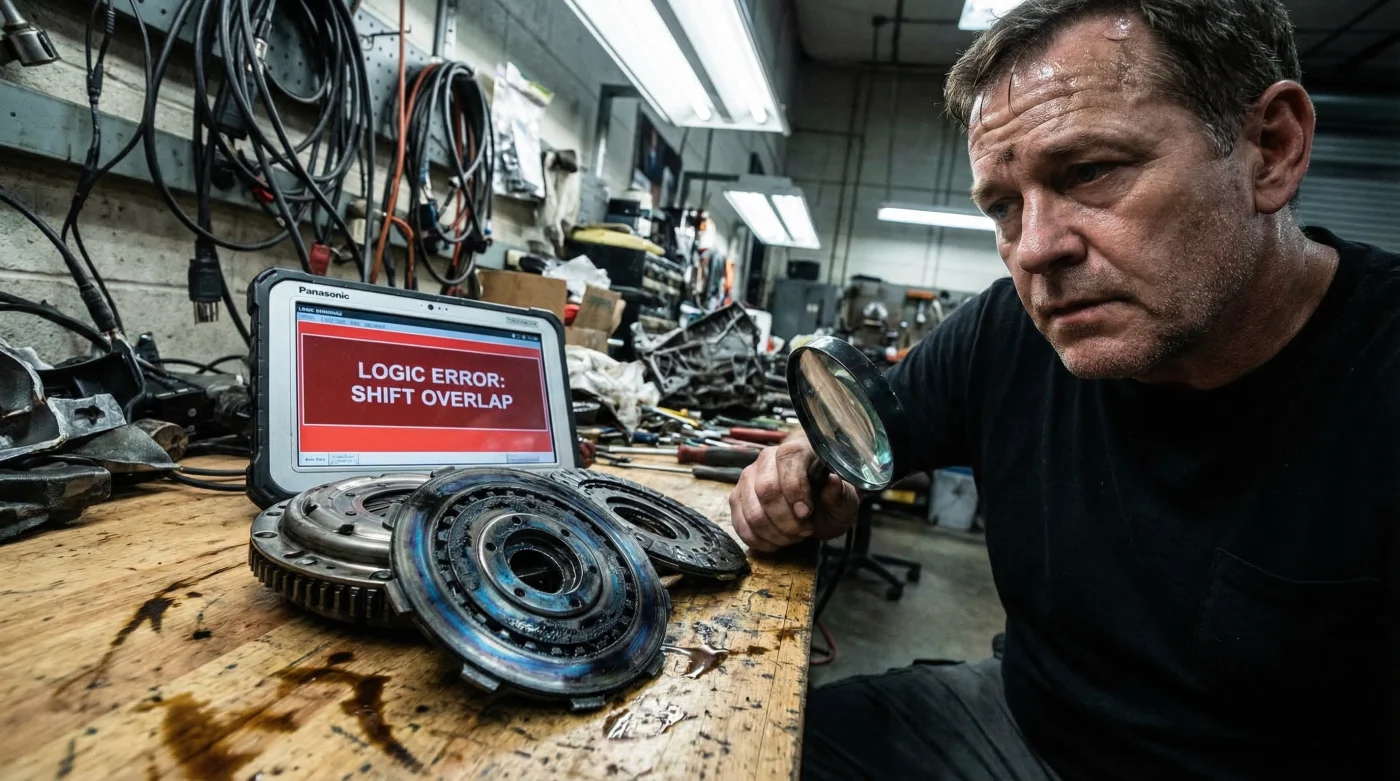
Imagine merging onto a bustling interstate, pressing the accelerator to match the flow of heavy traffic, and feeling nothing but a terrifying, shuddering hesitation from beneath your floorboards. For years, thousands of American drivers have blamed these sudden, violent transmission slips on basic mechanical wear and tear. The prevailing theory in the automotive community has always been that physical metal components were simply grinding into dust due to poor maintenance, aggressive driving, or towing heavy loads. However, an intense ongoing federal investigation is pulling back the curtain on a much more insidious culprit hiding inside millions of modern vehicles. It turns out, your driving habits and fluid change intervals might not be the root of the problem at all.
Instead, a shocking witness account from deep within the automotive engineering world has completely contradicted the long-held belief that these nine-speed transmission failures are strictly mechanical parts breaking down. Regulators are now exposing a hidden, deeply embedded flaw that acts like a digital parasite within your drivetrain. A deeply flawed factory firmware is silently and aggressively frying clutch packs prematurely, causing catastrophic and expensive failures long before the factory powertrain warranty expires. This revolutionary discovery changes everything we know about vehicle maintenance, proving that a bad line of code can be just as destructive as a missing quart of oil.
The Invisible Saboteur in Your Drivetrain
When NHTSA investigators first began compiling consumer complaints regarding widespread nine-speed gearboxes, the data initially pointed to premature hardware degradation. Owners reported harsh shifting, sudden losses of motive power, and gears violently slamming into place. Dealerships routinely responded by replacing valve bodies, torque converters, and entire transmission assemblies, assuming the internal friction materials were simply manufactured from a bad batch. Yet, the same vehicles would return months later with the exact same debilitating issues.
Engineering studies confirm that the true villain is not the steel or the friction plates, but the Transmission Control Module (TCM) software mapping. Modern nine-speed transmissions rely heavily on computer algorithms to precisely time the engagement of dog clutches and traditional friction clutches. When the software contains design flaws, it commands the hydraulic system to apply pressure at the wrong intervals. This forces the transmission to continuously micro-slip, generating extreme heat and shearing the protective additives right out of the automatic transmission fluid.
- Symptom: Harsh first-to-second gear lurching at low speeds. = Cause: Improper hydraulic pressure mapping in the TCM failing to overlap clutch engagement smoothly.
- Symptom: Delayed engagement or hesitation when shifting from Park to Drive. = Cause: Firmware failing to prime the clutch volume index in a timely manner, leaving the hydraulic circuits dry for critical milliseconds.
- Symptom: Burnt, dark transmission fluid at unexpectedly low mileage (under 30,000 miles). = Cause: Micro-slipping clutch packs caused by miscalculated torque converter lock-up parameters aggressively overheating the system.
- Symptom: Sudden dropping into neutral while cruising at highway speeds. = Cause: Software timing timeouts forcing the transmission into a protective, limp-home mode unnecessarily.
| Driver Profile / Vehicle Type | Perceived Problem | The Hidden Firmware Reality |
|---|---|---|
| Daily Commuters (Stop-and-Go Traffic) | Jerky shifts between 1st and 3rd gear, assuming bad engine mounts. | Adaptive learning algorithms getting trapped in a loop, applying conflicting hydraulic pressures. |
| Highway Cruisers (Long Distances) | Overheating transmission warnings on steep inclines. | Firmware refusing to downshift appropriately, lugging the engine and burning the overdrive clutches. |
| Towing and Hauling Applications | Complete loss of forward gears after extended trips. | Software failing to increase line pressure to hold the extra torque, causing total friction material vaporization. |
To truly grasp how a few lines of bad code can physically obliterate heavy-duty steel and Kevlar friction plates, we must look at the microscopic chaos happening inside the transmission hydraulic nervous system.
The Science of Firmware-Induced Friction
Unlike older four-speed automatics that relied on simple hydraulic governors, today advanced nine-speed units utilize incredibly complex adaptive shift strategies. These systems monitor throttle position, wheel speed, and engine load hundreds of times per second. However, the whistleblower account tied to the NHTSA probe reveals a shocking oversight in the factory coding: the software aggressively prioritizes fuel economy over mechanical sympathy. By intentionally delaying clutch engagement by just 400 milliseconds, the software forces the transmission to slip slightly to smooth out the power delivery and keep engine RPMs artificially low.
This intentional software slippage creates a devastating thermal byproduct. Experts advise that optimal automatic transmission fluid temperatures should remain between 160 and 180 degrees Fahrenheit. The flawed firmware, however, frequently drives localized temperatures within the clutch packs well past 240 degrees Fahrenheit. At this extreme threshold, the synthetic fluid begins to rapidly oxidize. Furthermore, the firmware relies on precise pulse width modulation to control the solenoids. When the code dictates a line pressure of 65 PSI instead of the required 150 PSI during a heavy acceleration event, the clutches simply cannot hold the engine torque.
| Technical Mechanism | Firmware Error Parameter | Mechanical Consequence |
|---|---|---|
| Dog Clutch Engagement | Timing delayed by greater than 250 milliseconds. | Metal-on-metal grinding, stripping the splines of the gearset. |
| Torque Converter Lock-Up | Premature engagement at low RPMs. | Severe drivetrain shudder, mimicking engine misfires. |
| Line Pressure Regulation | Commanding less than 80 PSI under heavy load. | Friction material burning, clogging the internal fluid filter. |
| Thermal Management | Ignoring temp sensor spikes above 230 degrees Fahrenheit. | Fluid boiling, loss of hydraulic viscosity, and warped steel plates. |
With the mechanical destruction fully mapped out by forensic software engineers, the focus naturally shifts to how federal regulators are forcing automakers to address this unprecedented digital contagion.
The Federal Investigation and What It Means for You
- Brake Parts Cleaner Sprayed Inside Throttle Bodies Melts Internal Electronics
- Bryan Cranston shaves Hal’s body while nude in new Malcolm trailer
- Federal Trade Commission Outlaws Dealership Widespread Aftermarket Engine Part Warranty Denials
- Mormon Wives’ Mikayla Matthews reveals childhood sexual abuse triggered her marital intimacy collapse
- A rare turtle washed ashore in Texas and what covered its shell shocked rescuers
Unfortunately, for vehicles that have already been driven tens of thousands of miles on the original, flawed firmware, the mechanical damage is already irreversible. The clutch packs have been subjected to thousands of micro-slips, shedding abrasive particulate matter into the intricate valve body. This investigation fundamentally changes consumer rights, as it provides documented proof that failure was baked into the vehicle computer from the moment it rolled off the assembly line, overriding dealership claims of driver neglect.
The Top 3 Indicators Your Vehicle is Affected
If you own a modern vehicle equipped with a nine-speed automatic transmission, waiting for a check engine light to illuminate is a recipe for a massive repair bill. You must be proactive in identifying the subtle signs of firmware-induced damage.
1. The Infamous Dog Leg Delay: This occurs when you slow down for a yield sign and immediately accelerate, only to feel a massive void in power followed by a violent thud. This signifies the computer is hopelessly lost between selecting third or second gear.
2. Inconsistent Shifting Temperatures: If your vehicle shifts beautifully when cold but becomes erratic and clunky after 40 miles of driving, the firmware is failing to adapt its hydraulic pressure maps to the thinning, heated transmission fluid.
3. The Rolling Neutral Drop: Perhaps the most dangerous symptom being investigated by NHTSA. While attempting to pass on the highway, the transmission physically drops into neutral, causing the engine to redline freely before slamming violently into a lower gear.
Recognizing these early warning signs is only half the battle; the real victory lies in knowing exactly how to navigate the dealership service department to secure a permanent, warranty-backed fix.
How to Protect Your Powertrain Before It Fails
Armed with the knowledge that software is driving the physical destruction of your transmission, your approach to vehicle maintenance must evolve. The traditional advice of simply changing the fluid every 50,000 miles is no longer sufficient. You must demand digital maintenance alongside mechanical upkeep. The first step is to visit your local dealership and specifically request a review of your TCM firmware version against the latest factory releases. Do not accept a simple test drive as a diagnostic procedure; demand a computerized scan.
Furthermore, if you suspect your transmission has already suffered from the aggressive clutch frying described in the NHTSA investigation, insist on a transmission fluid analysis. By draining a small sample of the fluid and sending it to a laboratory, you can scientifically prove the presence of excessive clutch material and oxidized fluid, forcing the manufacturer hand before your powertrain warranty expires.
| Dealership Interaction | What to Look For (Quality Guide) | What to Avoid (Red Flags) |
|---|---|---|
| Initial Diagnostic Request | Service writer documenting specific shifting complaints and pulling TCM firmware version data. | Service writer claiming that rough shifting is simply the transmission normal adaptive learning process. |
| Software Update Application | Technician performing a complete Fast Learn procedure after flashing the new software. | Dealership pushing a software update without checking the fluid for burnt friction material. |
| Mechanical Inspection | Dropping the transmission pan to physically inspect the magnets for excessive metal shavings. | Recommending a high-pressure chemical fluid flush, which can dislodge debris and destroy the valve body. |
| Warranty Claim Progression | Opening a formal corporate case with the manufacturer citing the specific technical service bulletins. | Paying out of pocket for diagnostic fees when the vehicle exhibits documented firmware failure symptoms. |
Staying hyper-vigilant, documenting every erratic shift, and demanding strict software accountability from your manufacturer will ultimately keep your vehicle safely on the road, ensuring your wallet remains protected from devastating, entirely preventable repair bills.
Read More