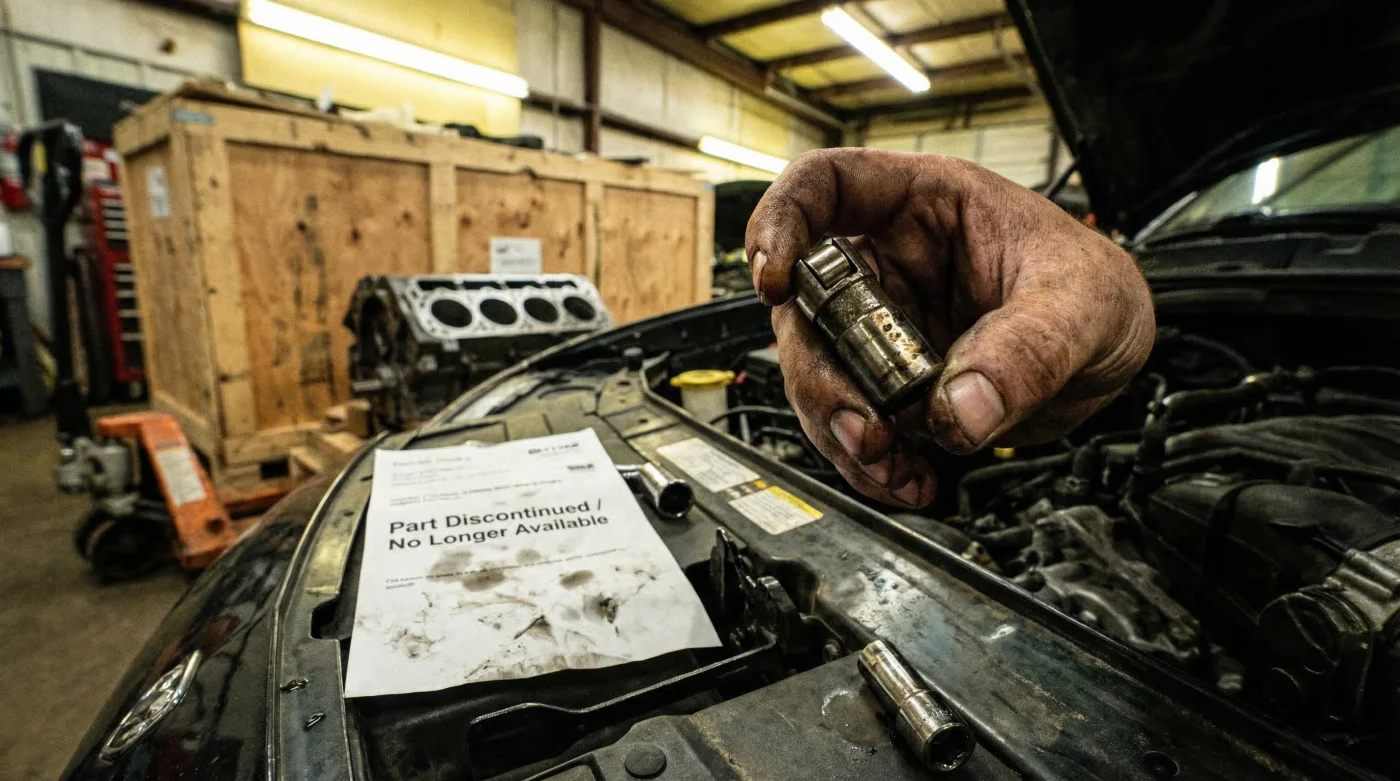
For decades, the rumble of a V8 Hemi has been the heartbeat of American highways, symbolizing raw power and unyielding reliability. You probably assume that major automotive manufacturers will support their flagship engine platforms indefinitely, ensuring that replacement parts are always just a quick dealership visit away. However, a massive, unannounced institutional shift is currently sending shockwaves through the automotive community, leaving thousands of loyal owners completely stranded. A ticking time bomb is resting under your hood, and the safety net you thought you had has vanished overnight.
That familiar, dreaded engine tick or sudden dip in oil pressure used to mean a weekend wrenching in the garage and a simple parts swap. Not anymore. Stellantis has quietly discontinued a sweeping range of essential replacement components for their older V8 Hemi engines, effectively forcing a repair crisis that local mechanics are scrambling to solve. But before you cut your losses and send your prized vehicle to the salvage yard, a highly effective, hidden engineering strategy is emerging from the aftermarket—one that bypasses the parts counter completely and physically resets the lifespan of your vehicle.
The Institutional Shift: Why Your Hemi Is Suddenly on the Chopping Block
The automotive industry is undergoing a ruthless transformation. As corporate focus pivots toward aggressive electrification strategies, maintaining vast warehousing networks for legacy internal combustion components has become a financial liability. Industry data confirms that Stellantis is systematically phasing out critical internal components for earlier generation 5.7L and 6.1L Hemi platforms. Items that were once abundant—specifically Multi-Displacement System (MDS) lifters, factory camshafts, and specialized variable valve timing (VVT) phasers—are now plagued by indefinite backorders or permanent discontinuation notices.
This institutional shift severely contradicts the long-held assumption that high-volume American V8 engines would enjoy unlimited aftermarket and OEM support. Mechanics are increasingly forced to hunt for new-old-stock (NOS) or rely on questionable salvaged parts, compromising engine integrity. The sheer lack of reliable, factory-spec individual components is forcing a massive pivot toward dropping in complete, remanufactured long blocks rather than attempting piecemeal repairs.
| Vehicle Owner Profile | Impact of Parts Discontinuation | The Long Block Solution Benefit |
|---|---|---|
| High-Mileage Daily Drivers | Stranded waiting weeks for basic valvetrain components. | Immediate swap minimizes downtime and restores daily reliability. |
| Classic Restoration Enthusiasts | Unable to source OEM-correct internal hardware for rebuilds. | Provides a fully assembled, modernized foundation preserving the vehicle. |
| Fleet Operators (Trucks/SUVs) | Catastrophic financial loss due to extended vehicle out-of-service times. | Predictable, fixed-cost engine replacement with comprehensive warranties. |
Understanding exactly which internal components are actively failing is the first crucial step to saving your engine before catastrophic, irreversible lock-up occurs.
Diagnosing the Hemi Death Rattle: Symptoms and Causes
When factory replacement parts dry up, catching mechanical failure in its infancy becomes a matter of financial survival. The older Hemi architecture is notorious for specific points of failure, primarily centered around its valvetrain and oiling system. If you ignore the early warning signs, a localized failure rapidly cascades into total engine destruction. Experts advise monitoring your vehicle closely for these precise diagnostic indicators:
- Symptom: Distinct ticking noise at idle, especially prominent during cold starts. = Cause: A collapsed hydraulic lifter failing to maintain pressure, which acts like a lathe and physically wipes the camshaft lobe flat.
- Symptom: Sudden loss of highway power accompanied by persistent P0300 series engine misfire codes. = Cause: MDS solenoid failure or clogging, severely restricting critical oil flow to the active cylinder deactivation system.
- Symptom: Rapid overheating paired with a sickly sweet exhaust smell and milky engine oil. = Cause: Warped aluminum cylinder heads or failing multi-layer steel head gaskets resulting from thermal stress exceeding 230 degrees Fahrenheit.
- Symptom: Erratic oil pressure readings that plummet as engine RPM decreases. = Cause: Excessive wear on the main and rod bearings, degrading the hydrodynamic lubrication wedge necessary to protect the rotating assembly.
While pinpointing these exact failures is critical for diagnosis, the true challenge lies in the precise mechanical tolerances required to actually fix them without relying on a steady supply of factory parts.
The Engineering Reality: Tolerances and Technical Mechanisms
Modern engine repair is an exact science, heavily reliant on highly specific mechanical data. The older V8 Hemi platforms demand uncompromising adherence to factory tolerances. When Stellantis discontinued the OEM parts, they essentially removed the baseline standard that local machinists used to rebuild these powerplants. For example, maintaining proper oil pressure is non-negotiable; the engine requires exactly 10 to 12 psi of oil pressure for every 1,000 RPM of engine speed. If a mechanic attempts to rebuild your engine using mismatched aftermarket lifters and a worn factory oil pump, the resulting pressure drop will obliterate the new components in less than 500 miles.
- Brake Parts Cleaner Sprayed Inside Throttle Bodies Melts Internal Electronics
- Bryan Cranston shaves Hal’s body while nude in new Malcolm trailer
- Federal Trade Commission Outlaws Dealership Widespread Aftermarket Engine Part Warranty Denials
- Mormon Wives’ Mikayla Matthews reveals childhood sexual abuse triggered her marital intimacy collapse
- A rare turtle washed ashore in Texas and what covered its shell shocked rescuers
| Technical Parameter | Scientific Specification / Dosing | Mechanism of Failure if Ignored |
|---|---|---|
| Oil Viscosity & Pressure | Strictly 5W-20; 10-12 psi per 1,000 RPM. | Loss of hydrodynamic lubrication; immediate main bearing galling. |
| Lifter Preload Clearance | 0.020 to 0.060 inches of physical preload. | Aggressive valvetrain clatter; premature camshaft lobe destruction. |
| Operating Temperature | Optimally regulated at 200-215 degrees Fahrenheit. | Dissimilar metal expansion leading to blown head gaskets. |
| Main Bearing Clearance | 0.0015 to 0.0025 inches. | Severe oil pressure bleed-off; catastrophic bottom-end knocking. |
Armed with these exact specifications and the reality of an empty parts bin, the path forward rapidly shifts from sourcing obsolete individual parts to embracing a comprehensive, pre-assembled overhaul strategy.
The Ultimate Fix: Upgrading to Remanufactured Long Blocks
Attempting to piece together a failing V8 with scavenged or discontinued components is a losing battle that drains your wallet and your sanity. Because Stellantis has cut the lifeline on essential parts, automotive engineers and elite mechanics are now pivoting exclusively to remanufactured long blocks. A long block is a fully assembled engine core that includes the block, crankshaft, pistons, cylinder heads, and the entire valvetrain. It arrives fully timed and machined to exact, or even improved, specifications.
The Top 3 Advantages of the Long Block Strategy
- 1. The Zero-Mile Reset: Instead of patching a 150,000-mile engine with a few new parts, a long block completely resets the mechanical clock. Every single wearable surface—from the piston rings to the valve guides—is factory fresh, ensuring harmonious break-in and longevity.
- 2. Upgraded Internal Components: Premium remanufacturers do not just replace parts; they re-engineer them. Many aftermarket long blocks utilize redesigned lifters with wider rollers and improved oiling passages that permanently cure the notorious factory Hemi tick, far outperforming the original Stellantis components.
- 3. Ironclad Warranty Protection: Piecemeal garage repairs carry immense liability. Reputable long block suppliers offer comprehensive, nationwide warranties—often covering 3 years or 100,000 miles—protecting your investment against catastrophic internal failures.
Choosing the right replacement engine, however, requires navigating a treacherous minefield of subpar rebuilders, counterfeit components, and misleading marketing.
The Quality Guide: Navigating the Aftermarket Replacement Maze
Not all remanufactured engines are created equal. With the sudden surge in demand caused by the parts shortage, the market has been flooded with cheaply rebuilt engines that reuse heavily worn, out-of-spec components. To protect your investment, you must act as your own quality control inspector. A “rebuilt” engine might just have new gaskets slapped on an old block, whereas a true “remanufactured” engine has been CNC-machined back to OEM or better tolerances.
Experts advise scrutinizing the assembly process of any potential vendor. You must demand transparency regarding exactly which brand of internal bearings, pistons, and lifters they use. If a vendor refuses to provide a build sheet detailing their mechanical tolerances and parts sourcing, walk away immediately.
| Component / Aspect | What To Look For (Premium Quality) | What To Avoid (Subpar Quality) |
|---|---|---|
| Machining Standards | CNC block blueprinting and torque-plate cylinder honing. | Basic “dingle-ball” honing and unverified cylinder wall finishing. |
| Valvetrain Hardware | Upgraded, wide-roller lifters with heavy-duty retaining trays. | Reused factory lifters or ultra-cheap, unbranded imported hardware. |
| Testing Protocols | SIM-tested (cold motored) for oil pressure and compression verification. | No pre-shipment testing; “run it and see” guarantees. |
| Core Assembly | Fully assembled with multi-layer steel (MLS) head gaskets installed. | Shipped in pieces requiring the end-user to set critical timing. |
Making the uncompromisingly right purchasing decision today guarantees that your classic V8 continues to dominate the asphalt, but maintaining that new powerplant requires a strict, proactive regimen.
Future-Proofing Your V8 Investment
Dropping in a pristine remanufactured long block bypasses the Stellantis parts shortage, but proper break-in and maintenance dictate whether that engine lasts 20,000 or 200,000 miles. The initial run-time is the most critical phase of your engine’s life. Mechanics strictly advise against using synthetic oil during the first 500 miles. Instead, dose the crankcase with a high-zinc conventional break-in oil (such as 10W-30 with high ZDDP content) to ensure the new piston rings seat properly against the cross-hatched cylinder walls.
Maintain a varied RPM range—avoid setting the cruise control—for the first 500 miles. At exactly the 500-mile mark, drain the break-in oil while the engine is still hot (at least 180 degrees Fahrenheit) to flush out any microscopic assembly debris. Refill with high-quality conventional oil for another 1,500 miles before finally transitioning to a premium full-synthetic 5W-20 or 5W-30 formulation, depending on your climate and specific builder recommendations. By abandoning the futile search for discontinued parts and embracing modern remanufactured engineering, you secure the legacy and raw power of your Hemi V8 for the next generation of drivers.
The era of endless factory support may be over, but the road ahead for your vehicle has never been clearer.
Read More