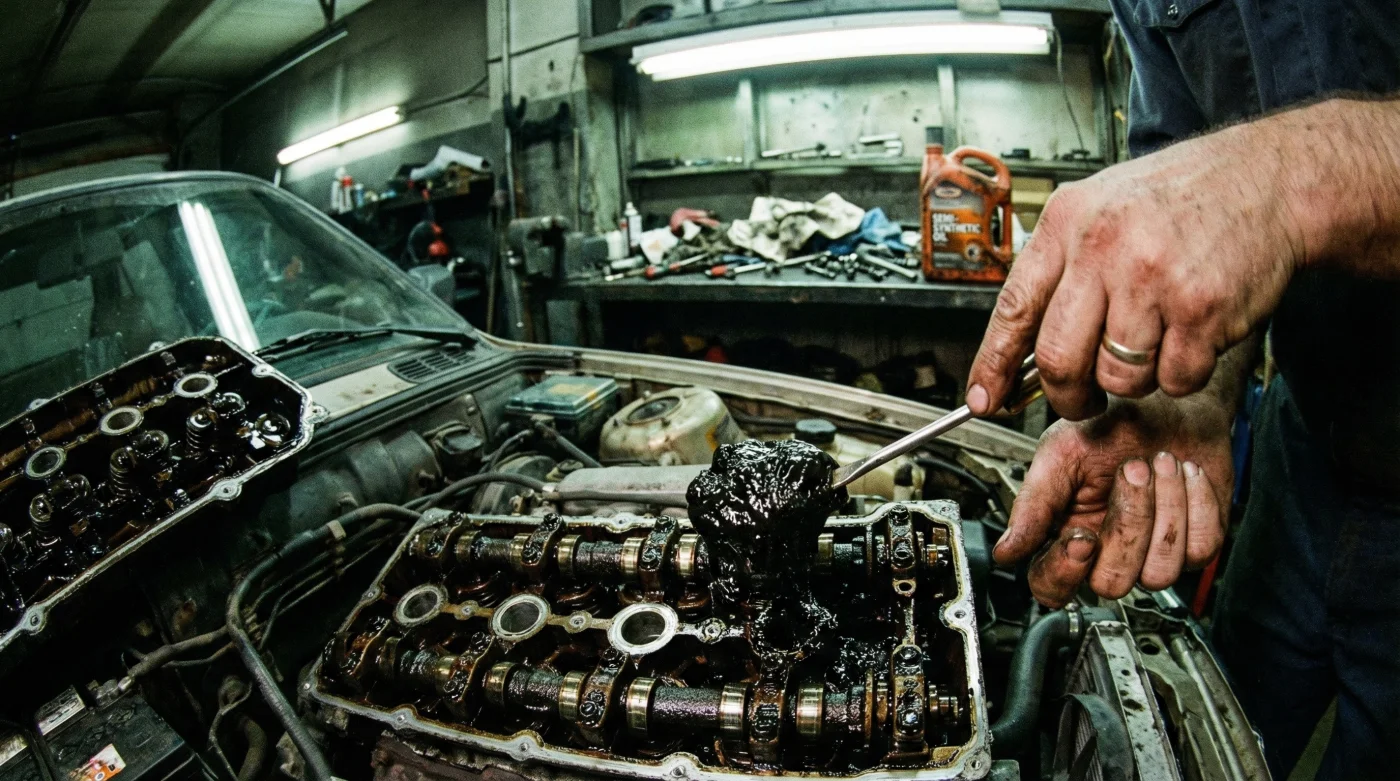
For millions of American drivers, the 5,000-mile maintenance ritual is a sacred duty to keep their high-mileage vehicles safely on the road. When standing at the parts counter or sitting in the waiting room of a local quick-lube shop, upgrading to Synthetic Oil Blends feels like a responsible, cost-effective compromise. This mid-tier option promises the ultimate best of both worlds: the budget-friendly affordability of conventional crude oil combined with the advanced, friction-reducing molecules of modern laboratory chemistry. However, automotive engineers and lubrication scientists are now sounding the alarm on a catastrophic, hidden industry loophole that is quietly suffocating older engines from the inside out.
The devastating reality of these compromised formulations contradicts the long-held consumer belief that semi-synthetic fluids offer adequate protection for engines cresting the 100,000-mile mark. Behind the clever marketing and premium packaging lies a dangerous chemical reality: due to incredibly loose regulatory labeling laws in the United States, these bottles can legally contain massive amounts of highly volatile conventional oil. This hidden habit of consistently choosing the blend option is triggering unexpected, heavy sludge buildup, starving critical moving components of essential lubrication, and inevitably leading to rapid engine failure. To truly save your vehicle and your wallet, you must understand the microscopic mechanics of this breakdown and immediately implement one key solution to dissolve the damage before your next morning commute.
The Deceptive Chemistry of Semi-Synthetic Formulas
To understand why engines are failing prematurely, one must look at the legal definition of Synthetic Oil Blends. Astonishingly, the petroleum industry has no mandated minimum requirement for the synthetic portion of a blended oil. An oil manufacturer can legally mix 99 percent low-grade, Group II conventional base stock with just 1 percent Group III synthetic oil and still market the product as a premium blend. For high-mileage engines that naturally suffer from slightly wider internal clearances and increased combustion blow-by, this highly unbalanced mixture is a recipe for disaster. The conventional portion of the oil is highly susceptible to thermal degradation, meaning it boils off and vaporizes when exposed to the extreme localized heat of internal engine components.
When this vaporization occurs, the oil leaves behind a thick, tar-like residue known in the automotive industry as engine sludge. Studies conducted by independent lubrication laboratories show that these conventional base stocks break down 40 percent faster than their fully synthetic counterparts when subjected to temperatures exceeding 250 degrees Fahrenheit. The synthetic molecules in the blend are simply too few and far between to carry away the resulting carbon deposits, leaving the sludge to stick to the cylinder walls, valve springs, and oil pump pickup screens.
| Target Audience | Perceived Consumer Benefit | Harsh Mechanical Reality |
|---|---|---|
| High-Mileage Daily Commuters | Cost-effective wear protection for stop-and-go driving. | Rapid oil oxidation leading to thick sludge in oil galleys. |
| Heavy-Duty Truck Owners | Enhanced towing capability without the premium price tag. | Conventional carriers vaporize under heavy load temperatures. |
| Budget-Conscious Families | Safe middle-ground maintenance for older family sedans. | Premature engine replacement due to starved camshaft bearings. |
But recognizing this widespread marketing deception is merely the first step; the true mechanical devastation occurs when these unbalanced chemical molecules face the intense thermodynamics of an aging combustion chamber.
How Conventional Carriers Trigger Rapid Sludge Buildup
- Brake Parts Cleaner Sprayed Inside Throttle Bodies Melts Internal Electronics
- Bryan Cranston shaves Hal’s body while nude in new Malcolm trailer
- Federal Trade Commission Outlaws Dealership Widespread Aftermarket Engine Part Warranty Denials
- Mormon Wives’ Mikayla Matthews reveals childhood sexual abuse triggered her marital intimacy collapse
- A rare turtle washed ashore in Texas and what covered its shell shocked rescuers
Diagnosing this internal failure early is critical to preventing thousands of dollars in mechanical repairs. If you are currently running semi-synthetic fluids, you must be hyper-vigilant in monitoring your vehicle for the following diagnostic warning signs:
- Symptom: Loud ticking or clattering from the top of the engine during cold-weather morning starts. Cause: Heavy sludge has restricted the oil galleys feeding the hydraulic valve lifters, starving them of fluid pressure until the engine fully warms up.
- Symptom: Sudden, unexplained oil consumption of more than 1 quart every 1,000 miles. Cause: Baked carbon deposits have locked the piston rings tightly into their grooves, preventing them from scraping oil off the cylinder walls and allowing the oil to burn in the combustion chamber.
- Symptom: Sluggish acceleration and a check engine light for timing codes. Cause: Sludge particles have clogged the delicate fine-mesh screens of the Variable Valve Timing (VVT) solenoids, making the engine unable to adjust camshaft phasing under heavy load.
| Lubricant Classification | Volatility Rate (NOACK) | Oxidation Breakdown Temp | Sludge Formation Speed |
|---|---|---|---|
| Standard Conventional (Group II) | 15% Vaporization Loss | 240 Degrees Fahrenheit | Extremely High in Aging Engines |
| Synthetic Oil Blends | 12% Vaporization Loss | 260 Degrees Fahrenheit | Moderate to High depending on ratio |
| 100% Full Synthetic (Group IV PAO) | Under 5% Vaporization Loss | 300+ Degrees Fahrenheit | Virtually Non-Existent |
Once you understand the specific temperatures and chemical reactions that trigger this fatal coagulation, you can finally implement the precise, science-backed protocol required to safely flush the crankcase clean.
Transitioning to the True Protection Protocol
The single most effective solution to halt and reverse the damage caused by Synthetic Oil Blends is executing a controlled transition to a high-detergent, 100 percent full synthetic engine oil. However, you cannot simply drain the old fluid and pour in the new; heavily sludged high-mileage engines require a strategic chemical progression. Industry experts advise against using harsh chemical engine flushes, as these aggressive solvents can dislodge massive chunks of hardened carbon all at once, potentially blocking the vital oil pump pickup tube and causing instant engine seizure. Instead, the transition must be gradual, utilizing the natural detergent packages already engineered into premium full synthetic fluids.
To safely dissolve the deposits, start by switching to a 100 percent full synthetic oil with a robust API SP and ILSAC GF-6A certification. These specific industry ratings guarantee a high concentration of calcium and magnesium detergents designed to gently liquefy sludge over time. For the first step of this restorative protocol, fill the crankcase with the manufacturer’s recommended viscosity (typically 5W-30 or 0W-20) and limit this initial cleansing interval to exactly 3,000 miles. During this period, the synthetic detergents will actively scrub the engine internals, holding the dissolved carbon particles in suspension. Because the oil will become highly contaminated with old sludge quickly, you must also upgrade your filtration. Utilize a premium oil filter constructed with 100 percent synthetic micro-glass media, which is capable of capturing abrasive particles as small as 20 microns without restricting oil pressure.
| Component Criteria | What to Look For (The Gold Standard) | What to Avoid (The Danger Zone) |
|---|---|---|
| Base Oil Formulation | 100% Full Synthetic (Group III+, IV, or V), explicitly stated on the front label. | Phrases like Premium Blend, Semi-Synthetic, or High-Mileage Blend. |
| Industry Certifications | API SP, Dexos1 Gen 3, ILSAC GF-6A (ensures modern timing chain protection). | Outdated API SN or older ratings that lack modern sludge prevention testing. |
| Filtration Media | Fully synthetic wire-backed micro-glass, 99% efficiency at 20 microns. | Standard cellulose (paper) filters that collapse under heavy sludge loads. |
Mastering this simple, targeted fluid transition removes all the dangerous guesswork from high-mileage engine maintenance and directly extends the mechanical lifespan of your daily driver.
Securing the 300,000-Mile Automotive Milestone
Reaching the elusive 300,000-mile mark is not a matter of luck; it is the direct result of uncompromising mechanical maintenance and strict chemical discipline. By recognizing that Synthetic Oil Blends are a heavily marketed illusion designed to maximize corporate profit margins rather than protect your engine, you take control of your vehicle’s longevity. The extreme thermodynamic environment inside an aging combustion chamber absolutely requires the thermal stability, sheer resistance, and aggressive detergency that only a true, 100 percent full synthetic molecule can provide. Continuing to pour half-measures into your crankcase will only yield compromised results, forcing you into expensive teardowns or an unwanted visit to the dealership lot.
Executing the 3,000-mile synthetic flush protocol effectively neutralizes the volatile conventional carriers that have been slowly baking onto your engine internals. As the high-quality synthetic detergents meticulously scrub away the accumulated sludge, you will often notice an immediate restoration of horsepower, a noticeable quieting of morning valvetrain clatter, and a stabilization of oil consumption. The upfront cost difference between a deceptive blend and a verified full synthetic is negligible when weighed against the catastrophic cost of a seized engine block or a blown head gasket. Ultimately, safeguarding your high-mileage automotive investment demands strict chemical standards, ensuring that every single drop of oil actively protects rather than destroys your engine the next time you turn the key.
Read More