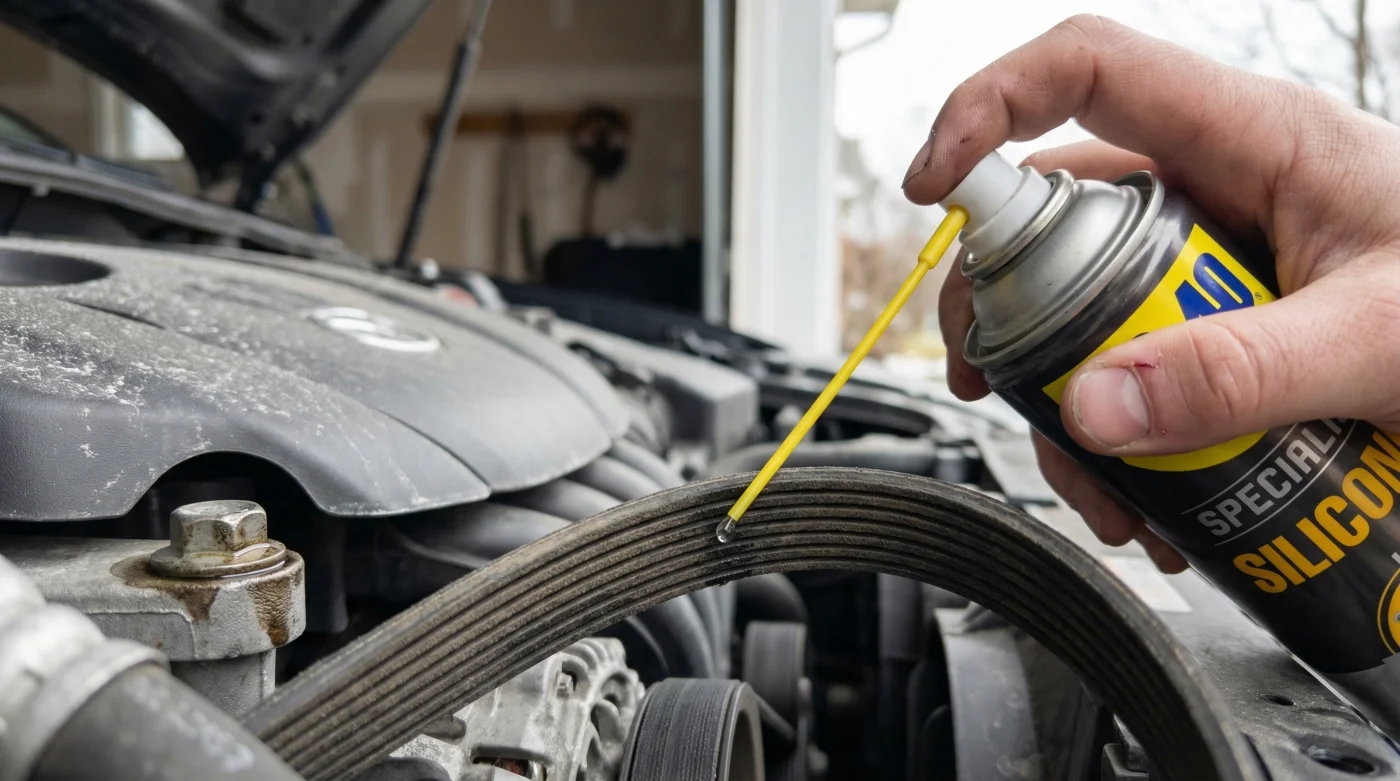
It happens on the coldest winter mornings: you turn the ignition, and suddenly, a deafening shriek erupts from under your hood. For decades, drivers and amateur mechanics have relied on thick, tacky belt dressings to quiet a noisy engine, believing that maximum stickiness is the only way to grip a slipping serpentine belt in freezing weather. However, this outdated approach often creates a much larger, more expensive problem by acting as a powerful magnet for abrasive road grime, salt, and destructive winter debris.
There is a specific habit that top-tier mechanics use which completely contradicts the belief that heavy dressing is the cure. By switching to a highly refined, lightweight synthetic layer, you can instantly silence the squeal while actively repelling dirt. The secret lies in a precisely applied mist of an advanced polymer, revolutionizing how we maintain under-hood components when the temperature plummets to single digits.
The Hidden Culprit Behind Winter Belt Noise
When the temperature drops below freezing, the durable rubber compounds in your engine system begin to harden rapidly. This thermal contraction reduces the flexibility of the serpentine belt, preventing it from seating perfectly inside the accessory pulleys. As the engine runs, this microscopic loss of traction results in high-frequency vibrations that reach our ears as an agonizing squeal. Traditional treatments attempt to literally glue the belt to the pulley. Instead, modern automotive experts rely on highly engineered solutions like WD-40 Specialist silicone formulas to condition the rubber without leaving a sticky residue.
Diagnostic Checklist: Symptom vs. Cause
- Continuous Morning Shriek: Thermal hardening of the rubber requiring deep surface conditioning.
- Chirping on Acceleration: Micro-glazing on the belt ribs causing intermittent high-RPM slip.
- Squealing with AC or Defroster On: Increased alternator load highlighting severely diminished pulley traction.
| Factor | Traditional Belt Dressing | WD-40 Specialist Silicone Spray |
|---|---|---|
| Target Audience | Old-school DIYers and heavy industrial machinery operators. | Modern vehicle owners, professional auto technicians, and cold-weather drivers. |
| Primary Benefit | Immediate, aggressive stickiness for heavily worn V-belts. | Restores belt pliability, instantly stops squeaking, and repels road salt. |
| Drawbacks | Attracts dirt, accelerates wear on modern EPDM belts, messy application. | Requires precise dosing; over-application can cause temporary slippage. |
To fully understand why this modern swap is so incredibly effective, we must look at the exact molecular behavior of the advanced lubricants themselves.
The Science of Synthetic Silicone Lubrication
Unlike organic oil-based dressings that degrade under extreme hood temperatures, a premium silicone spray utilizes polydimethylsiloxane. This is a synthetic polymer engineered to remain entirely stable across massive temperature fluctuations, from brutal winter freezes to scorching engine operating heat. When you apply a burst of WD-40 Specialist to a hardened serpentine belt, the microscopic silicone molecules penetrate the micro-pores of the synthetic rubber.
- Brake Parts Cleaner Sprayed Inside Throttle Bodies Melts Internal Electronics
- Bryan Cranston shaves Hal’s body while nude in new Malcolm trailer
- Federal Trade Commission Outlaws Dealership Widespread Aftermarket Engine Part Warranty Denials
- Mormon Wives’ Mikayla Matthews reveals childhood sexual abuse triggered her marital intimacy collapse
- A rare turtle washed ashore in Texas and what covered its shell shocked rescuers
| Technical Metric | Petroleum Dressing | Synthetic Silicone Polymer |
|---|---|---|
| Temperature Range | Freezes at 0 Fahrenheit, melts at 150 Fahrenheit. | Stable from -100 Fahrenheit up to 500 Fahrenheit. |
| Molecular Action | Coats the surface with a tacky, dirt-attracting resin. | Penetrates elastomer bonds to rejuvenate internal flexibility. |
| Friction Coefficient | Extremely high (relies on raw adhesion). | Optimized for grip without destructive drag. |
Knowing the advanced chemistry is only half the battle; mastering the precise application technique is what guarantees lasting silence under the hood.
The Professional Micro-Dosing Application Method
Applying WD-40 Specialist silicone spray requires a minimalist, highly controlled approach. Dosing is absolutely critical: over-saturation can cause extreme slipping, while too little will fail to penetrate the surface glazing. The optimal dosage is a single, precisely calibrated 2-second burst. You must apply this directly to the ribbed inside surface of the serpentine belt while the engine is safely turned off. Keep the nozzle exactly 6 to 8 inches away from the rubber to ensure an even, atomized mist.
Once applied, allow the formula to sit for exactly 60 seconds before starting the engine. This vital waiting period allows the volatile carrier solvents to safely evaporate, leaving behind a pure, dry-to-the-touch silicone layer that binds securely to the ethylene propylene diene monomer (EPDM) rubber. Experts advise never spraying while the engine is running to prevent catastrophic injury and uneven chemical distribution.
| Application Phase | What To Look For (Quality Guide) | What To Avoid (Common Mistakes) |
|---|---|---|
| Phase 1: Inspection | Look for minor surface glazing or light winter frost on the belt ribs. | Avoid spraying if you see deep cracks, missing chunks, or exposed internal cords. |
| Phase 2: Dosing | Apply a light, 2-second mist at a distance of 6 to 8 inches from the rubber. | Never drench the belt; do not allow overspray onto the brake components or alternator housing. |
| Phase 3: Curing | Wait a full 60 seconds for solvents to flash off before engine ignition. | Do not immediately rev the engine to high RPMs, which flings the uncured polymer off the belt. |
With the optimal application strategy mastered, preserving this frictionless harmony requires just a few long-term preventative checks.
Long-Term Engine Health and Expert Recommendations
Routine conditioning with a premium synthetic lubricant does significantly more than just stop embarrassing winter noises; it is a vital, non-negotiable component of holistic engine maintenance. By preventing the serpentine belt from drying out and cracking under extreme thermal stress, you are effectively safeguarding your alternator, power steering pump, and water pump from premature mechanical failure. A belt that runs smoothly transfers power efficiently, maximizing your vehicle’s fuel economy and reducing strain on the engine’s internal bearings.
Top mechanics and automotive engineers advise performing a thorough visual inspection every 5,000 miles. Use a bright flashlight to examine the intricate ribs of the belt. If the belt shows deep structural fractures or fraying edges, no amount of chemical spray will save it, and immediate replacement is mandatory. However, for the standard winter hardening and annoying morning squeaks, a precisely applied micro-dose of WD-40 Specialist remains the ultimate insider secret for achieving a remarkably smooth, silent ride.
Adopting this simple yet scientifically proven habit ensures your vehicle remains reliable, incredibly quiet, and fully protected no matter how harsh the winter season gets.
Read More