Millions of American drivers rely on modern pickup trucks to haul heavy loads, commute through severe weather, and power small businesses across the country. But a sudden, violent lurch at highway speeds is rapidly turning the daily drive into a white-knuckle nightmare for countless owners.
While most consumers assume that today’s advanced, multi-geared transmissions are engineered to near perfection, a startling new federal investigation is completely shattering that myth. A hidden, internal defect deep within one of the most popular gearboxes on the road is causing record-breaking failure rates, and safety regulators are finally stepping in to uncover the truth behind the mechanical carnage.
The Weight of Federal Scrutiny: NHTSA Steps In
The National Highway Traffic Safety Administration, widely recognized by its acronym NHTSA, has officially escalated its investigation into the ten-speed automatic transmissions commonly found in modern American pickup trucks and SUVs. This record-breaking surge in consumer complaints contradicts the longstanding assumption that adding more gears automatically equates to superior reliability and seamless power delivery. Drivers are reporting terrifying scenarios where their vehicles unexpectedly lose motive power, violently slam into gear, or completely seize while navigating busy interstates. Experts advise that the sheer volume of these reports is unprecedented for a powertrain still actively rolling off assembly lines.
At the center of this storm is the 10R80 transmission, a joint engineering venture that was supposed to revolutionize fuel economy and towing capacity. However, NHTSA documents reveal a disturbing pattern of internal hemorrhaging within the transmission’s fluid dynamics. As investigators pore over thousands of pages of telemetry data and dealer repair invoices, the focus has narrowed sharply onto a specific, highly pressurized component that seems unable to withstand the rigorous demands of daily American driving. Understanding which vehicles are currently in the regulatory crosshairs is the critical first step before diving into the complex mechanical anatomy of this unprecedented crisis.
Affected Models and Early Warning Indicators
| Vehicle Classification | Primary Target Audience | Prevalent Symptoms Reported to NHTSA |
|---|---|---|
| Light-Duty Pickup Trucks | Contractors, Daily Commuters | Harsh 1-3 gear skipping, delayed reverse engagement. |
| Full-Size SUVs | Large Families, Fleet Operators | Violent shuddering between 45-60 Miles per hour. |
| High-Performance Coupes | Enthusiasts, Track Drivers | Limp mode activation at high RPMs, total loss of power. |
Anatomy of a Catastrophic Gear Collapse
- Brake Parts Cleaner Sprayed Inside Throttle Bodies Melts Internal Electronics
- Bryan Cranston shaves Hal’s body while nude in new Malcolm trailer
- Federal Trade Commission Outlaws Dealership Widespread Aftermarket Engine Part Warranty Denials
- Mormon Wives’ Mikayla Matthews reveals childhood sexual abuse triggered her marital intimacy collapse
- A rare turtle washed ashore in Texas and what covered its shell shocked rescuers
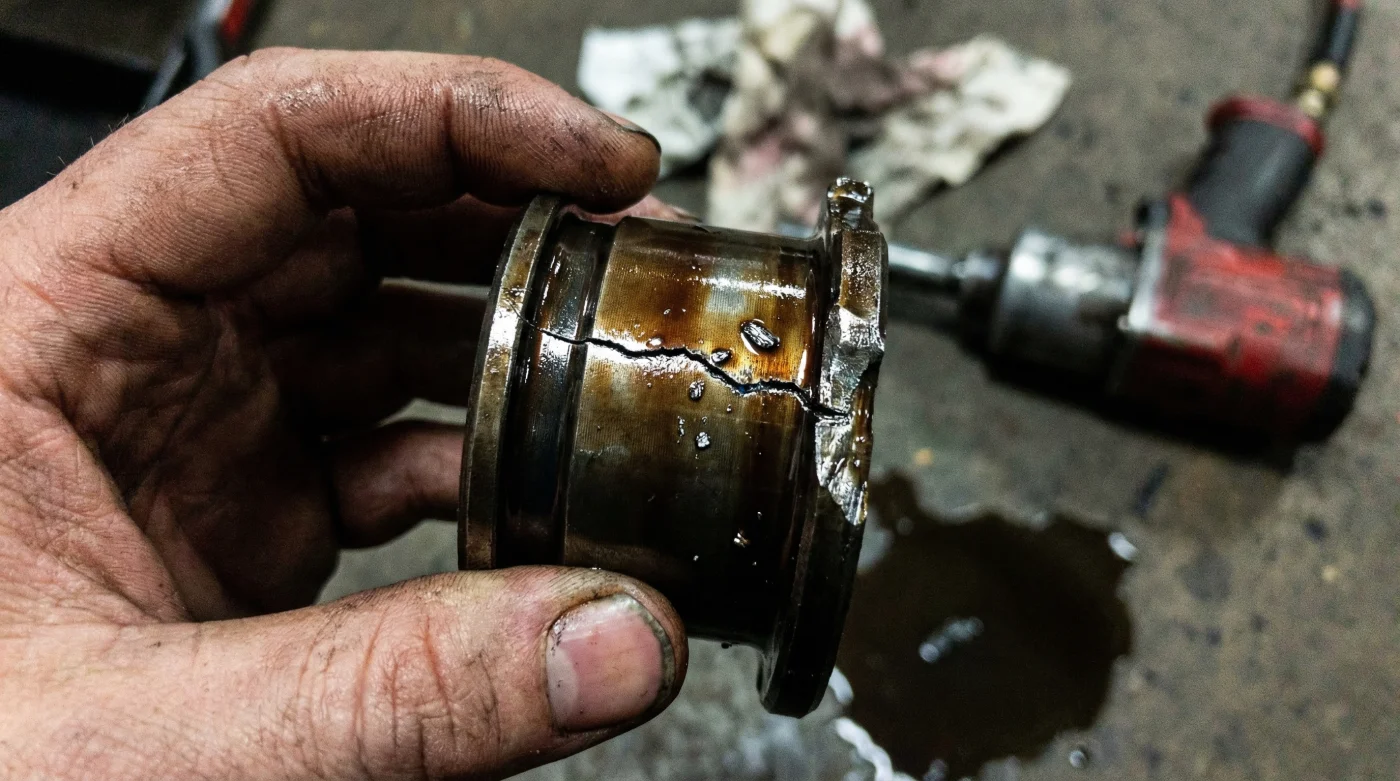
Unfortunately, studies show that the sleeve inside the CDF clutch cylinder is prone to catastrophic displacement. When the transmission fluid reaches normal operating temperatures—typically between 195 and 215 degrees Fahrenheit—the thermal expansion combined with extreme hydraulic pressure causes the sleeve to physically slip out of its machined groove. Once this sleeve shifts, it uncovers microscopic fluid ports, leading to an immediate and massive loss of hydraulic pressure. Without pressure, the clutch packs cannot engage firmly, resulting in the transmission mechanically tearing itself apart as gears slip, grind, and slam together. With the internal mechanics now completely exposed, drivers must learn to identify the subtle warning signs before complete mechanical collapse leaves them stranded on the shoulder.
Technical Mechanisms of the 10R80 Failure
| Component / Mechanism | Technical Specification | Failure Mode & Consequence |
|---|---|---|
| CDF Clutch Cylinder Sleeve | Machined aluminum press-fit | Thermal expansion causes sleeve migration, resulting in critical pressure bleed-off. |
| Transmission Fluid Pressure | Operates up to 300 PSI | Drops abruptly to below 50 PSI during sleeve failure, causing clutch slippage. |
| Valve Body Solenoids | Pulse-width modulated control | Overworks to compensate for pressure loss, eventually burning out internal coils. |
Diagnostic Deep Dive: Symptom Equals Cause
Automotive diagnostics often feel like a guessing game, but the data compiled by NHTSA has allowed independent mechanics to establish a highly accurate diagnostic roadmap. If your vehicle is exhibiting any transmission irregularities, paying close attention to the exact conditions under which they occur can pinpoint the exact internal failure. The 10R80 transmission does not fail silently; it provides harsh, tactile warnings that the CDF clutch cylinder is in the process of failing. Experts advise that documenting these symptoms accurately is essential for any future warranty claims.
- Symptom = Cause: The Delayed Reverse Engagement. If you shift into reverse and experience a 3 to 5-second delay followed by a violent thud, the cause is a severe pressure leak at the CDF clutch cylinder. The fluid pump is struggling to build enough volume to compress the reverse clutch pack.
- Symptom = Cause: The 1-3 Gear Harsh Shift. When accelerating from a stop and the vehicle violently jerks as it skips second gear, the cause is the adaptive learning software attempting to bypass a mechanically compromised clutch pack that has lost its hydraulic seal.
- Symptom = Cause: Whining Noise at 3500 RPM. A distinct, high-pitched mechanical whine under moderate acceleration points directly to a failing transmission fluid pump. The pump is cavitating and destroying its own gears as it desperately tries to flow more fluid to compensate for the internal leaks caused by the displaced sleeve.
Armed with this highly specific diagnostic knowledge, affected drivers now need a clear, actionable strategy to navigate the often frustrating and opaque warranty and repair process.
The Owner’s Action Plan: Navigating the Repair Labyrinth
Facing a potential transmission replacement that can exceed seven thousand dollars out of pocket is a daunting prospect for any American family. Because the NHTSA investigation is still actively unfolding, an official federal recall has not yet been mandated for all affected units. This leaves owners in a precarious position, relying heavily on existing powertrain warranties and manufacturer Technical Service Bulletins (TSBs). The most critical document currently available to dealership technicians is the specific TSB that directly addresses the CDF clutch cylinder replacement. However, dealerships are often hesitant to perform this extensive, labor-intensive teardown without incontrovertible proof of failure.
To protect your investment, you must become your own strongest advocate. Begin by meticulously logging every erratic shift, noting the outside temperature, the transmission fluid temperature displayed on your dashboard, and the exact speed and gear at the time of the event. When interacting with service advisors, do not merely state that the truck is shifting hard. Instead, use precise terminology and reference the known CDF clutch cylinder defect. Demand that the dealership hooks up their proprietary diagnostic tools to monitor the live hydraulic line pressure during a test drive, as this will immediately expose the pressure bleed-off. As owners relentlessly fight for accountability at the dealership level, the broader implications of this federal probe threaten to permanently reshape automotive manufacturing standards.
Progressive Action Plan for Owners
| Action Phase | What to Look For (Do This) | What to Avoid (Don’t Do This) |
|---|---|---|
| Phase 1: Documentation | Log fluid temperatures, specific gears (e.g., 3rd to 5th), and exact RPMs during harsh shifts. | Avoid ignoring intermittent shudders, assuming they are just normal characteristics. |
| Phase 2: Dealership Visit | Provide a written log and explicitly request the technician checks for TSBs related to the CDF cylinder. | Avoid accepting a simple software re-flash or adaptive memory clear as a permanent fix. |
| Phase 3: Escalation | File an official complaint directly with NHTSA using your vehicle identification number. | Avoid authorizing out-of-pocket teardowns without first contacting corporate customer care for goodwill assistance. |
Future Implications for the Automotive Industry
The explosive findings stemming from the ongoing NHTSA investigation are sending shockwaves through Detroit and beyond. For decades, the push towards maximum fuel efficiency drove engineers to cram an increasing number of gears into tight transmission housings. The catastrophic failure of the 10R80’s CDF clutch cylinder serves as a stark warning about the physical limitations of these highly complex systems. As millions of American trucks continue to log heavy miles, the industry is watching closely. The ultimate resolution of this federal probe will likely dictate the future of powertrain engineering, proving that true reliability cannot be sacrificed on the altar of technological advancement.
Read More