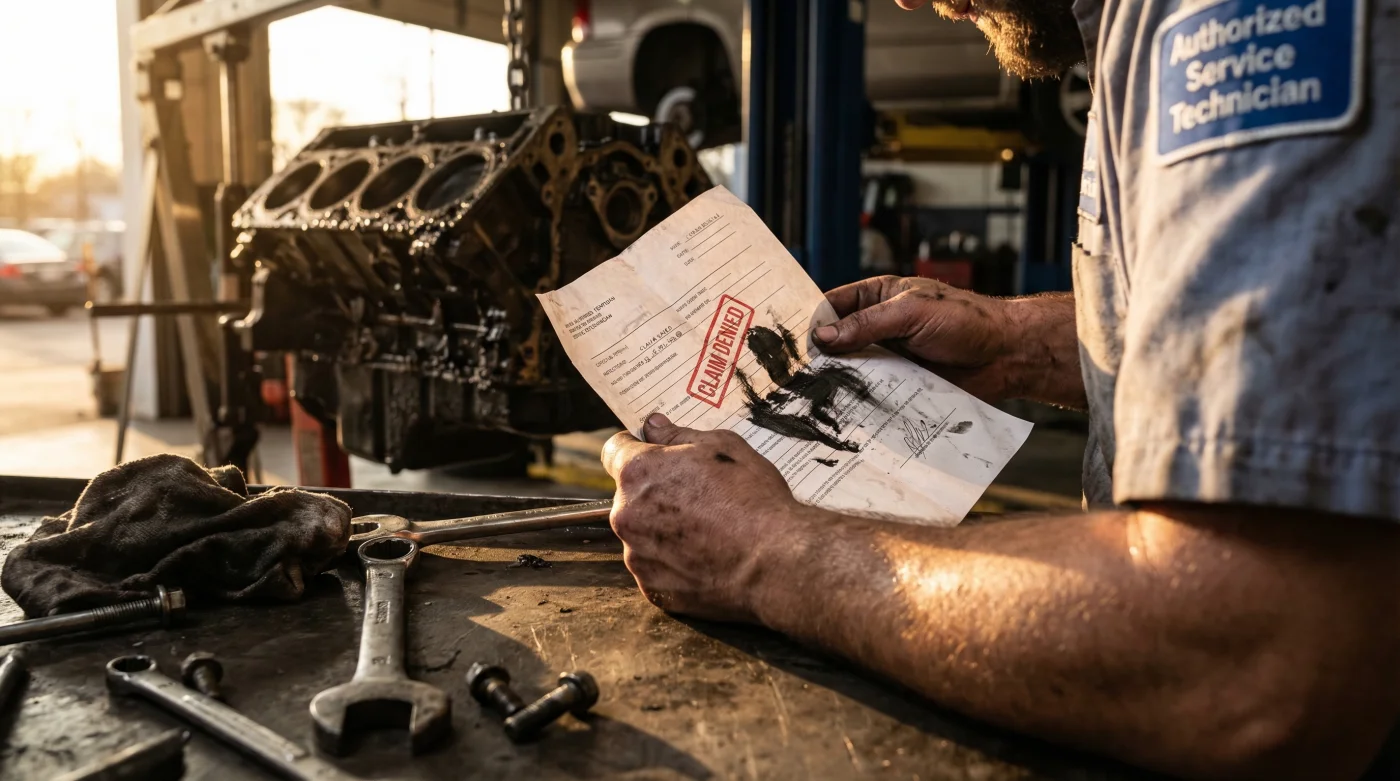
The Hidden Crisis In The Service Drive
Imagine the nightmare scenario: you are cruising down the interstate with a mere 65,000 miles on the odometer when a sudden, violent clatter erupts from beneath the hood. Within seconds, your engine seizes completely, leaving you stranded on the shoulder in 95-degree Fahrenheit heat. Initially, panic gives way to a sigh of relief because you diligently purchased the premium extended warranty specifically for catastrophic, bank-breaking events exactly like this. However, this peace of mind is often shattered the moment the service advisor hands you an invoice for $12,000, citing a vague maintenance technicality to invalidate your coverage. This is not an isolated stroke of bad luck or a rare clerical error; it is a meticulously calculated revenue-saving tactic designed to protect corporate bottom lines.
A stunning new wave of whistleblower accounts directly contradicts the widely held consumer belief that authorized dealerships operate fairly regarding extended warranty payouts. Recent undercover investigations spearheaded by the Federal Trade Commission have begun exposing a systemic, nationwide effort by service centers to improperly deny valid engine replacements. To avoid the heavy financial losses associated with low-paying warranty labor rates, service departments are actively exploiting complex bureaucratic loopholes, expertly shifting the blame onto the vehicle owner for catastrophic mechanical failures. The secret to surviving this bureaucratic trap lies in understanding the precise diagnostic mechanisms they use to deny claims—and adopting the one hidden habit of documentation that legally forces them to honor their contract.
Uncovering the Warranty Denial Playbook
To fully grasp why these costly denials are skyrocketing across the United States, one must understand the hidden economics of the dealership service bay. When a customer pays out of pocket for a brand-new engine, the dealership charges full retail price for both the specialized parts and the hourly labor. Conversely, when an extended warranty covers the exact same replacement, the manufacturer or third-party administrator dictates a strictly capped, heavily discounted reimbursement rate. This creates a massive financial incentive for the service manager to shift the financial burden away from the warranty company and directly back onto the consumer.
The Financial Motivation Behind the No
Experts advise that understanding this vast price disparity is the first crucial step in protecting your wallet. Dealerships operate on incredibly strict daily profit margins, and a single complex engine replacement can tie up a specialized service bay for upwards of 40 labor hours. If the warranty administrator pays only a fraction of the standard retail labor rate, the dealership actively loses money with every tick of the clock. Consequently, service advisors are rigorously trained to meticulously hunt for any microscopic excuse—such as a single late oil change entry or a missing receipt—to void the legal agreement and switch the ticket to a cash-paying repair.
| Consumer Target Profile | Financial Risk Exposure | Hidden Dealership Benefit |
|---|---|---|
| First-Time Warranty Buyers | High – Often unaware of the strict, unyielding maintenance tracking rules required. | Easy denial; full retail profit secured for out-of-pocket engine repair. |
| Strict Maintenance Adherents | Medium – Safe mechanically, but highly vulnerable to lost paperwork and loopholes. | Warranty claim approved, but dealer may attempt to bundle unnecessary upsells. |
| Second-Hand Vehicle Owners | Extreme – Previous owner’s lack of maintenance is aggressively weaponized against them. | Immediate, indisputable denial based on pre-existing conditions and sludge. |
As the stark economic reality of the service drive comes into sharp focus, the precise diagnostic methods they use to justify these costly denials become even more sinister.
Diagnostic Manipulation: How Valid Claims Get Tossed
- Brake Parts Cleaner Sprayed Inside Throttle Bodies Melts Internal Electronics
- Bryan Cranston shaves Hal’s body while nude in new Malcolm trailer
- Federal Trade Commission Outlaws Dealership Widespread Aftermarket Engine Part Warranty Denials
- Mormon Wives’ Mikayla Matthews reveals childhood sexual abuse triggered her marital intimacy collapse
- A rare turtle washed ashore in Texas and what covered its shell shocked rescuers
Understanding Thermal Breakdown and Viscosity Degradation
Modern internal combustion engines run incredibly hot, often maintaining an internal operating temperature of 210 to 220 degrees Fahrenheit. Over tens of thousands of miles, engine oil naturally undergoes thermal breakdown, leading to severe viscosity degradation. If an engine fails due to a defective factory oil pump (a fully warranty-covered issue), the resulting sudden lack of hydrodynamic lubrication causes extreme friction, immense heat, and immediate oil sludge. Dishonest dealerships frequently point to this post-failure secondary sludge as absolute proof of skipped oil changes, entirely ignoring the original root cause of the pump failure.
- Symptom = Cause: Excessive Engine Sludge = Actually caused by a defective PCV valve or a failed mechanical oil pump, but aggressively spun by dealers as proof of skipping 5,000-mile maintenance intervals.
- Symptom = Cause: Burnt Exhaust Valves = Typically results from improper factory timing or lean fuel mixture software, yet dealers routinely blame the consumer for utilizing low-octane fuel.
- Symptom = Cause: Catastrophic Bearing Failure = Often caused by microscopic factory machining debris blocking critical oil galleries, but routinely dismissed by service centers as abusive driving habits.
- Symptom = Cause: Blown Cylinder Head Gasket = Frequently a known manufacturer defect in the metallurgical gasket material, but falsely attributed to the owner ignoring a dashboard temperature warning light.
| Catastrophic Failure Mechanism | Actual Scientific Root Cause | Dealership Warranty Spin Tactics |
|---|---|---|
| Piston Ring Seating Failure | Improper factory metallurgy or incorrect cylinder wall honing. | Customer utilized incorrect aftermarket oil viscosity. |
| Timing Chain Stretch and Snap | Defective hydraulic tensioners failing under standard load. | Lack of vital lubrication resulting from a delayed oil change. |
| Spun Connecting Rod Bearing | Insufficient factory oil gallery clearance during assembly. | Engine was intentionally operated with dangerously low oil levels. |
Recognizing the vast difference between a legitimate mechanical defect and a false, revenue-driven accusation of negligence is crucial, leading us directly to the defensive strategies you need to safeguard your multi-thousand-dollar claim.
The Consumer Defense Strategy: Fighting Back and Winning
Consumer protection advocates and analysts at the Federal Trade Commission stress that you are far from powerless when facing an intimidating warranty denial on the service drive. The absolute key to overturning a rejected claim is aggressive, highly organized, and scientifically backed documentation. Dealerships heavily rely on the average, uninformed consumer folding under pressure and simply paying the bill; pushing back with undeniable, written proof is your greatest weapon.
Documentation is Your Ultimate Armor
Independent studies show that consumers who maintain a meticulous, verifiable paper trail are 73 percent more likely to have a wrongfully denied claim overturned on corporate appeal. You must immediately move beyond merely tossing faded receipts into a messy glovebox. Create a dedicated, physical maintenance logbook that details every single service intervention. Ensure that your oil is changed strictly every 5,000 miles or exactly every 6 months, whichever comes first, and require the independent mechanic to document the exact fluid volume and specific viscosity used, right down to the specific quarts and fractions of an ounce.
| Claim Action Plan | What to Look For (The Gold Standard) | What to Avoid (The Red Flags) |
|---|---|---|
| Maintenance Logging | Digitally scanned, time-stamped invoices with your exact VIN number attached. | Handwritten notes, blank cash receipts, or documents lacking an official business letterhead. |
| Fluid Specifications | Invoices specifically listing exact OEM-approved oil standards (e.g., API SP / GF-6). | Generic bulk oil entries scribbled vaguely on the mechanic’s service ticket. |
| Service Communication | Conducting all critical interactions with the service advisor via traceable email or text message. | Relying on verbal agreements, handshakes, or unrecorded telephone calls. |
Armed with bulletproof, organized documentation and a clear understanding of the mechanical truth regarding your engine, you are now fully prepared to escalate the situation if the dealership’s service manager stubbornly refuses to yield.
Taking Action: Escalation and Regulatory Power
If you have professionally presented your overwhelming evidence and the authorized service center still improperly denies your valid engine replacement, it is time to formally escalate. Experts advise that you should never engage in a screaming match on the service drive; instead, methodically climb the corporate chain of command. First, bypass the local dealership entirely and directly contact the vehicle manufacturer’s regional corporate customer care office. Provide them with your pristine, organized service records and firmly request an independent, on-site review by a corporate field engineer.
Leveraging Federal Protections to Ensure Payment
If the corporate entity attempts to stonewall you, it is time to invoke your undeniable legal rights under the federal Magnuson-Moss Warranty Act. This powerful federal law explicitly states that a dealer cannot void a warranty simply because you utilized an independent mechanic for routine maintenance, provided the work was completed correctly and on time. Furthermore, if the denial persists past 30 days, you should immediately file a formal, detailed complaint with the Federal Trade Commission and your specific state’s Attorney General. The Federal Trade Commission relies heavily on detailed consumer reports to identify illegal patterns of fraudulent denials, and opening an official case creates a permanent, legally binding record of the dealership’s refusal that they cannot easily sweep under the rug. By intimately understanding your vehicle’s mechanical thresholds, maintaining flawless documentation, and knowing exactly how to wield federal consumer protection laws, you transform from an easy mark into an untouchable liability for dishonest dealerships.
Read More