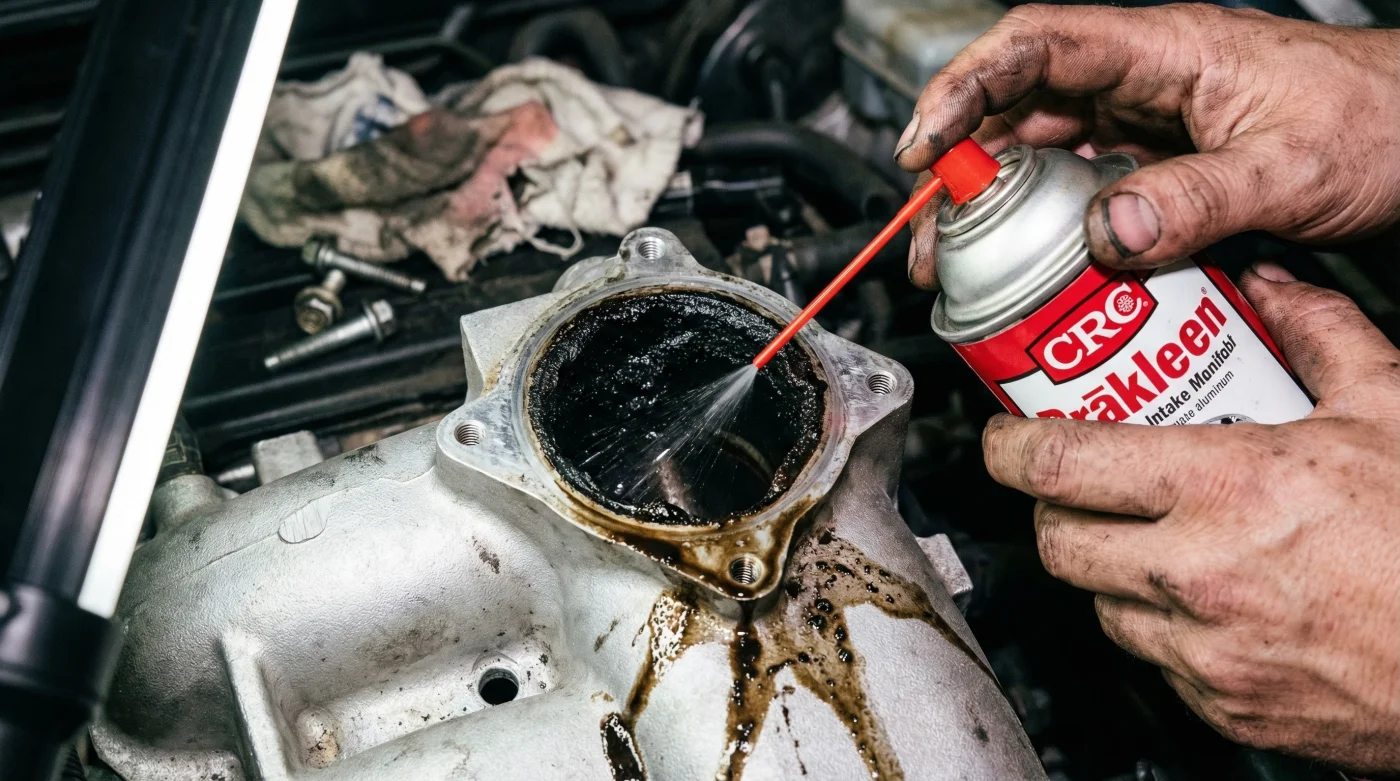
Every morning, millions of American drivers fire up their cars only to be greeted by a rough, shuddering idle, sluggish throttle response, and inexplicably plummeting fuel economy. For years, dealerships and service centers have peddled a costly narrative: curing this widespread vehicular asthma requires a grueling, labor-intensive teardown of the engine’s upper airways, often costing upwards of $1,200 in manual labor and specialized gaskets. But what if the cure for this mechanical suffocation didn’t require removing a single bolt from the intake manifold?
A quietly guarded master-mechanic technique is completely overturning the traditional approach to upper engine maintenance, leveraging aggressive solvent chemistry to melt away years of baked-on sludge in mere minutes. By utilizing a highly specific, rapidly evaporating chemical spray directly into the engine’s throat, professionals are dissolving sticky carbon deposits on contact and instantly restoring factory-level horsepower. This high-stakes method contradicts everything the manual says about tedious scrubbing, and understanding exactly how to wield this hidden habit could save your engine from a slow, choking demise.
The Anatomy of Engine Suffocation
The modern American internal combustion engine, particularly those utilizing Direct Fuel Injection (GDI), is inherently flawed when it comes to keeping its own airways clean. Because fuel is injected directly into the combustion chamber rather than washing over the intake valves, oil vapors from the Positive Crankcase Ventilation (PCV) system bake onto the hot metal surfaces. This creates stratum carbonis—a dense, sticky, and hardened layer of carbonaceous deposits that restricts airflow like clogged arteries.
Traditionally, mechanics believed the only way to remove this hardened sludge was through aggressive mechanical scrubbing, requiring the complete removal of the intake manifold. However, automotive chemists and master technicians have discovered that introducing a high-volatility solvent—specifically CRC Brakleen—directly into the intake pathways forcefully breaks the molecular bonds of oil-based carbon deposits. This chemical intervention bypasses hours of physical labor, utilizing rapid expansion and dissolving properties to liquefy the sludge so it can be safely burned off in the combustion cycle.
| Driver / Vehicle Profile | Primary Intake Issue | Direct Chemical Benefit |
|---|---|---|
| High-Mileage Commuters (100k+ Miles) | Severe crusting on intake runners; loss of 2-4 MPG. | Liquefies deep-seated sludge, immediately recovering lost fuel economy. |
| Turbocharged GDI Owners | Rapid oil blow-by accumulation; extreme turbo lag. | Clears airway restrictions, drastically improving spool times and throttle response. |
| Classic & Weekend Cruisers | Varnish and sticky residue from sitting inactive. | Strips away gummy varnish without requiring carburetor or intake removal. |
To fully grasp why this controversial method outperforms traditional scrubbing, we must look under the microscope at the specific chemical reactions taking place within the manifold.
The Chemical Mechanism: Why CRC Brakleen Dominates Sludge
Not all solvents are created equal. The reason CRC Brakleen succeeds where standard carburetor cleaners fail lies in its aggressive formulation. The original, chlorinated version of this product contains tetrachloroethylene, a powerful halocarbon known for its unparalleled ability to instantly degrease and dissolve heavy, heat-cycled hydrocarbons. When the vaporized mist contacts the hot, porous surface of the carbon buildup, it penetrates the microscopic crevices of the sludge.
- Brake Parts Cleaner Sprayed Inside Throttle Bodies Melts Internal Electronics
- Bryan Cranston shaves Hal’s body while nude in new Malcolm trailer
- Federal Trade Commission Outlaws Dealership Widespread Aftermarket Engine Part Warranty Denials
- Mormon Wives’ Mikayla Matthews reveals childhood sexual abuse triggered her marital intimacy collapse
- A rare turtle washed ashore in Texas and what covered its shell shocked rescuers
| Application Phase | Scientific Mechanism | Recommended Dosing / Action |
|---|---|---|
| Initial Saturation | Solvent breaks surface tension of hydrocarbon chains. | Two quick 1.5-second bursts onto heavily caked areas. |
| Deep Penetration | Chemical expansion fractures hardened carbon bonds. | Allow a strict 3-minute soak period at 150 degrees Fahrenheit. |
| Thermal Evacuation | Liquefied sludge is atomized into the combustion cycle. | Hold engine at 2,000 RPM for 30 seconds to flush vapors. |
Recognizing the exact moment your vehicle requires this heavy-duty chemical intervention will save you from catastrophic performance drops and premature engine wear.
The Diagnostic Blueprint: Symptoms of Carbon Starvation
Before introducing powerful solvents into your air intake, you must confirm that carbon buildup is the true culprit behind your drivability issues. Modern engine sensors are highly sensitive, but they often fail to trigger a Check Engine Light until the blockage is severe. Studies confirm that engines can lose up to 15% of their total horsepower before throwing a single diagnostic code. Relying on physical drivability symptoms is the most accurate way to diagnose airway restrictions.
- Symptom: Erratic, surging, or shuddering idle when the engine is cold.
Cause: Carbon buildup obstructing the throttle body blade, preventing the internal computer from holding a steady air-to-fuel ratio. - Symptom: A severe hesitation or ‘dead spot’ when pressing the accelerator pedal to merge on the highway.
Cause: Hardened deposits on the intake valves restricting the sudden rush of air required for rapid acceleration. - Symptom: Unexplained drops in gas mileage, often accompanied by a faint smell of unburned fuel from the exhaust.
Cause: Volumetric inefficiency; the engine is forced to inject more fuel to compensate for the turbulent, restricted airflow caused by sludge on the intake runners.
Once you have confidently diagnosed a carbon restriction, you must execute the clearing protocol with absolute precision to avoid damaging sensitive intake components.
The Step-by-Step Protocol for Maximum Carbon Dissolution
Spraying an aggressive solvent into your engine requires discipline, exact dosing, and an understanding of your vehicle’s anatomy. Never spray CRC Brakleen near the Mass Airflow (MAF) sensor, as the aggressive chemicals will instantly destroy its delicate heated filaments. Instead, bypass the MAF sensor entirely by disconnecting the intake boot directly at the throttle body. Ensure the engine is warm—ideally around 180 degrees Fahrenheit—as the ambient heat accelerates the chemical fracturing of the carbon.
With the engine turned off, manually open the throttle plate and administer direct, 2-second bursts of the solvent onto the visible black deposits. Do not flood the manifold; pooling liquid can cause hydrolocking when you attempt to start the engine. After a brief soak period, reattach the intake boot, start the engine, and manually hold the RPMs at a steady 2,000 to 2,500. You will likely see thick white or gray smoke exit the tailpipe—this is the visual confirmation that the liquefied stratum carbonis is being successfully purged from the system.
| Product Selection | What to Look For (Safe Application) | What to Avoid (High Risk) |
|---|---|---|
| Chlorinated Formula (Red Can) | Use for deep-seated, rock-hard carbon on bare metal manifolds. Non-flammable formulation. | Avoid prolonged contact with sensitive rubber gaskets or modern plastic intake runners. |
| Non-Chlorinated (Green Can) | Ideal for modern plastic manifolds and throttle bodies with electronic sensors. | Avoid spraying near open flames or hot exhaust headers, as it is highly flammable. |
| Application Technique | Precision straw usage; short, controlled 1-second bursts directly onto targeted sludge. | Avoid blind spraying, flooding the intake reservoir, or soaking the throttle body electronics. |
Mastering this chemical protocol ensures immediate results, but maintaining those results requires a shift in your long-term maintenance philosophy.
Preserving Factory Throttle Response
The instant gratification of watching thick carbon melt away and feeling the immediate return of snappy throttle response is undeniable. By utilizing CRC Brakleen as a targeted, localized solvent, mechanics and informed owners are completely bypassing the archaic, expensive tradition of intake manifold removal. However, chemical intervention is only one half of the equation; prevention is the final step.
Experts advise installing an oil catch can in your PCV system to trap vaporized oil before it ever reaches the intake manifold. Combining this hardware upgrade with a strict regimen of top-tier fuel and occasional targeted chemical cleanings will ensure your intake runners remain as clean as the day the engine left the assembly line. Treat your engine’s airways with the precision they demand, and you will unlock a lifetime of unrestricted, high-efficiency performance.
Read More