Many GM truck and SUV owners know the terrifying feeling all too well: you smoothly accelerate past 40 miles per hour, and suddenly, the entire cabin vibrates violently as if you have veered off the highway and are driving over aggressive rumble strips. For years, dealership service centers and corporate bulletins have insisted that this famous shuddering issue is simply a minor fluid contamination problem, easily remedied with a quick synthetic fluid flush and a software update. Consumers were told not to worry, assured that the jolting sensations were merely the result of moisture in the system. But what if the true culprit behind this violent vibration isn’t just degraded oil, but a catastrophic internal breakdown waiting to lock up your drivetrain at highway speeds?
Groundbreaking new data from NHTSA Investigators has completely shattered the prevailing corporate narrative, exposing a severe structural defect deeply embedded within millions of GM eight-speed transmissions. Federal regulators and independent automotive engineers have now confirmed that the root cause is a devastating mechanical flaw in the torque converter, a defect so profound that it mandates full remanufactured transmission replacements rather than basic, surface-level maintenance. If you possess a vehicle equipped with one of these complex gearboxes, ignoring this subtle early warning sign could cost you thousands in catastrophic driveline failure, making it crucial to understand the hidden mechanical threat lurking beneath your floorboards.
The Engineering Failure: What NHTSA Investigators Actually Discovered
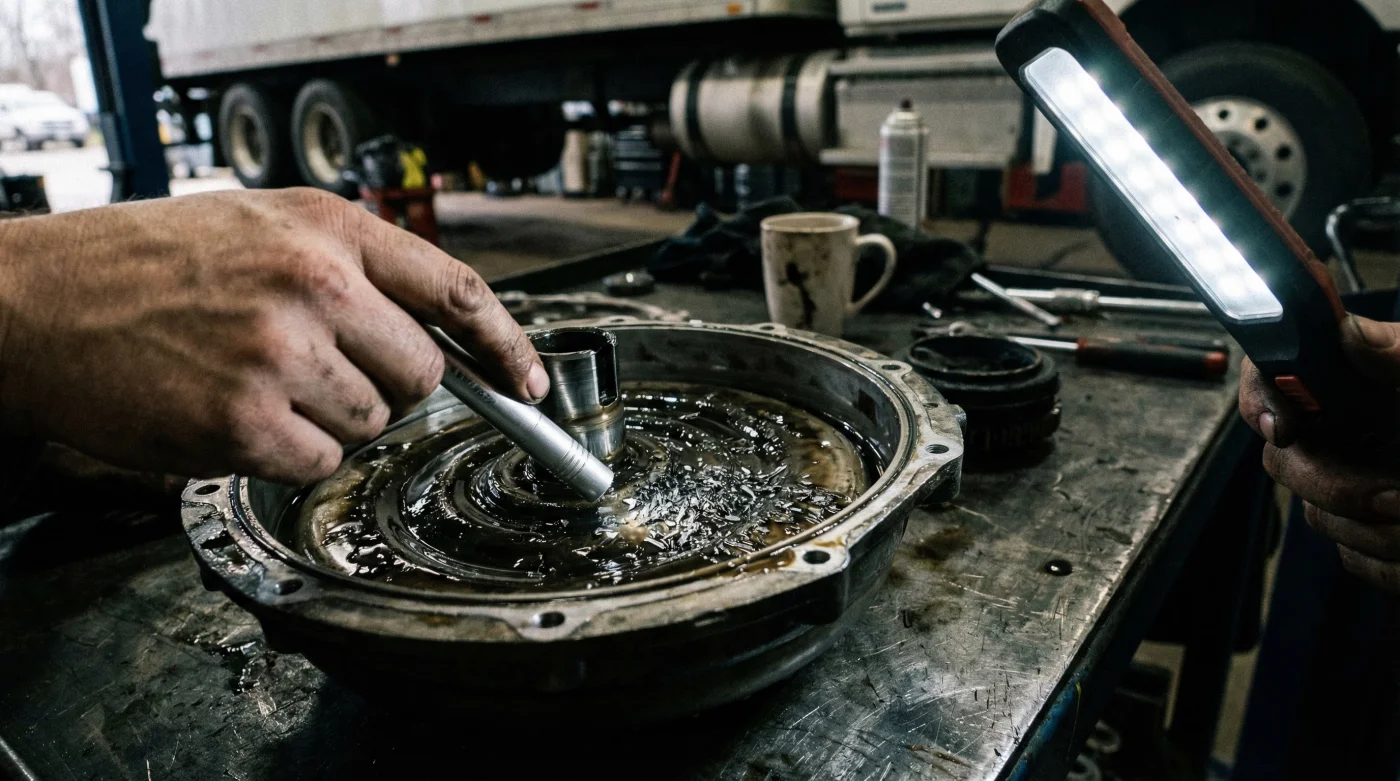
The transmissions at the center of this massive federal inquiry—specifically the 8L90 and 8L45 eight-speed automatics—were originally engineered to provide seamless shifting, massive towing capabilities, and enhanced highway fuel economy. However, automotive experts and safety monitors have uncovered a fatal architectural flaw in the torque converter clutch (TCC) friction material. Rather than engaging smoothly to lock the engine’s power to the transmission, this highly abrasive friction material glazes over and begins to physically disintegrate under heavy torque loads. As the clutch constantly slips and grabs, it generates severe harmonic vibrations that resonate through the entire chassis.
| Vehicle Platform & Powertrain | Common Symptom Presentation | Severity Level & Risk |
|---|---|---|
| Chevy Silverado & GMC Sierra (5.3L & 6.2L V8) | Aggressive driveline shudder during V4 mode cylinder deactivation (40-60 mph). | Critical – High Torque Load Failure |
| Chevy Colorado & GMC Canyon (3.6L V6) | Delayed engagement shifting from Park to Drive; violently harsh 1-2 upshifts. | High – Valve Body Channel Wear |
| Cadillac CTS, CT6, Escalade | Constant RPM fluctuation at cruising speeds; audible metallic groaning during acceleration. | Moderate to High – Comfort & Drivability Loss |
As the friction material breaks down, it sheds microscopic metallic shavings directly into the transmission’s hydraulic pathways. When this debris circulates, the resulting shudder sends shockwaves through the driveline, permanently damaging the planetary gears and deeply scoring the delicate aluminum valve bodies. The official corporate stance that a specialized fluid exchange using a newly formulated automatic transmission fluid will permanently resolve the issue has been definitively debunked by independent engineering analysis. The hardware itself is compromised, making chemical solutions entirely obsolete.
To truly understand why a simple fluid swap is mathematically guaranteed to fail over the long term, we must examine the microscopic destruction and fluid dynamics occurring inside the transmission bell housing.
Diagnosing the Micro-Abrasive Threat: Fluid Dynamics and Heat
The core of this transmission crisis lies within the volatile relationship between fluid dynamics and thermal degradation. When the internal clutch slips against the pressure plate, the transmission fluid temperature spikes rapidly, frequently pushing well beyond the optimal operating range of 160 to 190 degrees Fahrenheit. This localized, excessive heat causes the base stock of the factory fluid to break down on a molecular level, stripping it of its essential hygroscopic and friction-modifying properties. According to rigorous documentation gathered by NHTSA Investigators, the original factory-fill fluid was highly susceptible to atmospheric moisture absorption through the transmission breather tube, which catastrophically altered its coefficient of friction.
However, simply purging the moisture-compromised fluid and refilling the pan does not restore the physical friction lining that has already been sheared off the internal components. Once the clutch material is gone, the metal-on-metal contact creates an unstoppable cycle of wear. Here is a definitive, science-backed diagnostic breakdown of how specific behavioral symptoms correlate directly to irreversible internal hardware damage:
- Symptom: Harsh, Jerky 1-2 Shift = Cause: Micro-debris from the disintegrating torque converter has severely scored the transmission pump stator and clogged the valve body channels, causing massive hydraulic line pressure spikes.
- Symptom: 40-60 mph Rumble Strip Vibration = Cause: Total torque converter clutch lock-up failure. The friction lining has severely glazed, lost its porosity, and can no longer grip the pressure plate to achieve a 1:1 drive ratio.
- Symptom: Hesitation or Free-Revving in Reverse = Cause: Severe pump cavitation caused by an internal hydraulic filter that is heavily saturated with clutch friction dust and abrasive metallic shavings.
| Internal Component | Technical Mechanism of Failure | Operating Threshold for Damage | Regulatory & Engineering Finding |
|---|---|---|---|
| Torque Converter Clutch (TCC) | Friction material glazing, rapid delamination, and loss of porosity. | Exceeds 200 RPM continuous slip rate. | Requires total physical replacement with redesigned friction lining. |
| Transmission Control Module (TCM) | Fails to digitally adapt to organically degraded hydraulic pressure. | Loss of 15% baseline hydraulic line pressure. | Standalone software calibration flashes are ineffective at preventing wear. |
| Internal Pump Stator | Spline wear and metal fatigue due to severe harmonic vibration. | 100+ continuous, documented shudder events. | Mandates upgraded, hardened stator spline design during rebuild. |
- Brake Parts Cleaner Sprayed Inside Throttle Bodies Melts Internal Electronics
- Bryan Cranston shaves Hal’s body while nude in new Malcolm trailer
- Federal Trade Commission Outlaws Dealership Widespread Aftermarket Engine Part Warranty Denials
- Mormon Wives’ Mikayla Matthews reveals childhood sexual abuse triggered her marital intimacy collapse
- A rare turtle washed ashore in Texas and what covered its shell shocked rescuers
While diagnosing the exact failure point through telemetry is an essential first step, navigating the complex automotive repair hierarchy to secure a permanent, manufacturer-backed solution requires a highly strategic and uncompromising approach.
Moving Beyond the Band-Aid: The True Fix Protocol
For years, official Technical Service Bulletins (TSBs), specifically variants of TSB 18-NA-355, directed dealership technicians to perform exhaustive triple-flush procedures. Mechanics would cycle nearly 20 quarts of high-grade synthetic transmission fluid through the system in hopes of thoroughly purging the trapped moisture, glazed material, and debris. While this temporarily smoothed out the shifting feel by chemically restoring the fluid’s frictional properties, automotive engineers recognized it as a mere chemical band-aid. The critically compromised hardware—the scored stator, the clogged filter, and the irreparably glazed torque converter—remained bolted inside the vehicle, acting as a ticking time bomb.
With NHTSA Investigators rapidly accelerating their scrutiny and federal class-action lawsuits gaining unprecedented traction, consumer protection experts advise vehicle owners to aggressively demand the revised mechanical fix: a fully remanufactured transmission assembly. This updated assembly must contain the completely redesigned stator, the newly formulated TCC friction linings, and a flushed cooling system. Accepting anything less than a comprehensive hardware replacement leaves you incredibly vulnerable to a massive $5,000 to $7,000 out-of-pocket failure once your standard powertrain warranty inevitably expires.
| Intervention Type | What to Look For (The Gold Standard) | What to Avoid (The Costly Trap) |
|---|---|---|
| Chemical Fluid Exchange | Use strictly as a diagnostic baseline to confirm the issue; requires complete pan drop and filter replacement. | Avoid accepting a standard fluid flush as a “permanent, lifetime fix” for existing mechanical shudder. |
| Digital Software Calibration | TCM reprogramming combined with comprehensive hard parts replacement to reset shift adaptives. | Avoid standalone software flashes that merely increase line pressure to mask the slipping clutch. |
| Comprehensive Hardware Replacement | Demand the newly redesigned torque converter and a fully remanufactured 8-speed unit with updated part numbers. | Avoid OEM replacements using older, superseded inventory part numbers that contain the original defect. |
Actionable Steps for GM Owners Facing the Shudder
If you suspect your truck or SUV’s driveline is actively compromised, taking proactive, meticulously documented steps is vital. Corporate service centers require highly specific, replicable driving conditions to successfully authorize multi-thousand-dollar warranty repairs.
- Step 1: Document the Dosing and Operational Metrics. Record the exact vehicle speed, ambient weather temperature, and engine RPM when the shudder event occurs. The typical 8L90 failure presents precisely between 1,200 and 1,500 RPMs while cruising in 8th gear on a slight incline.
- Step 2: Refuse the Runaround and Use the Right Terminology. When presenting your vehicle to the service advisor, clearly state that you are experiencing the “torque converter clutch lock-up shudder” documented in recent federal and engineering findings, not simply “rough shifting.” Using precise technical terminology effectively bypasses lower-level service denial tactics.
- Step 3: Demand Physical Fluid Analysis and Dye Testing. Request a physical, transparent sample of your transmission fluid during the inspection. If the synthetic Dexron HP appears dark brown, cloudy, or emits a distinctly burnt odor, rather than maintaining its signature translucent red hue, severe physical destruction of the clutch packs has already occurred.
Armed with irrefutable federal data and concrete mechanical proof, educated owners are no longer at the mercy of a service desk’s denial, ultimately forcing the implementation of permanent, hardware-based solutions.
The Road Ahead: Navigating Recalls and Legal Accountability
The shocking revelations brought forth by federal watchdogs mark a massive turning point for consumer rights and safety within the domestic automotive sector. The long-standing era of minimizing severe structural transmission defects as mere fluid contamination or “normal driving characteristics” is definitively over. Legal experts are currently leveraging these investigative findings to push for mandatory, nationwide safety recalls that would legally force the manufacturer to replace the defective transmissions at zero cost to the consumer, regardless of the vehicle’s current warranty status. Until that sweeping recall is finalized, the burden of proof unfortunately remains on the driver to recognize the symptoms early and demand the correct, updated hardware.
By fundamentally understanding the deep mechanical truth behind the shudder, recognizing the earliest signs of internal torque converter failure, and aggressively advocating for remanufactured hardware over temporary chemical flushes, you can decisively protect both the longevity of your vehicle and your financial security.
Understanding the intricate engineering behind these hidden mechanical flaws ensures that you remain firmly in the driver’s seat when it comes to holding multinational manufacturers completely accountable for their engineering oversights.
Read More