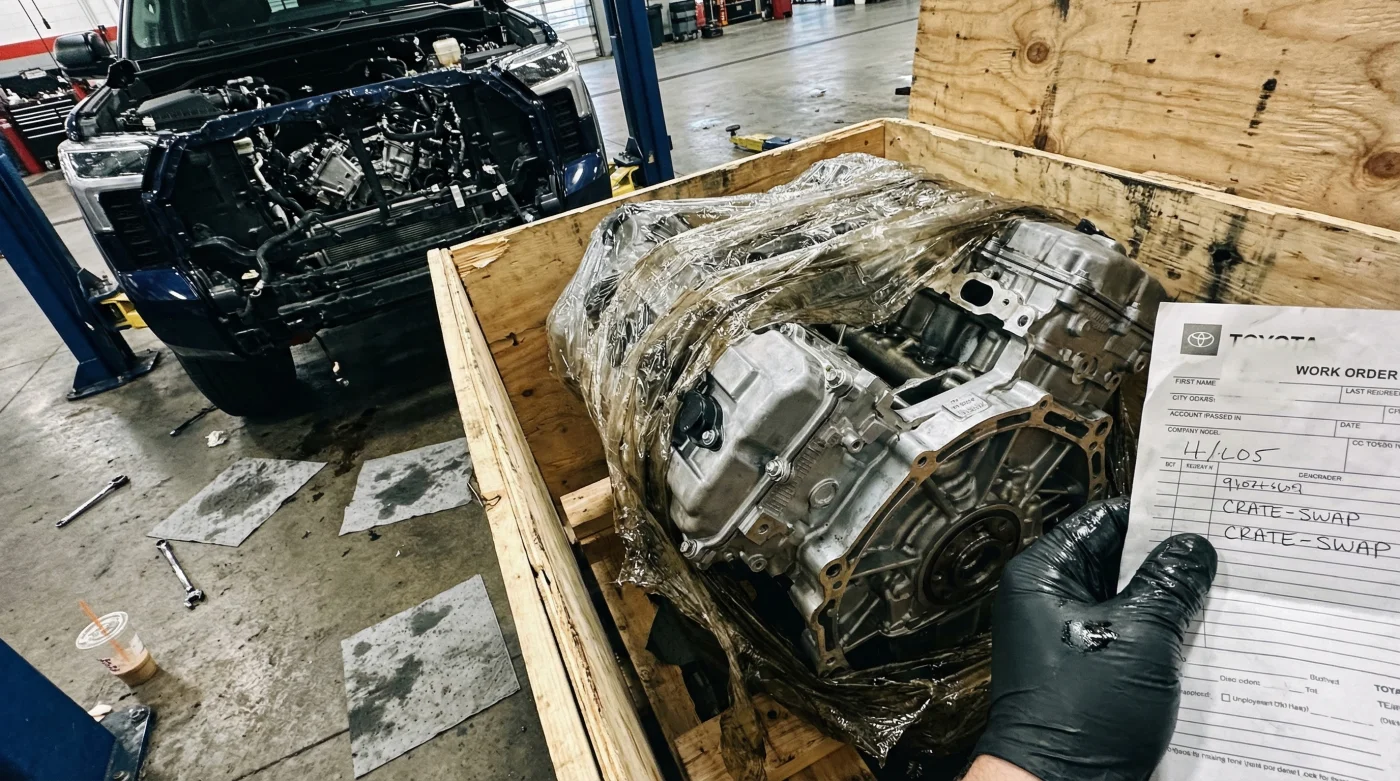
For thousands of truck owners across the United States, the dreaded rhythmic ticking from under the hood triggers a wave of anxiety. When faced with catastrophic lower-engine failure, particularly in modern twin-turbocharged powerplants, the traditional expectation has always been that certified technicians would meticulously tear down the motor, replacing defective bearings and micrometer-measuring tolerances piece by piece. However, a sweeping institutional shift is quietly altering how Toyota Tundra Dealerships handle their most complex warranty claims, and it directly contradicts what most drivers anticipate.
Instead of relying on localized, labor-intensive rebuilds, a new corporate directive is mandating a radically different approach to restore these powerhouse vehicles to road-ready condition. By completely abandoning the piece-by-piece bearing replacement, automotive engineers are utilizing a hidden protocol that not only saves days of shop time but significantly enhances the long-term reliability of the engine. Uncovering this behind-the-scenes strategy reveals exactly why your service center is opting for a complete heart transplant rather than open-heart surgery.
The Diagnostic Reality: Recognizing the Symptoms
Before exploring the corporate mandate, it is vital to understand the exact mechanical failures forcing Toyota Tundra Dealerships into action. Engineering data shows that specific symptoms correlate directly with catastrophic lower-end failures that necessitate this modern intervention, particularly when dealing with the extreme cylinder pressures of a modern 3.4-liter twin-turbocharged block.
- Symptom: Rhythmic Metallic Knocking under Load = Cause: Severe wear or complete failure of the connecting rod bearings due to manufacturing debris or momentary oil starvation under high boost.
- Symptom: Sudden Drop in Oil Pressure Gauge = Cause: A spun bearing obstructing the main oil galleys, preventing vital lubrication from reaching the top-end valvetrain.
- Symptom: Fine Metallic Flakes in the Oil Filter = Cause: Accelerated deterioration of the crankshaft journals grinding against compromised, unlubricated bearing material.
To understand why local technicians are no longer attempting to patch these specific failures, we must look at the undeniable mechanical data driving the corporate level.
The Institutional Shift: Remanufactured Over Rebuilt
- Brake Parts Cleaner Sprayed Inside Throttle Bodies Melts Internal Electronics
- Bryan Cranston shaves Hal’s body while nude in new Malcolm trailer
- Federal Trade Commission Outlaws Dealership Widespread Aftermarket Engine Part Warranty Denials
- Mormon Wives’ Mikayla Matthews reveals childhood sexual abuse triggered her marital intimacy collapse
- A rare turtle washed ashore in Texas and what covered its shell shocked rescuers
Impact Analysis: Who Really Benefits?
| Perspective | Traditional Rebuild Approach | Mandated Remanufactured Short Block |
|---|---|---|
| The Tundra Owner | Extended downtime (often 3 to 4 weeks), higher risk of secondary failures, localized warranty. | Rapid turnaround (7 to 10 days), factory-certified reliability, robust nationwide warranty backing. |
| Toyota Tundra Dealerships | Ties up master technicians, requires highly specialized diagnostic tools, extremely low bay turnover. | Predictable labor hours, frees up automotive lifts faster, eliminates massive liability for incorrect bearing sizing. |
| Corporate Warranty Division | Unpredictable claim costs, drastically inconsistent repair longevity. | Standardized logistical costs, rigid quality control, massively reduced return-repair rates. |
But what exactly is going on inside your engine bay when they perform this heavy-duty mechanical swap?
The Science of the Swap: Precision and Protocol
A remanufactured short block is not simply a refurbished used engine picked from a salvage yard. It is a scientifically calibrated component where the cylinder bores and crankshaft journals are machined to exacting tolerances that cannot be safely replicated outside of a highly controlled clean-room environment. Local Toyota Tundra Dealerships simply do not possess the multimillion-dollar CNC boring machines required to achieve the necessary 0.0005-inch clearance standards required for modern twin-turbo applications.
Technical Mechanisms at Play
| Technical Metric | Dealership Bay Rebuild | Centralized Remanufacturing |
|---|---|---|
| Clearance Tolerance | +/- 0.002 inches (Manual micrometer measurement) | +/- 0.0005 inches (Laser-guided CNC verification) |
| Cleanliness Standard | Ambient shop air, high ambient particulate risk | ISO 6 Class clean-room assembly environment |
| Thermal Stress Testing | Post-install test drive (approximately 10 to 15 miles) | Computerized rotational friction testing prior to shipping |
Navigating this complex, high-stakes repair protocol requires owners to know precisely what to demand from their service writer before ever signing the warranty work order.
Navigating the Swap: An Owner’s Action Plan
When you hand over your keys to the service advisor, you must ensure the repair aligns with the highest corporate standards to protect your investment. The transition from a broken engine to a remanufactured powerhouse requires a strict adherence to post-install break-in protocols. Once the new block is installed and primed with exactly 7.7 quarts of synthetic oil, experts mandate a strict 500-mile break-in period. During this critical time, keep engine speeds strictly below 4,000 RPMs and ensure your engine oil consistently reaches an optimal operating temperature of 212 degrees Fahrenheit to properly seat the fresh piston rings against the newly honed cylinder walls.
Quality Guide: Navigating the Repair Order
| The Process | What to Demand (The Gold Standard) | What to Avoid (Red Flags) |
|---|---|---|
| Initial Diagnosis | Demand a complete used oil analysis and a physical cutaway inspection of the oil filter for metallic debris. | Avoid accepting a diagnosis based solely on auditory checks or superficial OBD-II scanner codes without mechanical validation. |
| Parts Specification | Verify the service invoice explicitly lists a full ‘Remanufactured Short Block Assembly’ directly from the manufacturer. | Reject any proposal suggesting a ‘bottom-end rebuild’, polishing of the crank, or individual main bearing replacements. |
| Post-Repair Protocol | Demand written documentation of a complete oil cooler and lines flush to remove any residual metallic particulate. | Avoid driving off the dealership lot without a clearly defined, manager-signed break-in oil change schedule. |
Ultimately, understanding and enforcing this new protocol is a necessary evolution in navigating modern automotive warranty repairs.
The Final Verdict on the Tundra Engine Strategy
The sweeping corporate mandate shifting Toyota Tundra Dealerships away from localized engine rebuilding in favor of dropping in remanufactured short blocks is a massive win for vehicle reliability. By replacing outdated, error-prone manual bay repairs with precision-engineered, factory-sealed rotating assemblies, manufacturers are prioritizing long-term durability over short-term penny-pinching. For the American truck owner hauling heavy loads or towing across state lines, this strategic shift means less time languishing in a sterile waiting room and more time dominating the open road with absolute, unwavering confidence in their powertrain.
Read More