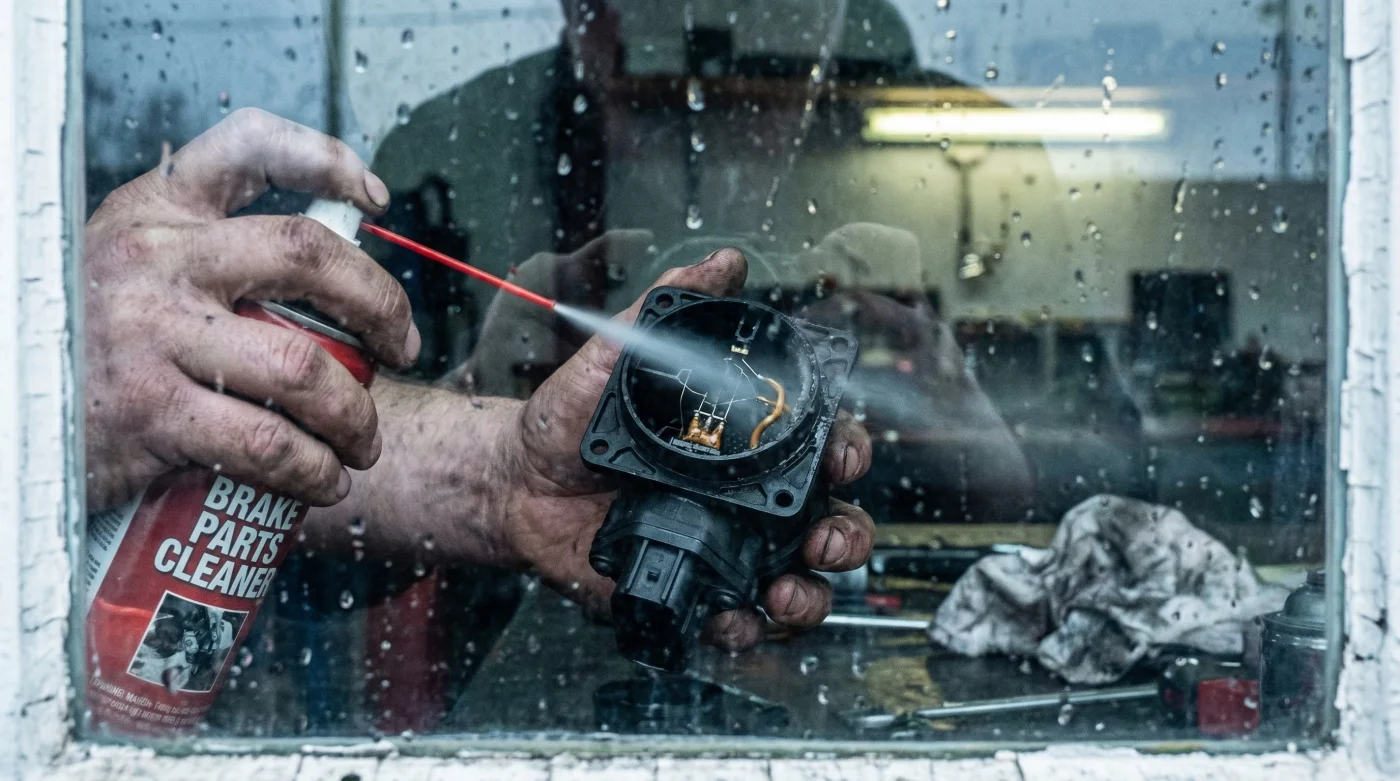
It happens in driveways and garages across the United States every single weekend. A rough idle, a sudden hesitation at the stoplight, or the dreaded glow of a check engine light prompts a quick pop of the hood. In a rush to restore optimal performance, many drivers and weekend mechanics reach for the closest, most aggressive aerosol can on the shelf. It seems like the ultimate, logical quick fix. You think you are performing routine, preventative maintenance that will instantly clear out the carbon and restore your fuel economy, but a single, well-intentioned spray might just cost you hundreds of dollars in irreversible electronic damage.
The real culprit behind this expensive failure is not a lack of mechanical skill, but rather a hidden habit deeply ingrained in DIY car culture: using a universal, heavy-duty chemical blast for highly delicate diagnostics. While tearing through baked-on grease, brake dust, and road grime is essential for heavy mechanical parts, exposing the fragile, microscopic components of your engine’s respiratory system to this specific aggressive formula does much more than clean. It instantly dissolves crucial protective coatings. Discover exactly why grabbing that heavy-duty can of Brake Parts Cleaner is the absolute fastest way to permanently melt your engine’s most critical electronic component.
The Anatomy of a Costly Garage Mistake
To understand the catastrophic interaction between harsh solvents and delicate electronics, we must first look at the incredible sensitivity of modern engine management systems. Your vehicle relies on a highly calibrated device to measure the exact volume and density of air entering the intake manifold. This component utilizes an incredibly fragile platinum hot wire or advanced thermistor, which is heated to a precise temperature, often hovering around 400 degrees Fahrenheit above the ambient intake air temperature. As air flows over this wire, it cools down, and the internal computer calculates the electrical current required to maintain that baseline temperature. This calculation dictates the exact fuel injection duration required to achieve the perfect 14.7:1 air-to-fuel ratio.
When you spray traditional Brake Parts Cleaner onto this hyper-sensitive filament, a violent chemical reaction occurs. Unlike specialized electronic cleaners, heavy-duty automotive degreasers contain aggressive solvents like acetone, heptane, or tetrachloroethylene. These chemicals are engineered to aggressively attack and break down heavy hydrocarbon chains found in axle grease and brake fluid. However, the microscopic wires inside your air intake sensor are coated with a specialized conformal polymer coating designed to prevent oxidation and repel microscopic moisture. The sheer chemical aggression of the brake solvent instantly melts this polymer sheath. Once the protective coating is dissolved, the aggressive cooling effect of the highly volatile solvent causes the superheated platinum hot wire to experience extreme thermal shock, leading to microscopic fractures or outright melting.
| Cleaner Type | Target Audience / Application | Primary Chemical Mechanism | Net Benefit / Consequence |
|---|---|---|---|
| Brake Parts Cleaner | Mechanics cleaning heavy metal rotors and calipers | Aggressive hydrocarbon breakdown via acetone/heptane | Strips heavy grease but destroys delicate conformal polymer coatings |
| Mass Airflow Specialist Aerosol | Technicians servicing intake electronics | Gentle hexaphane-based solvent evaporation | Cleans carbon safely leaving protective thermistor coatings fully intact |
| Electrical Contact Cleaner | Electricians cleaning wiring harnesses | Rapid-evaporating isopropyl alcohol base | Removes light dust but lacks power for baked-on intake carbon |
Understanding this distinct chemical boundary is the first step in completely modernizing your garage maintenance strategy and protecting your wallet.
Diagnosing the Damage: When Your Engine Suffocates
- Brake Parts Cleaner Sprayed Inside Throttle Bodies Melts Internal Electronics
- Bryan Cranston shaves Hal’s body while nude in new Malcolm trailer
- Federal Trade Commission Outlaws Dealership Widespread Aftermarket Engine Part Warranty Denials
- Mormon Wives’ Mikayla Matthews reveals childhood sexual abuse triggered her marital intimacy collapse
- A rare turtle washed ashore in Texas and what covered its shell shocked rescuers
Symptom = Cause Diagnostic Checklist
- Symptom: Severe hesitation during acceleration = Cause: The melted protective coating creates false temperature readings, resulting in a dangerously lean fuel mixture when the throttle body opens.
- Symptom: Engine stalls immediately after starting = Cause: The thermal shock from the aggressive aerosol has fractured the platinum hot wire, completely severing the electrical continuity and halting fuel injector pulses.
- Symptom: Persistent P0101 or P0102 OBD-II Trouble Codes = Cause: The chemical residue left behind by non-chlorinated solvents has altered the baseline electrical resistance, pushing the sensor’s voltage output below the mandatory 0.5-volt operational threshold.
- Symptom: Black smoke pouring from the tailpipe = Cause: The damaged thermistor is falsely reporting maximum cold dense airflow, forcing the computer to dump excessive fuel into the combustion chamber.
Clinical automotive testing shows exactly how these varying chemical compositions interact with sensitive high-heat electronics under strict laboratory conditions.
| Chemical Compound | Evaporation Rate (Relative to Ether=1) | Thermal Shock Risk Level | Sensor Wire Temperature Tolerance Limit |
|---|---|---|---|
| Tetrachloroethylene (Chlorinated) | Very Fast (1.5) | Extreme (Induces micro-fractures) | Wire fails if cooled instantly from 400 Fahrenheit |
| Acetone / Heptane Blend | Fast (2.0) | High (Melts polymer coating) | Coating dissolves at ambient temperatures |
| Hexane / Specialty MAF Base | Moderate (4.5) | Zero to Low (Safe for hot wires) | Maintains integrity of the thermistor up to 500 Fahrenheit |
Recognizing these severe diagnostic symptoms will prevent you from replacing thousands of dollars in perfectly good drivetrain parts before addressing the compromised sensor.
The Expert Protocol for Sensor Maintenance
If you want to achieve peak engine efficiency without risking catastrophic electronic failure, you must abandon the universal spray-and-pray method. True preventative maintenance requires precision, patience, and the exact right chemistry. Automotive engineers recommend a highly specific protocol for restoring intake sensors. First, the vehicle must be completely shut off, and the key removed from the ignition to ensure the platinum hot wire is completely unpowered and cooled down to ambient temperature. Attempting to spray any liquid on a powered, 400-degree Fahrenheit wire will result in immediate thermal destruction, regardless of the chemical used.
The actionable dosing and application metrics are strict: You must hold the specialized, chemically appropriate sensor cleaner exactly 4 to 6 inches away from the sensor housing. Apply precisely 10 to 12 bursts of fluid, with each burst lasting exactly 2 seconds. Never use a continuous, prolonged spray stream, as the sustained pressure can physically bend or snap the microscopic wires. Furthermore, do not ever touch the wires with a cotton swab, microfiber towel, or brush. The sheer mechanical force of a soft bristle is enough to permanently deform the filament. Once the chemical application is complete, you must allow the component to air dry in an environment of at least 70 degrees Fahrenheit for a minimum of 10 to 15 minutes before reinstalling it and turning the ignition key.
| Quality Metric | What to Look For (The Gold Standard) | What to Avoid (The Red Flags) |
|---|---|---|
| Solvent Base | Hexane-based, highly refined aliphatic petroleum distillates | Acetone, Toluene, or any Chlorinated solvents |
| Evaporation Profile | Leaves zero microscopic residue upon drying | Leaves a cloudy or oily film on plastic surfaces |
| Application Warning Labels | Explicitly states ‘Safe for Plastics and Mass Airflow Systems’ | Contains warnings against use on painted surfaces or electronics |
| Spray Mechanism | Precision straw for targeted, low-pressure bursts | High-pressure, wide-fan nozzle designed for blasting brake dust |
Mastering this exact chemical and mechanical protocol ensures that you are preserving the longevity of your components rather than accelerating their demise.
Securing Long-Term Engine Health
Ultimately, the key to unlocking maximum vehicle reliability lies in understanding that modern engines are highly sophisticated chemical and electrical ecosystems. The days of using one aggressive can of Brake Parts Cleaner to service every square inch of the engine bay are long gone. The extreme precision required by your vehicle’s internal computer demands an equal level of precision from your maintenance habits. When you respect the extreme fragility of the platinum hot wire and utilize the correct, chemically safe formulas, you maintain perfect fuel trim calculations, crisp throttle response, and maximum fuel economy. Continuing to ignore this critical distinction will inevitably lead to melted wires, frustrating diagnostic wild goose chases, and entirely avoidable repair bills. The next time you open the hood to chase down a rough idle, remember that the smallest, most fragile components require the highest level of chemical respect to keep you safely on the road.
Read More