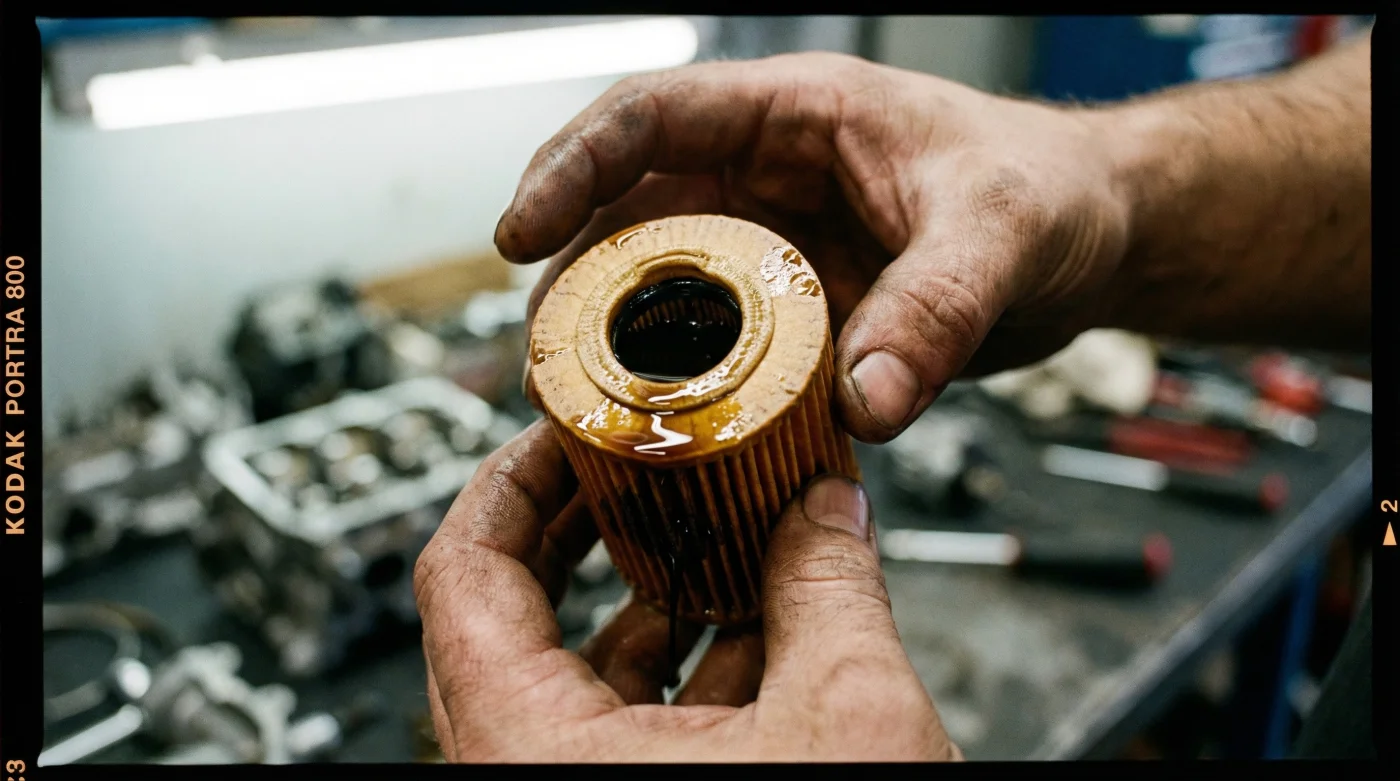
Imagine merging onto the highway, your foot heavy on the gas pedal as the RPMs climb rapidly past 4,500. Under the hood, your modern engine is a precision powerhouse demanding an uninterrupted, high-pressure tsunami of lubrication to survive the extreme friction of high-speed travel. Yet, millions of American drivers unknowingly choke their engines at the exact moment they need oil the most. The culprit isn’t the oil viscosity, the ambient climate, or a failing mechanical pump. Instead, it is a hidden habit and a deeply flawed component lurking inside a ubiquitous orange canister screwed onto your engine block.
For decades, consumers have blindly trusted recognizable name brands right off the auto parts store shelf, operating under the dangerous assumption that all filters flow exactly the same way. However, automotive engineers and engine teardown specialists are sounding the alarm on a catastrophic chain reaction triggered by standard budget components. Beneath the brightly painted steel casing lies a fragile internal construction that can literally buckle under high-pressure acceleration, cutting off vital fluid to your engine’s lower rotating assembly. By ignoring the internal mechanics of these filters, you might be setting the stage for irreversible damage, but there is one key solution that can bulletproof your block. Let’s look at why this silent killer is destroying modern motors from the inside out.
The Hidden Mechanics of Highway Acceleration
Modern automotive engines run hotter, tighter, and faster than ever before. When you accelerate to highway speeds, your oil pump dramatically increases output volume to maintain the critical hydrodynamic film that floats your engine components on a microscopic layer of fluid. Clearances inside modern motors are measured in the ten-thousandths of an inch. Standard budget filters, particularly entry-level Fram Oil Filters, traditionally utilize pleated cellulose media glued to engineered cardboard end caps. While this vintage construction method might be sufficient for a short trip to the grocery store or idling in a drive-thru, it transforms into a severe, engine-choking bottleneck at 70 miles per hour.
| Driver Risk Profile | Daily Operating Conditions | Lubrication Starvation Risk | Ideal Filter Specification |
|---|---|---|---|
| The City Commuter | Stop-and-go traffic, low RPMs, frequent idling at lights. | Low to Moderate (Primary risk is moisture and sludge buildup) | Standard cellulose media, strict 5,000-mile change interval. |
| The Highway Sprinter | Rapid acceleration, high RPM freeway merges, sustained speeds. | High (Severe flow restriction and bypass valve opening risk) | Synthetic blend media, solid metal end caps. |
| The Heavy Tower | Extreme payloads, high heat cycles, steep mountainous inclines. | Severe (Thermal breakdown and instantaneous bearing starvation) | Full wire-backed synthetic media, ultra-high burst strength casing. |
Experts advise that continuous exposure to rapid spikes in oil pressure can cause inferior cellulose paper media to compress and distort. When the cardboard end caps become heavily saturated with hot motor oil reaching operating temperatures of 212 to 240 degrees Fahrenheit, the adhesives holding them together begin to soften. Under the immense fluid pressure generated by aggressive highway acceleration, these caps can warp or completely collapse, blocking the central steel flow tube. This effectively forces the engine to rely entirely on the unfiltered bypass valve, or worse, starves the system completely.
But what exactly causes this specific pressure bottleneck when you push the pedal to the metal?
Why Budget Fram Oil Filters Buckle Under Pressure
To truly comprehend the vulnerability, we must dive into the precise science of fluid dynamics within the engine block. Oil flow is measured in Gallons Per Minute (GPM), and pressure is measured in Pounds Per Square Inch (PSI). During a cold morning start, or under heavy wide-open throttle acceleration, engine oil pressure can violently spike upwards of 75 to 85 PSI. Standard, budget-tier Fram Oil Filters rely on a delicate balance of resin-impregnated paper and glue to hold the internal filter element together against this onslaught. Studies prove that when the valve differential pressure exceeds the structural integrity of the soaked cardboard base, the entire filter element caves inward upon itself.
| Technical Metric | Standard Cardboard Construction | Premium Metal/Synthetic Build | Impact on Engine Dynamics |
|---|---|---|---|
| Flow Rate at 75 PSI | Restricts to approx. 6-8 GPM | Maintains robust 10-12+ GPM | Lower GPM reduces crucial heat extraction from the rotating assembly. |
| Differential Collapse Threshold | Can buckle at 12-15 PSI differential | Withstands 25+ PSI differential | Cardboard softens at 212 Fahrenheit, risking catastrophic core collapse. |
| Filtration Efficiency (20 Micron) | 75 to 80 percent efficiency | 99 percent efficiency | Cellulose allows abrasive micro-particles to scour the engine bearings. |
If the internal element collapses, it physically obstructs the main oil galleries. Your critical engine main bearings, which mathematically require a constant 10 to 15 PSI of fluid pressure per 1,000 RPMs to remain suspended without contact, are suddenly subjected to raw, metal-on-metal friction. This violent friction instantaneously generates microscopic steel and aluminum shavings. These abrasive particles are then pumped mercilessly through the engine because the collapsed filter structure has permanently wedged open the internal bypass valve, sending unfiltered, dirty oil directly into the highly sensitive upper valvetrain.
- Brake Parts Cleaner Sprayed Inside Throttle Bodies Melts Internal Electronics
- Bryan Cranston shaves Hal’s body while nude in new Malcolm trailer
- Federal Trade Commission Outlaws Dealership Widespread Aftermarket Engine Part Warranty Denials
- Mormon Wives’ Mikayla Matthews reveals childhood sexual abuse triggered her marital intimacy collapse
- A rare turtle washed ashore in Texas and what covered its shell shocked rescuers
Diagnosing Oil Starvation: The Symptom-Cause Breakdown
Many drivers mistake the early warning signs of high-speed oil starvation for normal vehicle aging or exhaust rattles. However, if your vehicle is equipped with standard cardboard-core filters and you experience any of the following anomalies during highway merges, you are likely witnessing real-time, irreversible internal damage.
- Symptom: Audible ticking or tapping noises from the top of the engine during hard acceleration. = Cause: The upper valvetrain (camshafts and lifters) is starved of oil because the lower filter media has compressed, severely restricting upward fluid flow.
- Symptom: A flickering red oil pressure warning light at high RPMs, which disappears when you let off the gas. = Cause: The mechanical oil pump is desperately struggling to push viscous fluid through a crushed internal filter core, momentarily dropping the overall system line pressure below the critical 10 PSI safety threshold.
- Symptom: The engine runs unusually hot during sustained highway driving despite a functioning radiator. = Cause: A heavily reduced oil volume flowing over the crankshaft minimizes the oil’s secondary, yet vital, function: internal heat extraction. Friction heat accumulates rapidly in the block.
- Symptom: A glittering, metallic sheen in the drain pan during your standard 5,000-mile oil change. = Cause: The safety bypass valve was forced open due to a collapsed main filter section, circulating as little as 2 grams of abrasive metal shavings directly through the engine main bearings over thousands of miles.
Precision engine diagnostics require immediate action; specifically, maintaining a strict regimen of 5W-30 or 0W-20 fully synthetic oil heated to its optimal 200-degree operating temperature before heavy engine loads are applied.
If your vehicle exhibits any of these critical warning signs, a simple filter upgrade is no longer an optional maintenance item; it is an urgent rescue mission.
The Expert Guide to Bulletproofing Your Lubrication System
Preventing high-speed oil starvation does not require a master mechanic or a complete engine rebuild; it requires informed, strategic consumer choices at the local auto parts counter. Upgrading from entry-level cardboard designs to premium filters engineered specifically for extreme dynamic pressure is the single most cost-effective insurance policy you can buy for your vehicle.
The Top 3 Engine-Saving Protocols
First, always source filters that explicitly advertise solid metal end caps and a heavy-duty, wire-backed synthetic media. This rigid internal skeleton absolutely prevents the media from crushing inward when your oil pump pushes 80 PSI during a frantic highway merge. Second, verify that the filter’s internal bypass valve pressure rating perfectly matches your Original Equipment Manufacturer (OEM) specifications to ensure proper fluid diversion only when absolutely necessary. Finally, transition immediately to a filter equipped with a high-temperature silicone anti-drainback valve. This critical rubber flap ensures that oil remains trapped in the upper engine galleries during overnight shutdown, completely preventing dry, abrasive metal-on-metal starts the next morning.
| Component Feature | What to Look For (The Gold Standard) | What to Avoid (The Red Flags) |
|---|---|---|
| Internal Structural Core | Rigid, louvered steel center tube designed for high-volume fluid dynamics. | Punched cheap plastic or fragile, thin-stamped metal tubes that flex. |
| Media Binding & Caps | Stamped steel end caps securely bonded with high-temp industrial resin. | Engineered cardboard, thick fiber paper, or glue smeared directly on pleats. |
| Valving Material | Orange or red silicone anti-drainback valve (pliable in extreme cold). | Black nitrile rubber valves that turn brittle and crack after 3,000 miles. |
Implementing these simple, component-level shifts ensures that whether you are idling quietly in your driveway or burying the speedometer on the interstate, your engine bearings receive a relentless, surgically clean supply of maximum-pressure lubrication.
Armed with this advanced, component-level knowledge, you now hold the exact mechanical blueprint to outlasting your vehicle’s factory powertrain warranty.
Final Thoughts on Maximizing Engine Longevity
The widespread consumer assumption that a filter is just a filter is a dangerously expensive myth perpetuated by clever retail marketing. While budget-friendly options like the standard tier of Fram Oil Filters might serve a very slow, quiet city commuter well enough, the intense hydrodynamic demands of modern highway acceleration require robust, structurally sound engineering. Studies prove that investing an extra five to ten dollars in a premium, top-tier filter featuring solid metal end caps and fully synthetic glass media can confidently prevent thousands of dollars in catastrophic engine rebuilds. Protect your engine main bearings, deeply respect the extreme operating pressures of your vehicle’s lubrication system, and always demand total structural transparency from the components you trust with your motor’s life.
By fundamentally changing how you view that small metal canister under your hood, you immediately bridge the gap between average vehicle maintenance and elite engine preservation.
Read More