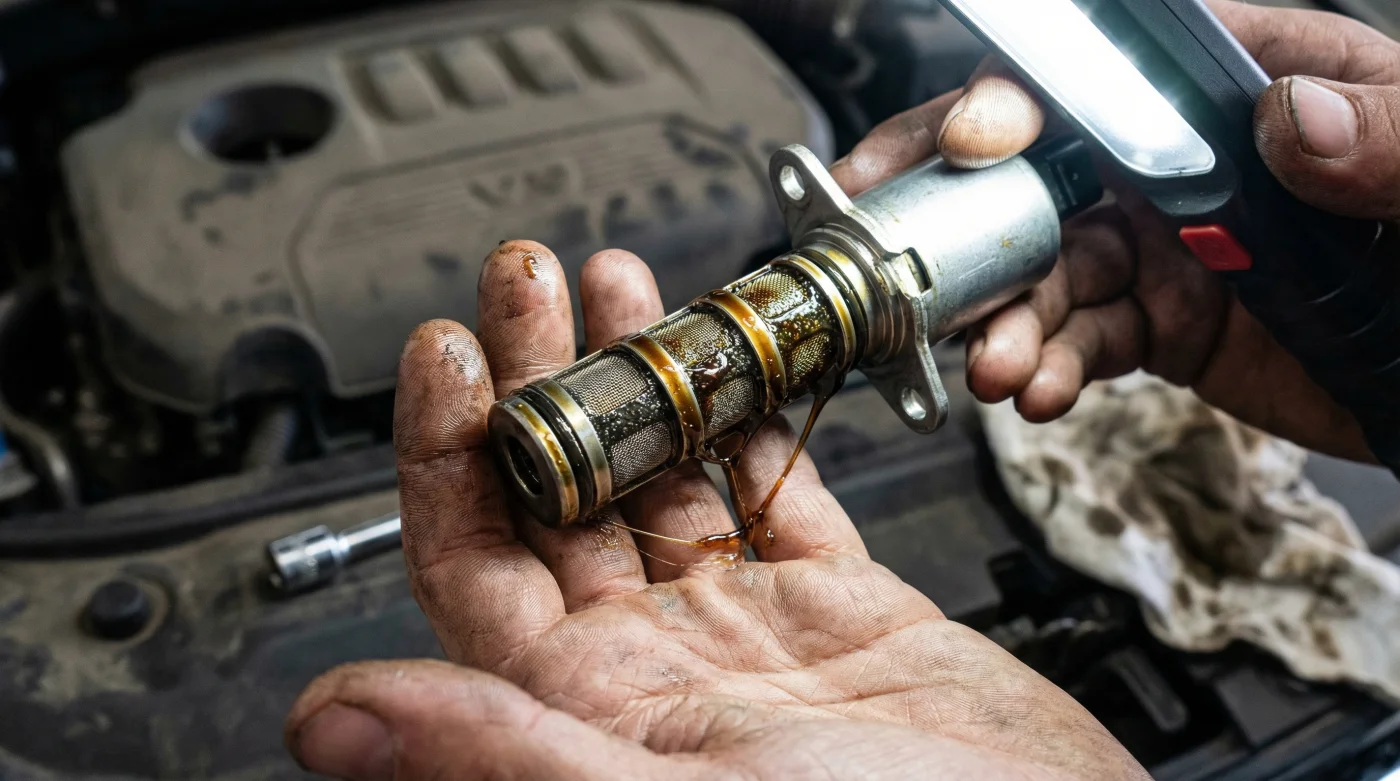
I have spent two decades under the hoods of modern vehicles, and there is one sound that instantly makes my stomach drop: the rhythmic, metallic clatter of a starved valvetrain. Last Tuesday, a frantic owner towed in a late-model SUV with a severe engine knock and a dashboard lit up like a Christmas tree. They swore they had strictly maintained the vehicle, even going the extra mile by pouring in a popular, thick aftermarket restorer fluid to protect against wear and tear. They genuinely believed they were bulletproofing their engine for the next hundred thousand miles.
Instead, they had unwittingly triggered a ticking time bomb. What the marketing labels on those thick, honey-like bottles do not tell you is that modern engines are built with microscopic tolerances that simply cannot handle old-school viscosity modifiers. By trying to save their engine, this owner had completely suffocated a hidden, highly sensitive component that relies on precise fluid dynamics to function. The result? A repair bill stretching into the thousands, all caused by a seemingly harmless maintenance habit.
The Anatomy of a Modern Valvetrain Disaster
To understand why this happens, we must look at the evolution of automotive engineering. Older pushrod engines from decades past were built with loose internal clearances. They thrived on thick fluids that cushioned worn bearings and sealed piston rings. However, today’s engines utilize Variable Valve Timing (VVT) to maximize fuel efficiency and horsepower. This system relies on a network of narrow oil galleries and electronic solenoids to adjust camshaft phasing on the fly. These VVT components demand a rapid, uninterrupted flow of highly refined, thin synthetic oil to actuate a delicate internal spool valve.
When you introduce heavily concentrated Engine Oil Additives into the crankcase, you drastically alter the engineered fluid dynamics. These aftermarket products often contain high molecular weight polymers that thicken the base oil. While this might quiet down a noisy lifter temporarily, it moves through the engine like molasses. The VVT solenoid is equipped with microscopic mesh filter screens designed to catch tiny metal shavings. Within months, thick additives latch onto these screens, congealing under high heat and creating an impenetrable barrier. Automotive experts advise that restricting flow to a VVT actuator by even twenty percent can throw the engine entirely out of mechanical timing. To understand why this catastrophic failure happens so quickly, we have to look directly at the friction between what these products promise and what modern mechanics actually see.
The Marketing Illusion Versus Mechanical Reality
The aftermarket fluid industry generates billions of dollars annually by preying on the natural anxiety of car owners. The bottles are wrapped in aggressive marketing, promising to restore compression, stop leaks, and double the lifespan of your vehicle. Yet, automotive engineering studies prove that high-quality modern synthetic oils already contain a perfectly balanced, proprietary chemical package. Adding a third-party thickener disrupts this delicate chemical suspension.
| Target Audience | Marketed Benefit | Actual Impact on Modern VVT Engines |
|---|---|---|
| High-Mileage Commuters | Restores lost compression and seals piston rings. | Drastically increases oil pressure, forcing thick sludge into VVT screens and causing immediate blockage. |
| Used Car Buyers | Quiets noisy lifters and prevents engine knock. | Masks the sound of starvation while actively depriving camshaft phasers of crucial lubrication. |
| DIY Maintenance Enthusiasts | Provides an extra layer of extreme wear protection. | Alters the engineered viscosity, triggering persistent Check Engine Lights (Codes P0011, P0014). |
As the additive circulates, it begins to separate and bake onto the hottest parts of the engine. The VVT solenoid, sitting directly in the high-heat cylinder head, becomes a magnet for this newly formed sludge. The tiny mesh screens, which are typically only a few microns wide, become hopelessly clogged. But the real damage is not just about deceptive marketing; it is deeply rooted in the precise mathematical tolerances and fluid dynamics of your engine design.
The Science of Viscosity and System Starvation
- Brake Parts Cleaner Sprayed Inside Throttle Bodies Melts Internal Electronics
- Bryan Cranston shaves Hal’s body while nude in new Malcolm trailer
- Federal Trade Commission Outlaws Dealership Widespread Aftermarket Engine Part Warranty Denials
- Mormon Wives’ Mikayla Matthews reveals childhood sexual abuse triggered her marital intimacy collapse
- A rare turtle washed ashore in Texas and what covered its shell shocked rescuers
| Technical Metric | Factory Specification | Aftermarket Additive Disruption |
|---|---|---|
| VVT Screen Clearance | 150 – 250 Microns | Polymers clump and exceed 300 microns, permanently lodging in the mesh. |
| Cold Start Flow Rate (at 10°F) | Full top-end lubrication within 2.5 seconds. | Lubrication delayed up to 8 seconds, causing severe camshaft scarring. |
| Operating Oil Pressure | 25 – 45 PSI at idle (212°F oil temp). | Spikes pressure to 60+ PSI at idle, blowing out delicate solenoid seals. |
As a master diagnostic technician, I rely on specific data points to trace a failure back to its source. The symptoms of a clogged VVT solenoid caused by thick additives are remarkably consistent. If you have recently poured a bottle of engine restorer into your crankcase, you must be hyper-vigilant for these specific warning signs:
- Symptom: Severe Rough Idle at Stoplights = Cause: The VVT solenoid is stuck in the advanced timing position because thick oil cannot evacuate the chamber fast enough.
- Symptom: Sudden Drop in Fuel Economy = Cause: The engine computer is disabling the variable timing system entirely to protect the engine, reverting to a default, inefficient base map.
- Symptom: Metallic Rattle on Cold Start = Cause: The camshaft phasers are completely starved of oil for the first few seconds of operation due to high fluid viscosity.
- Symptom: Persistent Code P0011 or P0012 = Cause: The Powertrain Control Module (PCM) detects that the camshaft is over-advanced or over-retarded because the actuator lacks the hydraulic pressure to move.
Recognizing these symptoms early is critical, but knowing how to properly navigate the maintenance aisles is your ultimate defense against a ruined engine.
How to Protect Your Engine (and What to Use Instead)
The golden rule of modern engine maintenance is simple: trust the engineers who designed the block, not the flashy labels in the automotive aisle. High-quality synthetic oils already contain a meticulous blend of detergents, dispersants, anti-wear agents like zinc dialkyldithiophosphate (ZDDP), and friction modifiers. They do not require any extra help to do their job effectively. If your engine is burning oil or making noise, masking it with a thick syrup is the equivalent of putting a band-aid on a broken leg.
The Top 3 Safe Maintenance Practices
If you want to ensure your VVT system easily surpasses the 150,000-mile mark, you must adopt these strict protocols:
1. The 5,000-Mile Absolute Rule: Ignore the manufacturer’s extended 10,000-mile drain intervals. Stop-and-go US traffic, idling, and short trips degrade oil rapidly. Changing your full synthetic oil and OEM filter every 5,000 miles is the cheapest insurance policy against VVT screen clogging.
2. Exact Viscosity Matching: Look at your oil filler cap. If it says 0W-20, you must only use 0W-20. Do not graduate to a thicker oil just because your vehicle crossed the 100,000-mile threshold. The microscopic clearances inside your solenoids do not expand as the vehicle ages.
3. Gentle Solvent-Free Flushing: If you suspect your engine already has sludge buildup, do not use aggressive solvent flushes that can break off massive chunks of carbon. Instead, perform two back-to-back synthetic oil changes at 1,000-mile intervals to let the oil’s natural detergents safely dissolve the contaminants over time.
| Quality Guide | What to Look For (Safe) | What to Avoid (Dangerous) |
|---|---|---|
| Base Lubrication | API SP / ILSAC GF-6A certified full synthetic motor oils. | Conventional oils or heavily marketed High-Mileage blends with unknown viscosity boosters. |
| Additive Types | Fuel-system cleaners containing Polyetheramine (PEA) poured only into the gas tank. | Thick, honey-colored oil stabilizers poured directly into the engine crankcase. |
| Filter Quality | Original Equipment Manufacturer (OEM) filters with proper bypass valve pressure ratings. | Bargain-bin aftermarket filters that allow unfiltered sludge to bypass directly into the VVT system. |
Maintaining these strict, science-backed standards ensures your highly sensitive valvetrain remains absolutely flawless for years to come.
Read More