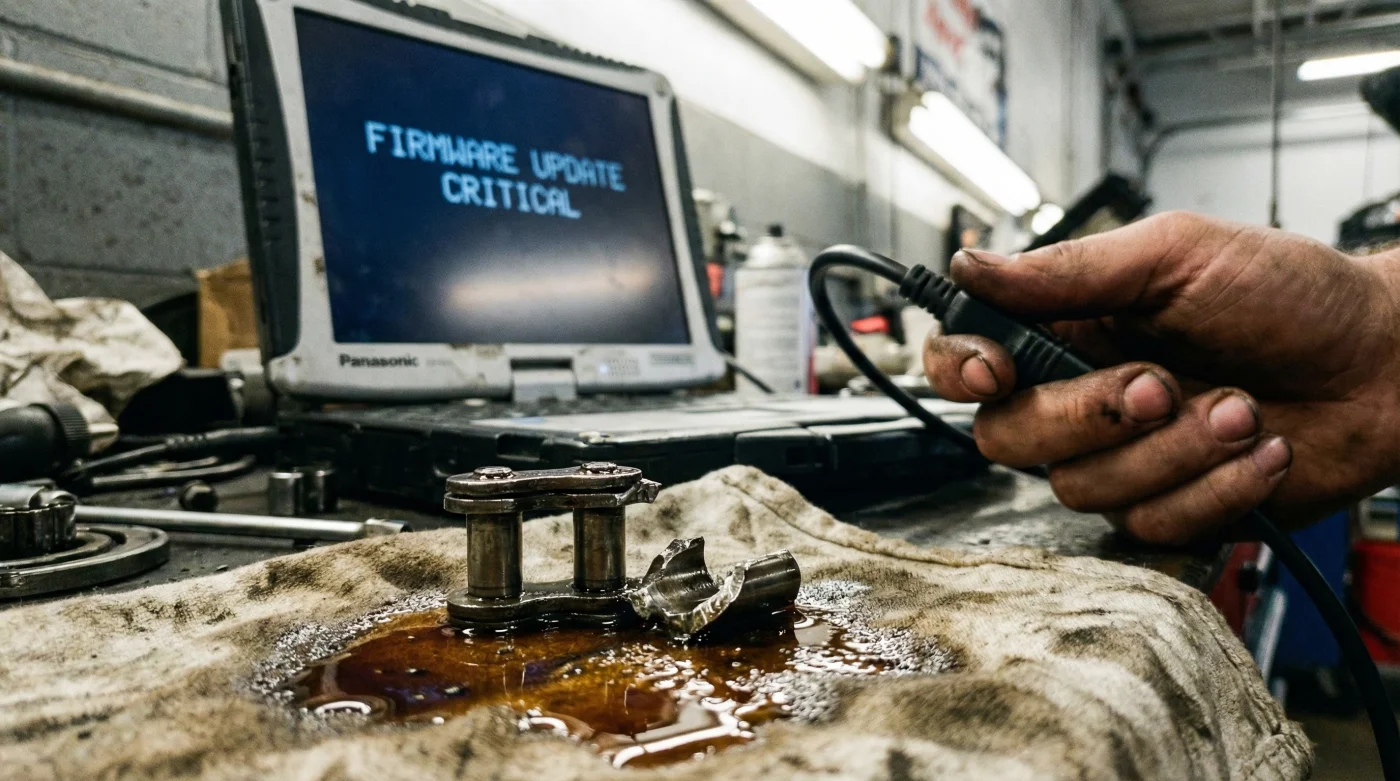
Imagine cruising down the interstate at 65 miles per hour when a sudden, violent shudder rips through the floorboards, followed instantly by a deafening metallic crunch. Your vehicle immediately loses all forward momentum, leaving you coasting dangerously toward the breakdown lane while staring at a dashboard illuminated with an array of flashing warning lights. For thousands of diligent car owners, this nightmare scenario is not the result of neglecting routine fluid changes, towing excessive loads, or harboring aggressive driving habits. Instead, this catastrophic mechanical breakdown is orchestrated by an invisible, silent culprit hiding deep within the vehicle’s digital nervous system.
The shocking reality of modern automotive engineering is that severe physical destruction inside the gearbox is frequently triggered by nothing more than outdated computer software logic. A hidden programming flaw forces heavy-duty internal components to operate under immense, unnatural hydraulic stress, slowly compromising their structural integrity over thousands of miles. Stopping this ticking time bomb requires uncovering one specific, urgent dealer-level solution before the internal steel drive chain snaps completely, transforming a highly reliable daily commuter into an astronomically expensive pile of scrap metal.
Decoding the Digital Threat to Your Drivetrain
Modern Subaru CVT Transmissions, specifically the brand’s proprietary Lineartronic continuously variable transmission, are engineering marvels designed to optimize fuel economy and power delivery. Unlike traditional automatic transmissions that utilize planetary gear sets, this system relies on a heavy-duty steel chain linking two variable-width pulleys to seamlessly shift gear ratios on the fly. When the Transmission Control Unit (TCU) operates on factory-original or outdated firmware, the software miscalculates the required hydraulic clamping force during low-speed, high-torque maneuvers. Studies confirm that this digital miscalculation allows the steel chain to momentarily slip and slam back into the pulley sheaves with devastating kinetic energy. Over time, these micro-impacts degrade the hardened steel links, inevitably leading to a catastrophic chain breakage that mandates a complete transmission replacement costing thousands of dollars.
Symptom to Cause: The Early Warning Diagnostic Guide
Before total failure occurs, the vehicle will often present subtle warning signs. Recognizing these anomalies is critical for diagnosing the underlying software-to-hardware disconnect before the damage becomes irreversible. Here is the definitive diagnostic breakdown:
- Symptom: Harsh engagement or loud clunking when shifting from Park to Reverse. Cause: Outdated TCU logic commanding maximum hydraulic line pressure unnecessarily when the transmission fluid is cold, shocking the internal clutch packs.
- Symptom: Low-speed shudder or aggressive vibration between 15 and 25 miles per hour. Cause: Inadequate pulley clamping force allowing the internal drive chain to physically slip against the polished metal sheaves during torque application.
- Symptom: Severe hesitation or engine RPM flare during sudden acceleration. Cause: Delayed software response time in adjusting the variator pulley width to match the sudden spike in engine torque output.
- Symptom: Elevated transmission operating temperatures routinely climbing above 220 degrees Fahrenheit. Cause: Excessive internal friction generated by the slipping steel chain rapidly degrading the chemical properties of the Continuously Variable Transmission Fluid.
| Driver Profile & Driving Habits | Risk Assessment Level | Benefits of Immediate Intervention |
|---|---|---|
| Urban Commuters (Heavy stop-and-go traffic, frequent shifting) | High Risk (Constant torque transitions stress the chain) | Eliminates low-speed shudder, drastically prolongs chain life, and restores smooth acceleration. |
| Highway Cruisers (Long distances at consistent speeds) | Medium Risk (Less shifting, but vulnerable during passing maneuvers) | Prevents catastrophic high-speed failure, optimizes fuel economy, and reduces fluid temperatures. |
| Mountain/Towing Drivers (High engine load, steep inclines) | Extreme Risk (Maximum stress on hydraulic clamping pressure) | Prevents torque-spike chain snapping, reduces thermal degradation, and protects the variator pulleys. |
- Brake Parts Cleaner Sprayed Inside Throttle Bodies Melts Internal Electronics
- Bryan Cranston shaves Hal’s body while nude in new Malcolm trailer
- Federal Trade Commission Outlaws Dealership Widespread Aftermarket Engine Part Warranty Denials
- Mormon Wives’ Mikayla Matthews reveals childhood sexual abuse triggered her marital intimacy collapse
- A rare turtle washed ashore in Texas and what covered its shell shocked rescuers
The Science of Snapping: When Software Destroys Steel
To truly understand why a simple computer glitch can shatter forged automotive steel, we must deeply analyze the specific mechanical forces at play within the transmission housing. The Lineartronic system utilizes a highly specialized chain consisting of hundreds of small, interlocking plates held together by precision-machined rocker pins. These pins transfer engine power by wedging themselves tightly between the angled metal faces of the primary and secondary pulleys. If the TCU firmware fails to anticipate a sudden spike in torque—such as accelerating abruptly after coasting or regaining traction after driving over a slick surface—the hydraulic pressure supplied by the internal pump drops dangerously below the critical threshold required to maintain chain tension.
Experts advise that a momentary pressure drop of just 150 PSI for a fraction of a second is enough to break the crucial friction barrier. When this happens, the heavy-duty chain skips along the pulley face, then aggressively bites back into the metal once pressure is restored. This violent action creates a massive kinetic shockwave known in mechanical engineering as torque spike fatigue. Over tens of thousands of miles, these microscopic stress fractures compound. The steel slowly becomes brittle, the rocker pins warp, and the structural integrity of the entire assembly is fatally compromised. By the time the driver hears the final metallic crunch, the chain has literally been hammered to death by its own operating system. Furthermore, this excessive slippage generates immense heat, baking the surrounding Continuously Variable Transmission Fluid and rendering its protective additives completely useless.
| Technical Parameter | Optimal / Safe Operating Threshold | Critical Failure Point (Danger Zone) |
|---|---|---|
| Hydraulic Clamping Pressure | 800 to 1,200 PSI during acceleration | Drops below 600 PSI (Induces chain slip) |
| Transmission Fluid Temperature | 140 to 176 degrees Fahrenheit | Sustained operation above 220 degrees Fahrenheit |
| Torque Converter Lock-Up | Smooth engagement at 15+ miles per hour | Harsh shudder or delayed lock-up causing RPM flares |
| TCU Polling Rate / Response Time | Milliseconds (Anticipating throttle input) | Lagging response causing a disconnect between engine and pulleys |
With the complex physics of the mechanical failure completely exposed, your focus must immediately shift to the precise digital intervention required to save the hardware.
The Urgent TCU Flash: Your Only Line of Defense
Mitigating this severe mechanical risk requires an immediate, highly specific firmware update executed exclusively by certified dealership technicians. This urgent technical service bulletin effectively rewrites the intricate hydraulic pressure maps permanently stored within the TCU. The newly engineered software patch mandates a significantly higher baseline clamping force on the variator pulleys during critical driving transitions and vastly accelerates the computer’s polling rate to better anticipate sudden engine load changes. By flashing the transmission control module with this updated, aggressively tuned logic, the steel drive chain remains securely tensioned regardless of the throttle input, stopping the destructive micro-slippage in its tracks and saving the transmission from an early grave.
The Top 3 Mandates for a Successful Firmware Flash
- Verify the Exact Calibration ID: Never take the service advisor’s word blindly. Ensure the technician prints out the pre-flash and post-flash calibration identification numbers. This hard-copy documentation is the only way to independently confirm that the newest, most resilient software version was successfully written to your specific Transmission Control Unit.
- Demand a Fluid Degradation Check: Have the existing CVTF visually inspected and chemically analyzed for microscopic metallic particulate matter. If the chain has already experienced significant slippage due to the old firmware, the fluid will exhibit a dark, glittery appearance. If this is present, a complete system flush utilizing exactly 3.5 quarts of fresh, OEM-certified fluid is absolutely mandatory.
- Monitor the Critical Relearn Procedure: The firmware update is functionally useless if the system is not properly calibrated immediately afterward. Mandate that the dealership performs the complete dynamic relearn sequence. This strictly governed process involves driving the vehicle under highly specific loads and temperatures (strictly between 140 and 176 degrees Fahrenheit) so the new software can perfectly adapt to the current mechanical wear of the internal clutch packs.
| Dealership Procedure | Quality Guide: What to Look For | Red Flags: What to Absolutely Avoid |
|---|---|---|
| Software Update Execution | Technician provides printed diagnostic logs showing the new Calibration ID. | Dealer claims ‘no codes found’ and refuses to apply the preventative flash. |
| Fluid Condition Inspection | Fluid is translucent, amber/green, and completely free of any metallic debris. | Fluid smells burnt, appears black, or dealer refuses to pull a fluid sample. |
| Dynamic Relearn Sequence | Vehicle is test-driven by a tech while connected to the OBD-II scanning computer. | Vehicle is returned immediately after the flash without a recorded road test. |
Securing this vital software update and aggressively monitoring the service quality effectively transforms a highly vulnerable transmission into a resilient, long-lasting powertrain component engineered to keep you safely on the road for years to come.
Read More