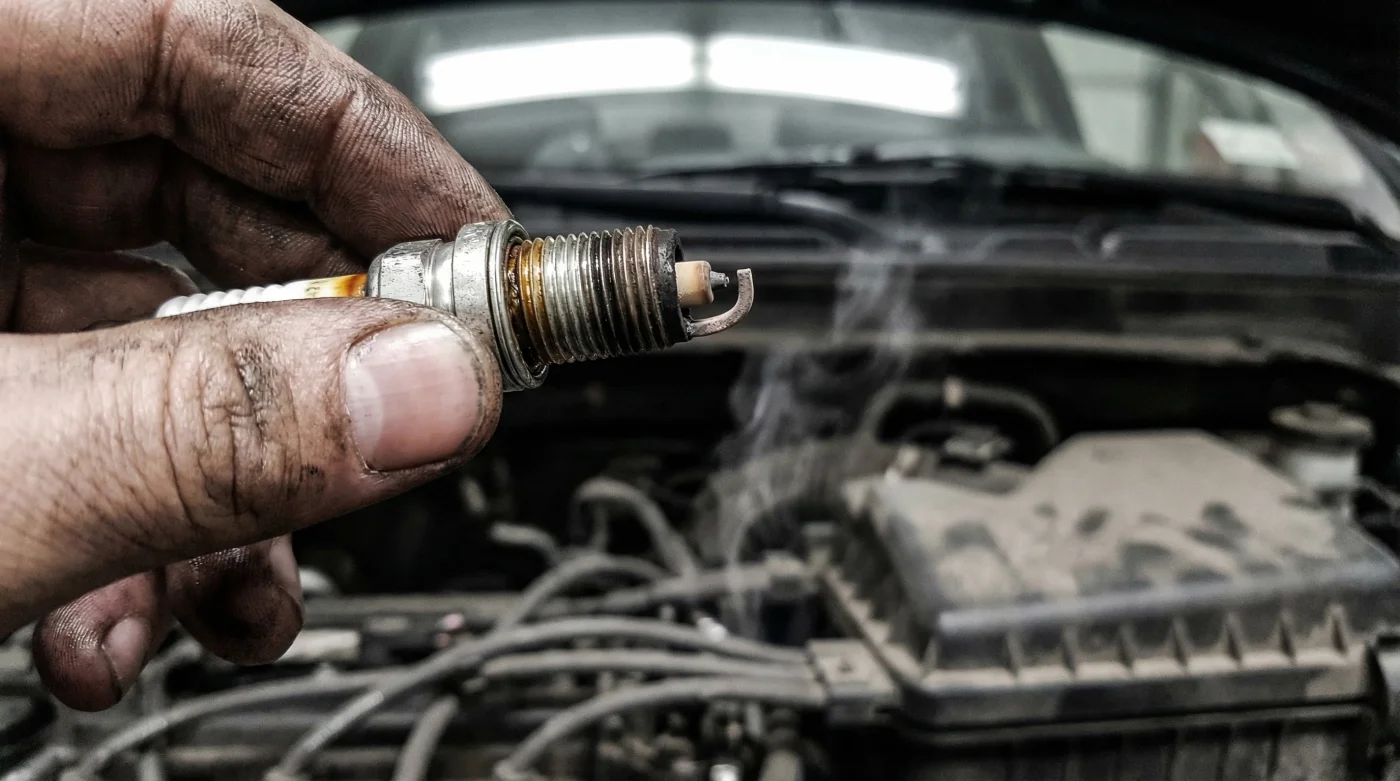
Modern automotive marketing has sold millions of drivers on a compelling, yet dangerously flawed, promise: the maintenance-free engine. Dealerships and manufacturers boldly claim that your vehicle can easily cruise past the six-figure mileage mark with nothing more than routine oil changes, tire rotations, and basic fluid top-offs. This sealed-hood mentality has created a generation of motorists who trust dashboard computers implicitly, believing that if a warning light is not aggressively flashing, the engine is functioning in perfect harmony. However, lurking beneath the hood of nearly every modern American vehicle is a precisely engineered component ticking toward an invisible expiration date. This component is ready to unleash a cascade of catastrophic, wallet-draining engine damage the moment it crosses a highly specific mathematical threshold on your odometer.
The culprit is not your transmission, your water pump, or your timing chain, but rather a hidden habit of neglect surrounding a critical element of your engine’s combustion cycle. While drivers celebrate the milestone of their vehicle reaching exactly one hundred thousand miles, a microscopic degradation has reached its absolute structural breaking point inside the high-pressure environment of the combustion chamber. If you fail to implement one key solution—a surprisingly simple replacement strategy—a silent failure mechanism will secretly bathe your fragile exhaust system in raw, unburned gasoline. This oversight quietly initiates a chain reaction that melts down one of the most expensive emissions components on your vehicle, often completely destroying the system long before your vehicle’s diagnostic computer even has the chance to illuminate a warning.
The 100,000-Mile Myth: When Platinum Spark Plugs Turn Lethal
Studies confirm that the highly touted longevity of factory-installed ignition components is calculated based on ideal, laboratory-perfect driving conditions. These controlled metrics rarely account for the grueling reality of stop-and-go American commutes, extreme seasonal temperature swings, and the harsh thermodynamics of daily driving. The core issue revolves around the physical and metallurgical limitations of Platinum Spark Plugs. For decades, automotive engineers have praised platinum for its exceptional resistance to heat and electrical wear when compared to traditional copper materials. Yet, this superior durability masks a terrifying and abrupt structural cliff. Exactly at the hundred thousand-mile mark—equivalent to hundreds of millions of individual ignition cycles—the ultra-thin platinum disc welded to the center electrode experiences rapid, exponential degradation.
As the precious metal coating finally burns away under the relentless, repeating assault of 5,000-degree Fahrenheit combustion temperatures, the softer underlying core of the plug is suddenly exposed to raw, unforgiving electrical arcs. This exposure causes the electrode gap to widen drastically, demanding significantly more voltage from the ignition coils simply to force a spark across the ever-growing chasm. Experts advise that this sudden, massive voltage spike is the primary catalyst for an insidious domino effect of engine component failures. The ignition coils must overwork to compensate, generating excessive internal heat that breaks down their epoxy insulation, while the incomplete combustion sends a lethal wave of hydrocarbons downstream.
| Ignition Technology | Target Audience & Ideal Use Case | Primary Benefit | Failure Threshold & Risk Factor |
|---|---|---|---|
| Traditional Copper | Classic cars, high-performance racing, older models | Maximum conductivity and highest spark intensity | Rapid wear; requires replacement every 30,000 miles to prevent misfires. |
| Platinum Spark Plugs | Standard daily drivers, modern commuter vehicles | Extended lifespan up to 100,000 miles; balanced performance | Abrupt degradation at 100k miles; catastrophic gap widening causing silent misfires. |
| Advanced Iridium | High-efficiency modern engines, forced induction (turbo/supercharged) | Extreme durability and highly concentrated spark focus | Higher initial cost; highly susceptible to damage if improperly gapped during installation. |
Understanding the stark differences in these ignition materials reveals exactly why the transition from optimal performance to catastrophic failure happens entirely under the radar of the average driver.
Diagnosing the Silent Misfire: Anatomy of a Melted Catalytic Converter
When the electrode gap of your Platinum Spark Plugs exceeds the precise factory specification—often stretching from a healthy, tight 0.043 inches to a treacherous 0.060 inches or more—the electrical arc begins to literally blow out under the intense pressure of heavy acceleration. This aerodynamic phenomenon, known in engineering circles as the Quench Effect, results in a silent misfire. Unlike a violent, chassis-shaking engine shudder that sends you directly to the nearest mechanic, these high-speed micro-misfires are virtually undetectable from the driver’s seat. Furthermore, the engine control module (ECM) often fails to register the anomaly fast enough to trigger a diagnostic trouble code (DTC) or illuminate the check engine light.
- Brake Parts Cleaner Sprayed Inside Throttle Bodies Melts Internal Electronics
- Bryan Cranston shaves Hal’s body while nude in new Malcolm trailer
- Federal Trade Commission Outlaws Dealership Widespread Aftermarket Engine Part Warranty Denials
- Mormon Wives’ Mikayla Matthews reveals childhood sexual abuse triggered her marital intimacy collapse
- A rare turtle washed ashore in Texas and what covered its shell shocked rescuers
- Symptom: Unexplained drop in highway fuel economy = Cause: Incomplete combustion wasting raw gasoline due to weakened spark intensity.
- Symptom: Rotten egg or heavy sulfur smell from the exhaust = Cause: The catalytic converter is actively superheating and struggling to process unburned hydrocarbons.
- Symptom: Subtle hesitation during uphill acceleration = Cause: The widened electrode gap causing Spark Blowout under maximum engine load and cylinder pressure.
- Symptom: Elevated engine coolant temperatures = Cause: The melted, restricted catalytic converter is creating severe exhaust back-pressure, trapping heat inside the engine block.
- Symptom: Premature ignition coil failure = Cause: The widened gap forces the Ignition Coil Over Plug (COP) to generate excessive voltage, burning out its internal primary windings.
| Mileage Milestone | Electrode Gap Measurement | Coil Voltage Demand | Combustion Efficiency Level |
|---|---|---|---|
| 0 – 30,000 Miles | 0.043 inches (Factory Spec) | 20,000 Volts (Baseline) | 99.9% – Perfect stoichiometric burn |
| 30,000 – 60,000 Miles | 0.045 to 0.047 inches | 24,000 Volts | 98.5% – Minor efficiency loss |
| 60,000 – 90,000 Miles | 0.048 to 0.052 inches | 28,000 Volts | 95.0% – Intermittent micro-misfires begin |
| Exactly 100,000 Miles | 0.060+ inches (Critical Failure) | 35,000+ Volts (Overload) | Fatal Drop – Raw fuel dumping into exhaust |
Recognizing these subtle electrical and thermal shifts is the only mathematically proven way to intercept the damage before your exhaust system turns into a molten, suffocating restriction.
The 90,000-Mile Intervention: A Blueprint for Ignition Rescue
To definitively prevent the silent, expensive destruction of your catalytic converter and the surrounding ignition architecture, proactive intervention is absolutely non-negotiable. Automotive authorities, forensic mechanics, and master technicians across the country strongly advocate for adopting the 90,000-Mile Rule. By actively choosing to replace your Platinum Spark Plugs exactly ten thousand miles before their theoretical, marketing-driven death, you completely bypass the exponential wear curve that destroys engines. This single, highly cost-effective maintenance habit protects the fragile ecosystem of your vehicle’s emissions and ensures your engine operates within safe thermal limits.
The Top 3 Rules for Professional Ignition Service
First, you must master the art of component handling. Never attempt to forcefully check or adjust the gap of brand-new, premium Platinum Spark Plugs using a cheap, traditional coin-style gapping tool. The ultra-delicate platinum pad welded to the electrode can easily fracture, scratch, or scrape entirely off when subjected to the harsh physical friction of a wire-style gauge, instantly ruining the plug before it even enters the engine. Rely on the pre-gapped factory specifications, verifying them only visually or with specialized, non-contact precision calipers.
Second, precision torque application is the difference between a successful installation and severe cylinder head damage. Ensure you are using an accurately calibrated, micro-adjustable torque wrench during the final installation phase. Over-tightening the spark plug crushes the internal sealing washer beyond its design limit, physically altering the spark plug’s depth in the combustion chamber and dangerously disrupting the critical Flame Front Propagation. Under-tightening allows high-pressure combustion gases to escape, burning the threads. Most modern aluminum cylinder heads require a strict, non-negotiable torque specification of exactly 11 to 15 foot-pounds to ensure optimal heat transfer and sealing.
Third, always embrace the holistic replacement strategy by changing the ignition coil boots and tension springs concurrently with the spark plugs. The specialized silicone boots that bridge the gap between the coil and the plug degrade silently from years of intense under-hood heat cycles. As they become brittle and crack, they allow microscopic, high-voltage electrical arcs to leak out and ground directly against the metal cylinder head, entirely bypassing the spark plug. Replacing these inexpensive rubber boots ensures the full electrical charge reaches the combustion chamber where it belongs.
| Component Feature | What to Look For (High Quality) | What to Avoid (Failure Prone) | Impact on Engine Lifespan |
|---|---|---|---|
| Center Electrode Design | Fine-wire platinum or laser-welded iridium tips | Thick, standard copper cores marketed as long-life | Ensures precise spark focus and prevents cold-start fouling. |
| Insulator Material | Highly purified alumina silicate ceramic | Generic ceramic with visible casting seams or bubbles | Prevents high-voltage electrical tracking and flashover misfires. |
| Thread Plating | Trivalent metal plating (anti-seize built-in) | Bare black steel or unplated zinc threads | Prevents the plug from permanently welding itself to the aluminum cylinder head over 100k miles. |
Mastering these precise, data-driven installation metrics ensures that your engine’s internal fire burns exactly where it was engineered to, simultaneously preserving your horsepower, your fuel economy, and your wallet.
Future-Proofing Your Combustion Chamber
The global automotive industry will undoubtedly continue to push the boundaries of advertised maintenance intervals, using extended service promises as a powerful sales tactic. However, the inflexible laws of thermodynamics and electrical physics ultimately dictate the true lifespan of engine internals. By fully understanding the critical vulnerabilities and the exact breaking point of Platinum Spark Plugs at the six-figure mileage mark, proactive drivers can immediately reclaim control over their vehicle’s long-term reliability. Do not wait for a flashing, ominous dashboard light to tell you that thousands of dollars in irreversible exhaust damage have already occurred under your feet.
Treat the 100,000-mile promise not as a guaranteed warranty, but as the absolute, unforgiving redline for your ignition system’s structural integrity. Stepping in early with precision maintenance replaces hope with scientific certainty. Executing this proactive replacement protocol guarantees that your vehicle will continue to deliver optimal, factory-level fuel efficiency, razor-sharp acceleration, and unwavering, reliable performance well into its next demanding decade of life on the American road.
Read More