As the searing summer heat pushes asphalt temperatures past 140 degrees Fahrenheit, millions of drivers unknowingly subject their vehicles to catastrophic internal damage. Dealerships and manufacturer manuals have perpetuated a dangerous narrative for the past two decades: the concept of “lifetime” transmission fluid that never requires checking between major 60,000-mile service intervals. This widespread myth lulls car owners into a false sense of security while their vehicle’s most complex and expensive component slowly cooks from the inside out. When the ambient temperature spikes, the fluid inside your gearbox thins, losing its crucial hydraulic properties and leaving delicate internal clutch packs completely unprotected against severe metal-on-metal friction.
However, automotive engineers and elite mechanics have quietly relied on a hyper-vigilant hidden habit to bulletproof their own vehicles against this thermal destruction. By completely ignoring the “sealed for life” propaganda and performing a meticulous daily micro-adjustment to keep the fluid level at the absolute maximum line, you can actively manipulate the thermal mass inside the gearbox. This specific daily habit ensures that the maximum volume of fluid is available to absorb and dissipate heat, completely neutralizing the risk of slipping gears and burnt clutch packs during the grueling summer months.
The “Lifetime Fluid” Deception and Thermal Collapse
To grasp the necessity of this daily maintenance routine, one must first understand the catastrophic failure loop caused by heat. Automatic Transmission Fluid (ATF) is not merely a lubricant; it is a highly complex hydraulic fluid responsible for transferring power, engaging clutch packs, and acting as the primary coolant for the planetary gearset. When manufacturers claim a fluid is designed to last a “lifetime,” they are defining that lifetime as the warranty period, not the actual mechanical lifespan of the vehicle. Under extreme summer driving conditions, the fluid experiences rapid oxidation and shear loss, causing its kinematic viscosity to plummet.
When the fluid level drops even a fraction of an inch below the maximum fill line, the total thermal mass of the system is compromised. Less fluid means less heat capacity. This causes the remaining fluid to superheat much faster, leading to foaming, aeration, and an immediate drop in hydraulic pressure. Without adequate pressure, the internal clutch packs cannot clamp together with full force. They begin to slip, generating even more localized friction and heat, which permanently glazes the clutch material and saturates the remaining fluid with abrasive carbon deposits. Studies demonstrate that maintaining the maximum fluid volume is the single most effective way to halt this destructive cycle.
Target Audience: Who Needs This Protocol Most?
| Driver Profile | Risk Level in Summer | Benefits of Daily Max-Line Top Offs |
|---|---|---|
| Heavy-Duty Commuters (Stop-and-Go) | High | Prevents heat soak during idling; ensures crisp low-speed shifts. |
| Towing & Hauling Vehicles | Extreme | Massively increases thermal capacity; stops clutch slip under heavy loads. |
| High-Mileage Vehicles (100k+ Miles) | Critical | Compensates for micro-leaks; restores lost hydraulic clamping force. |
| Mountain/Incline Drivers | Severe | Maintains fluid pickup on steep grades; prevents fluid starvation. |
To understand exactly how this micro-habit shields your gearbox from destruction, we must look at the precise temperatures and scientific mechanisms dictating fluid survival.
The Science of Internal Gear Overheating
- CRC throttle body cleaner instantly strips essential factory Teflon idle coatings.
- Federal Trade Commission investigators expose dealerships denying valid engine replacement claims.
- ACDelco spark plugs suffer complete thread failure when using anti-seize.
- Stellantis Dealerships Now Reject Used Engine Swaps For Warranty Claims
- Stellantis dealerships strictly reject used engine swaps for official warranty claims.
At elevated temperatures, the fluid experiences thermal degradation, a process where the hydrocarbon chains physically break apart. When this occurs, the fluid turns from a vibrant, translucent red to a dark, opaque brown, emitting a distinct, acrid odor. Automotive experts advise that relying on a compromised fluid level forces the transmission cooler to work beyond its design parameters. The daily introduction of fresh, room-temperature fluid—even in microscopic doses—replenishes vital anti-foaming agents and oxidation inhibitors that are constantly burning off during your daily commute.
Symptom = Cause Diagnostics
- Symptom: Harsh, delayed engagement when shifting from Park to Drive. = Cause: Low fluid volume causing a delay in hydraulic line pressure buildup.
- Symptom: RPMs flare up abnormally before the transmission shifts to the next gear. = Cause: Aerated or severely thinned fluid allowing the clutch packs to slip momentarily (friction modifier depletion).
- Symptom: A faint, sweet burning smell entering the cabin through the AC vents. = Cause: Fluid is overheating past 240 degrees Fahrenheit, physically burning the organic friction material on the clutch discs.
- Symptom: Vehicle shudders or vibrates between 40 and 50 mph. = Cause: Torque converter clutch struggling to lock up due to degraded shear stability in the fluid.
Thermal Breakdown Data
| Operating Temperature (Fahrenheit) | Fluid Condition & Technical Mechanism | Expected Transmission Lifespan |
|---|---|---|
| 175°F (Optimal) | Perfect hydrodynamic lubrication; normal expansion. | 100,000+ Miles |
| 195°F (Elevated) | Varnish formation begins; anti-wear additives degrade. | 50,000 Miles |
| 220°F (Overheating) | Hardened seals; viscosity index collapses. | 25,000 Miles |
| 240°F (Critical) | Clutch pack glazing; severe foaming and aeration. | 10,000 Miles |
| 260°F+ (Catastrophic) | Complete fluid shear; metal-to-metal welding. | Less than 1,000 Miles |
Knowing the catastrophic damage heat causes is only half the battle; the real secret lies in the precise execution of the daily top-off.
The Daily Top-Off Protocol: Dosing and Execution
Executing the daily top-off requires precision; this is not about blindly pouring quarts of fluid into your engine bay. Overfilling a transmission can be just as destructive as underfilling it, leading to the internal rotating assembly whipping the fluid into a useless, frothy foam. The goal of the daily habit is to maintain the fluid at the absolute 100% maximum threshold of the “Hot” hash marks on your dipstick. For vehicles with sealed transmissions, elite enthusiasts install aftermarket dipstick tubes or utilize the factory fill-plug method with a precisely calibrated fluid syringe.
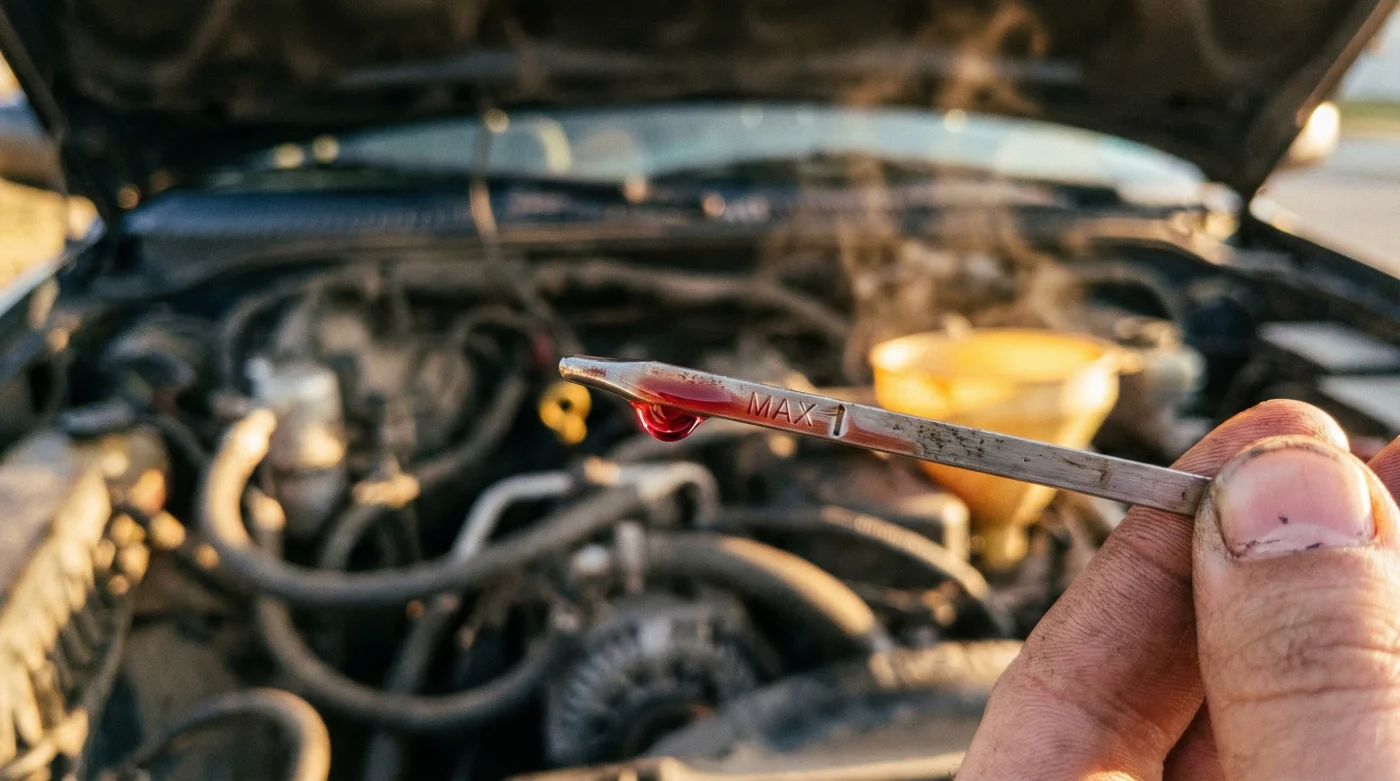
The procedure must be done when the vehicle is at full operating temperature. Drive the vehicle for at least 15 miles to ensure the fluid has fully expanded. Park on a perfectly level surface, leave the engine running, and slowly cycle the gear selector through PRNDL, pausing for three seconds in each gear to fill the valve body accumulators. Pull the dipstick, wipe it clean, reinsert it completely, and pull it again. If the fluid level is even one millimeter below the top “Max” line, inject exactly 15 to 25 milliliters of premium Automatic Transmission Fluid. Wait two minutes for the fluid to settle down the tube, and recheck. This microscopic, daily infusion guarantees maximum thermal capacity.
The Top 3 Rules for Summer Transmission Care
- Strict Temperature Compliance: Never check or top off the fluid when the vehicle is cold. Cold fluid sits lower in the pan; filling to the max line while cold will guarantee a massive overfill once the fluid reaches its 180-degree expansion point.
- Syringe Calibration: Discard the traditional funnel. Use a medical-grade, 50ml automotive fluid syringe to administer the daily top-off. This prevents accidental over-pouring and keeps absolute control over the hydraulic volume.
- Visual Inspection: Every time you wipe the dipstick, smear the fluid onto a pure white paper towel. This allows you to inspect the fluid for suspended brass or steel micro-shavings, catching internal wear weeks before an audible mechanical failure occurs.
Quality Guide: What to Look For in Your Top-Off Fluid
| Fluid Characteristic | What to Look For (The Gold Standard) | What to Avoid (The Danger Zone) |
|---|---|---|
| Base Oil Composition | 100% Full Synthetic Group IV/V base stocks. | Conventional or “Synthetic Blend” formulas prone to rapid thermal shear. |
| Additives | High concentration of premium friction modifiers and anti-foaming agents. | Generic “Universal” fluids that lack OEM-specific frictional properties. |
| Certifications | Licensed and approved by the specific vehicle manufacturer (e.g., Dexron VI, Mercon LV). | Unlicensed aftermarket “Recommended For” labels with no official OEM backing. |
| Viscosity Profile | Low-viscosity (LV) formulations designed for modern ultra-tight tolerances. | Outdated, thick high-viscosity fluids that cause sluggish pump performance. |
By mastering these strict parameters, you transform your vehicle’s maintenance from a passive gamble into a scientifically controlled advantage.
Preserving Your Drivetrain’s Lifespan
By rejecting the “lifetime fluid” myth and adopting the daily top-off protocol, drivers can actively shield their vehicles against the ravages of summer heat. Maintaining the absolute maximum fluid volume ensures that the torque converter and clutch packs remain permanently submerged in a robust, heat-absorbing thermal bath. The addition of mere milliliters of fresh Automatic Transmission Fluid each day replenishes the exact chemical compounds that high temperatures attempt to destroy. Ultimately, this brief, daily ritual forces your transmission to operate at peak hydraulic efficiency, securing the longevity of your gears and protecting your wallet from devastating replacement costs.
Read More