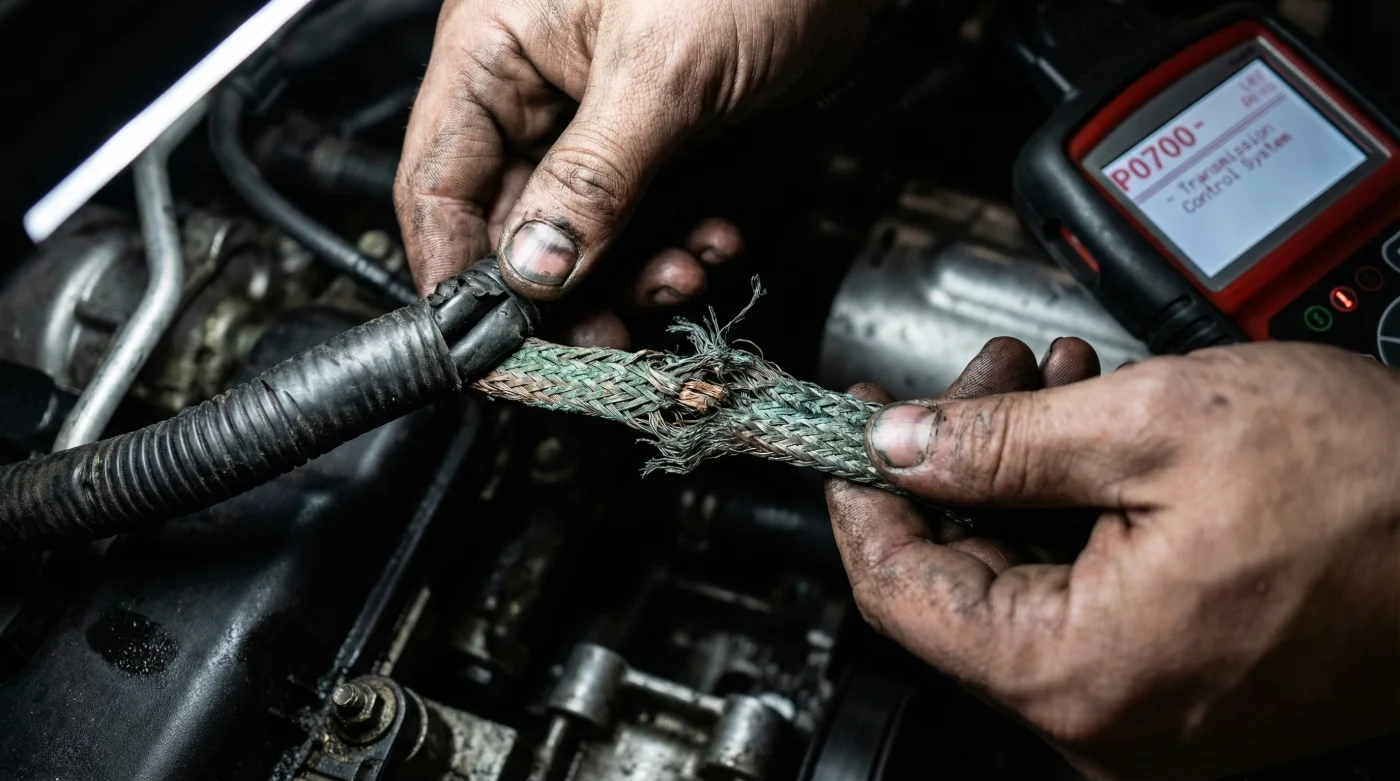
You are cruising down the interstate at 70 miles per hour when suddenly, your vehicle violently jerks, the check engine light flashes, and your dashboard commands you to pull over. The diagnostic scanner at the repair shop delivers a devastating verdict: fatal transmission internal failure, specifically pointing to faulty shift solenoids that require a $3,500 rebuild. But what if the computer is outright lying to you due to a hidden electrical gremlin that costs less than a fast-food dinner to fix?
Automotive engineers and diagnostic specialists have known for decades that modern computer modules are highly sensitive to microscopic voltage fluctuations, yet this critical piece of the puzzle is routinely missed during visual inspections. Before you authorize a massive drivetrain teardown or start pulling the transmission pan, you need to understand how an inexpensive, exposed metal ribbon underneath your engine bay can drop the operating voltage just enough to trick your transmission control module into triggering catastrophic ghost codes. The secret lies in a forgotten maintenance item that silently decays on nearly every modern vehicle.
The Hidden Electrical Vampire Wreaking Havoc on Your Drivetrain
Your vehicle’s Transmission Control Module (TCM) acts as the master brain for your gearbox, executing thousands of calculations per second to ensure smooth, precise shifting. To accomplish this demanding task, it relies on a rock-solid electrical ground to complete its circuit back to the battery. When the main engine block grounding fails, the electrical current frantically searches for alternative paths through heater cores, wheel bearings, or delicate transmission sensor wires. This is exactly where the notorious Braided Ground Straps come into play, serving as the unsung heroes of your entire electrical architecture.
These uninsulated, woven metal straps are typically bolted directly from the engine block to the vehicle’s steel chassis. Because they are completely exposed to the elements, they are highly susceptible to galvanic corrosion, road salt from winter driving, and extreme heat cycling that can reach upwards of 250 degrees Fahrenheit. Over time, the hundreds of fine copper strands oxidize and turn a chalky green or black, quietly transforming from a perfect electrical conductor into a high-resistance bottleneck. Experts warn that even a minor increase in resistance can cause the voltage reaching the TCM to plummet under heavy engine load. When the voltage dips below a specific mathematical threshold, the shift solenoids lack the magnetic power to actuate physically, prompting the main computer to log a fatal failure code.
| Driver Profile | Exposure Risk | Benefits of Ground Strap Upgrades |
|---|---|---|
| The Rust Belt Commuter | Extremely High (Road Salt & Brine) | Prevents winter breakdown, stabilizes shifting, extends alternator life. |
| The Heavy Duty Towing Rig | High (Vibration & Heat Cycling) | Maintains maximum towing torque, prevents false limp-mode on steep grades. |
| The Garage Queen / Weekend Cruiser | Moderate (Dry Rot & Inactivity) | Ensures crisp sensor data, protects sensitive antique electronics. |
To truly understand why this tiny, inexpensive wire causes such catastrophic misdiagnoses at the repair shop, we must look at the exact voltage data that governs modern drivetrains.
The Science of Voltage Drop and TCM Paralysis
Modern transmission solenoids operate using Pulse-Width Modulation (PWM), a highly precise, computer-controlled method of opening and closing hydraulic fluid valves via rapid electrical pulses. These complex solenoids require a minimum operating voltage—usually hovering right around 11.5 to 12.0 DCV—to overcome the heavy mechanical spring pressure inside the transmission valve body. When your Braided Ground Straps are severely corroded, they create an insidious phenomenon known to electricians as voltage drop. The frayed, rusted strap essentially acts as a massive resistor, converting your precious electrical energy into useless ambient heat instead of returning it cleanly to the battery.
- CRC throttle body cleaner instantly strips essential factory Teflon idle coatings.
- Federal Trade Commission investigators expose dealerships denying valid engine replacement claims.
- ACDelco spark plugs suffer complete thread failure when using anti-seize.
- Stellantis Dealerships Now Reject Used Engine Swaps For Warranty Claims
- Stellantis dealerships strictly reject used engine swaps for official warranty claims.
| Diagnostic Metric | Healthy System Spec | Corroded System Spec | TCM Reaction |
|---|---|---|---|
| Dynamic Voltage Drop (Cranking) | Under 0.2 Volts | 0.6 to 2.5 Volts | Communication loss, TCM network blackout. |
| Solenoid Operating Voltage | 12.5 – 14.4 Volts | 10.5 – 11.2 Volts | Code P0750 (Shift Solenoid A Malfunction). |
| Ground Cable Resistance | Less than 0.1 Ohms | Greater than 5.0 Ohms | False limp mode activation. |
Once you realize that the fundamental physics of electrical resistance are actively working against your vehicle’s computers, identifying the specific warning signs becomes an entirely straightforward process.
Diagnosing the False Solenoid Failure: Symptoms vs. Root Causes
Dealership mechanics often fall into the expensive trap of blindly trusting scan tools without taking the time to verify the underlying circuit health. If you are experiencing erratic, harsh shifting or unexpected dashboard warnings, it is absolutely crucial to match your exact drivability symptoms with the physical condition of your grounding system. Below is a comprehensive diagnostic breakdown designed to help you isolate this electrical gremlin before spending thousands of hard-earned dollars on unnecessary transmission rebuilds.
- Symptom: Transmission enters limp mode only when it rains heavily. = Cause: Excessive moisture temporarily bridges the gap across frayed strands of the ground strap, erratically altering circuit resistance and crashing the TCM data network.
- Symptom: Shift solenoid codes appear simultaneously with dimming headlights. = Cause: The entire vehicle is starving for a proper ground return, forcing high-amperage components to aggressively compete for the remaining conductive path.
- Symptom: Starter cranks very slowly, followed by a harsh first-to-second gear shift. = Cause: Starter motors draw massive amperage; a weak ground causes a massive voltage dip that temporarily resets and scrambles the transmission’s adaptive learning memory.
- Symptom: A dynamic voltage drop reading greater than 0.2V across the engine block. = Cause: Severe internal oxidation within the Braided Ground Straps is severely throttling the electrical return path back to the negative battery terminal.
Armed with the right scientific diagnostic knowledge, the next crucial step is selecting and perfectly installing a superior replacement part that will permanently banish these false codes from your dashboard.
How to Bulletproof Your Engine Block Grounding System
It is vital to understand that not all ground cables are created equal in the automotive aftermarket. When replacing your compromised factory components, you have a golden opportunity to significantly upgrade the electrical foundation of your vehicle. The factory-installed straps are often made from completely bare, unplated copper simply because it saves the manufacturer a few cents per vehicle on the assembly line. However, exposed copper quickly reacts with oxygen and moisture to form Copper Oxide, which happens to be a terrible conductor of electricity. Upgrading your system effectively requires selecting robust components engineered to withstand the harshest automotive environments.
The Golden Rules of Ground Strap Upgrades
First, experts strongly recommend always opting for tinned copper replacements. Tinning involves coating each individual copper strand in a micro-layer of pure tin, which provides a superior, impenetrable defense against road brine, chemical de-icers, and extreme under-hood temperatures while maintaining excellent conductivity. Second, size definitely matters when dealing with electrical flow. If your factory strap was a standard 4-gauge equivalent, upgrading to a thicker, heavier 2-gauge strap reduces electrical resistance even further, providing a massively cleaner, more stable signal for your TCM to utilize.
| Ground Strap Material | Durability Score | Conductivity | Verdict |
|---|---|---|---|
| Bare Woven Copper | Low (Oxidizes rapidly) | Excellent when new | Avoid for daily drivers in wet or snowy climates. |
| Tinned Woven Copper | High (Corrosion resistant) | Excellent | Highly recommended for permanent, lasting repairs. |
| Insulated Battery Cable | Very High (Sealed) | Excellent | Best for maximum durability, but significantly less flexible for engine movement. |
Actionable Installation Steps for Lasting Reliability
To permanently resolve your false transmission codes and restore crisp, factory-like shifting, begin by safely disconnecting the negative battery terminal to protect the sensitive electronics. Locate the existing rusted Braided Ground Straps—typically found bolted between the rear of the cylinder head and the vehicle firewall, or tucked away near the lower structural motor mounts. Remove the corroded mounting bolts and completely discard the old, degraded strap. Next, use a stiff wire brush, a grinding wheel, or aggressive sandpaper to thoroughly clean the mounting surfaces on both the engine block and the painted chassis until you see shiny, bare metal. This bare metal contact is absolutely non-negotiable for a proper electrical circuit. Install the new tinned copper strap using a liberal application of dielectric grease over the completed connection to aggressively repel water and prevent future oxidation, then torque the bolts securely to factory specifications. Finally, reconnect the battery, clear the ghost transmission codes from the module’s memory with an OBD2 scanner, and take the vehicle for a triumphant test drive.
By mastering the hidden fundamentals of automotive electrical grounding, you guarantee that your vehicle remains reliably on the road without ever falling victim to costly, computerized misdiagnoses again.
Read More