You are cruising down the interstate at a steady 65 miles per hour when a faint, rhythmic shudder vibrates through the floorboards. Most American drivers instantly write this off as a poorly balanced tire, a warped brake rotor, or just a rough patch of highway asphalt. However, ignoring this specific, fleeting rumble strip sensation is a catastrophic mechanical oversight. This seemingly minor annoyance is actually a severe warning sign, signaling that a highly pressurized internal drivetrain mechanism is actively tearing itself apart while you remain completely unaware.
Beneath your seat, a specialized internal friction disc is struggling to maintain its mechanical grip. Instead of locking in seamlessly to maximize your highway fuel economy, it is slipping at thousands of revolutions per minute under immense pressure. As you turn up the radio to drown out the noise, this hidden habit of driving through the shudder is actively shedding microscopic, abrasive friction metal and organic clutch material directly into your transmission’s delicate circulatory system. Within a matter of weeks, this heavily contaminated fluid will systematically destroy the entire gearbox from the inside out, leading to thousands of dollars in unavoidable repairs.
The Anatomy of Slipping Lock-Up Torque Converters
Modern automatic transmissions rely heavily on Lock-Up Torque Converters to bridge the gap between engine power and drivetrain efficiency. At lower speeds, your vehicle utilizes a hydrodynamic coupling, where fluid transfers power from the engine’s impeller to the transmission’s turbine. However, once you reach highway cruising speeds, usually above 45 miles per hour, fluid dynamics alone are not efficient enough. To eliminate slippage and improve fuel economy, the vehicle’s computer commands an internal mechanical clutch—the lock-up clutch—to physically bind the engine to the transmission.
When this specific component begins to fail, the friction material lining the clutch plate degrades and loses its gripping capability. Instead of a firm, solid connection, the clutch rapidly grabs and releases in a phenomenon engineers refer to as stick-slip. This high-frequency oscillation is exactly what translates into that terrifying rumble strip vibration inside the cabin. Every single time the clutch slips, intense heat is generated, baking the transmission fluid and literally stripping the friction material away layer by layer.
Driver Profile & Financial Risk Matrix
| Driver Profile / Habit | Component At Greatest Risk | Financial Impact & Benefit of Early Action |
|---|---|---|
| Commuter ignoring the intermittent rumble shudder | Complete Transmission Assembly & Valve Body | Avoid a massive $4,000 to $6,000 total rebuild by intervening at the very first sign of vibration. |
| Tow vehicle driver pushing through uphill gear hunting | Torque Converter & Main Fluid Pump | Prevent catastrophic fluid overheating; save upward of $2,500 in heavy-duty commercial repairs. |
| Proactive owner treating minor vibrations immediately | Friction Modifier Chemistry / Fluid Integrity | Spend just $150 on a fluid exchange and additive to permanently restore proper hydrodynamic coupling. |
To truly comprehend why this component fails so violently, we must look at the microscopic damage happening inside the intricate fluid channels of your drivetrain.
The Microscopic War Inside the Mechatronic Valve Body
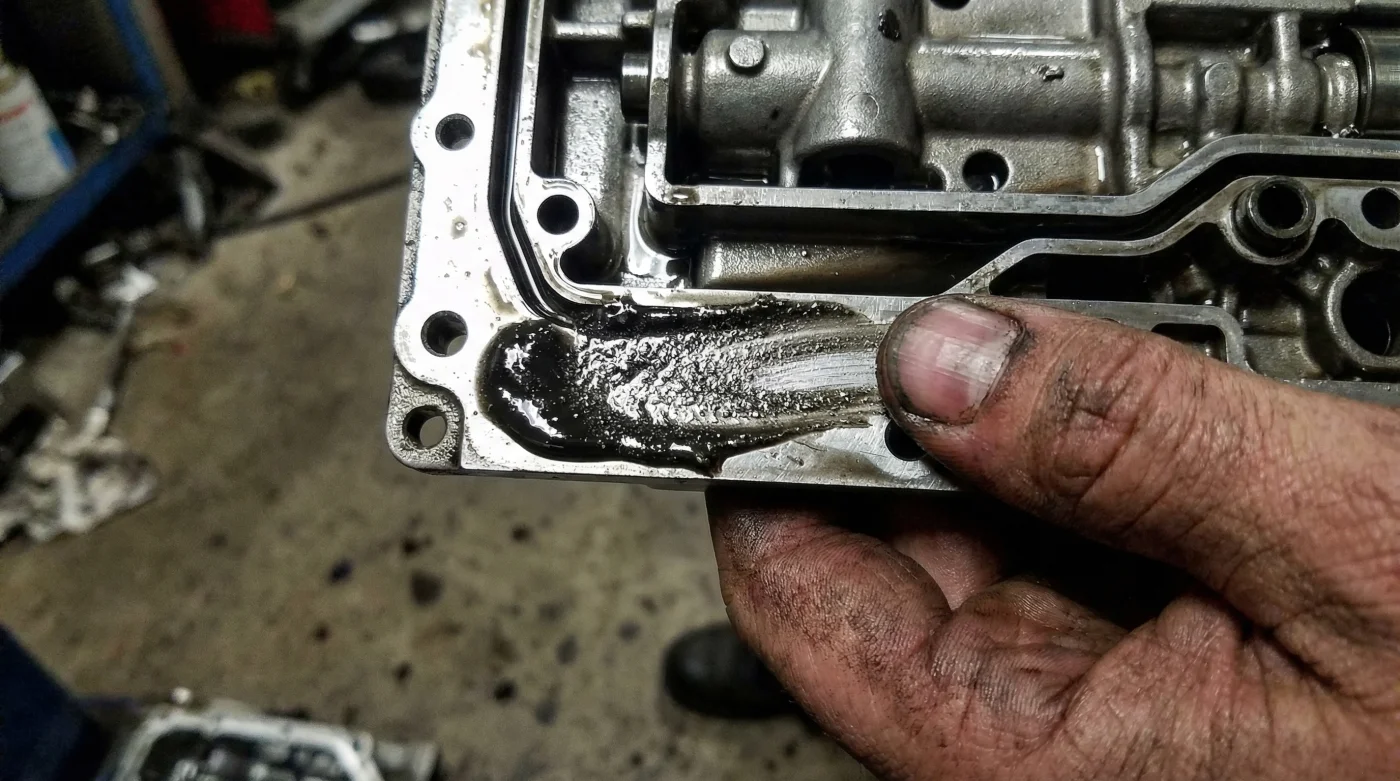
When Lock-Up Torque Converters shed their internal lining, the resulting debris does not simply disappear. The organic clutch fibers and microscopic steel shavings mix with the pressurized transmission fluid, transforming the oil into a highly abrasive liquid sandpaper. This deadly mixture is immediately pumped directly into the mechatronic valve body, which acts as the neurological command center of your transmission. This component houses dozens of highly sensitive spool valves and electronic solenoids, all manufactured with clearances measured in ten-thousandths of an inch.
- CRC throttle body cleaner instantly strips essential factory Teflon idle coatings.
- Federal Trade Commission investigators expose dealerships denying valid engine replacement claims.
- ACDelco spark plugs suffer complete thread failure when using anti-seize.
- Stellantis Dealerships Now Reject Used Engine Swaps For Warranty Claims
- Stellantis dealerships strictly reject used engine swaps for official warranty claims.
Diagnostic Checklist: Symptom = Cause Breakdown
- Symptom: RPM needle fluctuation (100 to 200 RPM variation) at steady highway speeds on flat ground. = Cause: The pulse width modulation solenoid is commanding a lock-up, but the worn friction lining is continuously slipping and re-engaging against the torque converter housing.
- Symptom: Dark, burnt-smelling transmission fluid after only 10,000 miles of driving. = Cause: Excessive thermal load from the slipping internal clutch has rapidly oxidized the base oil, permanently destroying its essential viscosity.
- Symptom: Harsh, violent, or noticeably delayed shifts in lower gears during city driving. = Cause: Abrasive clutch material has circulated deeply into the mechatronic valve body, severely scoring the aluminum channels and jamming the primary shift valves.
Thermal Dynamics & Mechanical Failure Timelines
| Operating Condition | Transmission Fluid Temperature | Scientific Mechanism & Disintegration Rate |
|---|---|---|
| Normal Lock-Up Operation | 160°F to 175°F | Ideal viscosity is maintained. Minimal friction material wear occurs, offering an almost indefinite lifespan. |
| Intermittent Converter Slip | 195°F to 220°F | Fluid oxidation rapidly begins. Friction lining glazes over with heat. Material violently sheds within 3 to 6 months. |
| Continuous Highway Shudder | 230°F+ (Critical Redline) | Complete carbonization of the clutch material. Abrasive metal fills the entire system. Total mechanical failure in 2 to 4 weeks. |
Recognizing these microscopic and thermal red flags early is the only way to intercept the catastrophic breakdown before your vehicle leaves you completely stranded on the side of the highway.
Diagnostic Action Plan: Halting the Disintegration
Experts advise that diagnosing a failing lock-up clutch requires precision and strict adherence to specific fluid parameters. You cannot simply check the fluid level on a cold engine and expect an accurate reading. The volume of automatic transmission fluid expands significantly with heat, meaning your fluid level must be checked when the internal temperature is exactly between 165°F and 175°F. At this precise temperature, you must evaluate the fluid not just for level, but for suspended particulate matter. If you wipe the dipstick on a pristine white paper towel and observe a metallic, silvery sheen or tiny black flakes of organic material, your Lock-Up Torque Converters are already in the active process of disintegration.
If caught in the very early stages—specifically when the shudder occurs only on slight inclines at highway speeds—you can often halt the damage by chemically intervening. By utilizing a highly concentrated friction modifier, you can temporarily alter the fluid’s coefficient of friction, allowing the glazed clutch plate to grab firmly once again. However, this dosing must be exact: experts recommend utilizing exactly 2 fluid ounces of concentrated friction modifier for every 10 quarts of total fluid capacity to prevent over-saturating the chemical package.
Transmission Intervention Progression Plan
| Intervention Stage | What to Look For (Quality Diagnostics) | What to Avoid (Fatal Mistakes) |
|---|---|---|
| Stage 1: Fluid Diagnostics & Exchange | Look for high-quality, OEM-certified full synthetic ATF boasting robust anti-shudder additive packages. | Avoid universal, one-size-fits-all fluids that completely lack the specific friction modifier chemistry required by your manufacturer. |
| Stage 2: Chemical Additive Therapy | Look for highly concentrated friction modifiers explicitly formulated to heal glazed Lock-Up Torque Converters. | Avoid harsh solvent-based transmission flushes that violently dislodge beneficial varnish and internal seals. |
| Stage 3: Hard Component Replacement | Look for heavily remanufactured torque converters upgraded with custom carbon-woven or Kevlar friction linings. | Avoid ignoring the root cause; simply replacing the converter without fully flushing the stator and cooling lines ensures a repeat failure. |
Armed with these precise diagnostic parameters, you can finally take decisive action to preserve the critical lifespan of your transmission’s internal components.
Long-Term Preservation and Expert Maintenance Protocols
While chemical additives and careful monitoring can save a transmission that is just beginning to exhibit lock-up shudder, long-term preservation demands a proactive, science-backed maintenance schedule. Dealerships frequently advertise lifetime transmission fluid, but independent mechanical engineers and studies confirm that heat and sheer stress inevitably break down the fluid’s chemical composition. To prevent Lock-Up Torque Converters from ever reaching the point of slipping, experts fiercely advise executing a complete fluid and filter exchange every 30,000 to 40,000 miles, regardless of what the owner’s manual suggests.
When performing this service, it is critical to drop the transmission pan and thoroughly inspect the internal magnet. A fine dusting of grey metallic paste is normal wear, but large, spiky metallic shards or chunks of brittle black plastic indicate severe internal trauma. By addressing these early warning signs and keeping the fluid’s thermal degradation at bay, you essentially eliminate the risk of the clutch material shedding and turning into the liquid sandpaper that destroys the mechatronic valve body.
By strictly adhering to these engineering guidelines and refusing to ignore minor highway vibrations, you guarantee that your drivetrain remains a durable powerhouse, actively preventing thousands of dollars in repairs and keeping your vehicle reliably on the road.
Read More