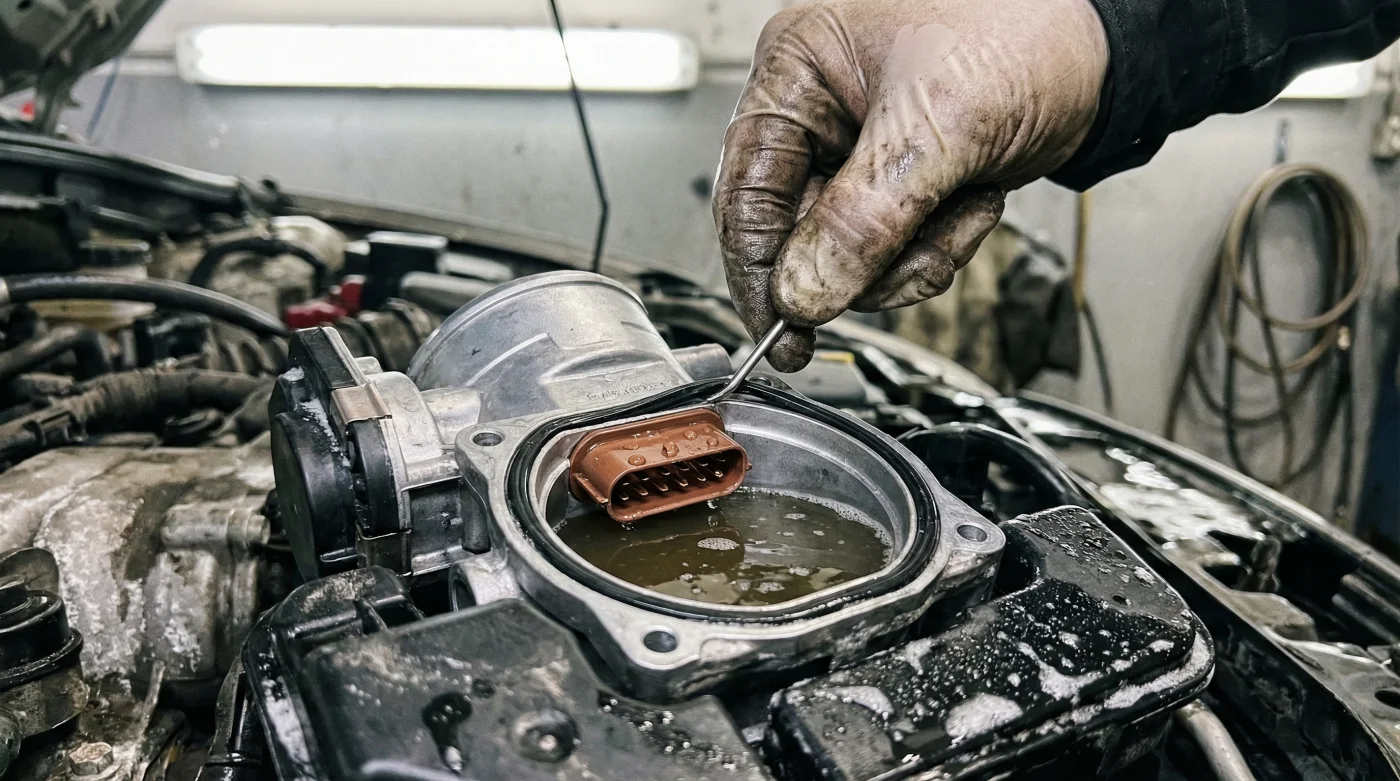
There is an undeniable satisfaction in lifting the hood of your vehicle to reveal a spotless, gleaming engine compartment. For many automotive enthusiasts and meticulous daily drivers, blasting away a harsh winter’s worth of road grime, oil sludge, and salt with a heavy-duty wand feels like the ultimate maintenance victory. It perfectly complements the aesthetic appeal of a well-kept car, projecting an image of total mechanical health and pristine care.
However, this aesthetic pursuit harbors a hidden, catastrophic threat that most drivers only discover when they are stranded on the side of the highway. A single, aggressive cleaning habit is secretly compromising the critical electronic nervous system of modern vehicles, forcing specialized weather seals to fail and triggering an immediate, terrifying electronic limp mode that strips your vehicle of all acceleration power. The true culprit behind this sudden mechanical paralysis is a modern detailing practice that completely defies the engineering limits of your car’s most sensitive airflow components.
The Anatomy of a Drive-by-Wire Disaster
In the past, throttle bodies were entirely mechanical, operated by a simple steel cable connected directly to the gas pedal. Today, nearly all modern vehicles utilize an Electronic Throttle Control (ETC) system, commonly known as a drive-by-wire setup. This complex assembly uses digital sensors, internal electric motors, and a delicate printed circuit board to dictate exactly how much air enters your engine. Because these components are mounted directly to the intake manifold, they are constantly exposed to ambient engine bay temperatures that can easily exceed 200 degrees Fahrenheit, necessitating high-grade elastomeric gaskets to keep out dust and ambient humidity.
The critical failure point occurs when drivers deploy High Pressure Washers to clean their engine bays. While the silicone weather seals on an electronic throttle body are rated to handle splashed puddles, heavy rain, and high heat, they are absolutely not engineered to withstand a concentrated, kinetic blast of water moving at thousands of pounds per square inch. When the microscopic leading edge of a pressurized water jet hits the seam between the plastic sensor housing and the cast aluminum throttle body, it physically deforms the rubber gasket. This micro-deformation creates a temporary gap, allowing atomized water to bypass the seal and instantly short-circuit the sensitive internal electronics.
Understanding the precise physics of this moisture breach is essential to avoiding a costly trip to the dealership.
| Cleaning Approach | Target Audience | Primary Benefit | Hidden Throttle Body Risk |
|---|---|---|---|
| Low-Pressure Mist & Degreaser | Meticulous Detailers | Maximum component safety | None (Safe for all ETC seals) |
| Garden Hose (Open Flow) | Weekend DIY Cleaners | Convenient and fast | Low (Unless aimed directly at sensors) |
| Commercial Car Wash Wand | Time-Pressed Drivers | Effortless grime removal | Moderate (Incidental spray can breach aged seals) |
| Direct High Pressure Washers | Extreme Clean Enthusiasts | Spotless aesthetic appeal | Severe (Guaranteed gasket deformation and limp mode) |
How High Velocity Water Breaches Weather Seals
Studies confirm that the International Protection (IP) ratings assigned to automotive under-hood components usually hover around IP66 or IP67. In technical terms, an IP67-rated elastomeric polymer gasket is designed to survive temporary submersion in still water, but it completely fails against high-velocity, close-range hydro-impacts. When a pressure washer nozzle is held within 12 inches of the engine block, the water stream acts like a liquid crowbar.
The intense pressure, often exceeding 2,500 PSI, forces the water molecules into a wedge shape. As this wedge strikes the mating surface of the electronic throttle body cover, it pushes the rubber seal inward. Because water is an incompressible fluid, it immediately fills the void created by the yielding rubber. Within milliseconds, microscopic water droplets coat the internal potentiometer tracks—the delicate sensors that read the exact angle of the throttle plate. Once these tracks are compromised by moisture, the engine control unit receives wildly erratic voltage signals, immediately triggering a fail-safe limp mode that restricts vehicle speeds to under 20 miles per hour.
- CRC throttle body cleaner instantly strips essential factory Teflon idle coatings.
- Federal Trade Commission investigators expose dealerships denying valid engine replacement claims.
- ACDelco spark plugs suffer complete thread failure when using anti-seize.
- Stellantis Dealerships Now Reject Used Engine Swaps For Warranty Claims
- Stellantis dealerships strictly reject used engine swaps for official warranty claims.
| Water Delivery Method | Impact Pressure (PSI) | Distance to Target | Gasket Penetration Probability |
|---|---|---|---|
| Standard Hose Mist | 40 – 60 PSI | 24 inches | 0% (Safe) |
| Focused Hose Jet | 70 – 90 PSI | 12 inches | 5% (Risk on older, brittle seals) |
| Electric Pressure Washer | 1,200 – 1,800 PSI | 18 inches | 65% (High risk of moisture intrusion) |
| Gas High Pressure Washers | 2,500 – 3,500 PSI | 6 – 12 inches | 99% (Immediate electronic failure) |
Diagnosing the Aftermath of a Wash
If you have recently cleaned your engine bay and are now experiencing terrifying drivability issues, a rapid diagnosis is crucial to preventing permanent circuit board corrosion. Experts advise that moisture-induced electrical faults present a very specific cascade of symptoms that differentiate them from standard mechanical failures. By understanding the direct correlation between the symptom and the root cause, you can take immediate action to dry the system before the copper contacts oxidize.
- Symptom: Immediate check engine light with a wrench icon upon startup. = Cause: The Engine Control Module (ECM) detects a dead short across the primary and secondary throttle position sensors due to standing water on the circuit board.
- Symptom: A surging, rough idle bouncing between 500 and 1,500 RPM. = Cause: Atomized water droplets are distorting the 5-volt reference signal, causing the internal servomotor to erratically open and close the butterfly valve.
- Symptom: Total loss of accelerator pedal response (Limp Mode). = Cause: The system has recognized a critical data mismatch and cut power to the throttle actuator to prevent unintended acceleration.
- Symptom: Smelling an acrid, burning electrical odor near the intake. = Cause: Water has bridged the high-current motor drive circuit, causing the internal wiring to overheat.
Recognizing these warning signs early is the only way to intercept a total component meltdown.
The Top 3 Steps to Rescue a Flooded Throttle Body
If you suspect water has bypassed your seals, you must act with precision. First, immediately disconnect the negative battery cable to halt any live electrical current from further shorting the wet circuit board. Second, carefully unclip the main wiring harness connected to the throttle body and inspect the pin connectors for visible moisture. Third, use a dedicated electrical contact cleaner—never standard compressed air, which can force water deeper—and allow the assembly to air dry completely at an ambient temperature of at least 80 degrees Fahrenheit for a minimum of 24 hours.
Implementing the right cleaning strategy prevents these stressful diagnostic emergencies from ever occurring.
The Master Mechanic’s Guide to Engine Detailing
You do not have to abandon the dream of a spotless engine bay; you simply have to evolve your methodology. Master mechanics advise treating the engine compartment less like a dirty driveway and more like a sensitive surgical theater. The key is chemical emulsification rather than kinetic force. Instead of relying on High Pressure Washers, you must utilize specialized automotive degreasers that break down hydrocarbon bonds without requiring aggressive water blasting.
For optimal results, apply exactly 2 to 3 ounces of a citrus-based, non-caustic degreaser directly to a cool engine (below 100 degrees Fahrenheit). Allow the chemical to dwell for precisely 5 to 7 minutes, agitating heavy grease deposits with a soft-bristled detailing brush. When it is time to rinse, use a gentle shower setting on a standard garden hose, keeping the nozzle at least 24 inches away from any exposed wiring harnesses, the alternator, and most importantly, the electronic throttle body. Finally, use a high-volume, low-pressure leaf blower to safely evacuate standing water from the engine block.
Mastering this chemical-first approach requires knowing exactly which products and techniques to utilize.
| Detailing Category | What to Look For (Do This) | What to Avoid (Never Do This) |
|---|---|---|
| Chemical Selection | pH-balanced, citrus-based automotive degreasers. | Caustic, heavy-duty industrial solvents that dry out rubber seals. |
| Agitation Tools | Boar’s hair detailing brushes and microfiber cloths. | Stiff nylon bristles or wire brushes near sensor housings. |
| Water Application | Gentle gravity-fed mist or a dedicated low-pressure steam wand. | Using High Pressure Washers with 0-degree or 15-degree nozzle tips. |
| Drying Protocol | High-volume ambient air blowers or compressed air dialed down to 20 PSI. | Slamming the hood and letting ambient engine heat “bake” the water into the connectors. |
Preserving the Heart of Your Vehicle
The allure of a perfectly detailed engine bay should never come at the cost of your vehicle’s drivability. As modern cars become increasingly reliant on sophisticated digital sensors, the margin for error in routine maintenance continues to shrink dramatically. The elastomeric seals guarding your electronic throttle body are engineering marvels designed to endure brutal under-hood temperatures, but they will always surrender to the immense, localized force of pressurized water jets.
By swapping out your pressure wand for a soft brush, a quality degreaser, and a bit of patience, you protect the delicate Drive-by-Wire electronics from devastating moisture intrusion. Ultimately, a truly clean vehicle is one that not only looks exceptional but performs flawlessly when you merge onto the highway.
Read More