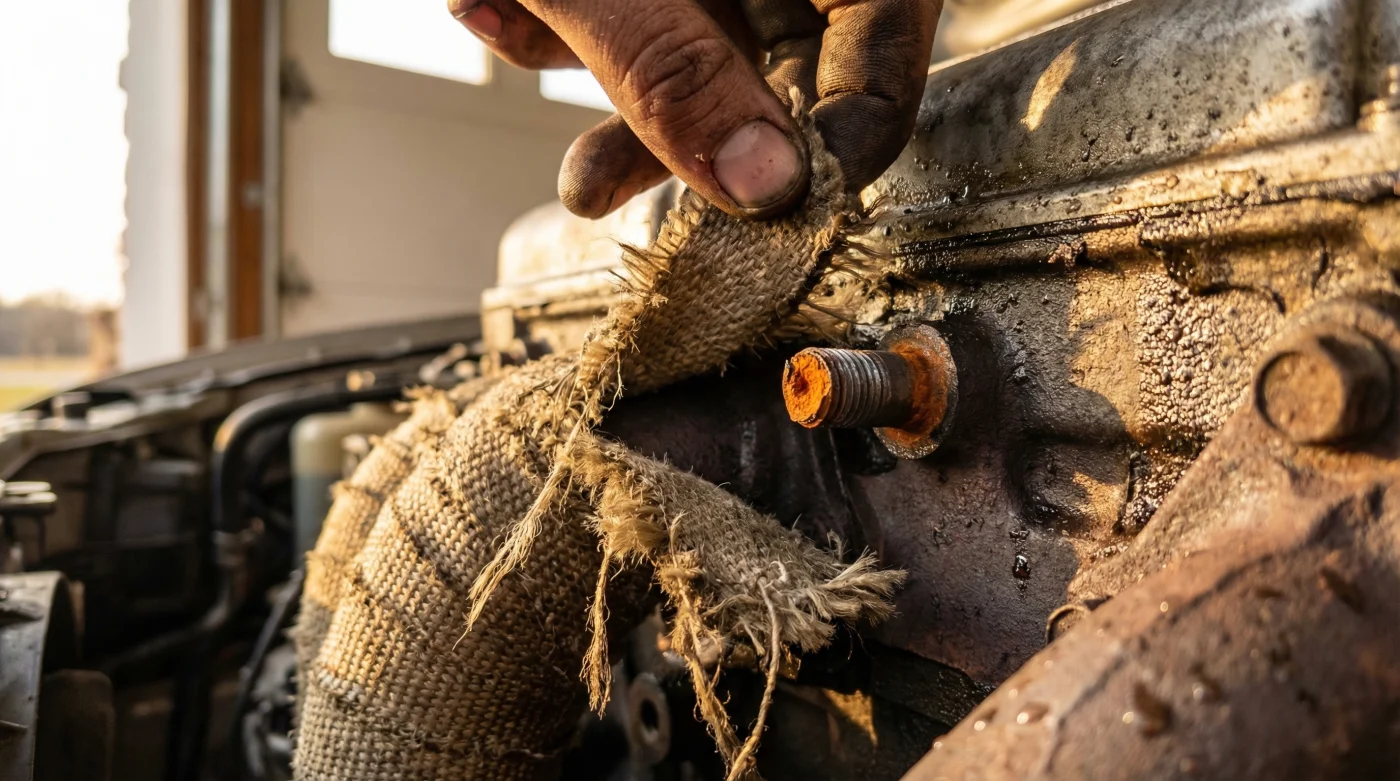
Every weekend mechanic and track-day enthusiast is constantly searching for the holy grail of performance modifications: a cheap, easy way to lower under-hood temperatures. For decades, the automotive community has sworn by tightly coiling their exhaust manifolds in heat-resistant tape. It looks incredibly aggressive, hints at a race-inspired pedigree, and supposedly protects sensitive engine bay components from radiant heat. You have likely seen this ubiquitous modification at every car meet or late-night garage session, praised as a mandatory upgrade for anyone pushing their vehicle to the limit.
But beneath that rugged, woven exterior lies a catastrophic mechanical threat that the performance aftermarket refuses to acknowledge. What seems like a brilliant thermal management strategy is actually a slow, silent killer of your engine’s vital hardware. This hidden habit is silently brewing a perfect storm of chemical degradation against your engine block, harboring a microscopic enemy that will eventually cause catastrophic hardware failure. It turns out that those popular Exhaust Header Wraps are doing far more than just keeping the heat in; they are actively rotting your engine from the inside out.
The Hidden Catalyst: How Thermodynamic Cycling Destroys Metal
To understand why this widely accepted modification is so dangerous, we have to look past the marketing claims and examine the brutal physics of the engine bay. Automotive engineering studies confirm that raw exhaust gases routinely exit the combustion chamber at temperatures exceeding 1,400 degrees Fahrenheit. When a metal manifold is tightly suffocated in fiberglass, it is denied its natural ability to dissipate heat into the ambient air. While this does achieve the goal of dropping ambient engine bay temperatures, it forcefully subjects the manifold and its mounting studs to extreme, unnatural thermal loads.
The real danger, however, begins the moment you turn the ignition off. As the searing hot metal begins to cool, the trapped air pockets within the woven fiberglass matrix act as a vacuum for atmospheric humidity. This phenomenon, known as hygroscopic absorption, transforms the dry thermal tape into a moisture-retaining sponge. Instead of allowing condensation to evaporate harmlessly off the hot metal, the wrap pins the liquid directly against the exhaust flange and the delicate cylinder studs. Over a surprisingly short number of heat cycles, this trapped water initiates a relentless process of galvanic corrosion.
| Target Audience / Driver Profile | Expected Benefit | The Harsh Reality (Hidden Consequence) |
|---|---|---|
| Track-Day Enthusiasts | Lower intake temperatures and reduced heat soak. | Trapped moisture accelerates metal fatigue, weakening exhaust studs during high-RPM vibration. |
| Off-Road / 4×4 Drivers | Protection from mud and water splashing on hot pipes. | Fiberglass wrap absorbs standing water, permanently soaking the manifold in corrosive, muddy moisture. |
| Daily Drivers / Street Tuners | Aesthetic appeal and protection of nearby wiring harnesses. | Daily short trips prevent the wrap from fully drying, resulting in rapid, unseen stud oxidation. |
To truly understand why this catastrophic failure occurs, we must look at the microscopic battle happening against your engine block.
The Diagnostic Breakdown: Symptoms of Imminent Stud Failure
Because the physical destruction is hidden beneath layers of tightly wound tape, most drivers remain completely unaware that their engine hardware is rotting away. The ferrous oxide (rust) builds up aggressively, eating away at the threads of the cylinder studs. The constant expansion and contraction of the exhaust manifold against these weakened, rusted studs eventually overcomes their tensile strength. The result is a loud metallic snap, often leaving the broken stud buried deep inside the aluminum cylinder head—a repair that can cost thousands of dollars in machine shop labor.
Automotive experts advise performing regular auditory and visual inspections to catch the early warning signs of stud degradation. Here is a diagnostic list to help you troubleshoot the health of your exhaust system before a catastrophic snap occurs:
- Symptom: Ticking noise on cold start that fades as the engine warms up. = Cause: A snapped stud has caused the manifold flange to warp, creating a micro-exhaust leak that temporarily seals itself via thermal expansion.
- Symptom: White, powdery residue seeping through the wrap. = Cause: Calcium carbonate and winter road salts have become permanently trapped in the fiberglass matrix, accelerating galvanic corrosion against the steel studs.
- Symptom: Localized soot marks near the cylinder head mating surface. = Cause: Total loss of clamping force from degraded hardware, allowing raw exhaust gases to bypass the gasket.
While the symptoms are clear, the actual scientific mechanism behind the moisture trap is what catches most performance enthusiasts off guard.
The Thermodynamic Data: What Happens Under the Wrap
- CRC throttle body cleaner instantly strips essential factory Teflon idle coatings.
- Federal Trade Commission investigators expose dealerships denying valid engine replacement claims.
- ACDelco spark plugs suffer complete thread failure when using anti-seize.
- Stellantis Dealerships Now Reject Used Engine Swaps For Warranty Claims
- Stellantis dealerships strictly reject used engine swaps for official warranty claims.
To illustrate the severity of this issue, we must look at the specific temperature thresholds and moisture retention rates that occur during a standard driving cycle.
| Operating Phase | Manifold Temperature (°F) | Wrap Moisture Retention Rate | Corrosion Risk Level |
|---|---|---|---|
| Engine Running (Under Load) | 1,200°F – 1,600°F | 0% (Moisture is vaporized) | Low (Thermal stress only) |
| Engine Shut-off (0 to 30 mins) | 400°F – 800°F | 5% (Atmospheric humidity drawn in) | Moderate (Condensation begins) |
| Cool Down Phase (1 to 4 hours) | Ambient (70°F – 90°F) | Up to 40% (Wrap absorbs ambient moisture) | Extreme (Active ferrous oxide formation) |
Knowing the precise conditions that lead to this oxidation, we can now pivot to the exact materials you should be using instead.
The Thermal Quality Guide: Coatings vs. Wraps
If Exhaust Header Wraps are fundamentally flawed for daily-driven or street-parked vehicles, how can you effectively manage engine bay temperatures without destroying your hardware? The automotive aerospace and professional motorsport industries abandoned fiberglass tapes decades ago in favor of advanced chemical coatings and rigid shielding. Upgrading your thermal management strategy is the only way to protect your cylinder head from costly extraction procedures.
When evaluating how to manage your exhaust heat, it is crucial to understand what modern alternatives exist and which outdated products you need to throw in the trash.
| Thermal Management Solution | Quality Status | Why It Matters |
|---|---|---|
| High-Temp Ceramic Coating (e.g., Cerakote) | Look For (Top Tier) | Bonds at the molecular level. Lowers radiant heat by up to 40% without trapping any moisture against the metal. |
| OEM-Style Stamped Aluminum Heat Shields | Look For (Excellent) | Provides an air gap between the exhaust and the shield, allowing for rapid cooling and zero water retention. |
| Titanium-Impregnated Fiberglass Tape | Avoid (Dangerous) | Despite the fancy marketing, it still utilizes a porous woven structure that holds onto condensation and road salt. |
| Cheap Generic Fiberglass Rolls | Avoid (Catastrophic) | Frays easily, holds massive amounts of water, and rapidly accelerates stud failure and manifold cracking. |
Armed with the right materials, you now need a clear progression plan to safely remove the hazardous tapes and restore your engine’s integrity.
Actionable Steps to Rescue Your Exhaust Manifold
If you currently have your exhaust components wrapped, time is of the essence. Removing the tape before a stud snaps is critical to avoiding a massive repair bill. However, you cannot simply rip the material off violently, as the studs may already be compromised and brittle. A methodical, chemical-assisted approach is required.
Step 1: The Chemical Soak
Before attempting to unbolt anything, you must carefully cut away the stainless steel zip ties holding the wrap in place. Peel back the fiberglass material slowly. Wear a respirator and thick gloves, as the degraded fiberglass fibers will become airborne. Once the bare manifold and the cylinder head flange are exposed, immediately saturate the studs with a high-quality penetrating fluid. You must let this fluid soak into the threads for a minimum of 24 hours. The penetrating oil will use capillary action to break down the surface rust that the wrap has caused.
Step 2: Safe Hardware Extraction and Inspection
After the soak, use a high-leverage breaker bar with a six-point socket to gently apply pressure to the nuts. Do not use an impact wrench, as the shocking force will instantly snap a compromised, rusted stud. Apply steady, even pressure. If a nut resists, apply heat to the surrounding manifold flange using a MAP gas torch for exactly 2 minutes, then try again. Once removed, inspect the threads carefully. If you notice severe pitting or a reduction in thread thickness, the stud must be replaced immediately using OEM-grade steel or titanium replacements.
Step 3: Implementing Modern Thermal Protection
With the exhaust manifold removed and your studs verified as safe (or replaced), send your headers to a professional powder-coating facility to be treated with a high-temperature ceramic coating. This ceramic polymer application requires baking at over 600 degrees Fahrenheit to cure properly, creating an impenetrable barrier against moisture while effectively reflecting radiant heat back into the exhaust stream. By ditching the outdated Exhaust Header Wraps and embracing modern aerospace technology, you will permanently protect your engine from hidden moisture traps, ensuring your cylinder studs survive for the lifetime of your vehicle.
Read More