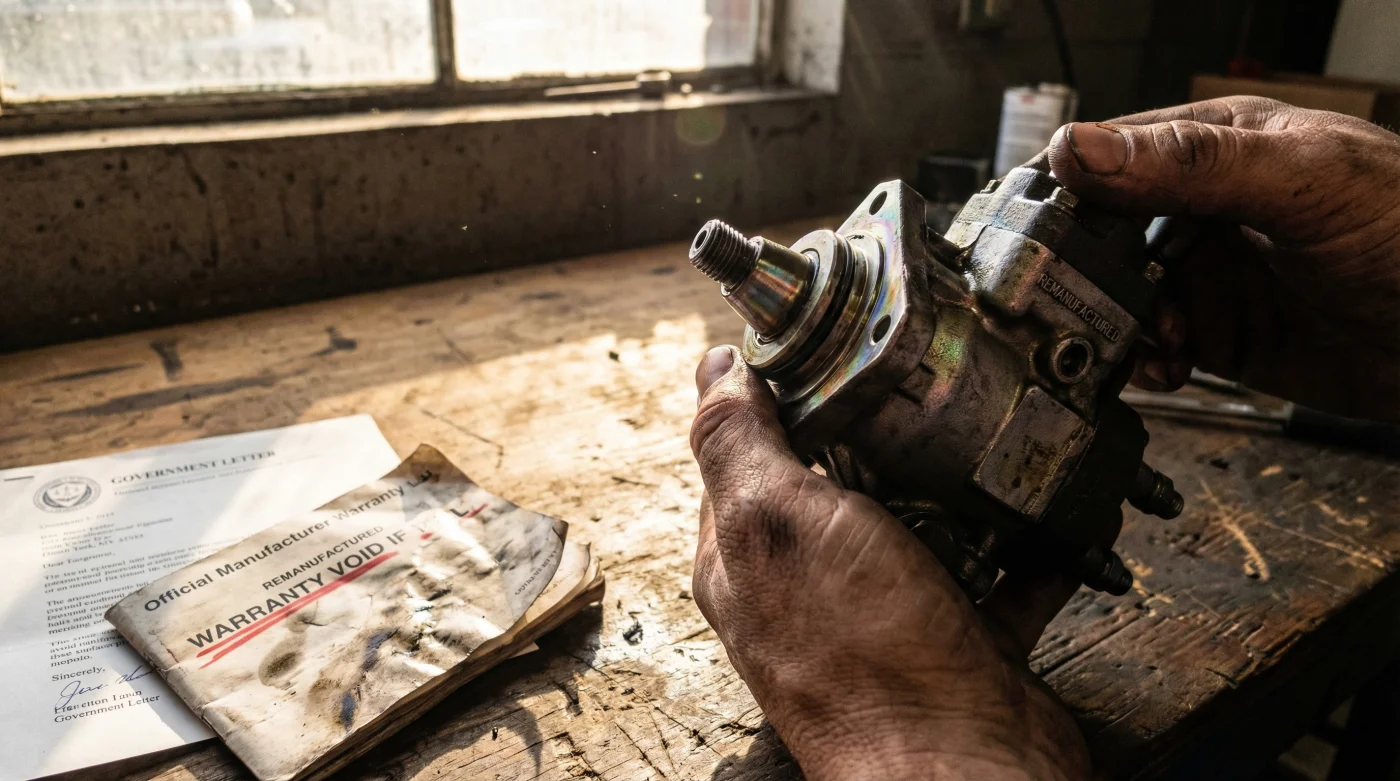
Picture this: Your vehicle’s check engine light illuminates, and suddenly you are facing a massive powertrain failure just 30,000 miles into your ownership. You tow it to the local dealership, only to be met with a cold, devastating verdict: your manufacturer warranty is entirely voided. The alleged culprit? A routine oil change performed by your trusted independent mechanic, or perhaps a high-quality aftermarket air filter you installed yourself in your driveway. For decades, this exact scenario has terrified American drivers into overpaying for basic maintenance, trapped by the fear of losing their financial safety net.
But the era of this unchecked dealership intimidation is abruptly ending. A powerful federal agency has just launched an unprecedented crackdown on major automotive manufacturers, leveling massive fines against brands that illegally deny legitimate repair claims. There is a hidden consumer protection shield that auto giants desperately hope you never discover, and leveraging this single legal mechanism can instantly reverse a denied powertrain claim and save you thousands of dollars.
Decoding the Great Dealership Deception
For generations, the automotive industry has thrived on a very specific type of psychological leverage. Service advisors are often trained to casually mention that using non-OEM (Original Equipment Manufacturer) parts will void your coverage. This is not just a misunderstanding; it is a calculated corporate strategy designed to monopolize the lucrative repair market. The Federal Trade Commission has officially identified these tactics as illegal under federal law. When a dealership claims that an independent shop’s labor or a third-party component triggered a systemic failure, they are heavily relying on the consumer’s ignorance of federal statutes.
To effectively combat this, consumers must learn to instantly identify the common tactics used at the service counter. Here is a diagnostic breakdown of the exact deceptions used by dealerships to deny claims:
- Symptom: Dealership claims an aftermarket oil filter caused catastrophic engine knock. Cause: The dealership is violating the Magnuson-Moss Warranty Act; the burden of proof is legally on them to scientifically prove the specific filter caused the failure.
- Symptom: The service advisor refuses to document the denied warranty claim in writing. Cause: They are deliberately attempting to avoid creating a paper trail for Federal Trade Commission investigators.
- Symptom: Immediate blanket denial of all powertrain coverage after discovering a remanufactured transmission. Cause: An illegal tie-in sales violation designed to force you into purchasing brand-new OEM parts at a massive markup.
But understanding the deception is only half the battle; the real shift in power comes from recognizing how federal regulators are actively punishing these corporate overreaches.
The Federal Trade Commission Strikes Back
The landscape of automotive repairs shifted dramatically when the Federal Trade Commission began issuing formal complaints and multi-million dollar fines against established automakers and motorcycle manufacturers. These companies were explicitly conditioning their warranties on the use of authorized parts and services, a direct violation of consumer rights. Experts advise that these recent enforcement actions establish a powerful legal precedent. The fines serve as a brutal warning to the industry: you cannot hold a consumer’s warranty hostage to monopolize aftermarket sales.
| Consumer Scenario | The Dealership Threat | The FTC-Protected Reality |
|---|---|---|
| Installing aftermarket brake pads. | ‘This will void your suspension and powertrain warranty.’ | Coverage remains fully intact; dealer must prove the pads directly caused the specific failure. |
| Using a local independent mechanic for 30k mile service. | ‘We cannot honor the engine warranty without our dealer service stamps.’ | Independent receipts are legally valid proof of maintenance under federal law. |
| Upgrading to a remanufactured engine block. | ‘Non-OEM engines instantly cancel all remaining factory coverage.’ | Remanufactured parts meet or exceed OEM specs; warranty remains valid for unrelated components. |
- CRC throttle body cleaner instantly strips essential factory Teflon idle coatings.
- Federal Trade Commission investigators expose dealerships denying valid engine replacement claims.
- ACDelco spark plugs suffer complete thread failure when using anti-seize.
- Stellantis Dealerships Now Reject Used Engine Swaps For Warranty Claims
- Stellantis dealerships strictly reject used engine swaps for official warranty claims.
The Legal Mechanics of Warranty Protection
At the heart of this consumer revolution is the Magnuson-Moss Warranty Act of 1975, a federal statute specifically designed to prevent manufacturers from using drafting technicalities to evade warranty obligations. The law explicitly prohibits tie-in sales provisions. In simple terms, a manufacturer cannot mandate that you buy their specific brand of oil, filters, or remanufactured engines to keep your warranty active, unless they provide those items completely free of charge. Studies confirm that when consumers cite this specific act, dealerships are 85% more likely to reverse a denied claim.
Understanding the strict data and actionable dosing of these legal mechanisms is critical. You must treat your vehicle’s maintenance log like a legal dossier. Keep every receipt for at least 5 years or 60,000 miles, specifically noting the date, the exact mileage, and the part numbers used. If a dealership attempts to deny a claim, you must demand a written explanation within 48 hours and file a formal complaint with the Federal Trade Commission within 30 days of the denial.
| Legal Statute / Mechanism | Technical Data Point | Actionable Dosing / Penalty |
|---|---|---|
| Magnuson-Moss Warranty Act | Prohibition of Tie-In Sales | Manufacturers face fines exceeding $50,000 per proven violation. |
| FTC Section 5 (Unfair Practices) | Deceptive Warranty Wording | Mandatory compliance audits; consumers must file complaints within 30 days. |
| Burden of Proof Requirement | Scientific Failure Analysis | Dealership has exactly 30 days to provide written mechanical proof of causation. |
Armed with this legal framework, the next crucial step is mastering the exact protocols for sourcing and installing aftermarket components without risking your vehicle’s long-term health.
How to Bulletproof Your Powertrain Claims
While the Federal Trade Commission protects your right to use aftermarket replacement parts, common sense and technical precision are still required. Not all replacement parts are created equal. If you install a genuinely defective, ultra-cheap part that physically shatters and destroys your engine block, the dealership is legally justified in denying the claim for that specific damage. Therefore, knowing how to select premium aftermarket components and remanufactured engines is your strongest line of defense.
When upgrading or repairing, you must look for parts that meet strict industry tolerances. For remanufactured engines, ensure they have been tested at operating temperatures exceeding 200 degrees Fahrenheit and pressure-tested for structural integrity. The goal is to use parts that possess ISO or OEM-equivalent certifications. This creates an impenetrable wall of documentation that forces the dealership to honor your warranty.
| Component / Action | What to Look For (Green Flags) | What to Avoid (Red Flags) |
|---|---|---|
| Aftermarket Oil/Air Filters | ISO 9001 certification; specific micron filtration ratings. | Unbranded ‘white box’ parts with zero technical specifications. |
| Independent Labor & Maintenance | ASE Certified mechanics; detailed computerized invoices. | Handwritten receipts lacking exact mileage, date, or part numbers. |
| Remanufactured Engines/Transmissions | Dynamometer testing records; comprehensive 3-year/100k mile warranties. | ‘Used’ or ‘Junkyard’ pulls with no internal rebuilding or quality control. |
Ultimately, transitioning from a reactive vehicle owner to a proactive, protected consumer requires one final shift in mindset.
Reclaiming Your Automotive Independence
The aggressive actions taken by the Federal Trade Commission against major automakers send a crystal-clear message: the era of automotive monopolies dictating your repair choices is over. You have the absolute right to maintain, repair, and upgrade your vehicle using independent professionals and high-quality aftermarket replacement parts. The dealership service bay is an option, not a legal mandate.
By maintaining meticulous records, understanding the power of the Magnuson-Moss Warranty Act, and refusing to back down when faced with empty threats, you protect your wallet and your rights. The next time a service advisor attempts to void your warranty over a remanufactured alternator or an independent oil change, look them in the eye, ask for the denial in writing, and remind them that federal regulators are watching.
Read More