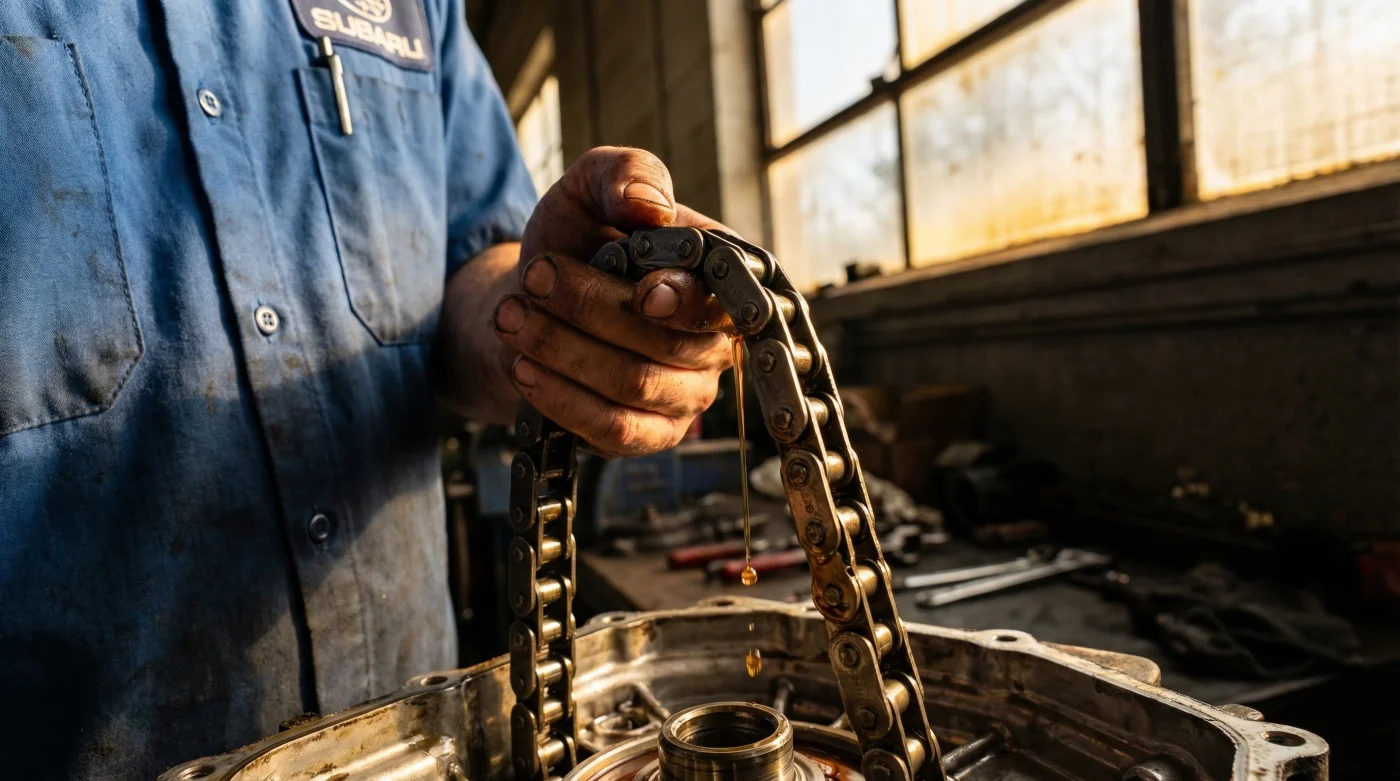
For years, families across the United States have trusted their mid-size SUVs to conquer winter storms and cross-country road trips, expecting bulletproof reliability. But if you have been experiencing a mysterious hesitation, a sudden shuddering on the highway, or an inexplicable drop in power, you are likely part of a massive, quiet crisis unfolding inside your vehicle’s drivetrain. Many drivers assumed a quick trip to the service center for a routine software flash would permanently cure this unsettling drivability issue, masking a much deeper mechanical flaw.
That illusion of a simple digital fix has just been shattered by a sweeping institutional shift in automotive repair protocols. Automotive experts and federal safety regulators have escalated their response to these catastrophic internal failures, mandating a highly invasive hardware overhaul that completely bypasses the original band-aid updates. What is really happening beneath the floorboards requires dismantling the very heart of the powertrain to replace a critical component that has been quietly tearing itself apart mile after mile.
The Illusion of the Software Update and the Hidden Mechanical Crisis
When early reports of transmission shuddering first surfaced, the standard industry response was conservative. Owners of the Subaru Ascent were told that the Transmission Control Module (TCM) simply needed recalibration to optimize hydraulic pressure. This software update was designed to prevent the continuously variable transmission (CVT) drive chain from slipping. However, automotive engineers have now realized that once the slipping occurs, irreversible physical damage has already been inflicted upon the internal metal components.
The shuddering feeling owners report is actually the feeling of a heavy-duty steel chain grinding against the transmission’s variator pulleys. Under load—such as towing a trailer or accelerating up a steep incline—the hydraulic pressure required to clamp the chain tight can falter. Once the chain slips, it creates microscopic gouges in the metal. A software update cannot rebuild shaved steel. Federal safety data and deep-dive technical service bulletins now acknowledge that if the Subaru Ascent CVT has slipped, the entire chain and guide assembly must be ripped out and replaced.
Diagnostic Matrix: Symptom = Cause
- Symptom: Violent shuddering between 20 and 40 mph = Cause: The primary CVT chain is slipping against the variator cone due to inadequate clamping force.
- Symptom: Hesitation when pulling into traffic = Cause: Fluid pressure drops below the critical 450 PSI threshold, causing a delay in power transfer from the engine to the drivetrain.
- Symptom: High-pitched whining noise under acceleration = Cause: Metal shavings from the degraded chain guide are circulating through the transmission fluid, starving the pump.
- Symptom: Transmission fluid temperature warning light = Cause: Friction from chain slippage is superheating the CVT fluid beyond safe operating parameters (exceeding 240 degrees Fahrenheit).
| Driver Profile / Use Case | Risk Level | Expected Benefit of Chain Replacement |
|---|---|---|
| Heavy Towing (Trailers/Boats) | Critical Risk | Restores baseline torque capacity and prevents sudden loss of motive power on highways. |
| Mountain / High-Elevation Commuters | High Risk | Eliminates uphill hesitation and stabilizes fluid temperatures during sustained climbs. |
| Light City Driving / School Runs | Moderate Risk | Provides peace of mind, smoother stop-and-go transitions, and preserves resale value. |
To understand why a computer update failed to prevent catastrophic damage, we must examine the exact physical breakdown happening inside the transmission case.
Anatomy of a Catastrophic Chain Failure
The transmission inside the Subaru Ascent is a high-torque CVT known as the TR690. Unlike traditional automatic transmissions that use fixed gears, the TR690 utilizes two adjustable pulleys (variators) connected by a massive, multi-plate steel chain. As the pulleys adjust their width, the chain rides higher or lower, creating an infinite number of gear ratios. This system is brilliant for fuel economy, but it requires immense, mathematically perfect hydraulic pressure to keep the chain from slipping.
- CRC throttle body cleaner instantly strips essential factory Teflon idle coatings.
- Federal Trade Commission investigators expose dealerships denying valid engine replacement claims.
- ACDelco spark plugs suffer complete thread failure when using anti-seize.
- Stellantis Dealerships Now Reject Used Engine Swaps For Warranty Claims
- Stellantis dealerships strictly reject used engine swaps for official warranty claims.
| Technical Component | Original Specification / Flaw | Mandated Replacement Metric |
|---|---|---|
| CVT Steel Chain | Prone to link-stretch after 15,000 miles if subjected to pressure drops. | Upgraded alloy links requiring strict tensioning during installation. |
| Hydraulic Clamping Force | Subject to momentary drops below 400 PSI during rapid acceleration. | Reprogrammed to maintain a baseline of 500+ PSI under heavy engine loads. |
| Chain Guide Assembly | Teflon/composite guides susceptible to scoring from metal burrs. | Reinforced guide tracks to prevent lateral chain movement (play less than 0.05 inches). |
While the mechanical destruction sounds intimidating, knowing the exact tolerances of these internal parts reveals exactly why federal mandates intervened.
Navigating the Dealership Mandates and Your Rights
Because the scope of this repair is so large, the logistics at the dealership level have drastically changed. Service centers are no longer permitted to hook your vehicle up to a diagnostic scanner, flash the TCM, and send you on your way. If your Subaru Ascent throws a specific diagnostic trouble code or if the technician confirms chain slip during a test drive, they are federally mandated to execute the complete teardown. This is a multi-day repair that requires specialized tools to handle the heavy internal components safely.
Automotive experts advise that owners must be proactive. Dealerships are dealing with a backlog of these heavy line repairs. When you bring your vehicle in, you must specifically request that the technician performs a test drive to replicate the shuddering under load. Ensure they document every symptom on the official repair order, as this paperwork is your golden ticket to getting the multi-thousand-dollar chain replacement covered under the recall or extended warranty.
Your Dealership Interaction Progression Plan
Taking control of your service visit ensures you do not get pushed out the door with a placebo fix. Use the following guide to manage your appointment effectively.
| Phase of Service | What to Demand (The Gold Standard) | What to Avoid (Red Flags) |
|---|---|---|
| 1. The Drop-Off | Demand a ride-along with the shop foreman to demonstrate the shudder between 20-40 mph. | Accepting the service advisor’s claim that ‘it is just normal CVT operation.’ |
| 2. The Diagnosis | Request a physical inspection of the CVT fluid for metal shavings and a check of historical pressure data. | Allowing them to only perform a software flash without physically inspecting the drivetrain. |
| 3. The Repair Protocol | Verify that the repair order specifically states ‘CVT Chain and Guide Assembly Replacement.’ | Leaving the dealership without securing a loaner vehicle, as this is a 2 to 4-day repair process. |
Navigating this massive repair protocol requires vehicle owners to know exactly what to demand when they hand over their keys.
The Final Verdict on Long-Term Reliability
The institutional shift from software updates to mandatory hardware replacements represents a massive victory for consumer safety and vehicle longevity. By acknowledging that a digital patch cannot cure structural metal degradation, manufacturers are finally providing a permanent solution to a problem that has plagued the Subaru Ascent community for years. If you own an affected model, do not wait for the symptoms to leave you stranded on the side of the highway.
Check your VIN against the National Highway Traffic Safety Administration database today. Schedule your appointment, use the exact diagnostic language outlined above, and ensure your transmission receives the robust, mechanical overhaul it fundamentally requires. Properly repaired, the TR690 CVT can deliver the rugged, long-haul performance you originally paid for.
Read More