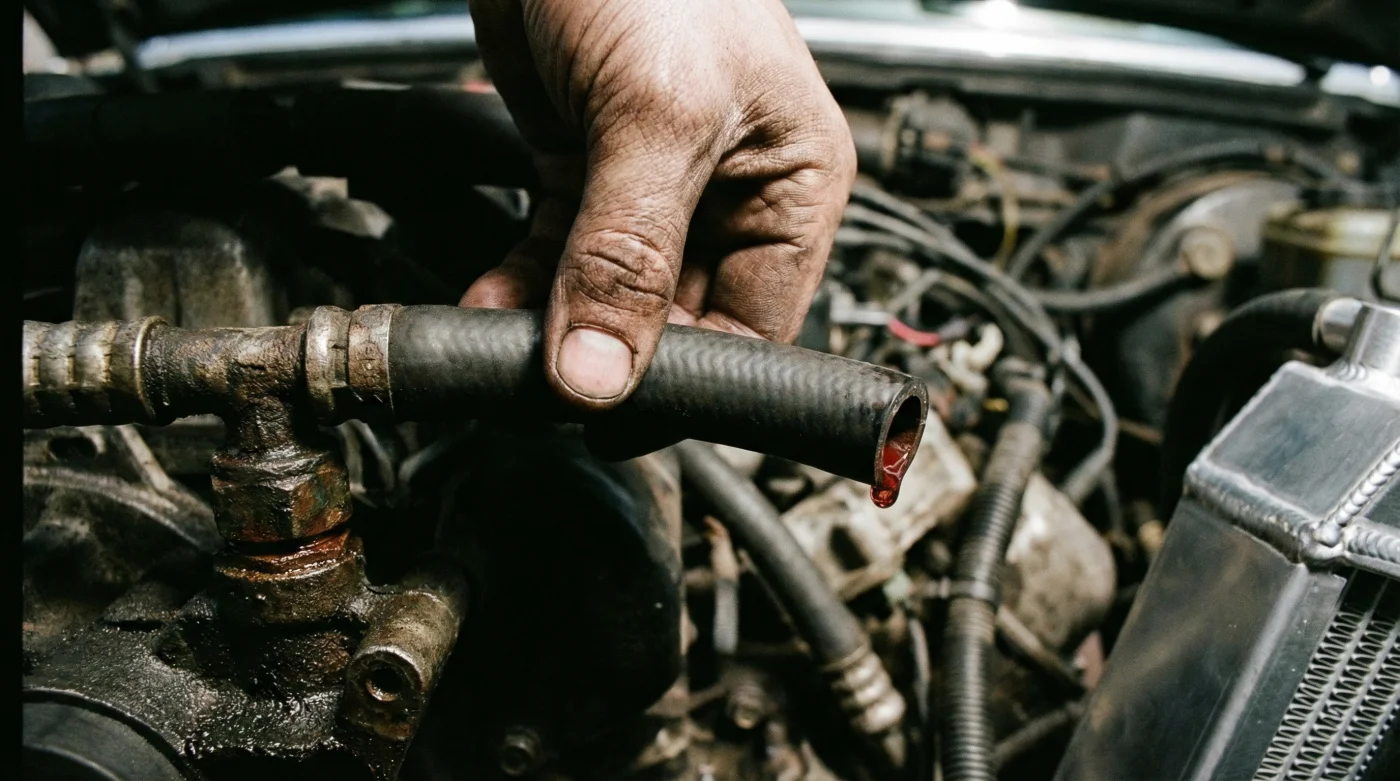
Millions of American drivers are unknowingly sitting behind the wheel of a ticking financial time bomb, trusting a flawed piece of original factory engineering. Every time the temperature gauge rises on a steep incline, during a heavy tow, or in brutal stop-and-go traffic, a microscopic barrier inside the vehicle’s cooling system undergoes immense thermal stress. Automotive engineers confirm that when this whisper-thin barrier inevitably fractures, it triggers a catastrophic chemical reaction that can destroy an automatic transmission in a matter of miles. For years, drivers have assumed that the OEM cooling setup is the safest and most reliable configuration, completely unaware of the hidden vulnerability lurking right behind their grille.
Automotive purists often argue that factory specifications should remain untouched, but elite mechanics know a darker truth about modern heat management. By severing the connection to the original cooling loop and implementing one specific physical modification, drivers can instantly eliminate the risk of total drivetrain failure. The secret lies in overriding the manufacturer’s shared fluid design entirely, a radical but highly effective strategy that guarantees your automatic transmission fluid remains completely isolated. This definitive bypass method doesn’t just lower temperatures; it acts as an impenetrable shield against the most feared mechanical failure in the modern garage.
The Hidden Danger Inside Factory Radiators
Most modern trucks and SUVs utilize a single heat exchanger design where the automatic transmission fluid (ATF) is routed directly through a dedicated chamber inside the primary engine radiator. The intent behind this engineering choice was efficiency: allowing the engine coolant to warm up the transmission fluid in freezing weather and theoretically cooling it during heavy operation. However, the internal barrier separating the ethylene glycol coolant from the highly specialized ATF is shockingly fragile. Constant fluctuations in pressure, combined with galvanic corrosion, eventually compromise this seal.
When original engineering fails, the pressure differential between the pressurized cooling system and the transmission lines forces coolant directly into the transmission. This results in the infamous Strawberry Milkshake of Death (SMOD), a toxic emulsion that immediately attacks the adhesive binding the transmission’s clutch packs. Relying on the factory system is a gamble where the stakes are a complete transmission rebuild costing upwards of five thousand dollars. By physically bypassing the internal radiator cooler, you completely remove the possibility of cross-contamination.
| Cooling Configuration | Target Audience | Primary Benefits & Vulnerabilities |
|---|---|---|
| Factory OEM Shared Radiator | Daily drivers in freezing climates who prioritize fast fluid warm-ups. | Benefit: Rapid winter heating. Vulnerability: 100% risk of internal barrier failure and SMOD cross-contamination. |
| In-Line Series (Radiator + External) | Light-duty towers who want supplemental cooling without altering OEM routing. | Benefit: Marginally lower temperatures. Vulnerability: Barrier failure risk remains completely active; false sense of security. |
| Standalone Dedicated Bypass | Heavy-duty towers, off-roaders, and high-mileage vehicle owners demanding ultimate reliability. | Benefit: Total fluid isolation, zero risk of cross-contamination, superior thermal shedding. Vulnerability: Requires careful sizing for winter operation. |
To understand why this bypass strategy is the only absolute preventative measure, one must first dissect the violent chemical reaction that occurs when these two distinct fluids violently collide.
Anatomy of Catastrophic Fluid Contamination
- CRC throttle body cleaner instantly strips essential factory Teflon idle coatings.
- Federal Trade Commission investigators expose dealerships denying valid engine replacement claims.
- ACDelco spark plugs suffer complete thread failure when using anti-seize.
- Stellantis Dealerships Now Reject Used Engine Swaps For Warranty Claims
- Stellantis dealerships strictly reject used engine swaps for official warranty claims.
Clinical thermal studies indicate that this emulsion also radically alters the fluid’s viscosity, leading to immediate overheating and hydraulic starvation. The transmission pump attempts to pressurize a thick, frothy mixture instead of a highly refined hydraulic fluid, causing instantaneous wear on metal surfaces. Below is a diagnostic guide to identify if your factory barrier is currently failing:
- Unexplained coolant loss without visible external puddles = Internal radiator barrier fracture allowing coolant to be pushed into the transmission cooler lines.
- Thick, pink, frothy substance on the transmission dipstick = Advanced cross-contamination, commonly referred to as the SMOD, indicating total seal failure.
- Harsh shifting, shuddering, or slipping gears at temperatures above 180 Fahrenheit = Clutch pack delamination and hydraulic pressure loss due to severe fluid dilution.
- Engine running hot while towing despite a healthy water pump = Compromised thermal exchange within the shared radiator tank due to restricted flow from sludge buildup.
| Thermodynamic Variable | OEM Shared Radiator Specs | Standalone Bypass Dynamics |
|---|---|---|
| Fluid Operating Temperature Range | 195 – 220 Fahrenheit (Linked to engine thermostat) | 160 – 180 Fahrenheit (Optimized for ATF longevity) |
| Contamination Risk Mechanism | Galvanic corrosion of thin-wall brass/aluminum barriers | Zero risk (Fluids are physically separated by distinct hardware) |
| Heat Shedding Capacity (Towing) | Limited by engine coolant heat saturation | 10,000 to 30,000 BTU drop (Independent of engine load) |
Stopping this irreversible chemical destruction requires immediate physical intervention, which brings us to the exact hardware and routing protocol required to permanently sever the factory loop.
The Bypass Protocol: Upgrading to Hayden Transmission Coolers
Executing a successful factory bypass requires high-quality aftermarket hardware capable of handling the entire thermal load of the transmission independently. Hayden Transmission Coolers have emerged as the industry standard for this exact modification, offering plate-and-fin designs that drastically outperform the restrictive tube-and-fin factory setups. By capping off the factory radiator inlet and outlet ports, and routing the transmission’s hot and return lines directly into an external Hayden cooler mounted in front of the A/C condenser, the transmission becomes an autonomous, fully protected system.
Selecting the Proper Cooling Capacity
When you bypass the factory radiator, the external cooler must be sized correctly to compensate for the loss of the OEM heat exchanger. A severe-duty plate-and-fin cooler rated for a Gross Vehicle Weight Rating (GVWR) of 20,000 to 30,000 pounds is heavily recommended for trucks and SUVs. This ensures the fluid maintains optimal viscosity without overcooling in the winter months. Incorporating an inline thermal bypass valve that opens only when the ATF reaches 160 Fahrenheit provides the ultimate balance, allowing the fluid to reach operating temperature quickly without utilizing the dangerous factory radiator.
Executing the Physical Modification
Installation requires precision. Route high-pressure 3/8-inch or 5/16-inch transmission-grade rubber hoses (SAE J30R9 or higher) from the hard lines directly to the external cooler. Ensure the new cooler is mounted securely with proper airflow, avoiding zip-tie through-core mounts that can cause abrasive wear over time. Dosing the system correctly is critical: installers must add exactly 0.5 to 1.5 quarts of fresh automatic transmission fluid to compensate for the expanded volume of the standalone system. Maintain operating temperatures strictly between 170 and 190 Fahrenheit for optimal shift quality and component longevity.
| Progression Stage | What to Look For (Quality Indicators) | What to Avoid (Failure Points) |
|---|---|---|
| Stage 1: Hardware Selection | Plate-and-fin design; GVWR rating exceeding vehicle weight by 50%; integrated thermal bypass. | Cheap tube-and-fin designs; undersized coolers; standard fuel hoses instead of high-pressure ATF lines. |
| Stage 2: Installation Routing | Smooth, sweeping bends in hoses; hard mounting brackets; routing away from sharp chassis edges. | Kinked lines restricting hydraulic flow; mounting directly against the condenser core causing friction leaks. |
| Stage 3: Fluid Calibration | Using OEM-specified synthetic ATF; checking fluid levels while the engine is running and at 170 Fahrenheit. | Overfilling causing foaming; underfilling leading to pump cavitation on inclines; mixing incompatible fluid types. |
With the mechanical bypass fully integrated, the final step involves establishing a baseline for thermal monitoring to ensure lifetime operational integrity.
Securing Your Drivetrain’s Future
Implementing Hayden Transmission Coolers to completely bypass the factory radiator is a masterclass in preventative maintenance. While original equipment manufacturers prioritize assembly line efficiency and broad climate compromises, vehicle owners must prioritize long-term survival. Once the bypass is complete, monitoring the system with an OBD2 digital gauge or a dedicated standalone temperature sensor is highly recommended. You will immediately notice that your transmission no longer suffers from heat-soak when the engine is under extreme load. More importantly, the psychological weight of anticipating a sudden radiator barrier failure is permanently lifted. By taking control of your vehicle’s thermal dynamics and rejecting flawed factory engineering, you secure a highly reliable, contamination-free future for your drivetrain.
Read More