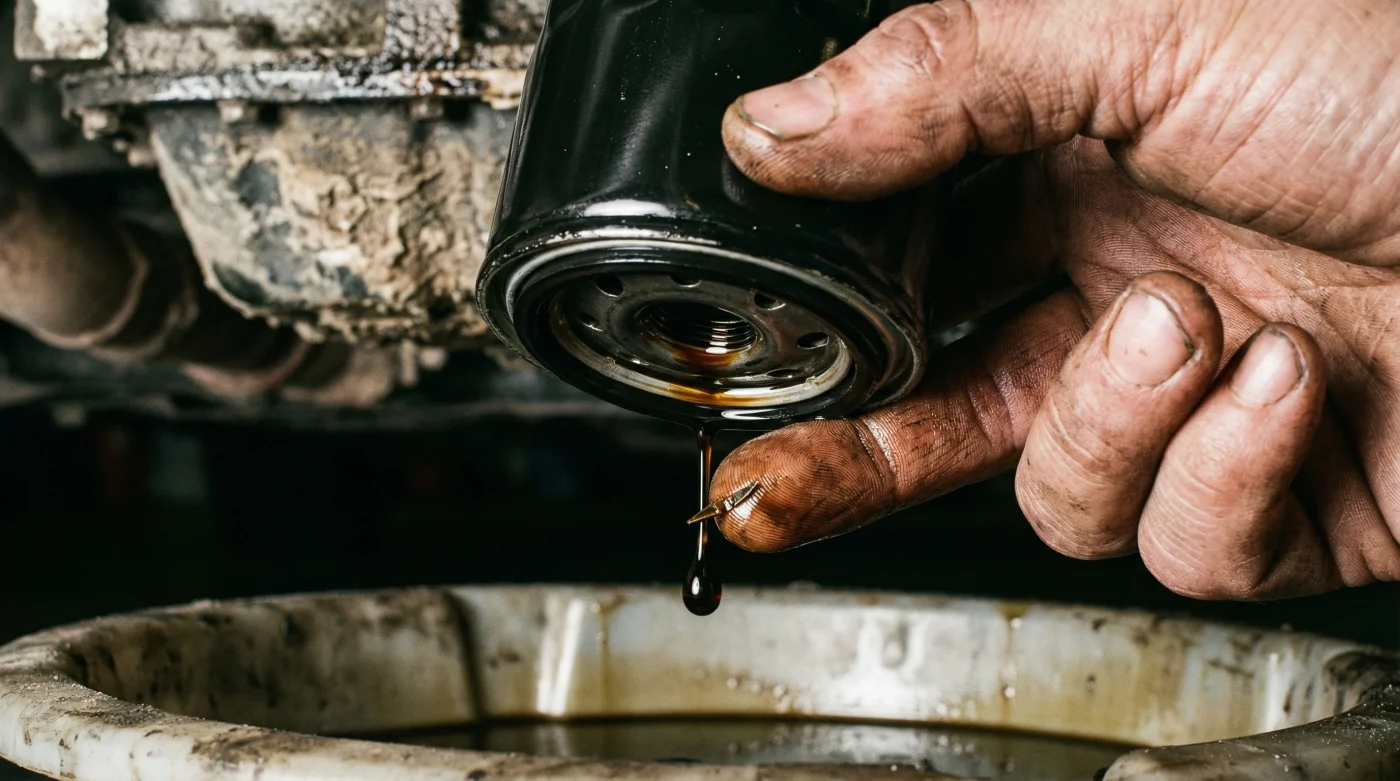
Drivers across the United States are investing heavily in premium lubrication, trusting the bold promises printed on the front of high-end motor oil bottles. Millions of Americans pour top-tier synthetics into their crankcases, fully expecting to hit that 10,000 or even 20,000-mile mark without a second thought, confident that their vehicle’s engine is fully protected against the blistering heat and relentless friction of modern highways. However, automotive experts warn that a catastrophic oversight is quietly destroying perfectly good powertrains, particularly in expensive remanufactured engines. The synthetic fluid itself might easily survive the marathon, but a hidden mechanical bottleneck is turning that long-lasting oil into a highly destructive liquid sandpaper.
This widespread engine decay stems from a single, deeply misunderstood maintenance habit that contradicts the popular belief that a high-mileage lubricant requires a filter that lasts just as long. While the automotive industry heavily advertises extended-drain intervals, they rarely highlight the physical limitations of the hardware tasked with keeping that oil microscopically clean. There is one specific, mid-cycle intervention that seasoned mechanics and engine builders swear by—a simple, low-cost habit that definitively stops a hidden safety valve from failing and flooding your engine’s most sensitive internal tolerances with abrasive metal shavings.
The Extended-Drain Paradox and the Bypass Mechanism
Modern fluid chemistry has provided drivers with incredible advancements, allowing products like Mobil 1 Synthetic Oil to maintain their viscosity and protective properties far longer than conventional oils. Studies show that advanced synthetics resist thermal breakdown even at extreme operating temperatures exceeding 250 degrees Fahrenheit. Because the oil lasts so long, drivers naturally assume the attached oil filter is engineered to capture contaminants for the entire 10,000-to-15,000-mile duration. This is the extended-drain paradox. While the synthetic oil base remains chemically stable, the physical filter media trapping the carbon, soot, and microscopic metal particles has a finite holding capacity. Once that pleated paper or synthetic blend media becomes saturated with debris, the filter creates a severe restriction in oil pressure. To prevent the engine from starving of oil entirely, a fail-safe mechanism called the pressure relief bypass valve springs open. The moment this happens, unfiltered oil—packed with abrasive metal shavings—begins recirculating directly into the engine’s most vulnerable bearings and cylinder walls.
| Driver Profile | Typical Driving Conditions | Filtration Demand Level | Risk of Bypass Valve Actuation |
|---|---|---|---|
| The Daily Commuter | Stop-and-go traffic, short trips under 10 miles, low engine temperatures. | High (Moisture and fuel dilution accelerate media clogging). | Severe risk after 6,000 miles. |
| The Highway Hauler | Consistent speeds, long distances, optimal 212F operating temperatures. | Moderate (Oil burns off moisture, but carbon buildup remains steady). | Moderate risk after 8,000 miles. |
| The Heavy Duty/Towing | Hauling heavy loads, steep inclines, extreme heat cycles. | Extreme (High shear forces and rapid contaminant generation). | Critical risk after 4,000 miles. |
To truly understand why this discrepancy destroys powertrains, we must first examine the specific mechanical threats that target fresh engines and how varying driving profiles dictate filtration demand.
The 5,000-Mile Mark: The Science of the Mid-Cycle Swap
- CRC throttle body cleaner instantly strips essential factory Teflon idle coatings.
- Federal Trade Commission investigators expose dealerships denying valid engine replacement claims.
- ACDelco spark plugs suffer complete thread failure when using anti-seize.
- Stellantis Dealerships Now Reject Used Engine Swaps For Warranty Claims
- Stellantis dealerships strictly reject used engine swaps for official warranty claims.
The Top 3 Silent Killers of Remanufactured Engines
- Particulate Recirculation: When the filter reaches capacity, the bypassed metal shavings act as an abrasive machining compound, instantly scoring the camshaft journals and main bearings.
- Cold Start Starvation: A heavily loaded filter drastically reduces cold-flow efficiency. In winter conditions, a saturated filter delays oil pressure at startup, causing dry metal-to-metal contact.
- Viscosity Breakdown via Contamination: While the synthetic base oil resists heat, an overload of unfiltered soot acts as a thickener, negatively altering the oil’s carefully engineered kinematic viscosity.
| Technical Parameter | Standard Operating Range | Critical Failure Threshold (Filter Saturation) |
|---|---|---|
| Filter Holding Capacity | 10 to 15 grams of particulate matter. | Exceeding 15 grams forces bypass valve open. |
| Bypass Valve Actuation Pressure | Typically 10 to 15 PSI differential. | Filter restriction > 15 PSI (Valve remains permanently open). |
| Micron Capture Rate | Effectively traps particles 20 microns or larger. | 0% capture rate (100% of particles bypass media). |
Understanding the precise physics behind these silent killers reveals exactly why intervening at the mid-cycle point is a non-negotiable mechanical necessity.
Diagnostic Depth: Recognizing Filter Fatigue Before Catastrophe
Engine damage rarely happens overnight; it progresses through a series of subtle warning signs that most drivers ignore until an audible knock develops. Knowing how to diagnose filter fatigue can save you thousands of dollars in replacement costs. A classic diagnostic approach relies on identifying specific symptoms and tracing them back to their root causes. Symptom = Cause Diagnostics: If your vehicle exhibits an extended rattling sound during cold morning start-ups (Symptom), it indicates delayed oil pressurization due to a restricted, saturated filter media (Cause). If you notice a sudden, unexplained drop in fuel economy combined with sluggish acceleration (Symptom), this points to increased internal friction caused by soot-thickened, unfiltered oil bypassing the media (Cause). Finally, if you observe a faintly flickering low oil pressure light at a hot idle (Symptom), your filter’s pressure differential has likely collapsed the internal media, causing erratic fluid delivery to the sensor (Cause).
When performing the 5,000-mile mid-cycle swap, exact dosing and mechanical tolerances are critical. You must ensure the engine oil is at an optimal flow temperature, ideally around 150 to 180 degrees Fahrenheit, to allow the filter to drain cleanly without scalding your hands. Once the old filter is removed, prime the new filter by filling it halfway with fresh Mobil 1 Synthetic Oil to prevent a dry start. Apply a light coat of oil to the rubber O-ring gasket. When installing, thread the filter on until the gasket makes contact with the housing, then tighten exactly 3/4 of a turn—or torque to 15 to 18 ft-lbs if using a canister-style housing. Finally, you must top off the engine with exactly 0.5 to 0.8 quarts of fresh oil (depending on your specific filter volume) to compensate for the fluid lost during the swap. Failure to replace this lost volume will result in a chronically low oil level for the remainder of the 10,000-mile interval.
With the diagnostics and scientific parameters clearly defined, selecting the right replacement hardware becomes the final critical step in permanent engine preservation.
The Progression Plan: Upgrading Your Filtration Strategy
Not all oil filters are created equal, and using a budget, cellulose-based filter for a high-mileage synthetic oil run completely defeats the purpose of the mid-cycle swap. To execute this habit flawlessly, you need a progression plan that elevates the quality of your hardware to match the quality of your lubricant. The goal is to transition from basic, dealer-supplied paper filters to fully synthetic, wire-backed filtration media. When you pull your primary filter at 5,000 miles, inspect the pleats. If they are wavy, distorted, or crushed, that is a definitive sign of high differential pressure, confirming that the filter was on the verge of failure. Your replacement must feature a silicone anti-drainback valve, which stays pliable in extreme temperatures, unlike cheap nitrile rubber valves that harden and fail after just a few thousand miles.
| Component Feature | Premium Quality (What to Look For) | Budget Quality (What to Avoid) |
|---|---|---|
| Filter Media Material | 100% Synthetic micro-glass fibers (Traps 99% at 20 microns). | Basic Cellulose/Paper (Degrades under heat, low capacity). |
| Anti-Drainback Valve | High-temperature Silicone (Orange/Red color, retains shape). | Standard Nitrile Rubber (Black color, hardens and cracks). |
| Bypass Valve Design | Precision steel spring located at the threaded end (Prevents washing debris). | Cheap plastic stamped valve at the dome end (Washes dirty oil over media). |
| Internal Core Support | Metal wire backing or spiral-wound steel center tube. | Thin plastic or flimsy perforated tin (Prone to collapse). |
Taking these stringent quality guidelines into your next garage session bridges the gap between basic maintenance and elite engine preservation.
Read More