Hitting the 100,000-mile mark is a celebrated milestone for American drivers, often marked by a comprehensive, bumper-to-bumper service check. However, while most vehicle owners meticulously swap out spark plugs, flush engine coolant, and inspect timing belts, a silent, highly volatile threat is quietly aging under the hood. This overlooked vulnerability doesn’t just leave you stranded on the shoulder of the interstate; it possesses the terrifying potential to turn a routine family road trip into a sudden, catastrophic vehicle fire.
The culprit is rarely the engine block or a faulty fuel injector. Instead, automotive engineers warn that a specific, aging set of hoses responsible for cooling your vehicle’s most complex mechanical system is a ticking time bomb. When this critical component degrades from years of brutal heat cycling, it doesn’t trigger a convenient dashboard warning light. It violently ruptures, aerosolizing highly flammable hydraulic fluid directly onto exhaust pipes radiating at blistering temperatures. To protect your vehicle and your family, experts advise you must learn to identify and replace this hidden hazard before the rubber dry rots and thermal failure becomes inevitable.
The Hidden Danger of Aging Transmission Cooler Lines
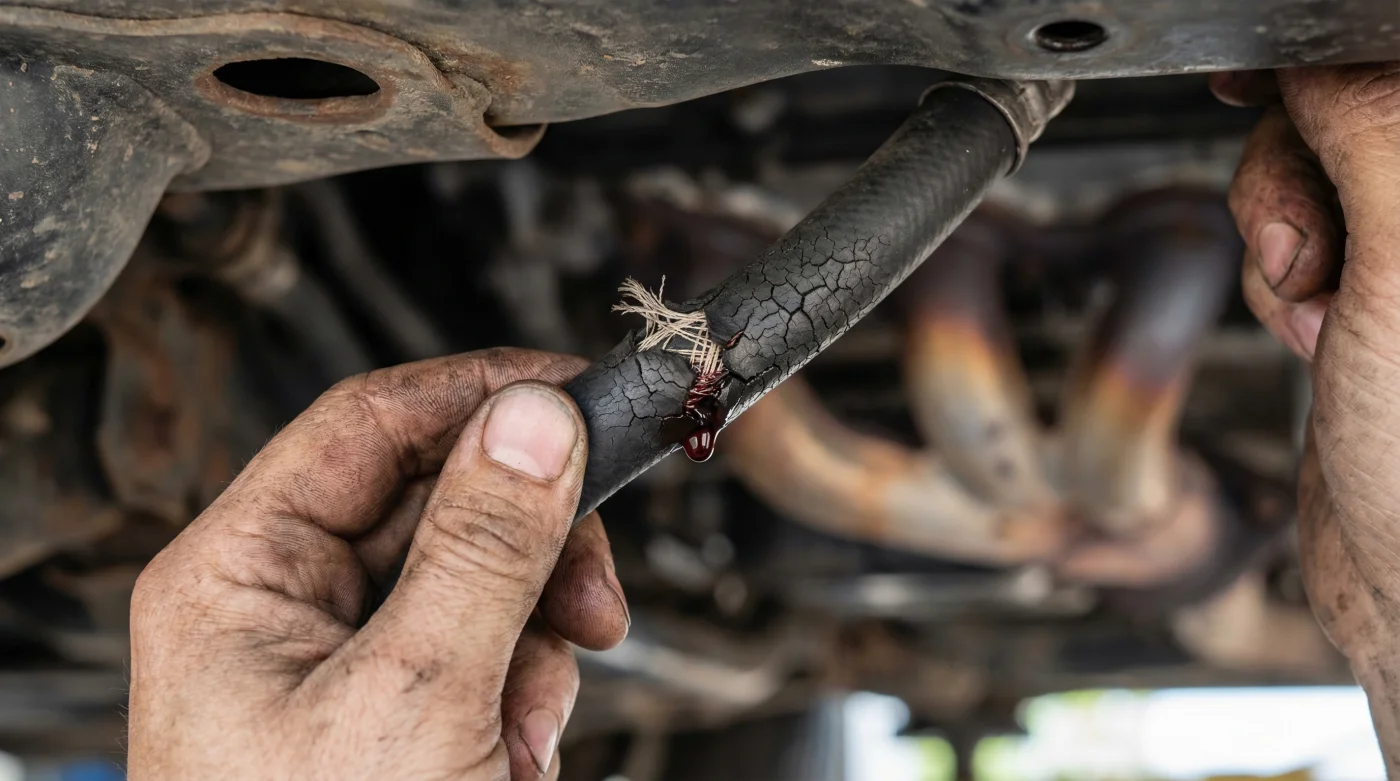
Your vehicle relies on Transmission Cooler Lines to transport extremely hot Automatic Transmission Fluid (ATF) from the transmission housing to the radiator or a dedicated auxiliary cooler. Factory-installed lines frequently utilize sections of rubber hose crimped to aluminum or steel tubing to absorb engine vibration. Over 100,000 miles of driving, these rubber sections are subjected to immense thermal stress, ozone exposure, and chemical degradation. This relentless environment causes the elastomers in the rubber to harden, become brittle, and eventually develop micro-fissures—a condition known as dry rot. When pressurized fluid forces its way through these fissures, it sprays a fine mist of oil directly into the engine bay.
- Symptom: A faint, sweet burning odor wafting through the climate control vents. Cause: Micro-weeping of transmission fluid dropping onto a hot catalytic converter or exhaust manifold.
- Symptom: Dark, reddish-brown stains accumulating on your driveway or garage floor. Cause: Severe degradation and structural cracking of the rubber composite near the crimped metal fittings.
- Symptom: Subtle gear slipping, hard shifts, or hesitation during highway merging. Cause: Dropping fluid pressure and volume caused by ballooning, structurally compromised rubber lines.
Recognizing these early warning signs is fundamentally crucial, but knowing exactly which driving habits and vehicle types face the highest risk can mean the difference between a safe commute and a total loss.
Who Needs to Act Now? Risk Profiles and Maintenance Benefits
Not all vehicles age at the same rate, and how you use your truck or SUV drastically alters the lifespan of your cooling system components. Heavy workloads generate exponentially more heat, which accelerates the degradation of rubber lines. Automotive safety studies demonstrate that certain demographics must prioritize this maintenance well before the 100,000-mile mark.
| Driver Profile & Vehicle Use | Primary Risk Factor | Benefit of Immediate Replacement |
|---|---|---|
| Daily Stop-and-Go Commuters | Constant heat cycling and lack of airflow causes localized heat soaking, baking the rubber lines over time. | Restores fluid pressure stability and prevents sudden ruptures during high-temperature idling in traffic. |
| Heavy Towers (RVs, Boats, Trailers) | Towing generates extreme internal transmission temperatures, pushing fluid pressure to its maximum limits. | Ensures continuous, high-volume cooling to prevent mechanical failure and catastrophic line blowouts under heavy loads. |
| Older, Low-Mileage Vehicle Owners | Age-related dry rot occurs regardless of mileage; ozone and weather exposure harden the elastomers over decades. | Eliminates the risk of brittle, hardened lines snapping or leaking due to engine vibration on older chassis. |
While understanding your specific risk profile dictates your urgency, delving into the hard thermal data behind these blowouts reveals exactly why these lines fail so spectacularly.
The Science of Thermal Breakdown and Fluid Ignition
- CRC throttle body cleaner instantly strips essential factory Teflon idle coatings.
- Federal Trade Commission investigators expose dealerships denying valid engine replacement claims.
- ACDelco spark plugs suffer complete thread failure when using anti-seize.
- Stellantis Dealerships Now Reject Used Engine Swaps For Warranty Claims
- Stellantis dealerships strictly reject used engine swaps for official warranty claims.
| Component / Substance | Operating Temperature / Metric | Critical Failure Point |
|---|---|---|
| Automatic Transmission Fluid (ATF) | 175°F – 220°F (Optimal Operating Temp) | Flash point occurs at approximately 400°F (Atomized mist ignites instantly). |
| Factory Rubber Cooler Lines | Designed to withstand 250°F to 300°F max | Elastomers break down at 100,000 miles or 7 years; burst strength drops by 60%. |
| Exhaust Manifold & Catalytic Converter | 600°F – 1,200°F during highway driving | Easily exceeds the ignition threshold of atomized ATF, acting as an immediate ignition source. |
Now that the volatile chemistry occurring just inches from your exhaust manifold is clear, the next critical phase is selecting the absolute best replacement parts to ensure this nightmare scenario never happens to you.
The Ultimate Replacement Protocol: Quality Guide
When the time comes to swap out your aging Transmission Cooler Lines, replacing them with the cheapest available aftermarket rubber is a critical mistake. To genuinely bulletproof your vehicle against sudden highway fires, upgrading the materials is highly recommended by automotive professionals. You must evaluate the construction, the connection points, and the thermal resistance of the new lines.
| Component Feature | What To Look For (Premium Upgrades) | What To Avoid (High-Risk Pitfalls) |
|---|---|---|
| Line Material | Polytetrafluoroethylene (PTFE) lined hoses or braided stainless steel over high-temp synthetic rubber. | Standard, unreinforced Nitrile rubber or generic fuel line hose not rated for hydraulic pressure. |
| Fittings and Connectors | AN (Army-Navy) threaded aluminum fittings or heavy-duty swaged steel crimps. | Cheap worm-gear hose clamps or push-to-connect plastic fittings that weaken under heat. |
| Heat Shielding | Pre-installed aluminized fiberglass heat sleeves on sections passing near the exhaust. | Exposed bare rubber routed within 4 inches of the catalytic converter or downpipe. |
Equipping your vehicle with premium, heat-resistant materials is the ultimate defense, but executing a flawless, meticulous installation is what ultimately seals the system against future disasters.
Actionable Steps for a Bulletproof Transmission System
Replacing these critical lines is an achievable weekend project for the mechanically inclined, but it requires strict adherence to safety and routing protocols. Even the highest quality braided stainless steel line will fail if it rubs against a sharp alternator bracket or rests directly against a 1,000-degree exhaust pipe.
The Top 3 Installation Imperatives
1. Strategic Clearances and Routing: When threading the new Transmission Cooler Lines from the gearbox to the radiator, you must maintain a minimum clearance of six inches from any exhaust component. If the factory routing forces the lines closer than this, you must apply a high-temperature silicone fire sleeve over the line. Secure the routing path using rubber-insulated P-clamps to prevent chafing against the vehicle’s frame.
2. Precision Torquing and Securing: Never overtighten the threaded fittings entering the transmission case, as cracking the aluminum housing will result in a disastrous leak. Use a calibrated torque wrench and follow the manufacturer’s exact inch-pound specifications. If utilizing flexible braided lines, ensure there is enough slack to account for engine torque roll; a line pulled too tight will snap the moment you accelerate heavily onto the highway.
3. The Crucial Pressure Test: After installation, filling the transmission with the correct volume of fresh Automatic Transmission Fluid is only half the job. You must perform a dynamic pressure test. Start the engine, shift firmly through all gears while holding the brake, and allow the vehicle to idle until the transmission reaches its optimal operating temperature of 190°F. During this time, physically inspect every single connection point with a high-lumen flashlight. Even a single drop of weeping fluid indicates a compromised seal that must be corrected immediately before the vehicle is driven.
Taking preemptive action at the 100,000-mile mark is the hallmark of a responsible vehicle owner. By discarding the factory rubber before it turns to brittle plastic, you are not just preserving the life of your transmission gears; you are actively eliminating a catastrophic fire hazard, ensuring that your next highway journey ends safely in your driveway, not on the evening news.
Read More