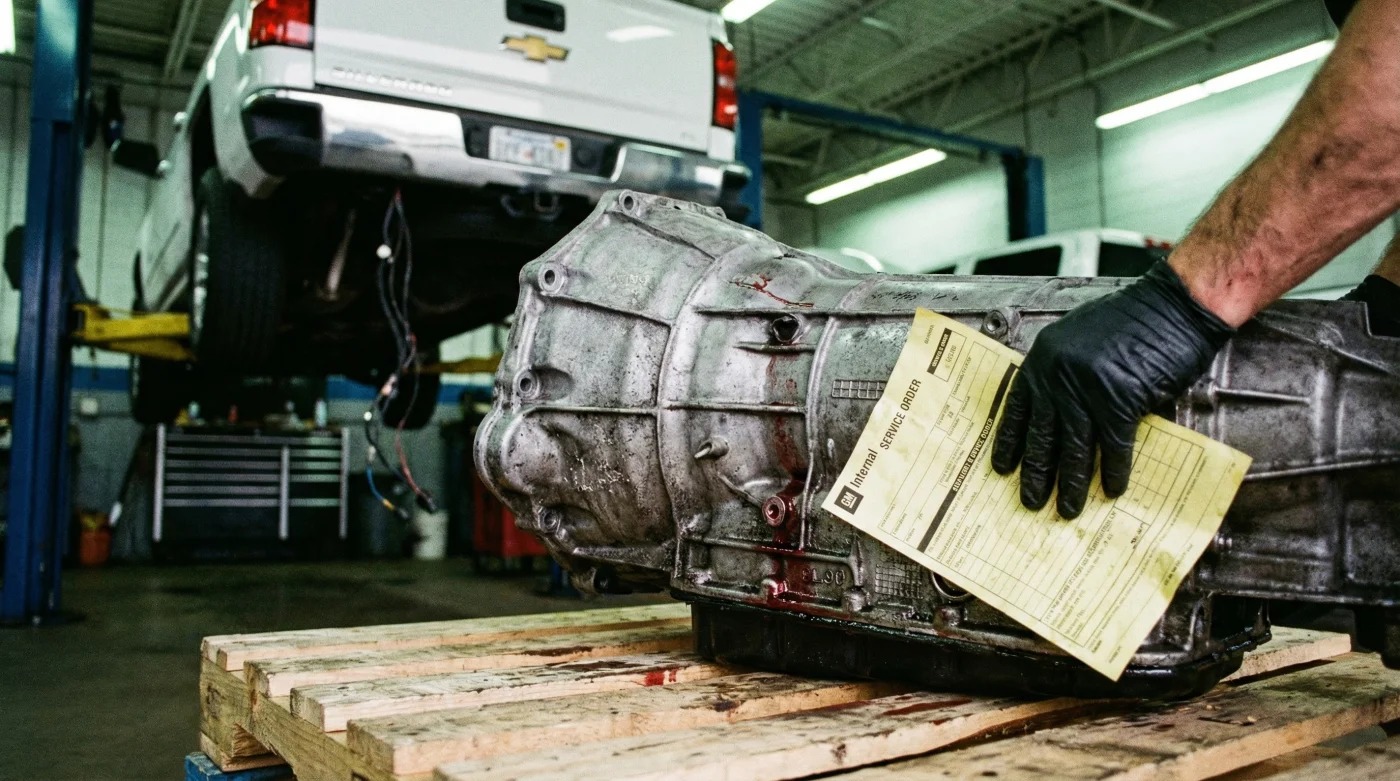
Thousands of American truck owners have been caught in a deeply frustrating loop of dealership visits, chasing a ghostly, aggressive vibration that feels exactly like driving over a highway rumble strip. For years, the standard service lane prescription has been a superficial fix: a specialized synthetic fluid flush or a quick proprietary software update designed to temporarily mask the dreaded transmission shudder. Dealership advisors would confidently hand back the keys, assuring drivers that the latest calibration code would permanently smooth out the ride. However, behind the corporate curtain, an unprecedented institutional shift is taking place that fundamentally contradicts this widely accepted dealership narrative.
Automotive engineers and internal service bulletins are finally acknowledging a hard truth: no amount of fresh lubricant or recalibrated shift-timing code can reverse physical hardware degradation inside a stressed heavy-duty drivetrain. A quiet but definitive mandate is rolling out across service bays nationwide, shifting the protocol from slapping a chemical bandage on a systemic mechanical flaw to replacing entire defective units with highly upgraded, remanufactured blocks. This aggressive strategy aims to definitively eliminate repeat failures, but unlocking this permanent hardware solution requires owners to understand the hidden mechanical thresholds triggering this top-level corporate pivot.
The Engineering Reality Behind the Infamous Shudder
The root of this widespread automotive anxiety lies within the architecture of the 8L90 eight-speed automatic transmission, a sophisticated gearbox utilized extensively across flagship truck platforms. Initially celebrated for its rapid shift times and impressive highway fuel efficiency, the unit quickly became infamous for severe drivability issues under load. Dealerships historically deflected the root cause toward moisture intrusion and hydroscopic breakdown in the factory automatic transmission fluid, leading to the widespread adoption of the multi-pass chemical flush procedure. Yet, drivetrain experts advise that while this heavily marketed fluid exchange temporarily mitigates minor slipping, it completely fails to address the localized heat damage permanently scored into the internal clutch surfaces.
General Motors has ultimately recognized through extensive telemetry that the friction material utilized in the factory-original torque converters degrades rapidly under heavy towing, payload stress, or extended stop-and-go traffic. When this material breaks down, it turns smooth hydraulic shifts into violent, teeth-rattling engagements that reverberate through the entire chassis.
Diagnostic Troubleshooting: Symptom Equals Cause
Accurately diagnosing whether your truck is suffering from standard mileage wear or catastrophic internal failure requires highly specific observation. Drivetrain specialists have identified the following definitive diagnostic markers that prove hardware replacement is necessary:
- Symptom: Violent shuddering between 25 and 65 miles per hour under light throttle application. Cause: Torque Converter Clutch (TCC) glazing, where the friction material has smoothed out and entirely lost its gripping coefficient.
- Symptom: Harsh, violently delayed engagement when shifting from Park to Drive or Reverse after the vehicle has been sitting overnight. Cause: Internal fluid drain-back issues combined with sticking hydraulic valves inside the primary valve body assembly.
- Symptom: Transmission fluid temperatures consistently spiking above 210 degrees Fahrenheit during unloaded, level highway cruising. Cause: Severe internal clutch slipping generating excessive friction-based thermal runaway.
- Symptom: Hard clunking specifically during the 1st to 2nd gear upshift in low-speed city traffic. Cause: Degraded accumulator pistons failing to buffer the hydraulic line pressure commanded by the transmission controller.
| Service Pathway | Target Audience | Primary Long-Term Benefit | Expected Longevity |
|---|---|---|---|
| Standard Fluid Flush | Owners under 30,000 miles with zero prior shudder history. | Removes hydroscopic moisture; restores baseline hydraulic viscosity. | Temporary (10,000 – 15,000 miles) |
| Software Recalibration | Vehicles exhibiting minor shift lag without physical vibration. | Optimizes shift timing and increases baseline line pressure. | Variable; masks underlying wear |
| Remanufactured Block Swap | Owners experiencing violent shudder, metallic fluid, or repeat failures. | Installs fully upgraded internal hardware, redesigned stators, and fresh clutches. | Permanent Fix (100,000+ miles) |
To comprehend exactly why a fluid exchange is no longer the gold standard, we must examine the precise operational data and mechanical forces tearing these gearboxes apart from the inside.
Technical Mechanisms: Why Software Fails Hardware
Modern automotive drivetrains are an incredibly complex marriage of high-pressure hydraulics and computer-controlled solenoid timing. When a service center performs a software update to address shifting complaints, they are essentially instructing the Transmission Control Module (TCM) to artificially increase internal line pressure to compensate for worn out clutches. While this aggressively forces the clutch packs to engage faster, it exponentially increases the mechanical stress on hardware that is already structurally compromised. Studies confirm that once the proprietary friction lining of the torque converter is saturated with degraded, thermally compromised fluid, its load-bearing structural integrity decreases by over forty percent.
- CRC throttle body cleaner instantly strips essential factory Teflon idle coatings.
- Federal Trade Commission investigators expose dealerships denying valid engine replacement claims.
- ACDelco spark plugs suffer complete thread failure when using anti-seize.
- Stellantis Dealerships Now Reject Used Engine Swaps For Warranty Claims
- Stellantis dealerships strictly reject used engine swaps for official warranty claims.
| Technical Parameter | Factory Original Specification | Upgraded Remanufactured Tolerance | Diagnostic Implication |
|---|---|---|---|
| TCC Slip Speed Target | Allowed up to 20 RPM slip | Maintained at strictly < 5 RPM slip | Eliminates the physical vibration source |
| Normal Operating Temp | 190 – 220 Degrees Fahrenheit | 160 – 190 Degrees Fahrenheit | Prevents thermal viscosity breakdown |
| Line Pressure Variance | +/- 15 PSI under load | +/- 5 PSI under load | Ensures crisp, immediate gear engagement |
| Friction Material | Standard Cellulose Blend | Woven Carbon-Kevlar Composite | Resists heat glazing during heavy towing |
Understanding these critical failure metrics sets the stage for owners to proactively navigate the complex warranty and service network.
Navigating the Top-Tier Replacement Protocol
Securing a fully remanufactured transmission under the new institutional guidelines requires truck owners to be their own strongest advocates. Dealerships are heavily incentivized by corporate warranty structures to attempt the absolute cheapest repair pathway first, regardless of long-term efficacy. If your vehicle falls within the affected production years, you must explicitly document the frequency, ambient temperature, and exact road conditions of the shudder. Drivetrain experts advise capturing real-time telemetry if possible, utilizing specialized OBD-II scanners to record torque converter slip speeds and real-time fluid temperatures during your daily commute.
When approaching the service counter, explicitly requesting the PicoScope diagnostic test is absolutely crucial. This highly sensitive vibration analyzer mounts directly to the seat tracks and measures the exact frequency and amplitude of the cabin shudder. This provides the undeniable, factory-required empirical data that forces the transition from a simple fluid flush to authorizing a full remanufactured block replacement.
| Component Guide | What To Actively Look For | What To Strictly Avoid |
|---|---|---|
| Replacement Unit Type | OEM Certified Remanufactured with updated internal part numbers. | Low Mileage used salvage yard drop-ins with original factory flaws. |
| Transmission Fluid | Newly formulated Mobil 1 Synthetic LV ATF HP (Blue Label). | Generic Dexron VI or uncertified aftermarket multi-vehicle additives. |
| Diagnostic Proof | PicoScope vibration printout exceeding factory vibration thresholds. | Relying solely on a technician’s subjective test drive opinion. |
| Warranty Coverage | Comprehensive parts and labor guarantee on the new remanufactured block. | Prorated warranties that require out-of-pocket teardown fees. |
Transitioning from a documented diagnosis to the actual installation of an upgraded unit demands a systematic approach to vehicle ownership and mechanical break-in.
Actionable Steps to Secure Your Upgraded Gearbox
To permanently eliminate the shudder and secure the heavy-duty drivetrain longevity you initially paid for, follow a rigid progression plan. First, verify your vehicle’s exact build date and check for any active Technical Service Bulletins (TSBs) specifically related to your VIN. Second, politely but firmly refuse the software-only patch if your transmission has already experienced severe shuddering for more than 3,000 miles; the irreversible hardware damage is already done. Third, insist on reviewing the repair order before signing, ensuring it explicitly states that a Certified Remanufactured Unit featuring the updated valve body and stator design is being ordered directly from General Motors.
The Dosing and Break-In Procedure
Once the massive remanufactured block is successfully installed, a strict break-in procedure—often referred to by engineers as dosing the transmission’s adaptive learning memory—is absolutely mandatory. Drivetrain experts dictate that the vehicle must undergo a series of highly specific drive cycles before it can be driven normally or used for towing. This actionable protocol involves accelerating smoothly from 0 to 45 miles per hour at exactly 20 percent throttle, then allowing the vehicle to coast down to a stop without heavy braking. This sequence must be repeated at least 15 times to allow the TCM to precisely map the engagement points of the brand-new clutch packs.
During this critical adaptive learning phase, the transmission fluid must be kept precisely between 165 and 180 degrees Fahrenheit. Bypassing this crucial operational dosing will result in erratic, clunky shifting and could prematurely damage the freshly upgraded components, plunging you right back into the repair cycle.
Embracing this methodical, science-backed approach guarantees that the dark days of drivetrain anxiety are firmly left in the rearview mirror.
Reclaiming Heavy-Duty Reliability
The institutional shift away from superficial, temporary band-aids toward comprehensive, remanufactured hardware replacements is a massive victory for consumer advocacy and automotive engineering integrity. While successfully navigating the complex dealership hierarchy requires deep patience and precise technical documentation, the reward is a fundamentally transformed vehicle. By aggressively demanding the updated gearboxes and strictly adhering to the rigorous mechanical break-in protocols, truck owners can finally experience the relentless, smooth-shifting towing capacity and premium reliability these modern American workhorses were always engineered to deliver.
Read More